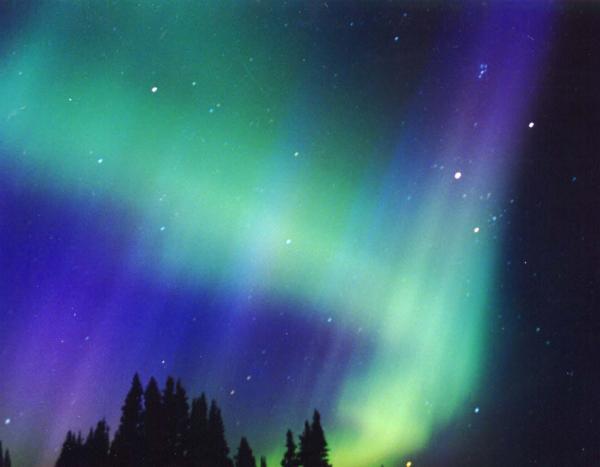
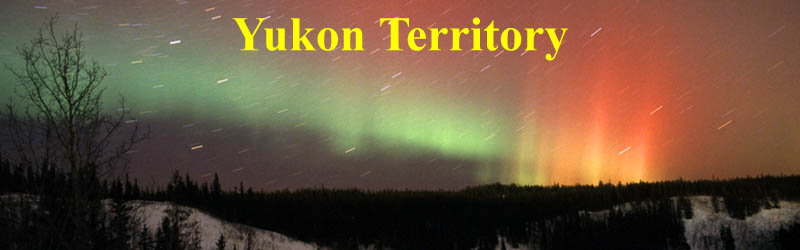
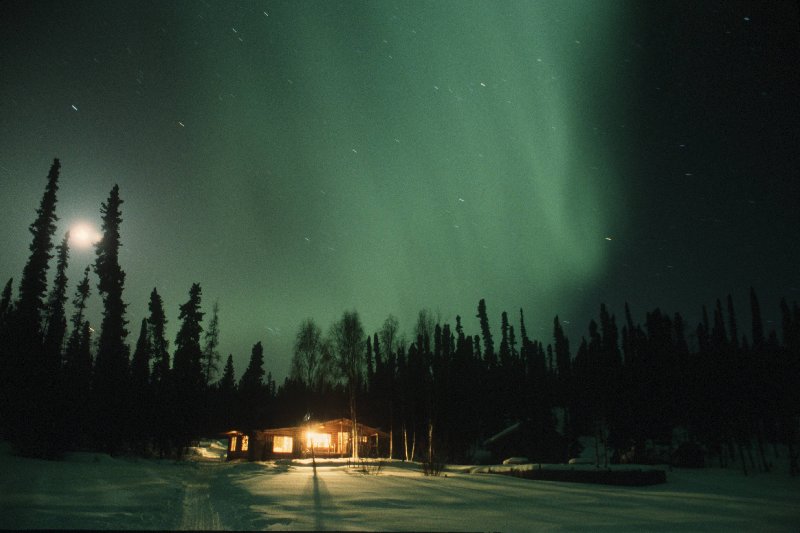
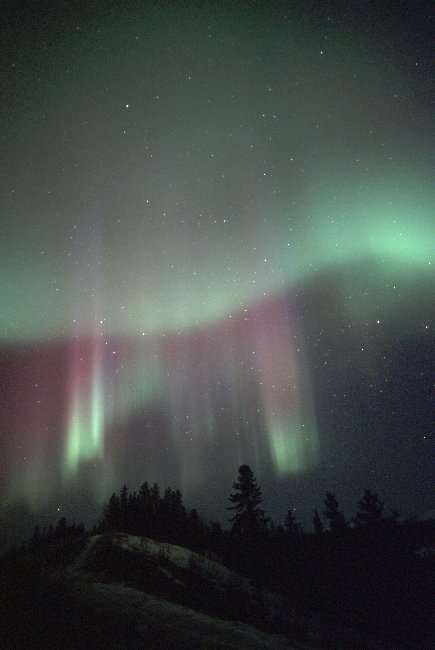
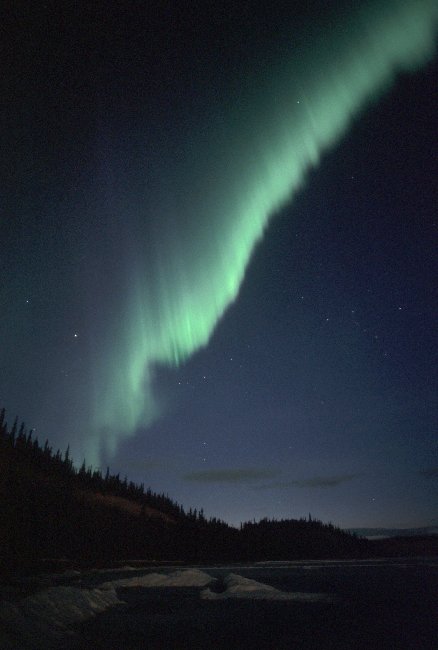
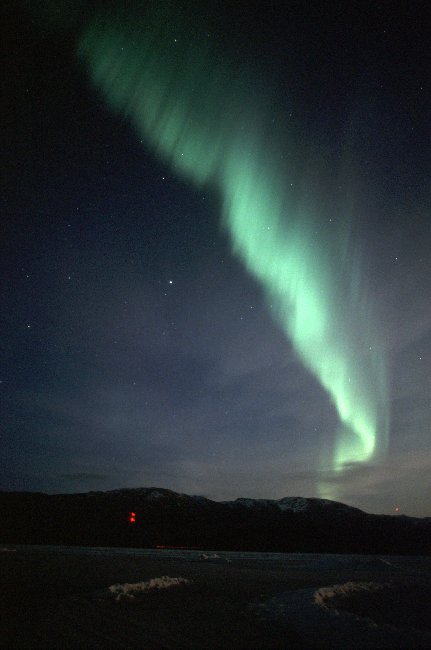
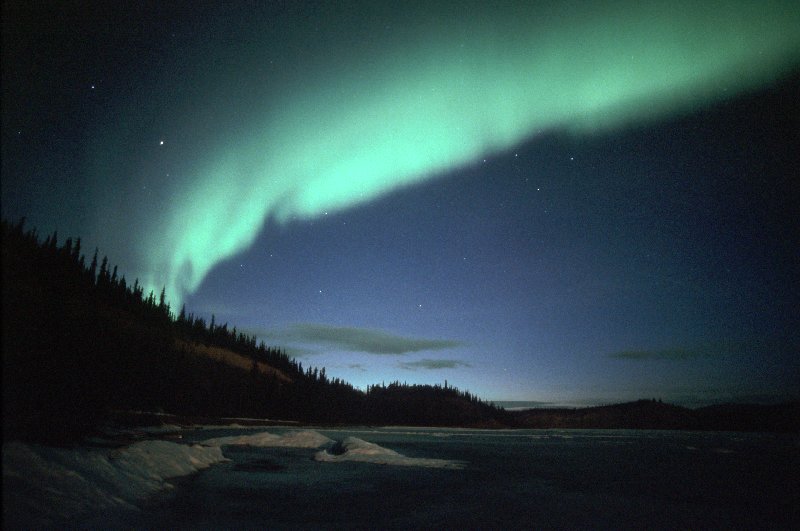
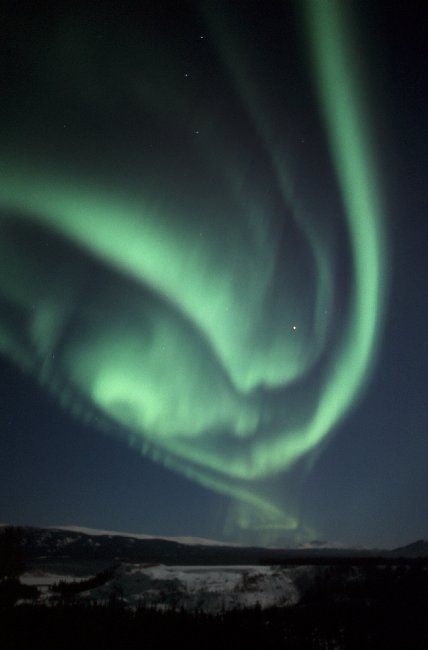
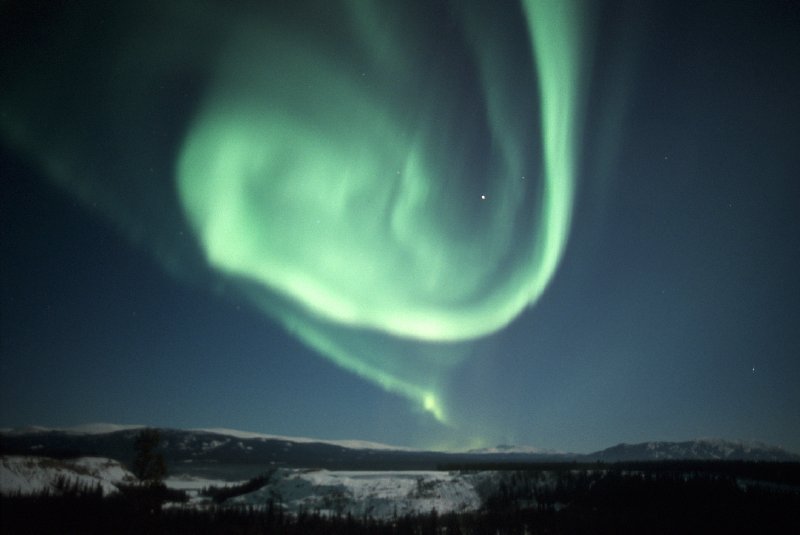
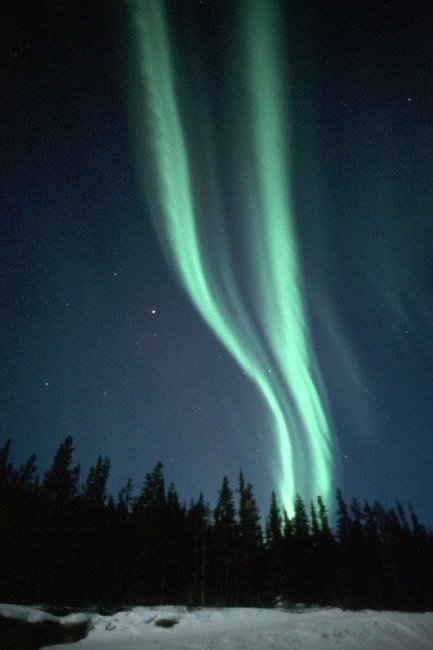
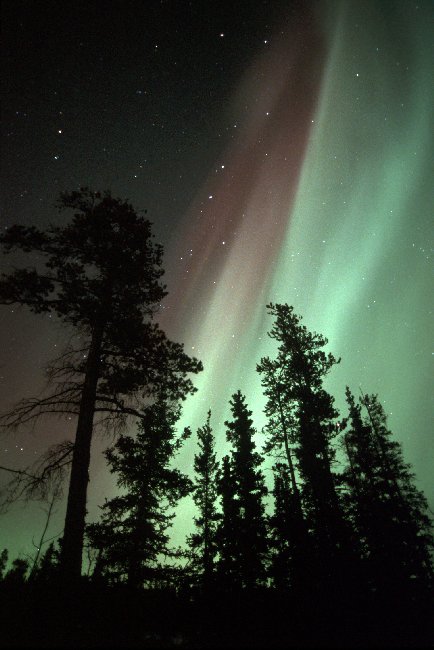
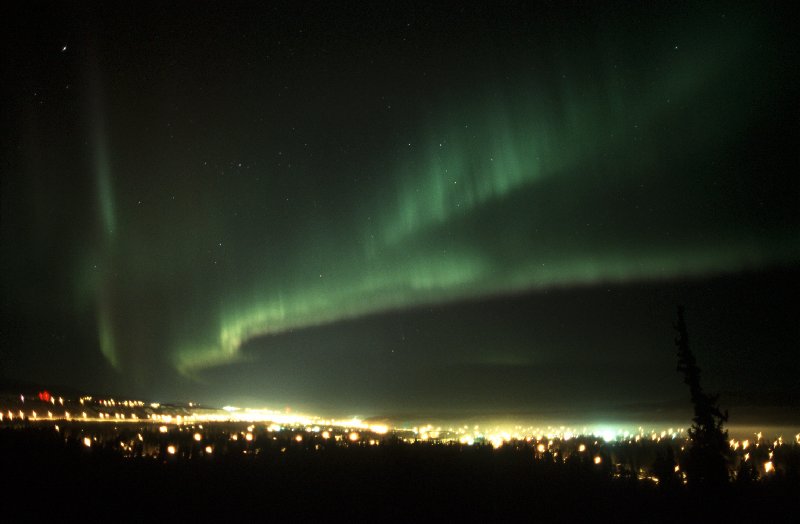
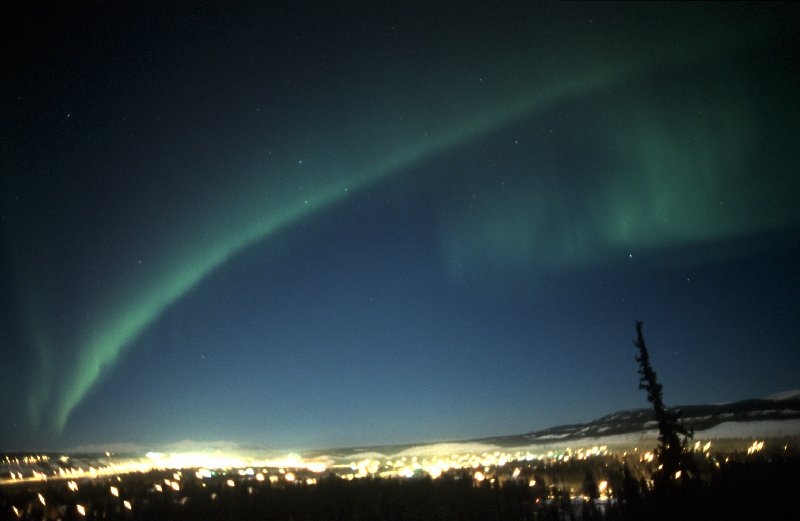
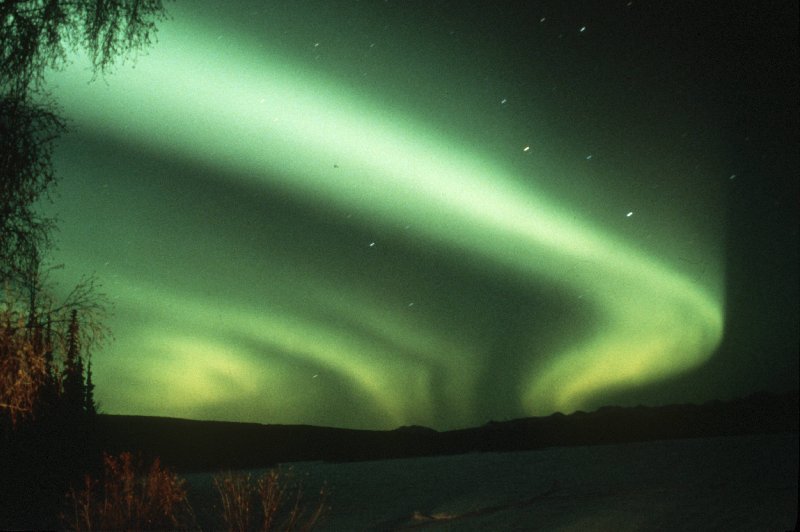
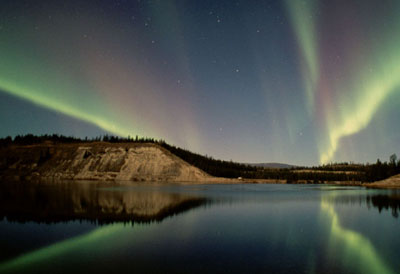
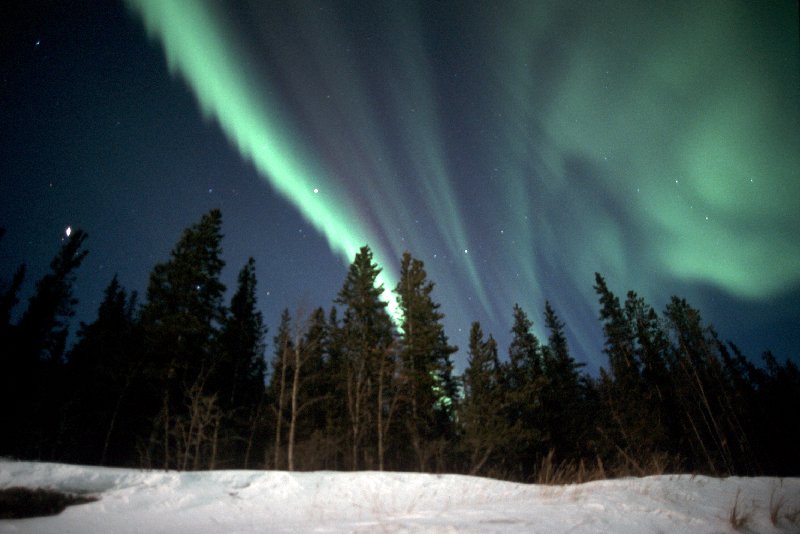
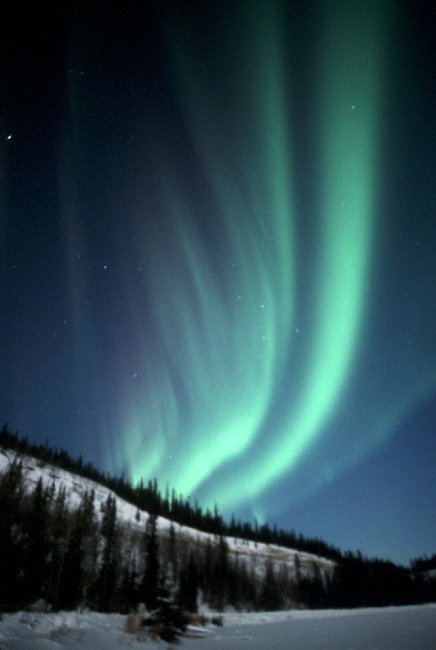
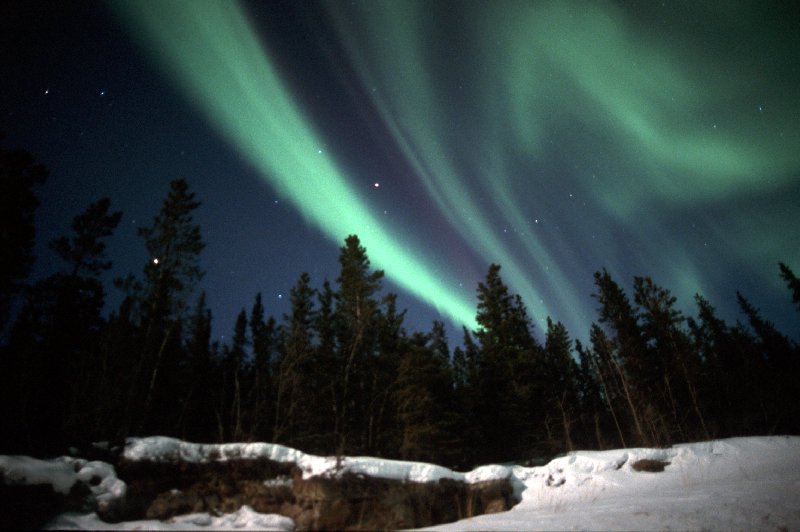
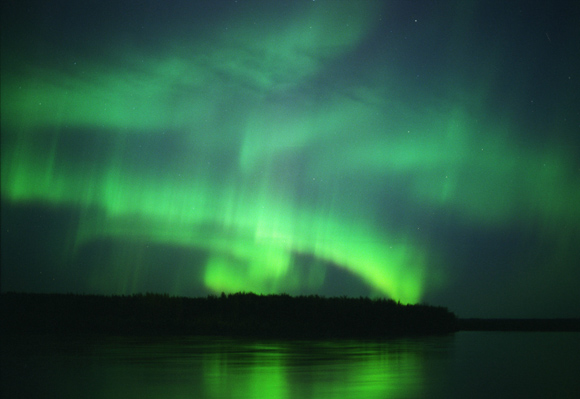
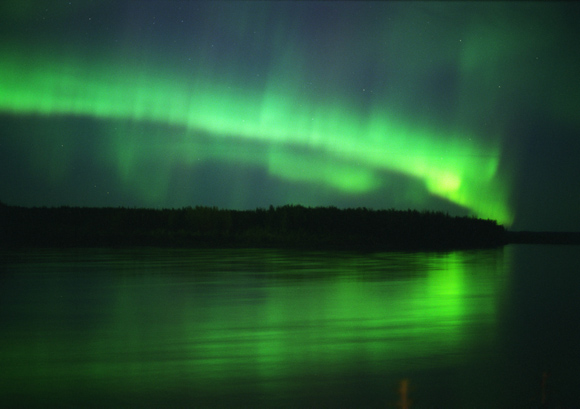
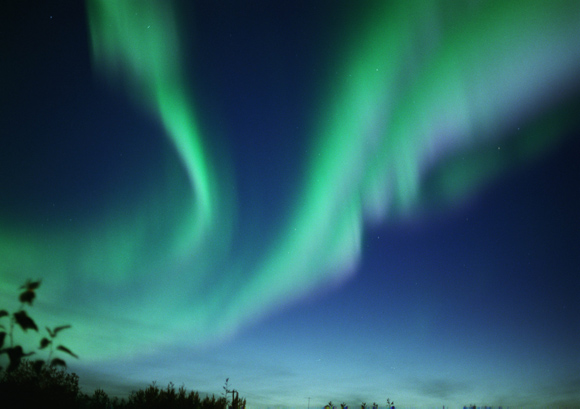
| Contrary to popular belief, the aurorae are not due to reflections of the Sun of the big glaciers of the North, but are really the result of the solar wind that interracts with the terrestrial atmosphere. When solar eruptions occur, many particles are projected into space. That is what you call the solar wind. Normally, it blows 250 to 300 km/sec around the Earth, but when there is a solar eruption that makes a path towards us, this wind can increase up to (for example) 700 km/sec when it often provokes some aurora borealis. On the surface of the Sun, sunspots - which are regions with unsettled magnetic fields - can be the theater of splar eruptions. Depending upon the speed, one of these eruptions can take between 1 to 3 days to arrive at the Earth. |