Early Binding When a binding is performed before the program is run
Late Binding Binding occurs at run time ( also late binding , dynamic binding )
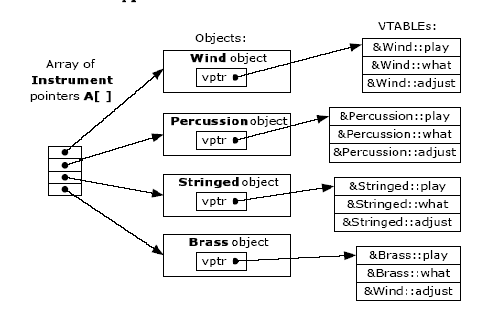
VTABLE
VPTR
// Explanation
// If u assign a derived clas object ( here flute ) to
// a base class type variable . and call the member function
// then the base class memeber function is called although
// the obj var has derived class object in it
// this is overcome by addding keyword "virtual" in the base class
// member function definition. By adding the keyword "virtual" the
// the compiler is forced to do a "Late Binding"
//: C15:Instrument3.cpp
// Late binding with the virtual keyword
#include <iostream>
using namespace std;
enum note { middleC, Csharp, Cflat }; // Etc.
class Instrument
{
public:
virtual void play(note) const
{
cout << "Instrument::play" << endl;
}
};
// Wind objects are Instruments
// because they have the same interface:
class Wind : public Instrument
{
public:
// Override interface function:
void play(note) const
{
cout << "Wind::play" << endl;
}
};
void tune(Instrument& i)
{
// ...
i.play(middleC);
}
int main()
{
Wind flute;
tune(flute); // Upcasting
} ///:~
Tip 1:
Each time you create a class that contains virtual functions, or you
derive from a class that contains virtual functions, the compiler
creates a unique VTABLE for that class,
Tip 2: Fortunately, the compiler takes care of all the
bookkeeping for you and ensures that all the function pointers in
all the VTABLEs of a particular class hierarchy occur in the same
order, regardless of the order that you may override them in
derived classes.
Tip 3 : This is where creation of the default constructor is essential. In the
Instrument examples, the compiler creates a default constructor
that does nothing except initialize the VPTR. This constructor, of
course, is automatically called for all Instrument objects before you
can do anything with them, so you know that it’s always safe to call
virtual functions.