LINKS:
koryu/kobudo internet links.
GROUPS:
Thumbnail sketches/contact details for authentic kobudo in Australia.
PROLOGUE:
Some introductory comments on koryu/kobudo.
(C) 1997 - 2002 D. LEE URL: http://www.geocities.com/Tokyo/Dojo/1276/
Bojutsu
Stick and staff arts of Japan's classical warrior traditions: some introductory
comments (Page 2)
Now, following the new Edo Jidai (Edo period), feudal police (often referred to
as torimono, doushin,..) were employed to maintain law and order. Weapons were
employed for both practical usage and as a symbol of post. The long staff was
one of the lower weapons used by the feudal police, and as a long weapon
(nagamono) was used as a feudal police weapon (torimono dougu) to arrest violent
or armed criminals (perhaps armed with a sword or another dangerous weapon). The
techniques of this origin are designed to arrest a person without unduely
injuring the individual, as compared with the more acute tactics of
warrior/battlefield long-arms usage. The 6 foot length staff (rokushakubo)
became a standard in this period, and it follows that terms such as "hanbo"
(half staff), a stick of some 3 feet in length, would have been devised circa
Edo Jidai. This is also to say the common use of names such as hanbo, bo, jo and
rokushakubo is to an extent a byproduct of Edo Jidai martial culture, and that
staff and stick names are and were both tradition-specific (eg Yagyu Shingan
Ryu: tesakikiribo, Shindo Muso Ryu/Uchida Ryu: Tanjo) and also in wider popular
use (bo/jo).
Japanese Bojutsu is one of the core elements of classical
martial study. Remaining traditions are a valuable store of traditional culture,
and are today receiving a revival in interest.
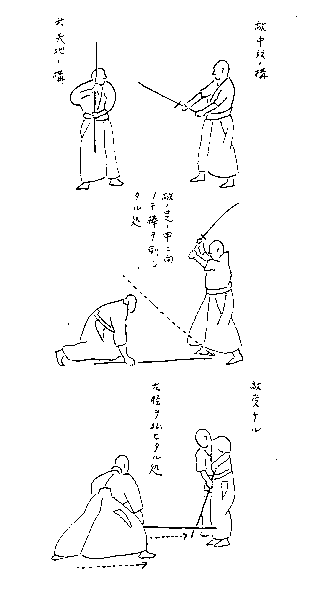
Section from handwritten densho by Ueno Takashi-sensei,depicting the Tsuru no Issoku form of Kukishin Ryu
Bojutsu (Lee collection)