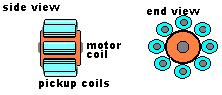
This can be collected, instead of wasted, using clusters of steel cores with coils of magnetic wire around them.
These "splatter" coils are then connected in series or paralell to be used for lighting flourescents for instance, or to fill caps or recharge batteries.
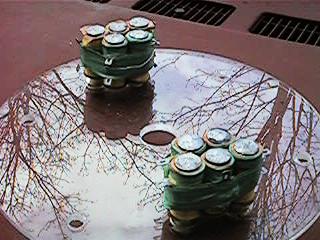
Here is a clear plastic plate with a pair of splatter-coil clusters mounted onto it:
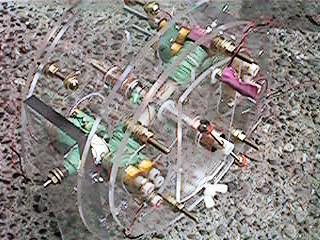
Below is a view of a DC pulse motor with two rotating rotor coils mounted at the ends of a rotating arm; and these coils have are pulsed and collide against two outer stationary stator coils for rotational power...there are also permanent magnets mounted right next to the stationary coils that give the motor much more power.(see "permanent magnet flux bridges" link)
This motor has two "aplatter plates" mounted onto it on each side of the rotor and stator coils as shown - and these plates pickup the normally-wasted flux that emits out the sides during the rotor-stator coil flux-collision:
Here is a close up showing the positioning of permanent magnets, a stationary outer motor coil and its core, and the splatter clusters at the sides on this DC pulse motor. The rotor coil would rotate downwards in this photo:
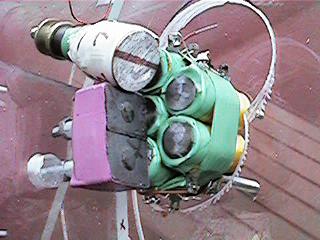
Below is a close-up of this motor that has its statioary motor coils and permanent magnets totally surrounded by clusters of splatter coils:
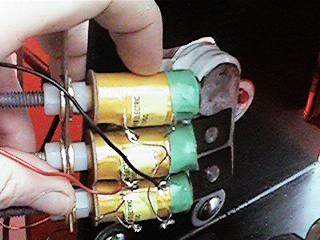
Here is a cluster of three splatter-coils wired in series being held in position by hand which collects the most energy as the motor runs:
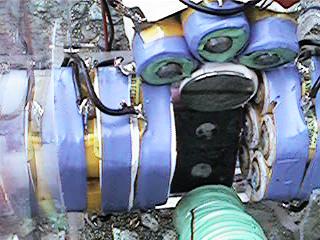
Here is an optional positioning of splatter coils that can done in combination with the splatter coil clusters as shown in the above photos to recover even more energy: