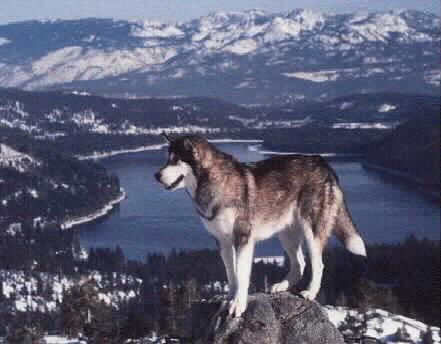
Alaskanmalamuutti-narttu Kans VA Mva Alyeska's Bearly Their (Allie),
WPD, WTD, WPDX. Omistaja: Charlene G. LaBelle, Yhdysvallat.
Female Alaskan Malamute Intl VA Ch. Alyeska's Bearly Their (Allie),
WPD, WTD, WPDX. Owner: Charlene G. LaBelle, United States of America.
© Charlene G. LaBelle, kennel Belle
Alkuperämaa: Yhdysvallat.
Ryhmä: 5
FCI:n numero: 243
Hyväksytty: FCI 14.8.1996
SKL-FKK 3.12.1997
Käyttötarkoitus: Rekikoira.
Origin: U.S.A.
Date of publication of the original valid standard: 14.08.1996.
Classification F.C.I: Group 5 Spitz and primitive types. Section 1 Nordic Sledge Dogs. Without working trial.
Utilization: Sledge dog.
YLEISVAIKUTELMA: Alaskanmalamuutti, eräs vanhimmista arktisista rekikoiraroduista, on voimakas ja vahvarakenteinen koira, jolla on syvä rintakehä ja vahva, voimakaslihaksinen runko. Malamuutti antaa vaikutelman suuresta aktiivisuudesta ja ylväästä ryhdistä. Se seisoo tukevasti raajoillaan, pää pystyssä ja valppaat silmät osoittaen kiinnostusta ja uteliaisuutta. Pää on leveä. Korvat ovat kolmiomaiset ja valppaalla koiralla pystyt. Kuono on jykevä ja kapenee vain hieman kohti kirsua. Kuono ei ole terävä eikä pitkä, ei kuitenkaan lyhyt. Paksussa karvapeitteessä karhea peitinkarva on riittävän pitkää suojaamaan villavaa pohjavillaa. Malamuuteilla on useita eri värejä. Värimerkit pään etuosassa ovat tunnusomaisia piirteitä, esim. ”lakki” pään päällä, täysin valkoinen pään etuosa tai valkea juova ja/ tai maski. Häntä on tuuheakarvainen, asennoltaan selän yläpuolella ja antaa vaikutelman heiluvasta ”plyymistä”. Malamuutin tulee olla jykeväluustoinen, sillä on hyväasentoiset raajat, hyvät käpälät, syvä rintakehä, voimakkaat lavat sekä kaikki muut fyysiset ominaisuudet, jotka ovat tarpeellisia tehokkaaseen työskentelyyn. Ravin tulee olla vakaata, tasapainoista, väsymätöntä ja täydellisen tehokasta. Malamuutti ei ole tarkoitettu kilpailemaan rekikoirien nopeuskilpailuissa, vaan se on rakenteeltaan voimakas ja kestävä. Kaikki tätä tarkoitusta haittaavat piirteet, myös luonteessa, ovat hyvin vakavia virheitä.
TÄRKEITÄ MITTASUHTEITA: Rinnan syvyys on suunnilleen puolet säkäkorkeudesta,
syvin kohta on juuri eturaajojen takana. Rungon pituus mitattuna olkanivelestä
istuinluun kärkeen on suurempi kuin säkäkorkeus. Rungossa ei saa olla ylipainoa ja luuston tulee olla suhteessa koiran kokoon.
KÄYTTÄYTYMINEN/ LUONNE: Alaskanmalamuutti on lempeä ja ystävällinen, ei ”yhden miehen” koira. Se on uskollinen ja kiintynyt seuralainen, yllytettäessä leikkisä, mutta aikuistuttuaan yleensä vaikuttavan arvokas.
GENERAL APPEARANCE: The Alaskan Malamute, one of the oldest Arctic sledge dogs, is a powerful and substantially built dog with deep chest and strong, well-muscled body. The Malamute stands well over the pads, and this stance gives the appearance of much activity and a proud carriage, with head erect and eyes alert showing interest and curiosity. The head is broad. Ears are triangular and erect when alerted. The muzzle is bulky, only slight diminishing in width from root to nose. The muzzle is not pointed or long, yet not stubby. The coat is thick with a coarse guard coat of sufficient length to protect a woolly undercoat. Malamutes are of various colors. Face markings are a distinguishing feature. These consist of a cap over the head, the face either all white or marked with a bar and/or a mask. The tail is well furred, carried over the back, and has the appearance of a waving plume. The Malamute must be a heavy boned dog with sound legs, good feet, deep chest and powerful shoulders, and have all of the other physical attributes necessary for the efficient performance of his job. The gait must be steady, balanced, tireless and totally efficient. He is not intended as a racing sledge dog designed to compete in speed trials. The Malamute is structured for strength and endurance, and any characteristic of the individual specimen, including temperament, which interferes with the accomplishment of this purpose, is to be considered the most serious of faults.
IMPORTANT PROPORTIONS: The depth of chest is approximately one half the height of the dog at the shoulders, the deepest point being just behind the forelegs. The length of the body from point of shoulder to the rear point of pelvis is longer than the height of the body from ground to top of the withers.
BEHAVIOUR/ TEMPERAMENT: The Alaskan Malamute is an affectionate, friendly dog, not a «one-man» dog. He is a loyal, devoted companion, playful in invitation, but generally impressive by his dignity after maturity.
PÄÄ: Leveä ja syvä, ei karkea eikä kömpelö, kuitenkin suhteessa koiran kokoon.
Ilme on pehmeä ja kuvastaa lempeää luonnetta.
KALLO-OSA: Leveä ja kohtuullisen pyöristynyt korvien välistä, silmiä kohti
tasaisesti kapeneva ja tasoittuva sekä melko litteitä poskia kohti kaartuva. Silmien välissä on loiva uurre.
OTSAPENGER: Vähäinen.
KIRSU: Kirsu, huulet ja silmänympäryspigmentti ovat mustat kaikissa muissa
karvapeitteen väreissä paitsi punaisessa. Ruskea pigmentti on sallittu punaisilla koirilla. Vaaleammaksi juovittunut ”lumikirsu” on hyväksyttävä.
KUONO-OSA: Suuri ja jykevä suhteessa kallon kokoon, kapenee hieman leveysja
syvyyssuunnassa kohti kirsua.
HUULET: Tiiviit.
LEUAT/ HAMPAAT/ PURENTA: Leuat ovat leveät ja hampaat suuret. Leikkaava
purenta. Ylä- tai alapurenta on virhe.
POSKET: Melko litteät.
SILMÄT: Asennoltaan viistot, mantelin muotoiset, keskikokoiset ja väriltään ruskeat. Siniset silmät ovat hylkäävä virhe.
KORVAT: Keskikokoiset, mutta pienet suhteessa pään kokoon. Korvat ovat kolmiomaiset ja kärjestään hieman pyöristyneet. Ne ovat kiinnittyneet etäälle toisistaan kallon takaosan ulkoreunoille, samalle linjalle silmien ulkokulman kanssa. Koiran ollessa tarkkaavainen ne kohoavat ylemmäksi. Korvat ovat hieman eteenpäin kallistuneet, mutta koiran työskennellessä ne ovat joskus taittuneet kallon myötäisesti. Korkealle kiinnittyneet korvat ovat virhe.
HEAD: The head is broad and deep, not coarse or clumsy, but in proportion to the size of the dog. The expression is soft and indicates an affectionate disposition.
SKULL: Broad and moderately rounded between the ears, gradually narrowing and flattening on top as it approaches the eyes, rounding off to cheeks. There is a slight furrow between the eyes. The topline of the skull and the topline of the muzzle show a slight break downward from a straight line as they join.
STOP: Shallow.
NOSE: In all coat colors, except reds, the nose, lips, and eye rim pigmentation is black. Brown is permitted in red dogs. The lighter streaked «snow nose» is acceptable.
MUZZLE: Large and bulky in proportion to the size of the skull, diminishing slightly in width and depth from junction with the skull to the nose.
LIPS: Close fitting.
JAWS/ TEETH: Broad with large teeth. The incisors meet with a scissor bite. Overshot or undershot is a fault.
CHEEKS: Moderately flat.
EYES: Obliquely placed in the skull. Eyes are brown, almond shaped and of medium size. Blue eyes are a disqualifying fault.
EARS: Of medium size, but small in proportion to the head. The ears are triangular in shape and slightly rounded at tips. They are set wide apart on the outside back edges of the skull on line with the upper corner of the eye, giving ears the appearance, when erect, of standing off from the skull. Erect ears point slightly forward, but when the dog is at work, the ears are sometimes folded against the skull. High set ears are a fault.
KAULA: Voimakas ja kohtuullisesti kaareutunut.
RUNKO: Tiivisrakenteinen, mutta ei lyhyt.
SELKÄ: Suora, hieman lonkkia kohti laskeva.
LANNE: Luja ja lihaksikas. Pitkä lanne, joka saattaa heikentää selkää, on virhe.
RINTAKEHÄ: Hyvin kehittynyt.
HÄNTÄ: Keskikorkealle kiinnittynyt, tyvestään selkärangan suuntainen ja asennoltaan selän yläpuolella, kun koira ei työskentele. Häntä ei ole lyhyt eikä tiukasti selkää vasten kiertynyt, ei myöskään lyhytkarvainen. Malamuutin häntä on tuuheakarvainen ja antaa vaikutelman heiluvasta ”plyymistä”.
NECK: Strong and moderately arched.
BODY: Compactly built but not short coupled. The body carries no excess weight, and bone is in proportion to size.
BACK: Straight and gently sloping to the hips.
LOINS: Hard and well muscled. A long loin that may weaken the back is a fault.
CHEST: Well developed.
TAIL: Moderately set; follows the line of the spine at the base. Carried over the back when not working. It is not a snap tail or curled tight against the back, nor is it short furred like a fox brush. The Malamute tail is well furred and has the appearance of a waving plume.
RAAJAT
ETURAAJAT
YLEISVAIKUTELMA: Eturaajat ovat jykeväluustoiset, lihaksikkaat ja edestä
katsottuna ranteisiin asti suorat.
LAVAT: Kohtuullisen viistot.
VÄLIKÄMMENET: Lyhyet, vahvat ja sivulta katsottuna hieman viistot.
KÄPÄLÄT: ”Lumikenkämäiset”, tiiviit ja syvät. Paksut päkiät antavat lujan ja
tiiviin vaikutelman. Käpälät ovat suuret, varpaat tiiviisti yhdessä ja hyvin kaareutuvat. Varpaiden välissä on suojaavaa karvaa. Päkiät ovat paksut ja lujat, kynnet lyhyet ja vahvat.
TAKARAAJAT
YLEISVAIKUTELMA: Takaraajat reidestä sääreen ovat leveät ja voimakaslihaksiset.
Takaa katsottuna raajat ovat seistessä ja liikkeessä samassa linjassa eturaajojen kanssa; eivät liian ahtaasti eivätkä liian leveästi. Takaraajojen kannukset eivät ole toivottavat ja ne tulisi poistaa pian pennun syntymän jälkeen.
POLVET: Kohtuullisesti kulmautuneet.
KINTEREET: Kohtuullisesti kulmautuneet ja matalat.
KÄPÄLÄT: Kuten etukäpälät.
LIIKKEET: Malamuutin liikkeet ovat vakaat, tasapainoiset ja voimakkaat. Koira
on kokoonsa ja rakenteeseensa nähden ketterä. Sivulta katsottuna takaosassa on
työntövoimaa, joka lihaksikkaan lanneosan kautta siirtyy etuosaan. Etuosa tasapainoittaa takaosan työntövoiman sujuvalla ja pitkälle ulottuvalla askeleella. Edestä tai takaa katsottuna raajat liikkuvat samassa linjassa, eivät liian ahtaasti eivätkä liian leveästi. Nopeassa ravissa käpälät lähestyvät rungon keskilinjaa. Kankeat tai muut kuin täydellisen tehokkaat ja väsymättömät liikkeet ovat virheelliset.
LIMBS
FOREQUARTERS: Forelegs heavily boned and muscled, straight to the pasterns when viewed from the front.
SHOULDERS: Moderately sloping.
PASTERNS: Short and strong and slightly sloping when viewed from the side.
HINDQUARTERS: The rear legs are broad. When viewed from the rear, the legs stand and move true in line with the movement of the front legs, not too close or too wide. Dewclaws on the rear legs are undesirable and should be removed shortly after puppies are whelped.
THIGHS: Heavily muscled.
STIFLES: Moderately bent.
HOCK JOINTS: Moderately bent and well let down.
FEET: Of the «snowshoe» type, tight and deep, with well-cushioned pads, giving a firm, compact appearance. The feet are large, toes tight fitting and well arched. There is a protective growth of hair between the toes. The pads are thick and tough; toenails short and strong.
GAIT/ MOVEMENT: The gait of the Malamute is steady, balanced and powerful. He is agile for his size and build. When viewed from the side, the hindquarters exhibit strong rear drive that is transmitted through a well-muscled loin to forequarters. The forequarters receive the drive from the rear with a smooth reaching stride. When viewed from the front or from the rear, the legs move true in line, not too close or too wide. At a fast trot, the feet will converge toward the centerline of the body. A stilted gait, or any gait that is not completely efficient and tireless is to be penalized.
KARVAPEITE
KARVA: Malamuutin peitinkarva on paksua ja karheaa, ei koskaan pitkää ja pehmeää. Pohjavilla on tiheää, 2,5 - 5 cm pitkää, öljyistä ja villavaa. Karhean peitinkarvan pituus vaihtelee pohjavillan tavoin. Karva on melko lyhyttä tai keskipitkää kyljissä ja pitempää lavoissa, kaulassa, selässä, lantion kohdalla, reisissä ja hännässä. Kesäkuukausina malamuutilla on yleensä lyhyempi ja harvempi karvapeite. Malamuutti esitetään luonnollisena. Trimmaus ei ole hyväksyttävää lukuunottamatta käpälien siistimistä.
VÄRI: Yleisimmät värit ovat: harmaan eri sävyt vaaleanharmaasta mustaan, soopeli ja soopeliin vivahtavasta punaiseen. Ainoana yksivärisenä sallitaan valkoinen väri. Väriyhdistelmät ovat sallittuja pohjavillassa, alla mainituissa kohdissa ja housuissa. Valkoinen on aina vallitseva väri rungon alaosassa, osissa raajaa, käpälissä ja osassa päätä. Valkoinen ”pläsi” otsassa ja/ tai kaulus tai pilkku niskassa ovat miellyttävän näköisiä ja sallittuja. Malamuutilla on mantteli; rikkinäinen väri rungossa tai epätasaisesti sijoittuneet läiskät eivät ole toivottuja.
COAT
HAIR: The Malamute has a thick, coarse guard coat, never long and soft. The undercoat is dense, from one to two inches in depth, oily and woolly. The coarse guard coat varies in length as does the undercoat. The coat is relatively short to medium along the sides of the body, with the length of the coat increasing around the shoulders and neck, down the back, over the croup and in the breeching and plume. Malamutes usually have a shorter and less dense coat during the summer months. The Malamute is shown naturally. Trimming is not acceptable except to provide a clean cut appearance of feet.
COLOR: The usual colors range from light gray through intermediate shadings to black, sable, and shading of sable to red. Color combinations are acceptable in undercoats, points and trimmings. The only solid color allowable is all-white. White is always the predominant color on underbody, parts of legs, feet, and part of face markings. A white blaze on the forehead and/or collar or a spot on the nape is attractive and acceptable. The Malamute is mantled, and broken colors extending over the body or uneven splashing are undesirable.
KOKO JA PAINO
SÄKÄKORKEUS: Rodussa on luonnollista kokovaihtelua. Toivottava työkoiran
säkäkorkeus on uroksilla 63,5 cm ja nartuilla 58,5 cm.
PAINO: Urokset 38,5 kg ja nartut 34 kg.
Kuitenkaan koko ei saa olla tärkeämpi kuin tyyppi, mittasuhteet, liikkeet ja muut toiminnalliset ominaisuudet. Jos koirat on arvosteltu tyypiltään, mittasuhteiltaan ja liikkeiltään samanarvoisiksi, pidetään parhaana koiraa, joka on lähinnä toivottavaa työkoiran kokoa.
SIZE/ WEIGHT: There is a natural range in size in the breed. The desirable freighting sizes are: Males: 25 inches at the shoulders -85 pounds (63,5 cm -38 kg). Females: 23 inches at the shoulders -75 pounds (58,5 cm -34 kg).
However, size consideration should not outweigh that of type, proportion, movement and other functional attributes. When dogs are judged equal in type, proportion, movement, the dog nearest the desirable freighting size is to be preferred.
TÄRKEÄ YHTEENVETO: Alaskanmalamuutteja arvosteltaessa niiden tehtävä arktisena raskaiden kuormien vetokoirana tulee asettaa etusijalle. Virheen asteen tulee riippua siitä, missä määrin koira poikkeaa ihanne-malamuutista ja siitä, kuinka paljon kyseinen virhe vaikuttaa koiran työskentelykykyyn. Malamuutin raajojen tulee olla epätavallisen vahvat ja niissä on valtava työntövoima. Kaikkia epäterveitä piirteitä raajoissa ja käpälissä, etu- tai takaosassa, seistessä tai liikkeessä, tulee pitää vakavina virheinä, joita ovat myös: litteät käpälät, pihtikinttuisuus, heikot välikämmenet, suorat lavat, kulmausten puute, jäykät liikkeet (tai liikunta, joka ei ole tasapainoista, voimakasta ja vakaata), pitkärunkoisuus, matalaraajaisuus, kömpelyys, luuston keveys tai virheelliset mittasuhteet.
IMPORTANT SUMMARY: In judging Alaskan Malamutes their function as a sledge dog for heavy freighting in the Arctic must be given consideration above all else. The degree to which a dog is penalized should depend upon the extent to which the dog deviates from the description of the ideal Malamute and upon the extent to which the particular fault would actually affect the working ability of the dog. The legs of the Malamute must indicate unusual strength and tremendous propelling power. Any indication of unsoundness in legs and feet, front or rear, standing or moving, is to be considered a serious fault. Faults under this provision would be splay-footedness, cowhocks, bad pasterns, straight shoulders, lack of angulation, stilted gait (or any gait that isn’t balanced, strong and steady), ranginess, shallowness, ponderousness, lightness of bone and poor overall proportion.
VIRHEET: Kaikki poikkeamat edellämainituista kohdista luetaan virheiksi suhteutettuna virheen vakavuuteen.
HYLKÄÄVÄT VIRHEET: Siniset silmät.
FAULTS: Any departure from the foregoing points should be considered a fault and the seriousness with which the fault should be regarded should be in exact proportion to its degree.
ELIMINATING FAULT: Blue eyes.
HUOM. Uroksilla tulee olla kaksi normaalisti kehittynyttä kivestä täysin laskeutuneina kivespussiin.
N.B: Male animals should have two apparently normal testicles fully descended into the scrotum.
Lähde/Information: FCI Rotumääritelmä/ FCI Breed Standard
Lisätietoa rodusta/ More information about this breed:
Alaskan_Malamute_Club_of_America
Alaskanmalamuuttiyhdistys_ry
Yankee_Alaskan_Malamute_Club_of_New_England
Potomac_Valley_Alaskan_Malamute_Association
Alaskan_Malamute_Club_of_Wisconsin
Tri-State_Alaskan_Malamute_Club
Northern_California_Alaskan_Malamute_Association
Southern_California_Alaskan_Malamute_Club
Alaskan_Malamute_Club_de_France
Alaskan_Malamute_Club_of_Belgium
Asociación_Española_de_Perros_Nordicos_y_Akita_Inu
Club_Italiano_Razze_Nordiche
Belle_Kennels