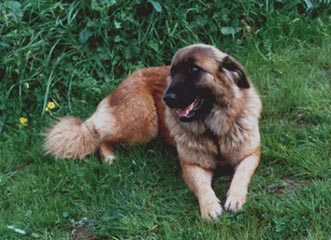
Estrelanvuoristokoira-narttu Jana de Sabuestrela (Carlota).
Omistaja: Manuela Paraíso, Portugali.
Female Estrela Mountain Dog Jana de Sabuestrela (Carlota).
Owner: Manuela Paraíso, Portugal.
© Manuela Paraíso, kennel Ponta da Pinta
Alkuperämaa: Portugali.
FCI:n ryhmä 2
Pinseri- ja snautserityyppiset, molossityyppiset sekä sveitsinpaimenkoirat
(alaryhmä 2)
Hyväksytty: FCI 11.1.1967,
SKL-FKK 25.4.1995
Origin: Portugal.
Date of publication of the original valid standard: 20.12.1966.
Classification FCI: Group 2 Pinscher and Schnauzer, Molossoid breeds, Swiss Mountain and Cattle Dogs and other breeds. Section 2.2. Molossoid breeds, Mountain type. Without working trial.
KÄYTTÖTARKOITUS: Paitsi erinomaisena maatilojen ja talojen vahtina, estrelanvuoristokoiraa käytetään myös suojelukoirana ja jopa vetokoirana. Paimenen erottamattomana seuralaisena se vartioi uskollisena laumaa, jota se puolustaa henkeen ja vereen asti susia ja karjavarkaita vastaan.
LYHYT HISTORIAOSUUS: Jo ammoisista ajoista lähtien estrelanvuoristokoirarotuisia koiria on elänyt Portugalissa, Estrelan vuoristossa, jonka korkein huippu yltää lähes 2000 metrin korkeuteen. Rodun varsinainen alkuperä on tuntematon. Joka tapauksessa rotu lienee yksi Pyreneitten niemimaan vanhimmista. Estrelanvuoristokoiria tavataan vuorten alimmilta rinteiltä aina ylimmille tasanteille asti. Kesällä, jolloin ruoho lumen kadottua kasvaa vehreänä ylätasankojen laitumilla, karja kiipeää sinne alempien rinteiden ruohon kuihduttua auringonpaahteessa. Koirat seuraavat karjalaumoja valppaina vahteina ja suojaavat niitä seudulla esiintyviltä susilta. Näitä koiria tapaa siellä täällä muuallakin maassa, varsinkin Keski-Portugalissa, jonne niitä on tuotu jo pentuina vuoristosta tai ne ovat syntyneet siellä vuoristoseudulta kotoisin olevien siitoskoirien jälkeläisinä.
UTILIZATION: An inseparable friend of the shepherd and a faithful watch-dog of the herds which he protects fiercely fighting against wolves or thieves. A wonderful guardian of farms and dwellings, also a good escort to people, he can occasionally be trained as draught-dog.
BRIEF HISTORICAL SUMMARY: Living from the remotest time in the Serra da Estrela (high mountains in the North of Portugal), despite of its obscure origin, the Estrela Mountain Dog may be considered as one of the oldest beeds of the Iberian Peninsula. He can be found from the foot of the mountains to the top, mainly in summer, when, alert the snow has disappeared, the green pastures are much sought after by the herds, which he accompanies from the lower regions where the grass is totally dried up by the excessive heat. As a sheep-and watch-dog, he protects the flocks against the wild animals still existant in these regions. These dogs may also be found scattered in other parts of the country, mainly in the Center, but all these dogs have their origin in the Estrela mountains; either they have been brought as puppies to this area or they have been bred by breeders originally from the Serra regions.
YLEISVAIKUTELMA: Estrelanvuoristokoira on kaarevalinjainen, mastiffityyppinen molossikoira. Se on sopusuhtainen ja hyvärakenteinen. Kokonaisuus on erittäin tasapainoinen, mikä kertoo aikojen kuluessa vakiintuneesta rotupuhtaudesta.
KÄYTTÄYTYMINEN / LUONNE: Estrelanvuoristokoira on karaistunut, vahva ja hyvin eloisa koira, jolla on runsaasti arvokkaitaominaisuuksia. Sen katse on valpas, rauhallinen ja ilmeikäs. Vaikka se on hyvin epäluuloinen vieraita kohtaan, se on tuttujen parissa säyseä ja tottelee isäntänsä ehdottomasti.
GENERAL APPEARANCE: A mastiff type molossoid dog with slightly convex lines, compact and rustic. Well proportioned, of a perfect morphology, the harmonious unity revealing a long tradition of ethnic purity.
BEHAVIOUR/ TEMPERAMENT: Alert and dignified, his expression is calm, but keen and vivid. Imposing and remarkable for his sometimes threatening distrust against strangers; on the other hand, he excels in his dedication and his obedience to the shepherd, his master.
PÄÄ: Voimakas, jykevä, pitkänomainen ja lievästi kupera. Pään koko on suhteessa runkoon samoin kuin kallo kuonoon. Kokonaisuus on erittäin tasapainoinen.
KALLO-OSA: Sileä, hyvin kehittynyt, pyöristynyt ja sivukuvaltaan kupera. Ei havaittavaa niskakyhmyä.
OTSAPENGER: Loiva, etäisyys kirsuun jokseenkin sama kuin niskakyhmyyn.
KIRSU: Sieraimet suorat, laajat ja hyvin avonaiset. Kirsu väriltään aina karvapeitettä tummempi, mieluiten musta.
KUONO-OSA: Pitkä, kärkeä kohti jonkin verran kapeneva, ei kuitenkaan suippo. Kuononselkä on pääsääntöisesti suora, mutta kärkiosastaan hieman kupera.
HUULET: Kita syvä. Huulet voimakkaat ja tiiviit, eivät paksut eivätkä riippuvat. Suun limakalvo ja kitalaki mustat, samoin huulten reunat.
LEUAT/ HAMPAAT/ PURENTA: Leuat hyvin kehittyneet. Hampaat vahvat, valkoiset ja hyvin kiinnittyneet. Leikkaava purenta.
POSKET: Sileät.
SILMÄT: Vaakasuorat, eivät ulkonevat eivätkä syvällä sijaitsevat, soikeat ja keskikokoiset. Silmät ovat symmetriset, varsin avoimet ja useimmiten tumman meripihkan väriset. Ilme rauhallinen ja älykäs. Silmäluomet tiiviit, väriltään mustat. Kulmakarvat hieman erottuvat.
KORVAT: Kokonaisuuteen nähden pienet (11 cm pitkät ja 10 cm leveät), ohuet, kolmiomaiset, kärkeä kohti pyöristyvät, riippuvat, keskikorkealle kiinnittyneet ja taipuneet taaksepäin päätä vasten siten, että korvan tyvestä näkyy hieman korvan sisäpintaa. Typistetyt korvat hyväksytään, mutta typistämättömiä pidetään parempina. (Huom. Suomessa typistyskielto.)
HEAD: Strong, big, long and slightly convex. Well inserted and in good proportion with the body, as well as the skull is proportioned with the foreface, all parts in perfect balance. Skull and cheeks smooth-skinned.
SKULL: Well developed, arched and convex in profile. Slurred occipital crest.
STOP: Not very marked, in about the same distance to the tip of the nose as to the top of the skull.
NOSE: Nostrils straight, wide and well open. Always darker than the coat, preferably black.
MUZZLE: Long, tapering towards the tip, but not pointed. Almost straight, but very slightly convex at the tip (aquiline nose).
LIPS: Clean cut; large lips, but not thick, not hanging and well closed. Mucous membranes of mouth and palate and rims of the lips intensely black pigmented.
JAWS/ TEETH: Jaws well developed. Teeth strong, white, well inserted, with good conclusion.
EYES: Horizontal, oval eyes, on a level with the socket. Medium and equal in size, well open. Keen and calm expression. Preferably dark amber in colour. Well closing black rimmed lids. Eyebrows slightly marked.
EARS: Comparatively to the body small (11 cm length to 10 cm width), thin, triangular, rounded at the tip; hanging; moderately high set; carried slightly falling backwards against the side of the head, with a small portion of the inner edge showing. Cropped ears accepted although natural ears are more appreciated.
KAULA: Suora, lyhyt ja paksu. Eteenpäin suuntautunut ja tukeva. Vain hieman kaulanalusnahkaa.
YLÄLINJA: Melkein vaakasuora, mielellään lyhyt.
LANNE: Leveä, syvä, lyhyt, lihaksikas ja liittyy kiinteästi lantioon.
LANTIO: Hieman viisto.
RINTAKEHÄ: Hyvin kaartuva, mutta ei tynnyrimäinen.
ALALINJA JA VATSA: Kupeet tilavat, suhteessa muuhun runkoon, eivät selvästi erottuvat. Vatsalinjan tulee kohota vähitellen, mutta sulavasti rintalastasta nivusiin.
HÄNTÄ: Typistämätön, pitkä, koiran ollessa paikallaan kintereisiin ulottuva, sapelin muotoinen, keskikorkealle kiinnittynyt ja tuuheakarvainen. Pitkäkarvaisella muunnoksella hapsullinen. Hännän päässä J:n muotoinen koukku. Koiran seistessä häntä on selkälinjan alapuolella ja laskeutuu luontevasti reisien väliin. Koiran liikkuessa häntä nousee selkälinjan yläpuolelle ja kaartuu ylöspäin.
NECK: Straight, short and thick; well set into shoulders; with a modest tuft of hair under the throat.
BACK: Almost level preferably short.
LOINS: Wide, short, muscled and well connected with the rump which should be slightly sloping.
CHEST: Well rounded, but not barrel-shaped; wide, deep and well let down.
UNDERLINE: Belly not paunchy, well proportioned to the substance and harmoniously connected with its surroundings; underline rising gradually but gently from the sternum towards the groin.
TAIL: Long, not docked, reaching to the hocks when the dog is at rest. Thick, scimitar shaped, set on at normal height, well furnished with hair and feathered in the long haired variety, ending with a hook. At rest below the horizontal line, hanging naturally between the thighs; when the dog is excited or moving, the tail raises above the horizontal curving upwards, forwards, sidewards or even downwards.
RAAJAT
ETU- JA TAKARAAJAT
YLEISVAIKUTELMA: Raajat ovat pystysuorat koiran seistessä tasapainoisesti. Kyynärvarret ja sääret ovat lähes tasapaksut. Raajat ovat hyvin muodostuneet, lihaksikkaat ja vahvaluiset. Vahvat nivelet ja sopusuhtaiset kulmaukset mahdollistavat erittäin vaivattomat liikkeet.
KINTEREET: Melko matalat, kinnerkulma suhteellisen avoin.
VÄLIJALAT: Oikeassa asennossa ollessaan pystysuorat.
KÄPÄLÄT: Suhteessa koiran kokoon. Sopusuhtaiset, eivät liian pyöreät eivätkä liian pitkät, muodoltaan kissankäpälän ja jäniksenkäpälän väliltä, eivät siis litteät. Varpaat ovat paksut ja tiiviit. Varpaiden ja päkiöiden välit ovat runsaskarvaiset. Päkiät ovat paksut ja kovat. Kynnet tummat tai mustat ja hyvin näkyvissä. Tällä rodulla voi olla yksinkertaiset tai kaksoiskannukset.
LIIKKEET: Normaalit ja vaivattomat.
LIMBS
FORE- AND HINDQUARTERS: Vertical when the dog is in good stance. Forearms and second thighs approximately cylindrical in cross section. Bone well developed, solid and well muscled. Strong articulations, angles medium open allowing easy movement.
HOCK: Slightly let down, evenly angulated and well set like the vertical second thigh.
FEET: Well proportioned, well made, neither very rounded nor excessively long, more or less between catfoot and harefoot, never splay feet. Thick, well closed toes with abundant hair in between them and between the pads; pads thick and hard. Dark or preferably black nails, well grown. The hindlegs may have single or double dewclaws.
GAIT/ MOVEMENT: Free and easy movement.
KARVAPEITE
Kaksi karvanlaatumuunnosta: Pitkä- ja lyhytkarvainen.
KARVA: Vahva, karkeahko, ei kuitenkaan liian kova. Muistuttaa hieman vuohen karvaa. Suoraa tai lievästi laineikasta, hyvin runsasta kummallakin muunnoksella. Normaalisti karvapeitteen paksuus vaihtelee rungon eri osissa. Raajoissa kyynärpään ja kintereen alapuolella karva on lyhyempää ja tiheämpää, samoin päässä. Korvissa karva lyhenee tyvestä kärkeä kohti ja muuttuu ohuemmaksi ja pehmeämmäksi. Karva on pitempää hännässä, joka on tuuhea, paksu ja pitkäkarvaisella muunnoksella hapsuinen, samoin kaulan ympärillä, jossa se voi muodostaa pienen kauluksen ja edelleen reisien ja eturaajojen takapuolella etenkin pitkäkarvaisella muunnoksella. Etenkin pitkäkarvaisella muunnoksella karkean karvan juuressa kasvava pohjavilla on hienoa, lyhyttä, runsasta ja tavallisesti vaaleampaa kuin peitinkarva.
VÄRI: Sallittuja värejä ovat ainoastaan kellanruskehtava, sudenharmaa ja keltainen yksivärisinä tai laikullisina.
COAT
HAIR: Strong, slightly thick, not too harsh, somewhat like goat hair; smooth or slightly wavy and close over almost the whole body; very abundant in the shorthair as well as in the longhair variety. Normally the hair is of different length in certain areas of the body. On the limbs, below the elbows and the hocks it is rather short and dense as it is on the head; on the ears it gets gradually shorter from the set on towards the tip, becoming thinner and softer; it is longer on the tail which is bushy, thick and feathered in the long haired variety; it is also longer around the neck and throat where it may form a thick tuft of hair, and over the thighs where especially the longhaired dogs may present feathering on the back as well as at the backside of the forearms. The undercoat is short and dense, made of fine hair entangled at the base with the coarser hair and generally lighter coloured than the coat. This is found mainly in the longhaired variety.
COLOUR: The only admitted colours are fawn, wolfgray and yellow, either self-coloured or with white markings.
KOKO JA PAINO
SÄKÄKORKEUS: Uroksilla 65 - 72 cm, nartuilla 62-68 cm.
PAINO: Urokset 40 - 50 kg, nartut 30 - 40 kg.
SIZE
HEIGHT: Males 65 to 72 cm, bitches 62 to 68 cm.
WEIGHT: Males 40 to 50 kg, females 30 to 40 kg
VIRHEET JA HYLKÄÄVÄT VIRHEET: Kaikki poikkeamat edellämainituista kohdista luetaan virheiksi suhteutettuna virheen vakavuuteen. Liian kapea, pitkä tai teräväkuonoinen pää. Alapurenta. Keskenään eriväriset tai erikokoiset silmät.
Väärin kiinnittyneet, liian suuret, paksut tai pyöreät korvat. Typistetty, surkastunut tai synnynnäisesti viallinen häntä. Albinismi. Vaalea tai vaaleatäpläinen kirsu. Epätyypillinen karvapeite. Liian suuri tai liian pieni koko, mutta 4 cm:n poikkeama kumpaankin suuntaan voidaan sallia.
FAULTS: Any departure from the foregoing points should be considered a fault and the seriousness with which the fault should be regarded should be in exact proportion to its degree. Head: Too narrow, long or pointed. Nose: Too light or Dudley nose. Jaws: Under- or overshot mouth. Eyes: Wall eye, eyes different in size. Ears: Incorrect set on, too big, too fleshy or round. Tail: Docked, rudimentary, congenitally absent (anouria). Coat: Albinism, texture very different from standard type. Corpulence. Size: Much above (giantism) or much below (nanism) standard, with a tolerance of about 4 cm.
HUOM. Uroksilla tulee olla kaksi normaalisti kehittynyttä kivestä täysin laskeutuneina kivespusseihin.
N.B: Male animals should have two apparently normal testicles fully descended into the scrotum.
Lähde/ Information: FCI Rotumääritelmä/ FCI Breed Standard (Portuguese Kennel Club, Dr.J.-M. Paschoud and Mrs .R.Binder)
Lisätietoa rodusta/ More information about this breed:
Liga_dos_Criadores_e_Amigos_do_Cão_da_Serra_da Estrela
Estrelanvuoristokoirat_ry
Estrela_Mountain_Dog_Association_of_America
Estrela_Mountain_Dog_Association
Ponta_da_Pinta