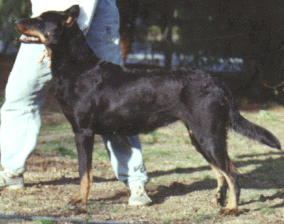
Beauceron-narttu Fidele De La Loutre.
Omistaja: Debbie Skinner, Yhdysvallat.
Female Beauceron Fidele De La Loutre.
Owner: Debbie Skinner, United States of America.
© Debbie Skinner, kennel Les Ombres Valeureux
Alkuperämaa: Ranska.
Ryhmä: 1
FCI:n numero: 44
Hyväksytty: FCI 29.11.2001
SKL-FKK 28.4.2003 (nro 455)
Origin: France.
Group: 1
FCI Number: 44
Date of publication of the original valid standard: 29.11.2001
KÄYTTÖTARKOITUS: Paimen- ja vahtikoira.
LYHYT HISTORIAOSUUS: Chien de Beauce (Beaucen koira), Beauceron ja Bas-Rouge ("punasukka") ovat nimiä, joita käytettiin 1800-luvun lopulla kuvaamaan ikivanhoja ranskalaisia tasankopaimenkoiria. Ne olivat keskenään samantyyppisiä, niillä oli sileäkarvainen naama, kova ja lyhyt karva sekä typistetyt korvat. Rungossa oli punaiset merkit, erityisesti kaikkien käpälien kärjessä olevat merkit saivat sen ajan kasvattajat kutsumaan koiria "punasukiksi". Karvapeite oli tavallisesti musta punaisin merkein, mutta oli myös harmaita ja yksivärisiä mustia, jopa yksivärisiä punaruskeita koiria. Näitä koiria kasvatettiin ja valittiin jalostukseen niiden laumanajo- ja laumanvartioimiskyvyn perusteella.
UTILIZATION: Sheepdog and Guard Dog.
BRIEF HISTORICAL SUMMARY: “Beauce Dog”, “Beauceron” and “Red-Stocking” were the names chosen at the end of the XIX century to designate these ancient French Sheepdogs of the plains, all of the same type, with smooth hair on the head, a harsh, short coat and ears normally cropped. The body had tan markings, notably at the extremities of the four legs, which led the breeders at that time to call these dogs “Red-Stockings”. The coat was commonly black and tan but there were also grey, entirely black and even wholly tan dogs. These dogs were bred and selected for their aptitude to conduct and guard flocks of sheep.
YLEISVAIKUTELMA: Kookas, vankka, maatiaismainen, voimakas, hyvärakenteinen ja lihaksikas, ei raskas.
TÄRKEITÄ MITTASUHTEITA: Normaalirakenteinen. Rungon pituus mitattuna olkanivelestä istuinluun kärkeen on hieman säkäkorkeutta suurempi. Pää on pitkä, 2/5 säkäkorkeudesta. Kallon leveys ja syvyys ovat hieman alle puolet pään kokonaispituudesta. Kallo ja kuono ovat yhtä pitkät.
KÄYTTÄYTYMINEN/ LUONNE: Luoksepäästävä ja peloton, ystävällinen ja rohkea. Ilme on avoin, ei koskaan vihainen, pelokas eikä levoton.
GENERAL APPEARANCE: The Beauce Sheepdog is big, solid, hardy, powerful, well built and muscular, but without lumber.
IMPORTANT PROPORTIONS: The Beauce Sheepdog is medium in all its proportions. The length of the body from the point of the shoulder to the point of the buttock should be slightly greater than the height at the withers. The head is long: 2/5 the height at the withers. The height and width of the head are slightly less than half its total length. The skull and muzzle are of equal length.
BEHAVIOUR/ TEMPERAMENT: Franc approach and self-assured. The expression is candid, never mean timid or worried. The character of the Beauceron should be gentle and fearless.
PÄÄ: Hyvin meislautunut ja tasapainoinen. Sivusta katsottuna kuonon ja kallon ylälinjat ovat lähes yhdensuuntaiset.
KALLO-OSA: Edestä katsottuna tasainen tai hiukan kaareutunut. Otsauurre on vain hieman erottuva, niskakyhmy erottuva.
OTSAPENGER: Vain hieman erottuva, sijaitsee niskakyhmyn ja kirsun puolivälissä.
KIRSU: Suhteessa kuono-osaan, suuri, aina musta; ei koskaan halkinainen.
KUONO-OSA: Ei kapea eikä suippo.
HUULET: Tiiviit ja aina hyvin pigmentoituneet. Ylähuulen tulee peittää alahuuli tiiviisti; huulten tulee muodostaa suupielessä hyvin vähäinen, aina kiinteä poimu.
HAMPAAT/PURENTA: Hampaat ovat vahvat; purenta leikkaava.
SILMÄT: Vaakasuorat ja hieman soikeat. Iristen tulee olla tummanruskeat, ei koskaan tummaa pähkinänruskeaa vaaleammat, vaikka punaiset merkit olisivat vaaleahkot. Harlekiininvärisillä hyväksytään herasilmä.
KORVAT: Ylöskiinnittyneet. Typistetyt korvat ovat pystyasentoiset, eivät sisään- eivätkä ulospäin kääntyneet, hieman eteenpäin kallistuneet. Hyväasentoisen korvan keskikohta osuu kuvitteelliselle linjalle, joka jatkaa kaulan sivuja ylöspäin. Typistämättömät korvat ovat puolipystyt tai riippuvat, eivät poskenmyötäiset. Ne ovat litteät ja melko lyhyet, puolet pään pituudesta. (Huom. Suomessa typistyskielto.)
HEAD: The head is well chiselled with harmonious lines. Seen in profile, the top lines of skull and muzzle lie roughly in parallel planes.
CRANIAL REGION: Skull: Flat or slightly rounded from one side to the other. The median groove is only slightly marked, the occipital protuberance can be seen on the summit of the skull. Stop: The stop is only slightly pronounced and is equidistant from the occiput and the end of the muzzle.
NOSE: Proportionate to the muzzle, well developed, never split and always black.
MUZZLE: Neither narrow or pointed.
LIPS: Firm and always well pigmented. The upper lip should overlap the lower without any looseness. At their commissure, the lips should initiate a very slight pouch which should stay firm.
JAWS/ TEETH: Strong teeth with a scissor bite.
EYES: Horizontal, slightly oval in shape. The iris should be dark brown, and in case never lighter than dark hazel even if the tan is light coloured. For the harlequin variety, wall eyes are admitted.
EARS: Set high. They are carried upright if cropped, neither convergent nor divergent, pointing slightly forward. The well carried ear is one whose middle falls on an imaginary line in prolongation of the sides of the neck. Uncropped ears are half-pricked or drop-ears. They should’nt be plastered against the cheeks. They are flat and rather short. The length of the uncropped ear should be half the length of the head.
KAULA: Lihaksikas ja pitkä, tasapainoisesti lapoihin liittyvä.
RUNKO
SÄKÄ: Selvästi erottuva.
SELKÄ: Suora.
LANNE: Lyhyt, leveä ja lihaksikas.
LANTIO: Vain hieman laskeva.
RINTAKEHÄ: Ympärysmitaltaan 1/5 säkäkorkeutta suurempi, kyynärpäiden tasolle ulottuva, leveä, syvä ja pitkä.
HÄNTÄ: Typistämätön, matala-asentoinen ja vähintään kintereisiin ulottuva, suoraan alaspäin riippuva, muodostaa loivan j-koukun. Koiran liikkuessa häntä voi nousta selkälinjan jatkeeksi.
NECK: Muscular, of good length, united harmoniously with the shoulders.
BODY
TOP LINE: The back is straight. The loin is short, broad and well muscled. The croup is only slightly inclined.
WITHERS: Quite visible.
CHEST: The girth of the chest is greater than the height at the withers by more than one fifth. The chest is well let down to the point of the elbow. It is wide deep and long.
TAIL: Whole, carried low, it reaches at least to the hock, without deviating, forming a slight hook in the form of a “J”. When in action, the tail can be carried higher, an extension of the top line.
RAAJAT
ETURAAJAT
YLEISVAIKUTELMA: Eturaajat ovat edestä ja sivulta katsottuna pystysuorat.
LAVAT: Viistot ja keskipitkät.
KYYNÄRVARRET: Lihaksikkaat.
KÄPÄLÄT: Vahvat, pyöreät ja tiiviit; kynnet ovat aina mustat; päkiät lujat mutta kuitenkin joustavat.
TAKARAAJAT
YLEISVAIKUTELMA: Takaraajat ovat sivulta ja takaa katsottuna täysin suorat.
REIDET: Leveät ja lihaksikkaat.
KINTEREET: Vahvat, eivät liian matalat; kärki sijaitsee noin ¼ korkeudella säkäkorkeudesta; välijalka muodostaa säären kanssa avoimen kulmauksen.
VÄLIJALAT: Lähes pystysuorat, hieman istuinluun kärkeä taaempana.
KÄPÄLÄT: Vahvat, pyöreät ja tiiviit.
KANNUKSET: Kaksoiskannukset, joita paimenet ovat perinteisesti vaalineet, muodostuvat selvästi toisistaan erillään ja melko lähellä käpälää olevista kynnellisistä varpaista.
LIIKKEET: Joustavat, vapaat ja yhdensuuntaiset. Beauceronin ravin tulee olla pitkää ja maatavoittavaa.
LIMBS
FOREQUARTERS: Upright when seen from the front or in profile.
SHOULDER: Sloping and moderately long.
FOREARM: Muscled.
FEET: Large, round, compact. The nails are always black. The pads are hard but nevertheless resilient.
HINDQUARTERS: Upright when seen from profile and from behind.
THIGH: Wide and muscled.
HOCK JOINT: Substantial, not too close to the ground, the point situated roughly at ¼ the height at the withers, forming a well open angle with the second thigh.
METATARSALS (REAR PASTERNS): Vertical, slightly further back than the point of the buttock.
FEET: Large, round, compact.
DEWCLAWS: By tradition, shepherds are much attached to the conservation of double dewclaws. The dewclaws form well separated “thumbs” with nails, placed rather close to the foot.
GAIT/ MOVEMENT: Supple and free. The limbs move well in line. The Beauce Sheepdog should have an extended trot with long reaching movement.
KARVAPEITE
KARVA: Päässä sileää, rungossa vahvaa, lyhyttä, paksua, tiivistä, pinnanmyötäistä ja 3 - 4 cm:n mittaista; reisien takaosassa ja hännän alapuolella on aina hieman hapsuja. Aluskarva on lyhyttä, hienolaatuista, tiheää ja untuvaista, mieluiten hiirenharmaata, erittäin tiivistä; sitä ei saa näkyä peitinkarvan läpi.
VÄRI: a) musta punaisin merkein, ns. punasukka; musta väri on hyvin puhdas, punaisen tulee olla oravanpunainen. Punaiset merkit jakautuvat seuraavanlaisesti: täplät silmien yläpuolella, väriä kuonon sivuilla vähentyen tasaisesti poskia kohti ulottumatta koskaan korvien alapuolelle. Rinnassa mieluiten kaksi laikkua, merkit kurkunalusessa ja hännän alapuolella. Raajoissa punainen väri vähenee tasaisesti ylöspäin, ei ulotu yli kolmasosaan, raajojen sisäpuolella punainen väri ulottuu hieman ylemmäksi. b) harlekiini (sinikirjava punaruskein merkein) eli harmaa, musta ja punainen; karvapeitteessä on yhtä paljon mustia ja harmaita laikkuja tasaisesti jakautuneina, joskus mustaa on enemmän kuin harmaata. Punaista väriä samoissa kohdissa kuin kaksivärisellä. Eturinnassa sallitaan vähäinen valkoinen laikku.
COAT
HAIR: Smooth on the head, short, thick, firm and lying close to the body, 3 to 4 cm in length. The buttocks and the underside of the tail are lightly but obligatorily fringed. The undercoat is short, fine, dense and downy, preferably mouse grey, very close, and can’t be seen through the top coat.
COLOUR: a) Black and tan (Black with tan markings): “red stockings”. The black is pure black and the tan, red squirrel coloured. The tan markings are distributed as follows: Spots over the eyes. On the sides of the muzzle, diminishing gradually on the cheeks, never attaining under the ear. On the chest, preferably two spots. Under the neck. Under the tail. On the legs, disappearing progressively while rising, without covering in any case more than 1/3 of the leg and rising slightly higher on the inside. b) Harlequin (blue-mottled with tan markings) : grey, black and tan, the coat being black and grey in equal parts, the spots well distributed, with sometimes a predominance of black. The tan markings are the same as for the black and tan. A faint while spot on the chest is tolerated.
KOKO
SÄKÄKORKEUS: Urokset 65 - 70 cm, nartut 61 - 68 cm.
SIZE
HEIGHT AT THE WITHERS: Male from 65 cm to 70 cm. Female from 61 cm to 68 cm.
VIRHEET: Kaikki poikkeamat edellämainituista kohdista luetaan virheiksi suhteutettuna virheen vakavuuteen.
HYLKÄÄVÄT VIRHEET: Vihaisuus ja sairaalloiset piirteet; aggressiivisuus tai voimakas arkuus; annetuista rajoista poikkeava säkäkorkeus; erittäin kevyt luusto; liian vaaleat silmät, herasilmä (ei koske harlekiineja); halkinainen, lihanvärinen tai muu kuin täysin musta kirsu; ylä- tai alapurenta, kun etuhammasrivit eivät kosketa toisiaan; kolmen tai useamman hampaan puuttuminen (P1 hampaita ei huomioida); täysin pystyt ja jäykät typistämättömät korvat; voimakkaasti ulkokierteiset takaraajat; yksinkertaiset tai kokonaan puuttuvat kannukset takaraajoissa; typistetty tai selän päälle kiertyvä häntä; muu kuin rotumääritelmässä mainittu karvapeitteen väri, punaisten merkkien täydellinen puuttuminen, pörröinen karva, selvästi valkoinen, selvärajainen laikku rinnassa; harlekiineilla liikaa harmaata, toinen kylki musta ja toinen harmaa, täysin harmaa pää (mustan puuttuminen).
FAULTS: Any departure from the foregoing points should be considered a fault and the seriousness with which the fault should be regarded should be in exact proportion to its degree.
ELIMINATING FAULTS: Aggressive or overly shy. Size outside the standard limits. Too light-boned. Eyes too light, or wall eyes (except for harlequins). Split nose, of a colour other than black, with unpigmented areas. Overshot or undershot with loss of contact, absence of 3 or more teeth (the first premolars not counting). Uncropped ears totally upright and rigid. Rear feet turned excessively to the exterior. Simple dewclaws or absence of dewclaws on hind legs. Shortened tail or tail carried over the back. Coat: Colour and texture other than those defined by the standard. Complete absence of tan markings. Shaggy coat. Well defined, quite visible white spot on chest. For the harlequin variety: too much grey, black on one side and grey on the other, head entirely grey (absence of black).
HUOM. Uroksilla tulee olla kaksi normaalisti kehittynyttä kivestä täysin laskeutuneina kivespussiin.
N.B: Male animals should have two apparently normal testicles fully descended into the scrotum.
Lähde/ Information: FCI Rotumääritelmä/ FCI Breed Standard (John Miller and Raymond Triquet)
Lisätietoa rodusta/ More information about this breed:
Club_des_Amis_du_Beauceron
Suomen_Beauceron_ry
Delégation_Alpes_Côte_D'azur_Club_des_Amis_du_Beauceron
Délégation_du_Nord_Pas_de_Calais_du_Club_des_Bergers_de_Beauce
Svenska_Beauceronklubben
North_American_Beauceron_Club
Beauceron_Club_of_Canada
Beauceronclub_Nederland
Belgische_Beauceronclub
Club_Beauceron_Luxembourg
Club_für_Französische_Hirtenhunde_e.V
Österreichischen_Club_für_Beauceron
Schweizerischer_Klub_der_Beauceronfreunde
Klub_Briarda_i_Beaucerona_w_Polsce
Beauceron_Klub_ČR
Slovenského_Beauceron_Klubu
Les_Ombres_Valeureux