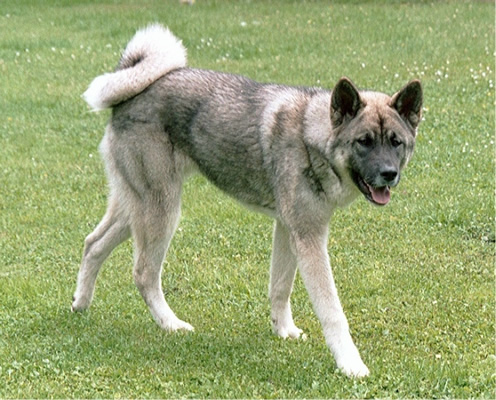
Amerikanakita-narttu Daika vom Wächterberg. Omistaja: Edgar Wachter, Saksa.
Female American Akita Daika vom Wächterberg. Owner: Edgar Wachter, Germany.
© Edgar Wachter, kennel Katana-Ken
Alkuperämaa: Japani
Kehittäjämaa: USA
Ryhmä: 5
FCI:n numero: 344
Hyväksytty: FCI 14.2.2001
SKL-FKK 8.6.2002
Origin: Japan
Development: USA
Classification F.C.I: Group 5 Spitz and primitive types. Section 5 Asian Spitz and related breeds. Without working trial.
Date of publication of the original valid standard: 06.07.2005
KÄYTTÖTARKOITUS: Seurakoira.
LYHYT HISTORIAOSUUS: Amerikanakitan alkuhistoria on sama kuin japanilaisen akitan. Akita Matageja (keskikokoinen karhunmetsästyskoira) käytettiin vuodesta 1603 lähtien Akitan alueella taistelukoirina. Vuoden 1868 jälkeen niitä risteytettiin tosien ja mastiffien kanssa, minkä seurauksena rodun koko kasvoi, mutta pystykorvatyypille ominaiset piirteet hävisivät. Koiratappelut kiellettiin vuonna 1908, mutta silti akita-rotua vaalittiin ja kehitettiin kookkaana japanilaisena rotuna. Tämän tuloksena yhdeksän rodun erinomaista yksilöä nimettiin vuonna 1931 kansallisaarteiksi. Toisen maailmansodan aikana (1939–1945) koirien nahkoja käytettiin yleisesti armeijan vaatteissa turkiksina. Poliisi määräsi kaikki koirat armeijan käytössä olevia saksanpaimenkoiria lukuunottamatta pyydystettäviksi ja takavarikoitaviksi. Jotkut kasvattajat yrittivät kiertää määräystä risteyttämällä koiriaan saksanpaimenkoirien kanssa. Toisen maailmansodan päättyessä akitojen lukumäärä oli vähentynyt jyrkästi. Rotu oli jakautunut kolmeen selvästi toisistaan erottuvaan tyyppiin: 1) karhunmetsästysakita, 2) taisteluakita ja 3) paimenkoira-akita, minkä vuoksi rodun tilanne oli hyvin sekava. Sodan jälkeen käynnistettiin elvytysohjelma, jolla pyrittiin takaisin puhdasrotuisuuteen. Amerikkalaiset sotilaat veivät kotimaahansa palatessaan mukanaan useita Dewa-linjan akitoja, joissa oli mastiffin ja saksanpaimenkoiran piirteitä. Amerikkalaiset kasvattajat ihastuivat niihin koska ne olivat älykkäitä ja kykenivät sopeutumaan erilaisiin oloihin. Niinpä rodun kasvattajien lukumäärä samoin kuin rodun suosio kasvoivat. The Akita Club of America perustettiin vuonna 1956 ja Amerikan Kennelklubi (AKC) hyväksyi rodun (se merkittiin rotukirjaan ja sai oikeuden käydä näyttelyissä) lokakuussa 1972. AKC ja JKC (Japanin Kennelklubi) eivät kuitenkaan päässeet silloin yhteisymmärrykseen toistensa sukutaulujen hyväksymisestä ja siksi uusien verilinjojen saaminen Japanista tyrehtyi. Siitä johtuen USA:n akitat kehittyivät huomattavan erilaisiksi alkuperämaan koiriin verrattuina. Ainutlaatuinen amerikkalainen tyyppi on pysynyt ominaispiirteiltään muuttumattomana vuodesta 1955. Se poikkeaa jyrkästi japanilaisesta akitasta, johon risteytettiin matagiakitoja tarkoituksena elvyttää alkuperäinen puhdas rotu.
UTILIZATION: Companion Dog.
BRIEF HISTORICAL SUMMARY: In the beginning, the history of the American Akitas is similar to the history of Japanese Akitas. Since 1603, in the Akita region, Akita Matagis (medium-sized bear-hunting dogs) were used as fighting dogs. From 1868, Akita Matagis were crossbred with Tosas and Mastiffs. Consequently, the size of Akitas increased, but characteristics associated with Spitz type were lost. In 1908 dog fighting was prohibited, but Akitas were nevertheless preserved and improved as a large Japanese breed. As a result, nine superior examples of Akitas were designated as «Natural Monuments» in 1931. During World War II (1939-1945), it was common to use dogs as a source of fur for military garments. The police ordered the capture and confiscation of all dogs other than German Shepherd Dogs used for military purposes. Some fanciers tried to circumvent the order by crossbreeding their dogs with German Shepherd Dogs. When World War II ended, Akitas had been drastically reduced in number and existed as three distinct types: 1) Matagi Akitas 2) Fighting Akitas 3) Shepherd Akitas. This created a very confusing situation in the breed. During the restoration process of the pure breed after the war, Kongo-go of the Dewa line enjoyed a temporary, but tremendous popularity. Many Akitas of the Dewa line, which exhibited characteristics of the Mastiff and German Shepherd influence, were brought back to the United States by members of the Military Forces. The Akitas from the Dewa line, intelligent and capable of adapting to different environments, fascinated breeders in the United States and the line was developed with increasing number of breeders and a great rise in popularity. The Akita Club of America was established in 1956 and the American Kennel Club (AKC) accepted the breed (inscription into the stud book and regular show status) in October 1972. However, at this time, the AKC and the JKC (Japan Kennel Club) did not have reciprocal agreements for recognizing each other’s pedigrees and therefore the door was closed for the introduction of the new bloodlines from Japan. Consequently, Akitas in the United States became considerably different from those in Japan, the country of origin. They developed as a type unique in the United States, with characteristics and type unchanged since 1955. This is in sharp contrast with Akitas in Japan which were crossbred with Matagi Akitas for the purpose of restoring the original pure breed.
YLEISVAIKUTELMA: Suurikokoinen, vankka ja tasapainoinen koira, jolla on voimakas rakenne, tilava runko ja järeä luusto. Rodun erityispiirre on leveä, tylpän kolmion muotoinen pää, jossa on syvä kuono-osa, melko pienet silmät ja pystyt, eteenpäin lähes niskalinjan suuntaisesti kallistuneet korvat.
TÄRKEITÄ MITTASUHTEITA: Säkäkorkeuden suhde rungon pituuteen on uroksilla 9:10 ja nartuilla 9:11. Rintakehän syvyys on puolet säkäkorkeudesta. Kirsun etäisyys otsapenkereestä verrattuna otsapenkereen etäisyyteen niskakyh-mystä on 2:3.
KÄYTTÄYTYMINEN/ LUONNE: Ystävällinen, tarkkaavainen, vastaanottavainen, omanarvontunteva, mukautuvainen ja peloton.
GENERAL APPEARANCE: Large-sized dog, sturdily built, well balanced, with much substance and heavy bone. The broad head, forming a blut triangle, with deep muzzle, relatively small eyes and erect ears carried forward almost in line with back of neck, is characteristic of the breed.
IMPORTANT PROPORTIONS: The ratio of height at withers to length of body is 9 to 10 in males and 9 to 11 in bitches. The depth of the chest measures one-half of the height of the dog at withers. The distance from tip of nose to stop corresponds to the distance from stop to occiput as 2 does to 3.
BEHAVIOUR/ TEMPERAMENT: Friendly, alert, responsive, dignified, docile and courageous.
PÄÄ: Massiivinen, kuitenkin suhteessa rungon kokoon, ylhäältä katsottuna tylpän kolmion muotoinen; koiran ollessa rauhallinen pää on rypytön.
KALLO-OSA: Tasainen ja korvien välistä leveä. Matala otsauurre ulottuu korkealle otsaan.
OTSAPENGER: Selvästi havaittava, ei liian jyrkkä.
KIRSU: Leveä ja musta. Lievästi vaalentunut pigmentti sallitaan ainoastaan valkoisilla koirilla, musta on kuitenkin aina toivotuin.
KUONO-OSA: Leveä, syvä ja täyteläinen.
HUULET: Mustat, eivät riippuvat. Kieli on vaaleanpunainen.
LEUAT/ HAMPAAT/ PURENTA: Leuat eivät ole pyöreät, vaan tylpät, vahvat ja voimakkaat. Vahvat hampaat, säännöllinen ja täysi hampaisto. Leikkaava purenta on toivottu, mutta tasapurenta hyväksytään.
SILMÄT: Tummanruskeat, melko pienet, eivät ulkonevat, lähes kolmionmuotoiset. Silmäluomet ovat mustat ja tiiviit.
KORVAT: Kolmionmuotoiset, hieman pyöreäkärkiset, tyvestään leveät, eivät liian alas kiinnittyneet, pienet suhteessa pään kokoon. Korvan pituutta mitattaessa eteenpäin taivutetun korvan kärki koskettaa yläluomea. Korvat ovat tanakasti pystyssä ja sivulta katsottuna kallistuneet eteenpäin silmiä kohti niskalinjan suuntaisesti.
HEAD: Massive, but in balance with the body, free or wrinkles when at ease. Head forms a blunt triangle when viewed from above.
SKULL: Flat and broad between ears. A shallow furrow extends well up on forehead.
STOP: Well defined, but not too abrupt.
NOSE: Broad and black. Slight and diffuse lack of pigment on nose is acceptable in white dogs only but black is always preferred.
MUZZLE: Broad, deep and full.
LIPS: Black. Not pendulous; tongue pink.
JAWS/ Teeth: Jaws not rounded, but blunt, strong and powerful. Teeth strong with regular and full dentition; scissor bite preferred, but level bite acceptable.
EYES: Dark brown, relatively small, not prominent, almost triangular in shape. Eye rims black and tight.
EARS: Strongly erect and small in relation to the rest of the head. If the ear is folded forward for measuring length, tip will touch upper eye rim. Ears are triangular, slightly rounded at tip, wide at base, not set too low. Viewed from the side, the ears are angled forward over the eyes following the line of the neck.
KAULA: Tanakka ja lihaksikas, mahdollisimman vähän löysää kaulanahkaa, suhteellisen lyhyt ja vähitellen lapoja kohti levenevä. Korostunut niskalinja liittyy sulavasti kallon takaosaan.¨
RUNKO: Korkeuttaan pitempi. Nahka ei ole liian ohut, liian tiukka eikä liian löysä.
SELKÄ: Tasainen.
LANNE: Kiinteälihaksinen.
RINTAKEHÄ: Leveä ja syvä; kylkiluut ovat selvästi kaarevat ja eturinta hyvin kehittynyt.
ALALINJA JA VATSA: Vatsalinja on kohtuullisen ylösvetäytynyt.
HÄNTÄ: Paksu ja tuuheakarvainen, ylös kiinnittynyt ja asennoltaan selän päällä tai kuvetta vasten; kolmeneljäsosa-, yksin- tai kaksinkertainen kierre, joka aina koskettaa selkälinjaa tai painuu sen alapuolelle. Kolmeneljäsosaltaan kiertyneen hännän pää laskeutuu selvästi kuvetta vasten. Hännän tyvi on paksu ja vahva. Viimeinen häntänikama ulottuu kintereeseen hännän ollessa riippuva tai alas vedetty. Hännän karvapeite on karheaa, suoraa ja tiheää, ei vähääkään töyhtömäistä.
NECK: Thick and muscular with minimal dewlap, comparatively short, widening gradually toward shoulders. A pronounced crest blends harmoniously into the base of skull.
BODY: Longer than high. Skin not too thin, neither too tight nor too loose.
BACK: Level.
LOIN: Firmly muscled.
CHEST: Wide and deep. Ribs well sprung with well developed brisket.
UNDERLINE AND BELLY: Moderate tuck-up.
TAIL: Large and well furnished with hair, set high and carried over back or against flank in a three-quarter, full, or double curl, always dipping to or below level of back. On a three-quarter curl, tip drops well down on flank. Root large and strong. The terminal bone of tail reaches hock when let or puled down. Hair coarse, straight and dense, with no appearance of a plume.
RAAJAT
ETURAAJAT
YLEISVAIKUTELMA: Eturaajat ovat järeäluustoiset ja edestä katsottuna suorat.
LAVAT: Vahvat, voimakkaat, kohtuullisen viistot ja taakse sijoittuneet.
VÄLIKÄMMENET: Hieman eteenpäin viistot, noin 15°:n kulmassa pystysuoraan nähden.
KÄPÄLÄT: Eteenpäin suuntautuneet ns. kissankäpälät; selvästi kaareutuneet var-paat. Päkiät ovat paksut.
TAKARAAJAT
YLEISVAIKUTELMA: Takaraajat ovat vahvalihaksiset, leveys ja luusto ovat suhteessa eturaajoihin. Yleensä takaraajojen kannukset poistetaan.
REIDET: Vahvat, hyvin kehittyneet ja takaa katsottuna yhdensuuntaiset.
POLVET: Kohtuullisesti kulmautuneet.
KINTEREET: Matalat, eivät sisään- eivätkä ulospäin kiertyneet.
KÄPÄLÄT: Kuten etukäpälät.
LIIKKEET: Voimakkaat ja maatavoittavat, kohtuullisen pitkä askel ja hyvä työntö. Takaraajat liikkuvat samassa linjassa kuin eturaajat. Selkä pysyy vahvana, kiinteänä ja tasaisena.
LIMBS
FOREQUARTERS: Forelegs heavy-boned and straight as viewed from front.
SHOULDERS: Strong and powerful with moderate layback.
PASTERNS: Slightly sloping forward in an angle of approximately 15° to the vertical.
HINDQUARTERS: Strongly muscled, width and bone comparable to forequarters. Dewclaws on hind legs customarily removed.
UPPER THIGH: Strong, well developed, parallel when viewed from behind.
STIFLES: Moderately bent.
HOCK JOINTS: Well let down, turning neither in nor out.
FEET: Straight, cat feet, well knuckled up with thick pads.
GAIT/ MOVEMENT: Powerful, covering ground with moderate reach and drive. Hindlegs move in line with forelegs. Back remaining strong, firm and level.
KARVAPEITE
KARVA: Kaksinkertainen karvapeite. Aluskarva on tiheää, pehmeää, tiivistä ja peitinkarvaa lyhyempää. Peitinkarva on suoraa ja karheaa tai jäykkää ja rungossa melko pystyä. Päässä, raajojen alaosassa ja korvissa karva on lyhyttä. Sään ja lantion kohdalla karva on suunnilleen 5 cm pitkää, eli hieman pitempää kuin muualla rungossa. Hännässä karva on pisintä ja tuuheinta.
VÄRI: Kaikki värit kuten punainen, kellanruskea, valkoinen jne. tai jopa läiskikäs (pinto) ja juovikas (brindle) ovat sallittuja. Värit ovat kirkkaat ja puhtaat, värimerkit tasapainoisesti jakautuneet. Koiralla voi olla maski tai piirto. Yksivärisillä valkoisilla koirilla ei ole maskia. Pintovärisillä on valkoinen pohjaväri, jossa on suuria, tasaisesti jakautuneita, pään ja yli kolmanneksen rungosta peittäviä värimerkkejä. Aluskarva voi olla eri väristä kuin peitinkarva.
COAT
HAIR: Double-coat. Undercoat thick, soft, dense and shorter than outer coat. Outer coat straight, harsh/stiff and standing somewhat off body. Hair on head, lower legs and ears short. Length of hair at withers and croup approximately 5 cm, which is slightly longer than on rest of body, except tail, where coat is longest and most profuse.
COLOUR: Any colour like red, fawn, white, etc; or even pinto and brindle. Colours are brilliant and clear, and markings are well balanced, with or without mask or blaze. White dogs (solid in colour) have no mask. Pinto have a white ground colour with large, evenly placed patches covering head and more than one-third of body. Undercoat may have a different colour from the outer-coat.
KOKO
SÄKÄKORKEUS: Urokset 66-71 cm, nartut 61-66 cm.
SIZE
HEIGHT AT WITHERS: For males 66 to 71 cm (26-28 inches), for bitches 61 to 66 cm (24-26 inches).
VIRHEET: Kaikki poikkeamat edellämainituista kohdista luetaan virheiksi suhteutettuna virheen vakavuuteen. Virheellinen sukupuolileima; kapea tai suippo pää; puuttuvat hampaat lukuunottamatta 2 P1:n ja/tai M3:n puuttumista; sini- tai mustapilkullinen kieli; vaaleat silmät; lyhyt häntä; sisään- tai uloskiertyneet kyynärpäät; viitteet kauluksesta tai hapsuista; arkuus ja äkäisyys.
VAKAVAT VIRHEET: Hentous ja kevyt luusto.
HYLKÄÄVÄT VIRHEET: Vihaisuus tai sairaalloiset piirteet; pigmentittömiä alueita (perhoskirsu) tai täydellinen pigmentinpuute kirsussa; taittuneet, riippuvat tai laskostuneet korvat; ala- tai yläpurenta; sirpin muotoinen tai suora häntä; säkäkorkeus uroksilla alle 63,5 cm ja nartuilla alle 58,5 cm.
FAULTS: Any departure from the foregoing points should be considered a fault and the seriousness with which the fault should be regarded should be in exact proportion to its degree. Feminine dogs, masculine bitches. Narrow or snipey head. Any missing tooth (except 2 of the PM1 and/or M3). Blue or black spotted tongue. Light eyes. Short tail. In or out at elbows. Any indication of ruff or feathering. Shyness or viciousness.
SERIOUS FAULTS: Light in substance. Light bone.
ELIMINATING FAULTS: Aggressive or overly shy. Totally unpigmented nose. A nose with unpigmented areas (Butterfly nose). Drop, hanging or folded ears. Under- or overshot bite. Sickle or uncurled tail. Dogs under 63,5 cm (25 inches), bitches under 58,5 cm (23 inches). Any dog clearly showing physical or behavioural abnormalities shall be disqualified.
HUOM. Uroksilla tulee olla kaksi normaalisti kehittynyttä kivestä täysin laskeutuneina kivespussiin.
N.B: Male animals should have two apparently normal testicles fully descended into the scrotum.
Lähde/ Information: FCI Rotumääritelmä/ FCI Breed Standard
Lisätietoa rodusta/ More information about this breed:
American_Akita_Preservation_League
Suomen_Suurijapaninkoira_ry
American_Akita_Club_eV
American_Akita_Forum (German)
Katana-Ken