 |



Art From China



Islamic Art




The
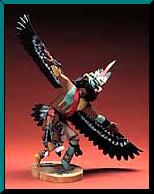
first figure is Kwahu the Eagle Kachina, carved and painted by Leslie
David. The kachina dolls in the
next picture are Wiharu, the White Ogre and Tawa, the Sun Kachina.
Both kachina dolls were carved and painted by Malcolm Fred and are around
ten inches high (Ron McGee, 1999).
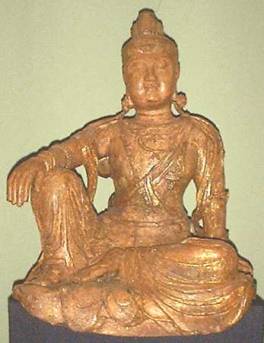
The statue is of Guan’Yin, who is the Goddess of
Mercy. The statue is 92 cm high and
is made of wood and painted. Guan’Yin
is currently held by Art & Antiques, Bachmann and Eckenstein (Bachmann and
Eckenstein, 2001).
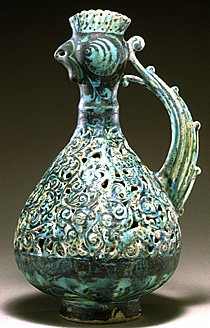
This
is a Double-Walled Ewer in the Form of A Rooster and was made between the
late 12th and early 13th century.
The piece is 27 cm high, made of ceramic and is currently exhibited by
the Detroit Institute of Arts (E Peck, W Peck & Slough, 2001).
Summary
Art
is genre that can express anything the artist wishes it to.
The art I was looking at examined the significance of art that expresses
religious symbols. I found each
picture off the Internet. I
examined three different cultures that had three different perspectives on
religion. The first I examined was
Art of the Hopi People. The second
resource I examined was Art from China. The
final resource I examined was Islamic Art.
I will first discuss about what each of the pieces of art mean to me,
then I will discuss what they mean from the artists perspective.
The Hopi people have been a source of intrigue for me in the past year.
I read a horror novel by Owl Goingback, titled Darker than Night.
The book contained many terrific scenes, but what really sparked my
interest were the kachina dolls. I
found three kachina dolls off a website that are shown in the section of our art
resources titled Art of the Hopi People.
The first picture looks to me like a kachina doll that is a hawk or an
eagle. The wide wings display that
it is a large bird and it has a grand mane much like a hawk or eagle.
The figure is leaning to the left looking like it is taking off to fly
somewhere heading west. The kachina doll has no talons, but human feet and boots
instead. I am aware that kachina
dolls represent the kachina spirits that live in the underworld.
These kachina spirits are viewed by the Hopi people as living beings and
certain times of the year they live through people that reside in Hopi villages.
They live through them by dancing and taking possession of the dancer’s
body. This particular kachina doll
looks to me like a person dressed in the attire of a eagle or hawk whose spirit
has been possessed by the eagle or hawk kachina spirit.
The next picture on Art of the Hopi People has two kachina dolls.
The first kachina doll looks like some kind of monster.
It has sharp spikes sticking out of its head threatening to stab anyone
that comes near. It has a big white
tooth sticking out of its mouth and the monster is holding a knife.
The eyes of the monster are huge and it has bullhorns on its head.
The monster has a torso much like a human being.
I definitely interpret the monstrous kachina doll as something that is
supposed to be evil. The third
kachina doll is quite a bit smaller than the monster.
It looks much like a child with a lion mane surrounding its face. This tells me that it is some kind of creature that is not
physically powerful, but has some kind of magical powers or control.
It seems like a peaceful creature.
The second resource I examined was a Buddhist art piece. Please refer to Art From China. The figure looks like a statue made of wood.
It looks like a woman that seems to be wealthy and covered with jewels
and a golden robe. The woman looks like someone with power and is part of some
kind of royalty. The woman is
seated elegantly and is very proud. Her
hair and dress look very traditional and the piece looks like it is depicting
Chinese history.
The third resource I examined was some Islamic art. Please refer to Islamic Art. It looks like some kind of container that holds liquid
materials, such as drinking water. The
piece looks very old and is representative of Islamic history. The top of the container has eyes sticking out giving the
impression that it is watching for something.
The color of the container is blue and it reminds me of a peacock.
The top of the container looks much like a peacock’s head and the
handle it’s tail. The torso of
the container looks like a ruffle of feathers.
It is quite an eerie piece and seems to be presenting some kind of
danger.
The first picture from Art of the Hopi People actually represents
an eagle. The eagle according to
Hopi culture represents an honored guest that is adourned with gifts.
This particular kachina doll was carved and painted by Leslie David and
is called Kwahu who is an eagle kachina. Here
is a description of Kwahu from Ron Mcgee at www.hopiart.com
“Kwahu, the Eagle Kachina, appears most often with Mudheads in the Kiva or Repeat Dances of early March. The dance is a conscious effort to duplicate the actions and motions of eagles and is a prayer for an increase of eagles. Eagles occupy a rather unique position among the Hopi, for they are treated as honored guests, and are given presents just as the Hopi children are.” (Mcgee, 1999)
The second kachina doll is a White Ogre and crafted by Malcolm Fred. It is to remind children not to get into mischief. The third kachina doll is Tawa, the Sun god and crafted by Malcolm Fred as well. Tawa is one of the gods that created earth and helped create the world that we live in today (Crystal, 2001)
The statue in Art From China represents Guan’Yin who is the Goddess of Mercy. The statue is very old and was created sometime during the Ming Dynasty in China, between 1386 and 1644. According to the legend, Guan’Yin refused to marry and her father punished her for it. He eventually sentenced Guan’Yin to be executed. A sword was used to execute her, but when it struck her body it broke into a thousand pieces. After this incident, she was regarded as a Goddess and traveled through China healing people. She now grants forgiveness to people and their souls once they pass from our living world (Bachmann & Eckenstein, 2001).
The picture from Islamic Art is a ewer that is in the form of a rooster. This particular piece served its purpose for its owner by protecting them from being poisoned. The crest of the rooster is open for people to pour in liquid and the beak is open to pour the liquid out of the ewer. The ewer is very old and was made somewhere between the late 12th and early 13th century. The ewer is made of metal and is supposed to be very solid. Perhaps the solidarity of the object also symbolizes protecting its owner from being poisoned (E. Peck, W. Peck, & Slough, 2001).
Bibliography
Bachmann & Eckenstein.2001. Guan’Yin: Ming Dynasty. http://www.art-antiques.ch/
Crystal, Ellie. 2001. Hopi. http://www.crystalinks.com/hopi.html
McGee, Robert. 1999. Hopi Kachinas and Guide to Hopi Kachinas. http://www.hopiart.com/
Peck, E., Peck, W. & Slough, Penelope. 2001. Islamic Art: Double-Walled Ewer in the Form of a Rooster. http://www.dia.org/collections/ancient/islamicart/1989.34.html