During world war two there were three main factors tank designers had to consider. These features are the same that modern tank designers must focus on, they haven�t changed.
Firstly, that armaments of the vehicle must be considered. The designers had to decide what the primary use of the tank would be, and what sort of targets it would be engaging. They also had to deal with size restrictions, especially when dealing with lighter vehicles. A tank gun could fire two basic kinds of shells. The first was what the original tanks in WWI fired, high explosive. The purpose of this round was to cause maximum damage to a soft, or unarmored target. The second type of shell to be fired was an armor piercing shell, made specifically to penetrate the hard armor of enemy tanks. It was quickly discovered that HE shells fired from small bore cannons were ineffective, because of the limited charge that could fit in the shell. Likewise it was realized that a larger diameter round penetrated much better then smaller calibers, and that a faster moving shell penetrated better as well. So when the war began, the 37mm gun was a standard AT caliber. And the short barreled 75mm was the main HE weapon. As the war progressed, tanks required bigger guns to defeat thicker armor. First the 37 and 45 millimeter guns were upgraded to 50mm. Eventually long barreled 75mm�s became standard. Some tanks carried calibers up to 150mm.
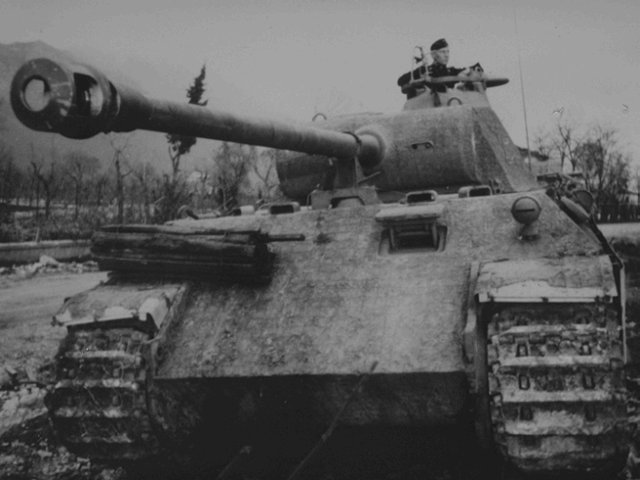
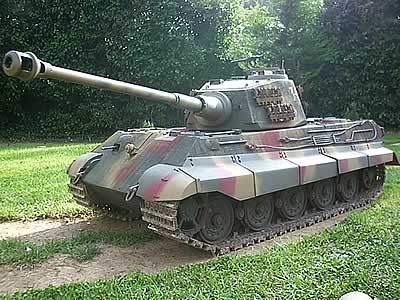
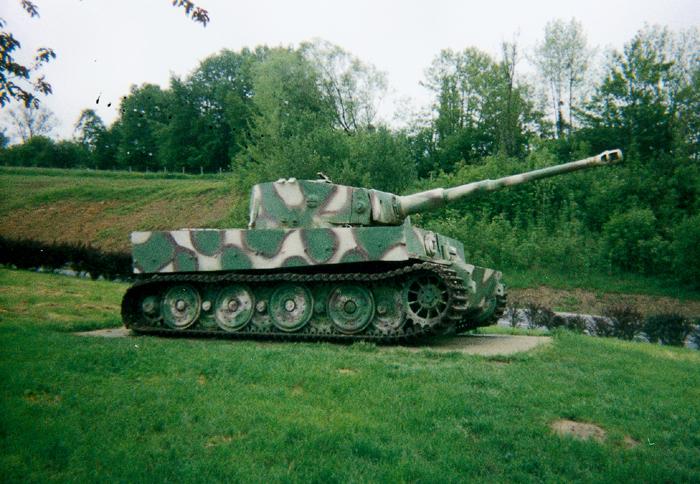
A design consideration directly linked to its main gun was armor. In order for a tank to survive on the battlefield, it needed metal armor to protect it. The biggest problem in providing thick armor is the weight factor. The more armor present, the more advanced and strong the engine and suspension needed to be. At a certain point, no engines or tracks available at the time could move the tank, so armor needed to be sacrificed in places. The frontal armor of a tank is always the thickest as it is most likely to be hit. Next in line is the side of tank, which was usually decently protected. Finally the rear of the tank was usually very thinly armored, as was the front. Throughout the war designers learned they could multiply the effectiveness of their armor by placing it at slanting angles. This was first widely implemented on the T-34, whose armor was only moderately thick. But because of the extreme angling it had, it proved incredibly difficult to penetrate. This change in design philosophy, from flat to angled, is clearly illustrated with the two Tiger marks. The Tiger one had incredibly thick armor, however most of it was nearly vertical. The King Tiger had the same thick armor, but it was slanted up and back to a great degree. |