| Mobile Defense |
| While the tank was a very powerful offensive weapon, it was quickly realized that its defensive attributes were equally as useful. When faced with enemy tanks, the best solution is to pit them against your own vehicles. The tank revolutionized the strategies behind defense warfare with a simple application of mobility. In war there are at often times immense tracks of land to guard against enemy incursion. When the enemy does attack, he usually does so at a concentrated point, achieving fire and numerical superiority in the local area. The tank proved an excellent counter balance to attack because it had the ability to quickly rush to a trouble spot on the front and deliver its essential firepower to the battle. This then was mobile defense. Screening units, usually infantry, would hold the line, as has been tradition in warfare for many hundreds of years. When the attack came, modern communication could quickly pass word of its location, and tanks, self-propelled guns, and mechanized and motorized infantry could rush to the trouble spot on the front. This application of armor was wisely used by the Germans during their defense against the Soviet army in the latter part of 1943 and for the rest of the war. Units dubbed �Fire Brigades�, which relied largely on armor, moved to counter attack any major attack that the Soviets launched. In previous wars the only way to meet the initial enemy attack with equal firepower was to guess where the first blow would fall. With tanks held in a mobile reserve, this was no longer the case. |
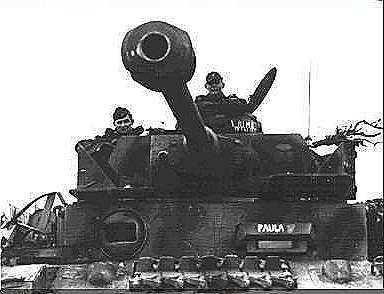 |
| A PzKpfw Mk. IV or the 12th Waffen SS Panzer Division. The division used its tanks in the mobile defense role during the battle of Caen. |