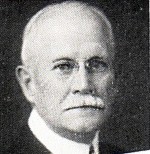
 Bernard M. Bridget (1861-1923), first Grand Knight, was a member of the firm of Parker, Bridget and Company,
the largest concern in the city dealing in men's clothing. The minutes of his administration as Grand Knight were not
available in the preparation of this account. It is typical of Americans to neglect their records. The United States was
the last of the leading nations to erect a National Archives, but not until priceless documents were lost or destroyed.
Washington Council has likewise been delinquent in this respect. Fortunately, after the death of Brother Wilkinson,
many of the official records were salvaged and will henceforth, it is hoped, be safely preserved in our Council's home.
But there has nowhere been located a complete file of the Council's Bulletin and Monthly. It is in these that the more
intimate history of the Council is to be found. Therein are given sketches and pictures of officers, personals,
reminiscences, details of special events, and contributions of Grand Knights and chaplains on subjects of timely
importance. The Monthly should be revived; and an appeal is now made to all brothers to turn over to the Council all
members of these publications which they may have. It should be the aim of the officers to assemble and bind a
complete file for deposit in the library.
Bernard M. Bridget (1861-1923), first Grand Knight, was a member of the firm of Parker, Bridget and Company,
the largest concern in the city dealing in men's clothing. The minutes of his administration as Grand Knight were not
available in the preparation of this account. It is typical of Americans to neglect their records. The United States was
the last of the leading nations to erect a National Archives, but not until priceless documents were lost or destroyed.
Washington Council has likewise been delinquent in this respect. Fortunately, after the death of Brother Wilkinson,
many of the official records were salvaged and will henceforth, it is hoped, be safely preserved in our Council's home.
But there has nowhere been located a complete file of the Council's Bulletin and Monthly. It is in these that the more
intimate history of the Council is to be found. Therein are given sketches and pictures of officers, personals,
reminiscences, details of special events, and contributions of Grand Knights and chaplains on subjects of timely
importance. The Monthly should be revived; and an appeal is now made to all brothers to turn over to the Council all
members of these publications which they may have. It should be the aim of the officers to assemble and bind a
complete file for deposit in the library.
From the meager records at hand we are informed that in June 1897, a class of thirteen members journeyed to
Philadelphia where San Domingo Council conferred upon them the final honors of membership. For obvious reasons it
will not be possible to list the names of all subsequent candidates, but an exception should be made in the case of this
first class of initiates. They were: Brothers Joseph Dierken, Rev. Eugene A. Hannan, F. P. Holmes, Frank C. Horigan,
A. C. Joy, Joseph E. McKeever, P. T. Moran, C. W. Noble, Anthony F. Rice, J. D. Sullivan, Edward J. Walsh, P. J.
Walsh, and Dr. A. D. Wilkinson. The first initiation under the auspices of the young Council was held the following
month when six candidates were instructed in the lessons of the first degree. These were: John J. Dermody, Jean P. des
Garennes (a member of the Papal Zouaves when Rome fell in 1870), Dr. Whit Hammett, F. P. Locraft, Charles H. Piggott and
H. A. Watkins. Our first Grand Knight turned over to his successor a council of 142 enthusiastic members. He was later to
receive further honors as first State Deputy and as the only representative from the District of Columbia ever to be elected to
the Supreme Board of Directors.
The history of Washington Council cannot be written without reference to the establishment of the other councils in our
jurisdiction. Two other councils besides our own will this year celebrate their golden jubilees: Keane No. 353, and Carroll
No. 377. The former was organized June 5, 1937, with Lawrence O. Murray, Comptroller of the Currency, as Grand Knight;
Carroll Council came into being December 15, M. J. Quinn, Grand Knight. April 23, 1899, Spalding Council was established
with Francis P. Sheehy as Grand Knight; June 30 of the same year Potomac Council was born, with Timothy M. Ring as
Grand Knight. The officers of Washington Council also assisted in the organization of Norfolk Council and Calvert No. 352
of Baltimore.
Return to History Index
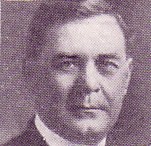 In 1898, Deputy Grand Knight Clement S. Ucker (1873-1930) was elevated to the Grand Knight's chair; later he
became the second, and youngest, State Deputy of this jurisdiction. He was a graduate of Georgetown University and was a
member of the Federal Board of Indian Commissioners. The Ucker administration was an active one: the initiation of 226
candidates kept the Council busy during his year in office. The Typographical Temple on G Street, where the early meetings
were held, soon became inadequate for the needs of the growing Council, so old Carroll Hall, farther along the same street
was secured to serve as headquarters until July 22, 1902, when the Council's first meeting assembled in the newly acquired
home at Sixth and E Streets, N.W.
In 1898, Deputy Grand Knight Clement S. Ucker (1873-1930) was elevated to the Grand Knight's chair; later he
became the second, and youngest, State Deputy of this jurisdiction. He was a graduate of Georgetown University and was a
member of the Federal Board of Indian Commissioners. The Ucker administration was an active one: the initiation of 226
candidates kept the Council busy during his year in office. The Typographical Temple on G Street, where the early meetings
were held, soon became inadequate for the needs of the growing Council, so old Carroll Hall, farther along the same street
was secured to serve as headquarters until July 22, 1902, when the Council's first meeting assembled in the newly acquired
home at Sixth and E Streets, N.W.
Attended by 125 members, the first anniversary was celebrated at Rauscher's, April 26, 1898. The fact that in those
days of low costs the price of this dinner was three dollars a plate can be explained only by remembering that this was before
the "noble experiment" had taken away much of the sociability of such occasions. With Brother John Victory as toastmaster,
the main addresses were given by State Deputy Delaney of New York (who had instituted the Council) and District Deputy
W. J. O'Brien of Baltimore. Incidentally, the latter's bill for expenses, when submitted at a later meeting, caused a lively
discussion in which the guardians of the finances disapproved the sum asked; but it was paid after some correspondence on
the subject. At the anniversary dinner the custom was inaugurated of presenting the retiring Grand Knight with a token of
appreciation for his services: a jeweled watch charm was given to Brother Bridget. As entertainment features, Brother Edward
Walsh gave recitations, and for the first time the name of George O'Connor appears as the Council's favorite entertainer. The
press far and wide, on the occasion of his recent death, paid extended and well-deserved tribute to the high character and
attainments of Brother George O'Connor. We of Washington Council are particularly saddened by his passing. Only when
prior commitments intervened did he ever refuse, when asked, to favor our meetings with his entertaining wit and songs. Of
his vast repertoire, "You Ain't No Brother of Mine" and "Saloon" were, perhaps, the Council's favorites. Genial and lovable
George will never be forgotten as long as the history of Washington Council is remembered.
Miscellaneous items of interest during the Ucker administration include the framing and hanging of the charter; a
High Mass of Requiem offered at St. Paul's Church February 22, for Supreme Knight James E. Haves who died early
in. the month; the regular meetings of the Council were set for the second and fourth Tuesdays of each month; the dues
of members serving in the Spanish-American War were paid by the Council; a gavel made of wood taken from a
blockhouse on San Juan Hill was presented by Private Raley; and the beginning of the interest which the Knights of
Columbus have always shown in the Little Sisters of the Poor was evinced when an article appeared in a Washington
morning paper maligning these saintly Sisters, because of which a committee was named to interview the editors of the
local papers in all cases of misrepresentations or attacks upon the Church. When Brother Ucker laid down the gavel the
Council had 362 members in good standing.
Return to History Index
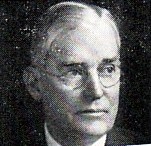 Dr. Henry J. Crosson, the third Grand Knight, served two non-successive terms. In addition, he has also acted as
District Deputy. State Deputy, and State Treasurer. At the second meeting in January 1899, Brother Wilkinson was
elected as Deputy Grand Knight in the place of Bernard Locraft resigned; Brother H. h. Brooks succeeded Wilkinson as
Financial Secretary, At the close of Grand Knight Crosson's first term, December 1899> there were 376 members on
the roll. During this year the District of Columbia was removed from the jurisdiction of Maryland and the State Council
came into existence.
Dr. Henry J. Crosson, the third Grand Knight, served two non-successive terms. In addition, he has also acted as
District Deputy. State Deputy, and State Treasurer. At the second meeting in January 1899, Brother Wilkinson was
elected as Deputy Grand Knight in the place of Bernard Locraft resigned; Brother H. h. Brooks succeeded Wilkinson as
Financial Secretary, At the close of Grand Knight Crosson's first term, December 1899> there were 376 members on
the roll. During this year the District of Columbia was removed from the jurisdiction of Maryland and the State Council
came into existence.
A report of this year's activities, prepared by Brother Harrington, Recording Secretary, has this to say of a Ladies'
Night held April 5 in the National Rifles Hall: "In order that the, brothers of the Council might in some way mollify the
wives, mothers and sweethearts for their absence from home, and in order to show our appreciation of the fair sex, it
was determined to devote one evening to the entertainment of our lady friends." The affair included the institution of
the Daughters of Isabella I whatever did become of that organization?], a concert, refreshments, and dancing. How
would the czar of the musicians' union now react to the item of $ 17.50 for an orchestra of seven pieces?
The anniversary banquet was again held at Rauscher's, at which s charm was presented to Past Grand Knight
Ucker, and the Rev. Dr. Garrigan, Vice Rector of the Catholic University, was the principal speaker.
The first public demonstration of the Order in Washington was held in connection with the dedication of the
Franciscan Monastery, Brookland, September 17, 1899. Dr. Wilkinson, chairman of the committee on arrangements,
made the introductory remarks; the flag was blessed by� our chaplain, Father Joseph A. Foley; and the main address
was made by Brother Dominic I. Murphy, late Commissioner of Pensions, and at the time secretary to the Isthmian
Canal Commission. Again, on December 5 of the same year, our brothers served as a guard of honor at the ceremony of
the blessing of the Monastery's bells.
The return of Admiral Dewey to the Capital was marked by a great parade on the night of October 2, 1899, in
honor of his victory at Manila Our Council, every member carrying a red, White, and blue parasol, lighted lantern, had
a prominent position in the Catholic division of the parade. Another feature was a living Roman cross of members of
Order, under the command of Brother P. J. Haltigan of Carroll Council.
The Council made several trips during this year of 1899. On February a council was established in Richmond;
about 200 brothers from the District participated. June 4, many attended the institution of the council at Portsmouth;
November 26, a number of the members witnessed degree work in Baltimore; on November 30, the Council took an
active interest in a third degree which was conferred at Norfolk by our District Deputy, Past Grand Knight Ucker. One
of the most enjoyable events of the year our participation in the program held at Atlantic City, August 3, to
commemorate the departure of Columbus from the port of Palos, Spain. Brothers Ed. Walsh, George O'Connor, and
Matt Halloran contributed much to the pleasure of that affair.
Works of charity played a prominent part in the year's activities. Under the auspices of the united councils, a
benefit was given for the House of the Good Shepherd which netted about $1100; St. Ann's Infant Asylum received
over 5800 from a similar affair; and an appropriation of 550 was made by the Council to aid in the building of a church
in County Roscommon Ireland. The first Communion Mass of the Council, now an annual event, was offered in St.
Paul's Church, May 14.
Other events of the year included the appointment of the first Employment Committee; further amendment of the
by-laws; the presentation by Brother J. A. Ryan of a gavel made of wood from a Spanish blockhouse at Guantanomo,
and a cross given by Brother Sergeant Mulhall constructed of wood taken from another blockhouse on San Juan Hill.
The first death in the Council was that of Brother James Fullerton January 19, 1899; he was a charter member.
Dr. Crosson returned to the chair in 1903. In the meantime and through the succeeding years he rendered most
useful service in behalf of the Council. He seldom missed a meeting and was always a power for good. Conservative,
experienced, his pungent and well-phrased remarks were always enjoyed, whether spoken in chastisement of a council
action, or for the good of the Order.
Return to History Index
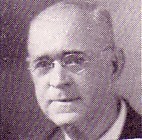 During the existence of Washington Council there have been three warmly contested elections for the office of
Grand Knight Brother Edward P. Harrington, the next incumbent, figured in two of these. Never has there been an
election such as was held for the year 1900. Deputy Grand Knight Wilkinson and Brother Harrington, then Recorder,
were open and avowed candidates, and the friends of each played politics to the hilt. Of a possible 320 votes of those
living in the District, 304 were present to vote at this election. The result was 176 for Harrington, 120 for Wilkinson,
with eight scattered among other members. With the exception of Financial Secretary and Treasurer, every other office
was contested; a postponed election was necessary to fill some of the offices no one having a majority.
During the existence of Washington Council there have been three warmly contested elections for the office of
Grand Knight Brother Edward P. Harrington, the next incumbent, figured in two of these. Never has there been an
election such as was held for the year 1900. Deputy Grand Knight Wilkinson and Brother Harrington, then Recorder,
were open and avowed candidates, and the friends of each played politics to the hilt. Of a possible 320 votes of those
living in the District, 304 were present to vote at this election. The result was 176 for Harrington, 120 for Wilkinson,
with eight scattered among other members. With the exception of Financial Secretary and Treasurer, every other office
was contested; a postponed election was necessary to fill some of the offices no one having a majority.
Brother Harrington's administration was a turbulent one; there always was excitement when "Ed" was in the
council chamber either as officer or private. He later wrote: "I never cared particularly whether [an election] was
unanimous or not; I preferred that it would not be unanimous,, so long as I won. . . . I have never been sensitive to
any extent. . . . Whatever share of success I may have had in this Order was due in great measure to the fact that I
have always refused to take opposition seriously, for as a matter of fact I have often courted opposition." He always
believed that for the number of enemies made in his positive dealings in the affairs of the Council, he won a
corresponding number of friends. A new ritual went into effect on January 1, 1900, in which appeared the ban
against bringing politics into the Order. Brother Harrington believed the new obligations were directed particularly
at Washington Council. It was the Grand Knight's duty to exact the promises from the members. He referred later to
the great glee it gave him to hear Brother P. T. Moran, the campaign manager of Dr. Wilkinson's cause, repeat the
promises as shouts of laughter resounded in the chamber.
After many rumors concerning the addition of other degrees to the Order's organization, the Fourth Degree
became a reality on February 22, at the Lenox Lyceum, New York. Washington Council was the only council in the
District eligible to select the ten candidates, permitted to each council, for initiation. As Brother Bridget was then a
member of the Supreme Board of Directors, the Council had eleven members. These became charter members of
Washington Assembly 224, which may be said therefore to have been brought into existence by Washington Council.
These favored ten acted in a very mysterious manner about their new experience. As a joke, carried out in all
seriousness, an appropriation of $100 was asked at a Council meeting for the exclusive use of the Fourth Degree.
When Trustee Callahan asked the purpose he was informed it was none of the business of the Council!
The third anniversary of the Council, commemorated April 25 at Rauscher's, was one of the most enjoyable
social events in the history of the Council. Past Grand Knight Crosson was presented with a testimonial, and stirring
addresses were delivered by the Council's favorite, State Deputy Judge Delaney of New York, and by four members
of Congress: Hon. George P. Foster of Illinois, Hon. John F. Fitzgerald (the popular "Honey Boy", later mayor of
Boston), Hon. Martin H. Glynn (recently Governor of New York), and Hon. John J. Fitzgerald, chairman of the
Committee on Appropriations.
Another idea which had its inception in Washington Council lead to the organization of the Chapter, August 1,
1900. The Washington Chapter is the second oldest in the history of the Order; it is antedated only by the one on
Long Island. Composed of delegates from each council, the Chapter has as its objects the securing of united action
on matters of common interest, the consideration of projects submitted by any council for the cooperation of the
other councils, and the promotion of whatever is deemed conducive to the good of the Order in this district. It acts
as the clearing-house for the councils in all matters requiring united action. Grand Knight Harrington presided over
the preliminary meetings which were held before formal organization, and Brother Wilkinson was elected the first
secretary. The Chapter had charge of the laying of the cornerstone of the Shrine of the Sacred Heart; and it arranged
for a High Mass of Requiem, celebrated at St. Stephen's Church for the deceased members of all the councils. It also
carried out an earlier suggestion of Brother Harrington for a combined musical Vespers service which was held it St.
Aloysius' Church on the evening of Sunday, October 28. About one thousand members were present to hear an eloquent
sermon by Father (later Bishop) Currier, and to enjoy the music of the Council's newly organized choir under the
direction of Brother L. E. Gannon.
The movement for the purchase of the Baptist Church at 6th and E streets as a permanent home for the Order in
Washington was getting well under way during the Harrington regime. The story of that campaign will be given a later
treatment, but during the year 1900 the Council meetings seldom lacked consideration of the question; there was much
opposition, so the debates were spirited and sometimes acrimonious.
The membership of the Council on December 31, 1900, was 396, a net gain for the year of twenty-three. We shall
meet Brother Harrington again later in these pages. He continued his active interest in the Council's affairs; to have
seen this fiery old "war house" in action is a memory which the older members will not soon forget.
Return to History Index
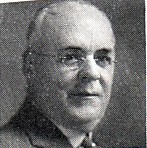 The election of officers for 1901 was in quiet contrast to the proceeding of the previous year. The only contest
concerned the choice of a delegate to the State Council which resulted in a preference for Past Grand Knight Harrington
over his opponents, Brothers Crosson and Ucker. Deputy Grand Knight Wilkinson was the unanimous choice for
presiding officer. He was the first to serve two successive terms as Grand Knight.
The election of officers for 1901 was in quiet contrast to the proceeding of the previous year. The only contest
concerned the choice of a delegate to the State Council which resulted in a preference for Past Grand Knight Harrington
over his opponents, Brothers Crosson and Ucker. Deputy Grand Knight Wilkinson was the unanimous choice for
presiding officer. He was the first to serve two successive terms as Grand Knight.
After the organization of the State Council and the Chapter, matters that before were more or less Council affairs
now became the business of those bodies to administer, and are therefore no longer an essential part of this record. The
histories of these organizations should some day he written if we are to have the entire story of the Council. It is here
sufficient to state that Washington Council was always cooperative, that its members took a prominent part in their
deliberations, and that many matters referred to these groups originated in the Council.
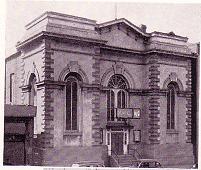 The most important event in Brother Wilkinson's administration was the purchase of the Baptist Church at 606 E
Street, N.W. The desirability for a home to be the center of Knights of Columbus activities in the District of Columbia
had long been felt and the subject had been debated for several years. It took definite form in January 1900, when
Spalding Council adopted a resolution providing for the appointment of a committee of five which, with a similar
committee from each of the other councils, would organize to hold a fair for the benefit of a building fund for the Order
in the city. A progressive euchre party, an excursion down the Potomac, and successful entertainments given by the
individual councils materially increased the fund to provide for the fair which was opened February 1, 1901, in
Washington Light Infantry Hall, with an address of welcome by State Deputy Brother Clement S. Ucker, a prayer by
the Papal Delegate, Archbishop Martinelli; and an eloquent address by the Rev. Dr. Stafford, then pastor of St.
Patrick's. The hall was lavishly decorated by C. H. Koster of New York. Washington Council's booth was under the
charge of Mrs. John T. Callaghan. There were lemonade, flower, and cigar booths, a "paddle" stand, supper table, and
an interesting paper was published each day. Addresses were made on subsequent evenings by the Rev. William
O'Brien Pardow, S.J., the Hon. Henry B. F. Marfarland, president of the District Commissioners; the Rev. Eugene A.
Hannan, and by the Hon. Champ Clark, Member of Congress from Missouri. The fair continued for two weeks and
netted nearly ten thousand dollars.
The most important event in Brother Wilkinson's administration was the purchase of the Baptist Church at 606 E
Street, N.W. The desirability for a home to be the center of Knights of Columbus activities in the District of Columbia
had long been felt and the subject had been debated for several years. It took definite form in January 1900, when
Spalding Council adopted a resolution providing for the appointment of a committee of five which, with a similar
committee from each of the other councils, would organize to hold a fair for the benefit of a building fund for the Order
in the city. A progressive euchre party, an excursion down the Potomac, and successful entertainments given by the
individual councils materially increased the fund to provide for the fair which was opened February 1, 1901, in
Washington Light Infantry Hall, with an address of welcome by State Deputy Brother Clement S. Ucker, a prayer by
the Papal Delegate, Archbishop Martinelli; and an eloquent address by the Rev. Dr. Stafford, then pastor of St.
Patrick's. The hall was lavishly decorated by C. H. Koster of New York. Washington Council's booth was under the
charge of Mrs. John T. Callaghan. There were lemonade, flower, and cigar booths, a "paddle" stand, supper table, and
an interesting paper was published each day. Addresses were made on subsequent evenings by the Rev. William
O'Brien Pardow, S.J., the Hon. Henry B. F. Marfarland, president of the District Commissioners; the Rev. Eugene A.
Hannan, and by the Hon. Champ Clark, Member of Congress from Missouri. The fair continued for two weeks and
netted nearly ten thousand dollars.
In March of that year Washington Council appointed a committee of three, to act with like committees from the
other councils, to have charge of the building fund, and to make recommendations as to its disposition. Brothers
Repetti, Gensler, and Dr. Mudd were named to this important Committee. This general committee organized with
Brother Repetti as chairman, adopted a set of by-laws, and held frequent meetings during which sentiment in favor of
the purchase of the E Street church began to crystallize. There was much apposition among the rank and file of the
Order: some wished the fund on hand to be so managed and increased that in time a large temple could be built; others
thought the fund should be held until it would be sufficient to purchase a suitable building without incurring any debt;
others preferred a more desirable location; and there were some who desired the fund to be divided among the five
councils for rental expenses and other uses. In time the majority report of the committee was adopted by all the
councils.
Next came the tedious details of negotiating- with a committee representing a congregation divided in sentiment
on the question of sale, and the consideration of the legal points involved in the purchase and the subsequent
management of the property. When the transfer of the title was accomplished the building committee surrendered its
authority, and the Knights of Columbus Building Company, formed by the appointment of two members from each
council, was incorporated December 9, 1901. When it was certain that the home would be purchased, Brother George
R. Repetti donated a city lot to be raffled for the benefit of the building fund. The raffle netted $1900; the winner was
Brother Victor J. Dowling, then a member of the New York State Senate. The fund was further increased by an
excursion to River View which gave the children of St. Joseph's and St. Vincent's orphan asylums a glorious holiday
and provided another thousand dollars to the fund. Later another fair was held which netted between eight and ten
thousand dollars. The E Street home had a certain informal coziness which encouraged foregatherings, was centrally
located, and contained one of the best meeting halls in the city, commodious, with perfect acoustics, and possessing a
splendid pipe organ which contributed much to the dignity and impressiveness of degree work. It was a hall much to be
preferred to any we have since occupied.
The first meeting of the Council in the new home, July 22, 1902, opened on a note of charity. Brother Dr. Joseph
A. Mudd, whose life was devoted to the service of the unfortunate, _presented a resolution to establish a fund for "the
useful and religious" education of children of deceased brothers. The plan as later adopted proposed the keeping of a
record of the address, age, and occupation of every child, the procurement of employment when necessary, and the
giving of such personal supervision of the children as would be prudent and proper. Through personal contributions,
benefits, and council appropriations, "Doctor Mudd's Fund," as it was always called, grew to respectable proportions.
At first administered by a special committee, it was later voted to be turned over to the general treasury, and after
Brother Mudd's death was exhausted through individual appropriations for charitable purposes other than those in the
mind of good Brother Mudd.
It is not necessary to repeat in each instance the appropriations made during the successive administrations for the
benefit of charitable institutions. The Council has always had a tender regard for the needs of the orphan asylums in the
District. St. Joseph's, St. Vincent's, St. Ann's, the Little Sisters of the Poor and other Catholic charities were annual
beneficiaries of the Council's generosity and concern. The watch dogs of the treasury insisted only on one thing: that
Section 125 of the constitution be observed in giving thirty days' notice before such requests were acted upon. Appeals
for every cause under the sun, for churches far and near, for fraternal organizations, and for objects in which the
Knights of Columbus could not possibly have any interest came to the Council by scores. With few exceptions these
never got beyond "the table". Exceptions were made during Dr. Wilkinson's administration when donations were
appropriated toward the erection of a church at Gleneida, N. Y., where the struggling congregation was holding
services in an attic over a grocery store, and toward a Knights of Columbus window for the church at Roanoke, Va. A
growing nuisance at meetings was the personal appeal made to the attending brothers to purchase tickets of all sorts. On
the grounds that such solicitation was embarrassing to members and reduced attendance, this practice was broken up.
During these years participation was made by the Council as a body in the nocturnal adoration of St. Aloysius'
Church, Holy Thursday night, 1901, from twelve to one; at the dedication services of St. Vincent's Orphanage, June 2,
1901; and at the dedication of St. Ann's Church, June I, 1902.
The fourth anniversary of the Council was celebrated by a smoker at a cost of one dollar per member. One of the
attractions was a "whistler" by the name of Clark who was paid three dollars for his demonstration. The character of the
observance of the fifth anniversary is not clear from the minutes. It was suggested that the celebration be -held in
connection with the program for the formal opening of the new home. Apparently � it was later decided to cooperate
with the other councils in marking the anniversary of the coming of the Order to the District of Columbia.
As a result of the State Council election, February 1902, Washington Council protested the election of the State
Deputy, and appointed a committee of Brothers Crosson, M. J. Kane, Sohon, Finn, and Heiskell, Advocate, to carry� its
appeal to New Haven. The Supreme Council ordered the State Council to reconvene when the contested officer was
unanimously elected.
In lighter vein, during the Good of the Order at one meeting, Brother Scharff intimated that in the singing of the
opening ode, "the voice of a particular member of the trustees was horrible" and he hoped the Brother would take the
hint and go way back and sit down." Brother Finn resented the charge and stated that "the members of the board. all
accomplished vocalists, had no excuse to make other than that the bum music [Scharff was organist] was responsible
for the discord!"
Miscellaneous affairs of the Wilkinson regime included the sending of a letter of sympathy to President McKinley
when he was shot while attending the Exposition of Buffalo; the entertainment of seventy-five visiting brothers from
Massachusetts en route to Portsmouth. Va.; and a reception given to brothers in the Grand Army of the Republic
on the occasion of the national reunion in this city.
It was not beneath the dignity of the retiring Grand Knight to accept the lowlier position of Lecturer. For two
years the acted in this capacity and gave the Council some of the best entertainment in its history. The contribution of
unselfish and accomplished service made by Brother Wilkinson to the growth and success of Washington Council can
not be overestimated nor adequately evaluated. No Brother will question the statement that Brother Wilkinson did
more for Columbianism in general in the District of Columbia and for the interests of Washington Council in
particular than any other member. "Doc" will be remembered best perhaps, for his long service as Financial
Secretary; the Past Grand Knights, above all others, know the value and extent of that service, and how much each of
them owes to his constant vigilance and helpful counsel. Brother Wilkinson typified the principles of our Order. If he
was as gray-haired as the Council, he was as youthful as its youngest initiate. He was the depository of the Council's
best traditions, the inspiration of its hopes, the embodiment of the vision of our founders.
Return to History Index
When Doctor Crosson again took up the gavel in 1903, the Council had passed through its first enthusiasm
and its period of frequent initiations, and had settled down more calmly to routine business, without loss, however, of
its interest in good works. A lecture for the benefit of the building fund was given by the Rt. Rev. Bishop John
Lancaster Spalding of Peoria, in Columbia Theatre, on the subject of "Education: Its Meaning and Worth," which
netted over three hundred dollars. Sponsored by Washington Council, an excursion for the pleasure of the orphans
was held by the joint councils and netted one thousand dollars. At the suggestion of Mobile Council, a committee was
appointed to call on the Postmaster General to protest the use of the mails to a newspaper called Our True Friend,
which contained scandalous matter and attacks against the Church. The committee was assured that the matter would
be referred to the Attorney General for investigation.
The sixth anniversary celebration was held at Rauscher's at the popular price of one dollar. A silver service was
presented to Past Grand Knight Wilkinson in appreciation of his services as Grand Knight.
When Leo XIII was in his last illness, a cablegram of sympathy was sent to the Cardinal Secretary of State; upon
the Pope's death proper resolutions were drawn and, by direction of the Supreme Knight, a small bow of purple ribbon
was worn for thirty days by all members as a mark of mourning.
Before the days of willing Brother Tom Costigan, who for years was the official "pumper of the organ,"
the attending brothers were not so kindly disposed toward this heavy chore. Anyhow, to meet this difficulty an
appropriation was made for the purchase of a pianola. Under the good of the order there were boxing and
wrestling matches; Brother Lee, at one meeting, entertained "with several excellent selections produced by his
phonograph;" at another, Brother Scharf, the organist, gave a travesty on certain officers and brothers which he
had composed. When a box of cigars was sent by Tampa Council to be auctioned for the benefit of Sacred Heart
Church of that city, Lecturer Wilkinson reported a profit of $6.25 from a recent euchre party, whereupon it was
voted to use this for the purchase of the cigars which were enjoyed that same evening.
The general elections in November gave satisfaction to the Council because of the election of Brother
Richard L. Hill to the Maryland legislature and of Chancellor Brother Finn, as district attorney for Essex County,
N. Y. The latter made a most eloquent farewell address.
Return to History Index
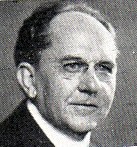 The administration of Grand Knight Dr. Wilson P. Malone for the years 1904 and 1905, was one of the
most attractive, especially in entertainment, in the history of the Council; yet strange to say, on December 31,
1905, the roster showed a gain of but one insurance member and the loss of twenty-four associate members. There
were then forty-four insurance members and three hundred and twenty associate members.
The administration of Grand Knight Dr. Wilson P. Malone for the years 1904 and 1905, was one of the
most attractive, especially in entertainment, in the history of the Council; yet strange to say, on December 31,
1905, the roster showed a gain of but one insurance member and the loss of twenty-four associate members. There
were then forty-four insurance members and three hundred and twenty associate members.
The Lecturers, Brother Wilkinson during the first year and Brother Harrington in 1905, each left an
enviable record of substantial and novel entertainment in the effort to sustain the interest of the Council. It was
agreed at this time to devote one-sixth of the dues to the lecturer. Shortly after Dr. Malone took office a typical
program consisted of addresses by Brother Edgar Rider, M.C. from New York City, and Brother William Wynne,
M.C. from San Francisco; Brother M. J. Walsh, registrar of San Francisco, sang Irish songs; Brother "Ed" Walsh
gave several of his choice recitations; and Brother McCarthy played some violin solos.
On April 12, Brother Wilkinson introduced "the most memorable assemblage of Brother Knights that had
ever attended a Council meeting." These were brothers then in the city to attend the presentation ceremonies of
the check for the chair of American history to the Catholic University. Brother Easby-Smith made an address of
welcome, after which responses were made by State Deputy George Monahan of Michigan and a National
Director; by the Grand Knight of St. Louis Council, and by the Hon. William Wynne of California. The greatest
applause was given to Past State Deputy, the Hon. John J. Delaney, who said he "never felt more at home than
when in the company of Washington Council which he had initiated seven years before." The entertainment
included an exhibition of tight-rope walking by Brother Joyce, boxing and wrestling, songs by several of the
brothers, a banjo solo by Brother Joe Cullen, and recitations by Brother Walsh.
Many members of Congress addressed the Council at its several meeting's. Lectures were frequent. Father
A. P. Doyle, Paulist, spoke on the purpose of the Mission House; Cartoonist Berryman, then of the Post, gave a
chalk talk on "Our Candidates and Other Public Men;" Brother Hon. Ira Rider, M.C. New York City, lectured on
"The Knight of the 20th Century;" Brother Frank Hogan, Carroll Council, gave an illustrated lecture on his trip to
the Philippines; and the Hon. J. C. Monaghan of the Department of Commerce spoke on "The War between Japan
and Russia." Brother Harrington gratified his ambition by giving three lectures: "The Tower of London," "The
Romance of Holy Rood," and "Ireland," the latter illustrated and interspersed with Irish melodies rendered by
Brother Robert Green. A burlesque of this last lecture, given two months later, was one of the funniest things ever
to happen at any meeting. When it is stated that Brother Crosson was the "lecturer," all will appreciate how
cleverly Brother Harrington's lecture was lampooned. Reference to this incident in the minutes reads: "it will ever
be a mooted question as to whom the honors belong, whether to the lecturer, to the illustrator and lantern
manipulator, the concocter of the scheme, or the brother who tolled the bell."
Relations with the Catholic University continued to be cordial. Among the more prominent candidates
initiated under Grand Knight Malone were the Rev. Dr. Charles P. Grannan, and the Reverend (later Monsignor)
Bernard A. McKenna who for many years was the director of the Shrine on the University campus. On the
evening of May 23, 1905, a delightful "University Night" was held. Addresses were made by the Rev. Doctors
Shanahan, Kerby, Healy, and Melody; and several vocal selections were given by Fathers O'Connor and Carroll,
by the Holy Cross quartet, and others.
The usual anniversary celebrations were held; on election night, 1904, a smoker was given and a special
wire was installed for receiving the returns. Two meetings were held at the country place of Brother M. A. Keane,
the second of which was a delicious "ox-roast." A pool tournament was held and a trophy awarded to the winner.
There were dances; a joint fair for the Building Company; Deputy Grand Knight Koones successfully represented
the Council in a contest for the selection of the most popular Knight of Columbus, for the benefit of the Church of
the Holy Comforter, and was awarded a jeweled charm. At a smoker in December 1905, Brother Neil O'Brien of
Dockstader's Minstrels, accompanied by four members of his company, gave the Council a delightful treat of song
and story.
The Council participated in the dedication of St. Patrick's school, hall, and rectory. It appropriated the
usual sums for charity, including a donation to the Catholic Church at Yazoo City, Miss., which had recently been
destroyed by fire. Finally, it supported by resolution Brother John A. Sullivan, M. C. of Massachusetts, upon
whom a bitter attack was made by William R. Hearst of' New York. Brother Sullivan thanked every member of
Washing-ton Council and stated that the unanimity with which the people of his faith had stood by him was the
most gratifying incident in his whole life. At the next meeting Brother Sullivan addressed the Council.
It is perhaps indicative of the condition of the Council's treasury at this time to note that for a long period
there was no organist after the resignation of the incumbent, because the Council refused to pay the unreasonable
sum of ten dollars per quarter for his services! Early in the next administration is was debated whether to
purchase a pianola or a graphaphone to take the place of the organ; neither motion prevailed. Then the Lecturer
moved an appropriation of $150 to be used to teach Brother Callaghan how to play the organ. It was this brother
who had opposed the above motions.
Return to History Index
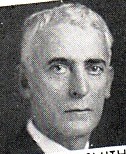 The succession of the Deputy Grand Knight to the retiring Grand Knight, because of the unwillingness of
Brother Dr. Charles Koones to accept the promotion, did not obtain in the elections for 1906. The choice fell
unanimously upon Brother J. S. Easby-Smith who had served the Council well in several subordinate positions.
Whether through the lethargy of the members or a feeling of superiority and exclusiveness which was shown by
the passage of a resolution (later reconsidered) to raise the initiation fee to twenty-five dollars, initiations for the
two years of this administration were few and the end of the year 1907 found a total loss in membership of
eleven.
The succession of the Deputy Grand Knight to the retiring Grand Knight, because of the unwillingness of
Brother Dr. Charles Koones to accept the promotion, did not obtain in the elections for 1906. The choice fell
unanimously upon Brother J. S. Easby-Smith who had served the Council well in several subordinate positions.
Whether through the lethargy of the members or a feeling of superiority and exclusiveness which was shown by
the passage of a resolution (later reconsidered) to raise the initiation fee to twenty-five dollars, initiations for the
two years of this administration were few and the end of the year 1907 found a total loss in membership of
eleven.
The social phase of the Council's program was not so prominent as during the preceding years, but several
matters of interest and of subsequent importance were given consideration. Dr. Mudd's Orphan Plan received
encouragement and support; there was discussion of a site for the Columbus Memorial and a committee was
appointed on this question which was discharged after Congress took the matter in hand; the approximate sum of
$350, from Council appropriations and individual subscriptions, was sent to the sufferers of the San Francisco
disaster; and the Council took the initial step in the establishment of a library for the building.
The practical, economy-minded leaders of Washington Council who had always urged upon the Council
the necessity of thrift and care in the administration of its affairs, did not approve the extravagance displayed at
the New Haven headquarters. By way of protest a communication was sent to the Supreme Board, State and
subordinate councils calling attention to the fact that the per capita tax of the Knights of Columbus was higher
than that of any other fraternal organization and asking greater economy at headquarters. That this was a popular
protest is shown by the dozens of letters in favor of the Council's action which were received from subordinate
councils and individuals.
At another place in this account the story will be told of the disposal of the E Street headquarters. Before
this, the issue many times had been before the Council. In May 1907, a resolution was passed by the Council
asking that a committee of five be appointed from each council to inquire into the feasibility of disposing
of the building and to report on the possibility of purchasing Carroll Institute. At the first meeting of the joint
committee the sale of the building for $32,000 was recommended, the sale to be contingent upon the purchase of
Carroll Institute. At that time the Institute was unwilling to sell, but the committee was continued. Later in 1907,
the Building Company was asked to sell 606 E Street at the best obtainable price.
The cordiality shown by Catholic members of Congress to the Council continued. Senator John M. Gearin
of Oregon was a speaker at one of the meetings; and Senator Joseph E. Ransdell of Louisiana received his first
degree as a member of the Council, February 26, 1907.
A snicker, following the regular meeting, marked the ninth anniversary of the Council's founding; the
tenth anniversary in 1907 took the more formal character of a banquet. These were the days when Houdini was
bursting chains and handcuffs, escaping from prison cells, and from all sorts of hopeless confinement. There was
much excitement, therefore when it was announced in Council that at a smoker scheduled for October 23, 1906,
the main attraction would be a duplication of one of Houdini's feats by Brother Maurice Joyce. A large crowd
was on hand to see our Brother escape in eighteen minutes from a packing box made particularly strong by
Brother Bridget's firm, and which was carefully nailed, screwed, and roped by a committee appointed from the
Council.
The Council received still another gavel, this one presented by Brother Finn, was made of a part of the wood
taken from "the enclosure of former Secretary of War Stanton."
During this term, Professor J. C. Monaghan lectured on "The Conditions of the Church in France"; Brother
P. J. Haltigan on: "Irishmen in the American Revolution"; C. F. Warren on "Puerto Rica"; and E. Fairman showed
"One Hundred Miles along the Tow Path."
Return to History Index
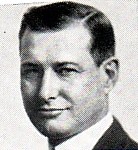 Nothing eventful occurred during the administration of Grand Knight James H. Johnson, Jr., who served but
one term. In their order, these unrelated matters were given attention by the Council: a testimonial was presented to
Past Grand Knight Easby-Smith; it was decided to hold another Charity Ball for the benefit of the local Catholic
charities; it was voted to hold no anniversary celebration in 1903; the usual appropriations were made to charity,
and the sum of twenty-five dollars was voted for a memorial to Father McGuire, S.J.; a committee was appointed to
consider the evil of placing Catholic children in Protestant homes; and it was announced that a free scholarship
placed at the disposal of the Council by Gonzaga High School, had been given to the son of a deceased brother.
Nothing eventful occurred during the administration of Grand Knight James H. Johnson, Jr., who served but
one term. In their order, these unrelated matters were given attention by the Council: a testimonial was presented to
Past Grand Knight Easby-Smith; it was decided to hold another Charity Ball for the benefit of the local Catholic
charities; it was voted to hold no anniversary celebration in 1903; the usual appropriations were made to charity,
and the sum of twenty-five dollars was voted for a memorial to Father McGuire, S.J.; a committee was appointed to
consider the evil of placing Catholic children in Protestant homes; and it was announced that a free scholarship
placed at the disposal of the Council by Gonzaga High School, had been given to the son of a deceased brother.
If there was no great excitement during this year, if the Council was struggling to maintain its membership, at
least all was peaceful, with the Old Guard in complete control of everything. So at least they
believed. Supposedly without opposition, Deputy Grand Knight Cullen had been groomed to succeed Johnson as
Grand Knight. Maybe Brother Harrington thought there should be more action; maybe he didn't like the control of
things by a few. Anyhow, on election night, without forewarning and with plans carefully kept secret, Brother
Harrington entered the hall with sufficient followers to put to rout the ticket of the Old Guard who were taken
completely by surprise and without time to rally their supporters who, hearing of no opposition to the "slate", had
not even bothered to come to the meeting. The old "war horse" had triumphed again.
Return to History Index
This year of 1909 fell into a typical Harrington pattern. The meetings were interesting, debate was lively, and
the entertainment varied. Potomac and Spalding Council's were entertained in turn. The anniversary celebration was
awarded to Brother Stohlman for $1.25 a member, the menu to include beer. The music for the annual charity ball
was volunteered by the Marine Band. There was a ball game between the Elks and the Knights which netted one
thousand dollars for the benefit of' St. Vincent's home. The speakers during the year included the Hon. J. T.
O'Connell, M. C. of Boston, Congressman Brother C. A. Corby of Indiana, and a Catholic Hindu scholar; there was
also a demonstration of "occultism and hypnotism" by "Professor" C. F. Saldanha. The Council was the thirty-
eighth in the country to take action in the matter of the $500,000 endowment for scholarships at Catholic
University, and agreed to pay one dollar per capita annually for a period of two and one-half years. An
appropriation of one hundred dollars was also made toward a memorial for the Rev. Dr. D. J. Stafford.
Return to History Index
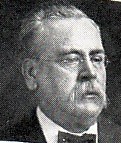 The Council could not complain of lack of excitement during the administration of Brother George R.
Repetti which followed, 1910-1911. There were two occurrences which may be termed "sensational".
The Council could not complain of lack of excitement during the administration of Brother George R.
Repetti which followed, 1910-1911. There were two occurrences which may be termed "sensational".
The first arose in connection with the usual anniversary celebration on April 26, 1910. "Function_" is a word
of varied definition. It had a special significance when applied to this event. Its meaning was cited from Webster
and precedents were invoked, but the State Deputy at the time had his own interpretation of the term. If the Council
on the occasion at hand did not "shun" its usual and quondam "fun", the "k" sound between these reversed syllables
of the word would stand for "knockout." The Grand Knight and his committee did not believe it. But it was true. A
new ruling o: the Supreme Board, forbidding the serving of a certain foaming liquid refreshment at council affairs
was invoked: Washington Council was suspended! Grand Knight Repetti fumed; the Council fumed-tremendously
excited meetings those. It was pointed out that recently beer was served at the dinner following the exemplification
of the Fourth Degree, and that the State Deputy had been present. The State Deputy set a date before which the
Council must "purge itself of the violation of the laws." The Grand Knight was stubborn; the Council was stubborn.
So on May 27 the edict went forth, and the Treasurer was ordered to make no further payments unless the vouchers
were approved by the State Deputy. An appeal was carried to New Haven by Brother Easby-Smith, but the action of
the State Deputy was upheld, and Washington Council ceased to "function" until July 16, when the Supreme Board
lifted the suspension with the warning that a second violation of the rule would result in the forfeiture of the
charter. One concomitant of this affair was a livelier interest in the monthly meetings.
This occurrence had its humorous side; the second was more serious. Brother Ben Johnson, a member of Congress
from the Bardstown district of Kentucky, appeared at a Council meeting to lay charges against one of our members
who promised, for a consideration, to deliver the Catholic vote of the farmer's district. It will serve no useful
purpose to identify the Brother, beyond saying that he had for many years served the Council in many capacities.
Formal charges were laid, and on August 15, 1911, testimony in the cause was taken here before Deputy Supreme
Knight Martin Carmody, who had been appointed special commissioner in the trial. After consideration of the
evidence, the Supreme Board, October 10, expelled the member from the Order on the grounds of having given
scandal and of having used his membership for business purposes without the permission of the Board as set forth
in article 162 of the laws and rules of the organization. When Washington Council presented a claim for $211.32, it
was rejected by the Supreme Board. Grand Knight Mudd, in his term, argued that the Board should pay the entire
cost of the hearing inasmuch as that body ordered the Council to press the charges. Pointing out the ambiguities and
inconsistencies of the constitution, Mudd referred to a section which read: "That the uniform for day parade of the
drill corps of the Fourth Degree consist of frock (Prince Albert or cutaway) coat, silk hat, sword and baldric and
none other [underscored by Mudd]." This, continued the writer, "is impossible in a town having policemen or in the
country where there are officers of the law charged with the preservation of order." It was argued that the expense
incurred by the trial committee of Washington Council was used for the protection of the insurance fund, in
preserving a record that would enable the Order to make a successful defense against a suit for damages which the
accused brother had repeatedly threatened, in order to secure his property rights in his insurance. When the claim
was definitely denied. Grand Knight Mudd wrote: "I think it safe to say that never again will Washington Council
expend a dollar to safeguard the interest of the Order in the trial of an insurance member."
A tempest in a teapot arose when our hawk-eyed warden discovered that members of Keane Council were
wearing Washington Council's robes at initiations. He was ordered to recover them which, after some clever
detective work, he did. The episode was amusing. One evening a hoax was successfully perpetrated by Brother P. T.
Moran who moved for the consolidation of all councils in the jurisdiction. This was waving a red flag before a bull.
A long debate followed and the motion was ordered to be laid on the table. Brother Moran then confessed that he
had accomplished his purpose of stirring tip a debate.
Several lectures interested the members during these years: Brother Robert J. Kennedy spoke on "Roger
Brooke Taney"; Senator Taylor of Tennessee gave, without cost, for the benefit of Dr. Mudd's Fund, his famous
lecture, "The Fiddle and the Bow"; and the Rev. Dr. William T. Russell, later Bishop Russell, presented a
discussion of "The Catholic: The Most Tolerant of American Citizens."
Baseball again interested the younger members. Brother "Cy" Cummings was appointed manager of the team
and games were played with a nine representing the Chamber of Commerce, and with the Eagles.
During the summer of 1910, the Financial Secretary, Brother Brooks, was obliged to resign his position
because of illness; Brother Wilkinson was appointed to act. Thus began a long service by the latter which ended
only shortly before his death. Brother Brooks was presented with a silver service, February 28, 1911, as a
testimonial of his long and capable service. He later continued that service as the Council's treasurer until 1945. In
the hands of Brothers Wilkinson and Brooks the financial matters of the Council were perfectly handled.
Under Grand Knight Repetti, the Big Brother movement was undertaken by the Council, and the first
Memorial Military Mass was celebrated, May 28, 1911, at the Washington Monument lot. The Council agreed to
the reorganization of the Chapter but not until it had voted that the State officers should have no vote at its
meetings.
The retiring Grand Knight was always a tower of strength to the Council. Perhaps he was brusque, gruff, and
unyielding when he felt he was in the right. But his motives could never be questioned: he sought only the best interests
of the Council. As has been mentioned he donated a city lot for the benefit of our first home. He was practical and
realistic. He with Brothers Harrington, Crosson, and a few others watched closely the expenditure, of the Council, and
frequently brought the Council back to common sense when it was inclined to let its generous impulses run wild.
Return to History Index
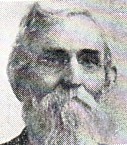 Repetti was succeeded by the gentle, saintly, universally beloved Brother Dr. Joseph A. Mudd who served as
Grand Knight for the following two years. An insurgent movement contested Dr. Mudd''s election for the second
term, but he easily defeated Brother W. Gwynn Gardiner, 60 to 34.
Repetti was succeeded by the gentle, saintly, universally beloved Brother Dr. Joseph A. Mudd who served as
Grand Knight for the following two years. An insurgent movement contested Dr. Mudd''s election for the second
term, but he easily defeated Brother W. Gwynn Gardiner, 60 to 34.
At the same election Brother Brooks was chosen Deputy Grand Knight over Brother Moriarity; Brother Leo Rover
won the chancellorship over Brother O'Brien; and Brother George Ogle was again elected Warden over Brother Edward
J. Craig. Charity was the essence of Dr. Mudd's character. His interest in the orphans and the unfortunate has been
mentioned. But he was not always serious; he had a keen sense of humor, and as a member of the degree team in
exemplifying the Second Degree, he took a delight in reciting the "Confiteor" in Latin.
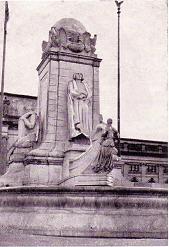 During his administration the Columbus Memorial on the Union Station plaza was dedicated. This occasion
brought to the city the largest outpouring of local and visiting Knights ever assembled. At least 50,000 brothers-the
Fourth Degree, with sword and baldric, in correct attire of frock coats and gray trousers, and silk hats of many a
vintage and from many a garret, all other members uniformly clothed in blue serge suit and straw hat of one color
and pattern (the entire outfit selling at that time through the firm of our first Grand Knight for about twelve
dollars!) marched up Pennsylvania Avenue, around the Capitol to the Plaza, to be reviewed by President Taft. On
the eve of his retirement from office, March 3, 1913, Mr. Taft found it agreeable to pay a visit to the K. C. home,
on which occasion Brother Harrington, then State Deputy, introduced the President in an address that was tactful,
appropriate, and eloquent, but which was unfamiliarly and strangely free of any expressed or implied protest against
the cost of the decorations or music!
During his administration the Columbus Memorial on the Union Station plaza was dedicated. This occasion
brought to the city the largest outpouring of local and visiting Knights ever assembled. At least 50,000 brothers-the
Fourth Degree, with sword and baldric, in correct attire of frock coats and gray trousers, and silk hats of many a
vintage and from many a garret, all other members uniformly clothed in blue serge suit and straw hat of one color
and pattern (the entire outfit selling at that time through the firm of our first Grand Knight for about twelve
dollars!) marched up Pennsylvania Avenue, around the Capitol to the Plaza, to be reviewed by President Taft. On
the eve of his retirement from office, March 3, 1913, Mr. Taft found it agreeable to pay a visit to the K. C. home,
on which occasion Brother Harrington, then State Deputy, introduced the President in an address that was tactful,
appropriate, and eloquent, but which was unfamiliarly and strangely free of any expressed or implied protest against
the cost of the decorations or music!
Already there had been agitation for a new home. A resolution in its favor was passed by the Council at its
August meeting of 1912; the purchase of Holy Cross Academy on Massachusetts Avenue was given some
consideration.
Other events of this administration included talks by Senators Ransdell, Ashurst, and Congressman Taggart;
a joint fair netted between eight and ten thousand dollars; a reception to the Daughters of Isabella; a ball game with
the Eagles for the benefit of St. Vincent's orphanage during which a player by the name of Clements lost his eye
and for whose relief the Council made an appropriation; Keane Council entertained the Council; and a committee
was appointed to interview the Papal Delegate for the purpose of having him join Washington Council, the result of
which was not recorded. On June 20, 1912, our membership numbered 415.
Return to History Index
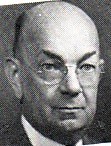 As the subsequent ),cars have shown, the results of the election of officers for 1914 were fortunate both for
Washington Council and for the Order. Brother Leo A. Rover was elected Grand Knight over Brother Gardiner by a
vote of 121 to 41; Brother Colliflower defeated Brother Eckert for Deputy Grand Knight, 90 to 66; and Brother E.
J. Collins was chosen Recorder, 102 to 37. The splendid achievements of Brother Rover, both as Grand Knight and
as State Deputy, arc still alive in our memory. His eloquence, too, has thrilled us on many occasions; whenever he
has been asked, "The Voice" has responded most willingly and effectively. His degree work has been highly
impressive. The record of his term of office is here printed as he wrote it.
As the subsequent ),cars have shown, the results of the election of officers for 1914 were fortunate both for
Washington Council and for the Order. Brother Leo A. Rover was elected Grand Knight over Brother Gardiner by a
vote of 121 to 41; Brother Colliflower defeated Brother Eckert for Deputy Grand Knight, 90 to 66; and Brother E.
J. Collins was chosen Recorder, 102 to 37. The splendid achievements of Brother Rover, both as Grand Knight and
as State Deputy, arc still alive in our memory. His eloquence, too, has thrilled us on many occasions; whenever he
has been asked, "The Voice" has responded most willingly and effectively. His degree work has been highly
impressive. The record of his term of office is here printed as he wrote it.
"When I was elected Grand Knight on October 14, 1913, the Council, then existing for about sixteen years,
had established a reputation in Knights of Columbus circles in Washington and elsewhere as one of the most
efficiently conducted subordinate councils of the Order. It was composed largely of business and professional men,
who brought to its management sound and enduring business principles, and as well a lively and sincere devotion to
Catholic principles. The spirit was excellent, meetings were well attended and the business of the Council was
conducted intelligently and with dispatch. I was then only 25 years of age, and naturally proceeded very cautiously
in attempting to introduce new ideas. However, I soon noted an inclination to follow along the simple and orthodox
lines that one would expect of a council born when the Order itself was quite young. Most of the charter members
were still active, and a large majority of the membership was close enough to the organization of the Council to still
have the enthusiasm and ardor expected of men so closely allied to the Council's beginning.
"In other councils at that time, younger men were joining in large numbers; through a closer alliance with the
Catholic University student body and the activities of other younger men, who joined, as I did, at the time of the
unveiling of the Columbus statue in Washington, quite a demand for more social activities, for more events that
appealed to the younger set came to the fore, and I believe it can be said that such activities were wisely fostered
and extended during my two years as Grand Knight without in anywise sacrificing the basic objectives of the
Council. If I were egotistical I would say that the administration of the revered and noble Brother Mudd marked say
the end of an era and that my administration was the beginning of a new era.
"After my election for my first term events moved rather rapidly. At the first meeting presided over by me I
announced that all meetings would be called to order promptly at 8:00 o'clock, and this prompt beginning
of meetings was pretty well adhered to during my two years of service. "At this meeting Reverend Bertrand
L. Conway, the well known Paulist, delivered a lecture on the Order and the Church.
"Following in a few weeks Past Grand Knight W. P. Malone presented on behalf of the Council a very
beautiful witch to Dr. Mudd commemorating his splendid service as Grand Knight,
"Early in January, 1914, Dr. Mudd was appointed to prepare a history of the Council; for reasons beyond the
Doctor's control this undertaking never came to .fruition.
"We then find the students of Catholic University entertaining the Council; Brother Danny O'Brien
exhibiting a fine group of amateur boxers and the Council forming a relay team and its winning the first race;
then Father O'Grady delivered a talk on Socialism-a subject then being as widely discussed as is Communism at
the present time.
"The two meetings in the month of March, 1914, the first of the very - delightful and interesting Past Grand Knights
meetings Were inaugurated. This innovation was proposed by the ever faithful soul, the late Dr. A. I). Wilkinson, a Past
Grand Knight and our Financial Secretary for many years. At this meeting Brother Bernard M. Bridget, the first Grand
Knight of the Council, took over the meeting, and with many of his officers recounted the doings of the Council in 1897.
Periodically during my two terms of office, in chronological order the other Past Grand Knights presided and gave us a
running verbal history of the Order; these Past Grand Knights were Ucker, Crosson, Harrington, Wilkinson and Malone.
"In May, 1914, this country and Mexico were on the verge of war; a brother Knight of Columbus, the
Honorable Nelson O'Shaughnessy, had performed the exacting duties of the American Charge d'Affaires in
Mexico City with very great distinction. Learning that he had just returned to this country to report to President
Wilson, at the suggestion of Dr. Wilkinson I invited him to address the Council; he graciously consented and was
the central figure of a most interesting meeting. The accompanying entertainment was furnished by Brothers
George O'Connor, Matt Home and Maurice Fitzgerald.
"At the meeting of July 28, 1914, it was reported that both the Grand Knight and the Deputy Grand Knight
would soon be married. Dr. E. J. Collins, the Recorder, noted that Brother Harrington (a confirmed bachelor) was
called upon "To give both benedicts such advice as in his long experience he might feel competent to advance."
In October 1914, practically all the officers were re-elected. In March the first memorial service that had been
conducted in many years was observed by the Council. Brother Charles A. Korbley, then a member of the House
of Representatives, delivered a very eloquent eulogy.
"In May 1915 two events happened that had never happened before; the Deputy Grand Knight became the
father of a baby girl, and the Council's bowling team wan the Inter-Council bowling tournament.
(Note: On October 12, 1915, just after the termination of my second term and at the first meeting presided over
by Brother James E. Colliflower, my successor, the birth of my first daughter was announced, and the Council
presented me with a beautiful silver service in commemoration of my service as Grand Knight.)
"In June 1915 an extremely interesting meeting was held at which Reverend Peter Guilday (not yet a
member of our Council) and Admiral William S. Benson, then Chief of Naval Operations, were the speakers, and
the vocal entertainment was supplied by the then very prominent tenor, Brother Fiske O'Hara.
"In August our Council meeting was held on a river steamer during the course of a moonlight trip down
the Potomac.
"In September 1915 Brother Colliflower was unanimously elected Grand Knight and I bowed out at the
second meeting in the month.
"Many members who afterwards made their mark in the Council were admitted during my term of office,
mostly by transfer. Among those I note John A. Shell who afterwards became a Deputy Register of Wills and one
of our District Deputies; Brother James A. Sullivan, afterwards Grand Knight and State Deputy; Reverend Father
Francis J. Hurney, who became quite prominent as pastor of Immaculate Conception Church and a leader in the
Catholic drama movement; Brother William E. Leahy, one of the country's outstanding lawyers and director of
the Selective Service System of the District of Columbia during most of World War II, with an outstanding
record, being recognized by President Truman who presented him with the highest war award that can be
conferred upon a civilian; Brother A. J. Scullen, later Grand Knight and Dean of the Engineering Department at
the Catholic University; Brother Frank O'Hara, afterward Grand Knight and a prominent member of the faculty
of the Catholic University and the first Dean of Columbus University; Brother Thomas J. Fitzgerald, who later
became a Grand Knight; Brother W. J. Wilson, the Superintendent of the Washington Terminal Company; and
Reverend Father Guilday, later elevated to the Monsignorship, a very active Chaplain in our Council and a leading
Catholic historian in this country."
Return to History Index
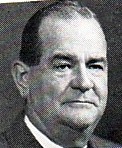 Genial Brother "Jim" Colliflower brought to the position of Grand Knight during the next two years the
same energetic and magnetic personality which has created his successful business, and which has commanded his
capable leadership in countless civic and religious movements. It was a most fitting recognition of this service
that his Alma Mater, Georgetown University, lately conferred upon him the honorary degree of Doctor of Laws.
Genial Brother "Jim" Colliflower brought to the position of Grand Knight during the next two years the
same energetic and magnetic personality which has created his successful business, and which has commanded his
capable leadership in countless civic and religious movements. It was a most fitting recognition of this service
that his Alma Mater, Georgetown University, lately conferred upon him the honorary degree of Doctor of Laws.
The call to arms twice disturbed the placid routine of Council affairs during his administration. First came
the border troubles and the expedition into Mexico which made it necessary for many of our brothers to join their
military units. To these the Council, through appropriations, sent magazines and other reading matter; nor were
they forgotten at the Thanksgiving and Christmas parties. Then came the outbreak of the first World War, which
further depleted our ranks. The dues of those in service were paid by the Council, generous contributions were
made to the Red Cross, and subscriptions authorized for the Liberty Loans. A War Camp Fund of one million
dollars was raised by the Order for recreation centers at the principal camps, for enlisting the services of
chaplains in addition to the Catholic priests in the regular corps, for furnishing secretaries at home and abroad,
and for supplying creature comforts for those in service, irrespective of creed. This is one of the most glorious
chapters in the entire history of the Order. An assessment of two dollars per member was levied for this fund. At a
well-attended meeting of the Council, July 24, 1917, this project was fully discussed by the Rev. Louis J. O'Hern,
C.S.P., the official representative of the hierarchy in all matters pertaining to chaplains; and by Brother Col. P. H.
Callahan, chairman of the Knights of Columbus Committee on War Camp Activities.
The war made necessary the resignation of our Treasurer, Brother Major R. J. Donnelly. He was succeeded
by Brother H. E. Brooks who most faithfully served in that position until his resignation in 1945. Brother Lavins,
the Lecturer, was presented, after enlistment, with a gold ring. A committee was appointed, to act with like
committees of our sister councils, in the dedication of the Knights of Columbus hut at Camp Meade. At every
meeting there were letters to be read from brothers in service at home and abroad.
Death laid a heavy hand upon the Council during these years: Past Grand Knight Mudd, Past Recorder Dr.
E. J. Collins; and Past Treasurer Brother Rauscher were mourned by the Council to whose interests they had
devoted many years of useful service. Doctor Mudd's death, in particular, brought an outpouring of sorrow and
regret which was expressed in speech and letter. A beautifully worded resolution, prepared by Brothers
Harrington and Repetti, was recorded. In May 1916, the Council held a memorial service for seventy-one
deceased brothers.
It often happens in life that for every loss there is again. Such compensation came to the Council in the
acquisition of several outstanding members; on October 12, 1915, Brother Rev. Dr. Peter Guilday was admitted by
transfer into Washington Council.
In spite of the shadow of war, during the Colliflower administration there was much diverting entertainment.
November 9, 1915, there was held a Catholic University Night of songs and addresses; at the Past Grand Knight's
meeting, November 23, Brother Repetti reviewed his administration; on December 14, the Holy Name Society of Ft.
Meyer entertained the Council. Addresses were made by Brothers Rear Admiral Benson, Brigadier General
McIntire, Father O'Hern, the Hon. Joseph Dyer, commander-in-chief of the Spanish War Veterans; and by Sergeant
Rawley. Songs and piano selections featured the entertainment. At. the Christmas party, December 20, 1915, the
Holy Name Society of Alexandria gave a concert. The anniversary celebration of 1916 was marked by the Third
Degree under Past Grand Knight Crosson, followed by a supper at Rauscher's. Among the lectures presented at this
time was one by Professor Charles H. McCarthy, of the Knights of Columbus Chair of American History, Catholic
University; and an illustrated talk by Brother P. J. Haltigan, on "Congress: Its History, Its Leaders, and How It
Works." The Knights of Columbus Fellows of Catholic University agreed to hold an annual debate for a loving cup
which was donated by Brother Edward Voight. The first subject, debated February 27, 1917, concerned "Suffrage
for the District of Columbia."
Several matters bearing directly upon policies of the Council and the Order were considered. At one of the
early meetings of the Colliflower administration, a long debate followed the charge that the outgoing Lecturer had
been extravagant in his expenditures for entertainment and had exceeded his legal allotment for this purpose. It was
shown conclusively that this was not the case. Nevertheless, the treasury "watch dogs" thought it would be wise for
the Council to save at least one thousand dollars a year. In 1916 the by-laws were completely overhauled. Early this
year a committee was appointed to consider the conditions under which the Order's scholarships were awarded at
Catholic University and to recommend, if feasible, that undergraduates be allowed to share in these advantages. No
change followed. A proposal of Keane Council for the merger of the five councils was rejected; and the necessity
for a new home was several times debated.
There were to be tragic years ahead, but Brother Colliflower turned over to his Successor a Council of over
600 members, with a healthy treasury, and with interest well sustained in spite of depressing and uncertain condi-
tions. After an interval of thirty years, Past Grand Knight Colliflower is again serving his Council with the same
efficient leadership during this Golden Jubilee year, as chairman of the Council's Advisory Committee of Past
Grand Knights.
Return to History Index
 The succeeding Grand Knight was no novelty as a presiding officer of the Council. His duties as head coach
of the Naval Academy's basketball team frequently made it necessary for Grand Knight Colliflower to call upon his
Deputy Grand Knight to preside over the meetings. When Brother Stock was re-elected for a second term, the
situation must have been really boring and monotonous to the members. The new Grand Knight came to
Washington Council by transfer from Mobile Council. He had served as organist for many years, and before his
election as Deputy Grand Knight had been the Council's Treasurer.
The succeeding Grand Knight was no novelty as a presiding officer of the Council. His duties as head coach
of the Naval Academy's basketball team frequently made it necessary for Grand Knight Colliflower to call upon his
Deputy Grand Knight to preside over the meetings. When Brother Stock was re-elected for a second term, the
situation must have been really boring and monotonous to the members. The new Grand Knight came to
Washington Council by transfer from Mobile Council. He had served as organist for many years, and before his
election as Deputy Grand Knight had been the Council's Treasurer.
The picture that recurs to the memory of this war-time Grand Knight is one of confused tones and
colors. Surrendering our home to be used by soldiers and sailors for recreational purposes, the Council found
temporary shelter in St. Mary's Hall on Fifth Street. Extraordinary efforts were made by the officers to sustain
the interest of the brothers at home, and to entertain those from afar. War pictures, lectures, and entertainment
of varied nature were provided. Those were hectic days: correspondence that increased with every day, visits to
the hospitals, arrangements for funerals, pleas for Liberty Loans and the War Camp fund, letters from Brothers
"over there", the dreadful flu which claimed as victims some of our active members and which postponed our
meetings, Christmas boxes to be sent to those in camp and across seas, visitations and errands of mercy for
parents and wives who naturally wrote to "Washington Council" for aid and inquiry if the son or husband was a
Knight of Columbus. Without knowledge of the number and names of the councils here, it seemed to these the
speediest contact to make through the general address of "The Washington Council of the Knights of
Columbus."
When in 1918 the Supreme Council appealed to the subordinate councils to furnish Knights of Columbus
secretaries in field service, Brother Philip S. Warren, one of our trustees, offered his services and went abroad in
that capacity. He later presented to the Council a gavel made of wood which was taken from the corner post of
the first Knights of Columbus hut erected in France, and trimmed with copper from a seaplane that had seen
service in the Bay of Biscay. The Council furnished a second secretary in the person of Brother Thomas Cullen.
Brother Stock's administration got off to a good start when the meeting of October 23, 1917, was set aside
to honor four Brothers who had recently received high and unusual recognition: Brother W. Gwynn Gardiner had
been appointed Commissioner of the District of Columbia; Brother Constantine J. Smyth, Chief Justice of the
District Court of Appeals; Brother Major (later Colonel) J. Easby-Smith who was attached to the office of the
judge Advocate General to assist in the formulation of the draft regulations; and Brother Admiral Benson, Chief
of Naval Operations.
The Grand Knight's connections with Carnegie Institution and the Catholic University made it possible for
him to arrange a series of lectures of timely significance and interest. Capt. Paul Rostand of the French Army
gave a talk, with motion pictures, on "France in Arms"; Dr. J. F. Jameson, chief of the Division of Historical
Research of Carnegie Institution, lectured on "The Growth of Nationalism in Modern Times"; Brother Dr. Guilday spoke on "The Church, the Guardian of Liberty"; Rev. Dr. James J. Fox, Catholic University, "Meaning of
Patriotism from the Catholic Viewpoint"; Brother Hon. Maurice Francis Egan, former Minister to Denmark,
"Denmark and Its Relations with Prussia"; Dr. Henry B. Learned, of the Department of Justice, "The Secret
Service During the War"; Professor Joseph Shafer, University of Oregon, "Some After Peace Problems"; Mon-
signor Thomas, Rector of St. Patrick's, "Will the Republic Endure?"; and Brother Monsignor Guilday, "German
Atrocities at the University of Louvain." There was also a speech by Sergeant John Heffernan who had been
returned by General Pershing from France, with a party of fifty soldiers, to stimulate the Third Liberty Loan
campaign.
May 28, 1918, a memorial service was held for the twelve brothers who had died during the year; the
eulogy was delivered by Brother Rover. Past Grand Knight Rover also spoke for the Knights of Columbus, on the
last
Sunday of the following month at an outdoor service at St. Anthony's, Brookland. The midsummer meeting
of the Council that year was held at Father Rosensteel's, Forest Glen, Md.
The historical sense of the Council prompted Brother Crosson to move that the Bulletin and Monthly be
bound; and a committee was appointed to compile a record of all brothers in the service or who were doing war
work. Unfortunately neither project came to successful fruition. Initiations were frequent, but there is nowhere, so
far as is known, the list of the names of the 350 (approximately) who were in service. At one of the initiations all
candidates and members of the exemplifying teams were in uniform at all three degrees. When the Council had
attained a membership of one thousand the anniversary celebration, held at the Dewey Hotel, was an unusually
brilliant affair. Past Grand Knight Easby-Smith acted as toastmaster. Then glorious peace, and the years of
reconstruction.
Return to History Index
 If it is true, as Past Grand Knight Rover writes in his account of his term of office, that his election marked
the departure from the old regime to a new, it is equally true that Brother Frank O'Hara's election after the First
World War began another transition, when problems of peace were pressing for solution. In the newly-elected
Grand Knight, the Council furnished a trained and experienced educator to assume charge of the Order's local post-
war educational program. O'Hara was then head of the Department of Economics at Catholic University.
If it is true, as Past Grand Knight Rover writes in his account of his term of office, that his election marked
the departure from the old regime to a new, it is equally true that Brother Frank O'Hara's election after the First
World War began another transition, when problems of peace were pressing for solution. In the newly-elected
Grand Knight, the Council furnished a trained and experienced educator to assume charge of the Order's local post-
war educational program. O'Hara was then head of the Department of Economics at Catholic University.
At the close of the war a substantial portion of the Order's War Camp fund remained unexpended. Many
suggestions were advanced for an appropriate disposition of this balance. The sum had been made possible by con-
tributors of every creed for the good of the men in service. What remained, therefore, did not actually belong to the
Order which had acted merely as trustee of the fund. Even less did it belong to the subordinate councils. It was
wisely determined to use it for the benefit of the veterans in whose behalf the fund was originally established. This
was done by offering educational facilities without cost to all returning survivors, men and women, irrespective of
creed, who wished to take advantage of such opportunities. Here in Washington the program began as the Knights
of Columbus Evening School where high-school subjects were taught by a capable faculty which included Grand
Knight O'Hara and several of his Council's personnel. Very soon Doctor O'Hara was appointed dean of this school
which added liberal and professional courses, reorganized itself into schools, and developed its curricula and
teaching staff until today, as Columbus University, it serves the Nation's Capital in a most useful and practical
manner. Washington Council can always take well-merited pride in the contribution which Grand Knight O'Hara
made to the establishment and development of this undertaking, and in the part played by many later officials in its
successful administration.
The E Street building, was returned to the councils, December 20, 1919. It was not long thereafter before
arguments were resumed for its sale. Resolutions, motions, and debates on the subject continued to draw their
weary lengths along. It had been voted to sell the home at a price to be fixed by a board of three-one to be selected
by the Building Company, one by any interested purchaser, and the third by these two; or to accept a three-year
lease at $25,000. During Grand Knight Stock's last term a proposal to purchase the property running from the
building to the corner of Sixth Street had been rejected. So far two councils had consented to the sale of the
building.
The next move was made by the Council, May 11, 1920, when a motion was carried to the effect that if,
within ninety days, seventy-five percent of the membership in the jurisdiction had not returned questionnaires
indicating the desire for a new building, Washington Council should consider the advisability of withdrawing
from the building and of erecting a new home for its own use. In the meantime still another resolution, looking
to the amalgamation of the five councils, was defeated.
On December 22, 1920, a general home committee recommended a campaign or drive for funds to be
conducted by a professional organizer. To carry out this recommendation it was further suggested that a
committee of five, one from each council, be appointed; that when the necessary funds had thus been raised, a
committee of five, "qualified by experience", be constituted with complete power to select a site for the erection
of a new home, and to determine the character of such a building; that the dues of the councils be raised to
twelve dollars, one-half thereof to be paid into the fund for the proposed building; and that the initiation fee be
raised to fifteen dollars, the additional five dollars also to be paid into this fund. If this resolution engendered
any spirit of optimism in the minds of its sponsors it was rudely shattered when, on February 8, 1921. the
committee to which it was referred made a very practical report as follows: that it would be impossible to raise
by subscription $500,000 which would be required for the erection of a new building; that less than fifty percent
of the members had been sufficiently interested to return the questionnaire on the subject which had been sent to
all; that only $11,261 had been promised in cash for the purpose and $98,000 pledged for the purchase of bonds;
that at least $250,000 would be necessary to finance a $500,000 building; that this would leave a debt of the
same amount which, with interest, taxes, insurance, and operating expenses could not possibly be paid out of an
allowance from dues and initiation fees. The committee advised the abandonment of the project on so large a
scale, but concurred in the proposal to raise dues and initiation fees through which means $25,000 or $30,000
could be accumulated for payment on a site within the Order's means.
The subject was again brought before the Council at the meeting of March 8, 1921, when Brother Sohon's
motion carried that $500 be made available to secure an option on the purchase of Carroll Institute on 10th
Street; and that unless two other councils at their next meetings should instruct their representatives in the
Building Company to vote for this purchase, Washington Council should acquire the property for its sole
benefit. Two supporting resolutions were unanimously adopted at the meeting of May 10, 1921: the first that the
treasurer of the Council be instructed to convert into cash sufficient investments to enable the Council to
arrange for the purchase of the property; the second, that the Building Company be authorized to sell the home
at 606 E Street on the best terms possible, provided possession be not given until the Carroll Institute building
was ready for occupancy by the councils. This new property was acquired for $65,000, of which amount $5,000
was paid in cash, $50,000 was secured by a first trust, and $10,000 by a second trust note, both of which notes
were payable on or before June 1, 1926, with interest at six percent. The Building Company recommended that
each council raise its monthly dues to twelve dollars, from which amount fifty cents per member be paid to the
company to cover maintenance and operation charges of the new home. The Council concurred in these
recommendations, but voted that for members living more than thirty miles from the boundary of the District of
Columbia the dues should be nine dollars instead of twelve. The Council also advocated the purchase of the
adjoining property on the north of the building which, it was stated, could be bought for $4,500.
So the long contest over the disposal of the E Street home came to an end but with much questioning of motives
involved and with widespread and reasonable doubts of the material advantages to be gained by the transfer. The new hall
was no more accessible than the old, the neighborhood was certainly no improvement over that which surrounded the former
home, and in spite of the large amount spent on the remodeling and redecoration of the newly acquired building it could not
be converted into a completely satisfactory or attractive home.
In the spring of 1920 the by-laws seem to have disappeared; at the meeting of May 28, it was voted that
effort be made to find them. They were wanted for the purpose of adding an amendment which would fix the first
meeting in August as the time for making nominations for office, the names of all candidates with a statement
from each as to his platform to be printed in the September issue of the Monthly.
Whether all this had any effect on the election of September 14, 1920, cannot be stated. It is true that not
since the spirited Harrington-Wilkinson contest for1900, nor since, has there been so exciting an election. For
reasons which did not seem justifiable to the "steering committee", an insurgent movement was organized during
the latter part of the summer for the purpose of defeating the Grand Knight for a second term. Brother Fred Rice,
afterwards State Deputy, was thought to have the desired personality and popularity to attract sufficient votes for
his success. The campaign was carefully planned by both sides. Complete slates of officers were decided upon
with the purpose of furnishing maximum appeal to the membership; committees were appointed to insure a large
attendance, pledged in advance to support each side's favorite; nominating speeches were carefully considered, and
effective strategy outlined. Grand Knight O'Hara was placed in nomination by Brothers Stock, Hartnett, and Rover,
in that order. The name of Brother Rice was presented by Brothers Mat Halloran, a favorite in the early years of the
Council, McKee, and Tom Cullen. The result was O'Hara 238 votes; Rice 144. For Deputy Grand Knight, Brother
Densmore had been selected by the Rice party to oppose Brother "Jimmy" Sullivan who had been chosen by the
"regulars" to add strength to the O'Hara ticket; but when the vote for Grand Knight was announced, Brother
Densmore withdrew his name from nomination. Sullivan and all other officers on the regular ticket were then
elected without contest.
Intellectual fare offered by the O'Hara administration included a lecture by the Rev. Dr. Edward A. Pace, of
Catholic University, on "The Psychology of Selling"; and a lecture on Sociology by the Rev. Dr. John A. Ryan, The
second Voight Cup debate discussed the question whether the high cost of living was due to the inflation of the
currency or to the growth of large bank deposits. The Rev. Dr. John O'Grady spoke on the Boy Welfare Movement after
which a committee of twenty-five was appointed to work with the speaker in his campaign. It was later reported that this committee was in touch with fifteen delinquent boys and doing effective work. An
appropriation of twenty-five dollars was made for this cause.
The twenty-third anniversary celebration was held in the Catholic University gymnasium with an
entertainment of vaudeville and refreshments. The usual donations were made for charitable purposes; in addition,
fifty dollars were appropriated to the Cardinal Mercier fund, and one hundred dollars to St. Mary's Industrial
School, Baltimore. The Council also affiliated with the National Catholic Welfare Council of Catholic Men. On
January 25, 1921, Past Grand Knight Rover reviewed the events of his administration. At the close of the O'Hara
administration the membership stood at 1392.
Return to History Index
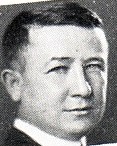 There was no opposition to the elevation of the popular Deputy Grand Knight, "Jimmy" Sullivan, to the
Grand Knight's chair. He had served the Council most faithfully in several capacities and was a general favorite
with the members. Like so many Past Grand Knights, he has never lost interest in the Council's welfare. This
continuing concern of our former presiding officers is characteristic of Washington Council, and accounts in
large measure for its consistent growth and for the spirit of unanimity which has marked its progress.
There was no opposition to the elevation of the popular Deputy Grand Knight, "Jimmy" Sullivan, to the
Grand Knight's chair. He had served the Council most faithfully in several capacities and was a general favorite
with the members. Like so many Past Grand Knights, he has never lost interest in the Council's welfare. This
continuing concern of our former presiding officers is characteristic of Washington Council, and accounts in
large measure for its consistent growth and for the spirit of unanimity which has marked its progress.
Grand Knight Sullivan presided at the Council's last meeting in the E Street building and at its first meeting
in the new home which was officially opened on February 14, 1922, in the presence of the late Most Reverend
Archbishop Curley, and other distinguished guests. The final report on this transaction showed the purchase of the
Carroll Institute property for $65,000; improvements, furniture, etc., $50,000; purchase of the adjacent lot, $2,750-a
total of $117,750. The E Street property was sold for $35,000. The Council voted against erecting an addition to the
new home at this time.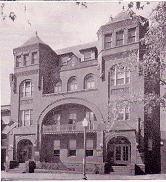
The twenty-fifth anniversary of the Council was held at the City Club on G Street. The toastmaster at the
dinner was Brother Henry Sohon, a charter member; Past Grand Knight Crosson, also a charter member, spoke for the
older members, and Brother J. Eugene Gallery for the younger element. Later when the Council had attained a
membership of 1,500 a special. and appropriate celebration was held. There was a First Degree and entertainment.
Other events during the Sullivan administration included talks by Dr. James A. Gannon on Cancer; and by
the Hon. Martin Trieviesa, mayor of San Juan and former acting governor, on Puerto Rico. Past Grand Knight
Colliflower spoke on his administration; the Barrett boxes were installed in the Council chamber, in honor of
Chaplain Father Barrett, for the reception of voluntary contributions to be used for charitable purposes; a card party
and dance were held at the Washington Hotel for the Council's relief fund; a gavel was presented to the Council by
ex-service men at St. Elizabeth's hospital; a barbecue was held at Keane's farm; in addition to the usual donations to
the orphan asylums of the city, the sum of $250 was appropriated to help finance the Sisters' Institute organized for
the aid of the teaching Sisters of Washington, and a further appropriation of one hundred dollars was made for the
Knights of Columbus Band. The death of our first Grand Knight was reported at the meeting of June 12, 1923.
Past Grand Knight Sullivan thus reports one other item of his administration: "During this time a so-
called insurgent group was organized in the Supreme Council to limit the terms of officers and directors. Prior to
the meeting of the State Council your Grand Knight read the insurgent program without comment. No instruction
or suggestion was made to the State Council delegates. Your Grand Knight and delegates voted approval in the
State Council of this program. A minority group repudiated this action in the Council meeting, whereupon the
Grand Knight replied that he had read the program to the Council before the State convention and receiving no
instruction he and the delegates used their own judgment. His action was based on the belief that it was to the
best interest of the Order to give opportunity to capable men of holding office rather than to retain too long in
office any individual or group." He was supported by the Council.
When Grand Knight Sullivan retired the membership was 1518, the largest in the Council's history to that
time.
Return to History Index
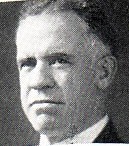 The contributions made by Grand Knight Fitzgerald to the progress and betterment of the Council were
practical and substantial. Even today when Tom is seen at the meetings the word "membership" at once comes to
the minds of everybody present. For years he has spoken on the subject; his enthusiasm and earnest appeals have
brought fruitful results.
The contributions made by Grand Knight Fitzgerald to the progress and betterment of the Council were
practical and substantial. Even today when Tom is seen at the meetings the word "membership" at once comes to
the minds of everybody present. For years he has spoken on the subject; his enthusiasm and earnest appeals have
brought fruitful results.
The new Grand Knight came to the chair with a definite, well-defined program around which all
subordinate activities of his administration were centered. His two objectives were increased membership and
increased relief funds for the sick. In the first he was ably assisted by his Chancellor, Brother Gallery. By reason of
the fellowships established by the Order at Catholic University and because of the active interest shown by some
members of the faculty in the Council, that institution offered a fertile field for spreading the seeds of
Columbianism. To stimulate interest there, in February 1925, the Council arranged a smoker at the University for
faculty and students. As a result of the discussion at this affair, a Knights of Columbus Club was organized which
was responsible for the initiation of about fifty students into the Council annually during the next few years. This
was decidedly worth while, for not only did many of these students bring new interests to the meetings (a few
served as officers) but upon graduation they became missionaries in their own communities for the principles of the
Order.
To provide additional relief funds for the Council, dances and card parties were held at the Washington
Hotel, January 18 and November 21, 1924, the latter under the chairmanship of Deputy Grand Knight Edward
Ready; and a later dance was given, early in 1925, at the former home on Tenth Street, tinder the direction of
Lecturer George A. Viehmann. All of these affairs were financially and socially successful.
At this time the subject of Catholic Action on the part of the laity was being stressed. The Chaplain, Rev.
Dr. Charles A. Hart, of Catholic University, made several interesting and instructive talks on the topic. In April,
1925, the Council sponsored a prize essay contest in the high schools of the city on "The Part Played by Catholics
in Establishing the Seat of Government in the District of Columbia", and appropriated one hundred dollars for
prizes. It is certain that this effort was instrumental in bringing to the minds of many young students information on
a Catholic contribution to our history which before had been unknown.
Perhaps the most important action taken by the Council during the Fitzgerald administration was its vote to
continue the Knights of Columbus Evening School. Adverse action would have resulted in the closing of the school, since
two other councils had opposed its continuance. Thus the Columbus University of today was made possible.
Return to History Index
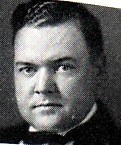 It would perhaps be more respectful to designate the succeeding Grand Knight as the Rev. J, Eugene
Gallery, S.J. But to the members who then saluted him as "Worthy Grand Knight", he was simply and
affectionately known as "Gene"; so the less formal appellation seems more fitting in this account. It is a unique
circumstance in the history of any council that a brother should successively occupy the chairs of Chancellor,
Deputy Grand Knight, and Grand Knight, and eventually receive ordination to the priesthood. This is Washington
Council's proud boast; but for all the dignity and learning that cloak the rector of the University of Scranton,
Father Gallery is remembered in these pages as a most efficient Grand Knight who gave to the Council a solid,
progressive administration.
It would perhaps be more respectful to designate the succeeding Grand Knight as the Rev. J, Eugene
Gallery, S.J. But to the members who then saluted him as "Worthy Grand Knight", he was simply and
affectionately known as "Gene"; so the less formal appellation seems more fitting in this account. It is a unique
circumstance in the history of any council that a brother should successively occupy the chairs of Chancellor,
Deputy Grand Knight, and Grand Knight, and eventually receive ordination to the priesthood. This is Washington
Council's proud boast; but for all the dignity and learning that cloak the rector of the University of Scranton,
Father Gallery is remembered in these pages as a most efficient Grand Knight who gave to the Council a solid,
progressive administration.
The character of his administration reflected his own charitable, religious, and intellectual interests.
When, at the meeting of October 27, 1925, a resolution of the convention of the Scottish Rite Masons urging
compulsory attendance at public schools was considered, a motion of protest was passed, with the suggestion that
"the most practical and effective way of accepting the challenge was for Knights of Columbus to intensify their
activity in their respective parishes." At the next meeting it was thought that Catholic education should be
promoted by making free the parish grammar schools and high schools in the District of Columbia to our Catholic
boys and girls. This matter was referred to the executive committee of the Council and to the State Council for
investigation and report. No further action is recorded. The Council's interest in Archbishop Curley's scholarship
fund was generous Through appropriations and personal donations about 51,700 was raised. The sum of $120 was
given to Rev. Dr. O'Grady of the Catholic Charities to be used in sending needy boys to camp. The Council also
favored the idea of a central Catholic employment agency.
An attractive and instructive feature of many meetings, introduced by Grand Knight Gallery, was a
forum at which members discussed education, immigration, and other timely topics. This was a popular
innovation. On February 23, 1926, students of the Knights of Columbus Evening School debated the subject of
the proposed Department of Federal Education.
In 1926-1927, Mexico was prominent in the news. Early in January of the former year a conflict
between Church and State was precipitated over the religious and educational provisions of the Mexican
constitution. This conflict reached a crisis on July 31, when the clergy, in protest against the impossible
conditions imposed by the Government, refused to accept these provisions. Churches and Church property were
nationalized and taken in charge by government agents; many of the clergy and the episcopate were deported; and
there were several uprisings on the part of the Catholic,. A mass meeting was held here in Washington to protest
against these religious persecutions. The Council ratified the resolution passed at this meeting. The Order
established a Mexican Fund for the relief of the Church to which Washington Council remitted the sum of
$1,933.50, a levy of $1.50 per member. A lecture on the subject was given under the auspices of the councils,
January 27, 1927, by Brother Joseph Scott of California.
Lectures during this term were given by the Rev. Frank Goodall, Past Grand Knight of Notre Dame
Council, Indiana, an the "Boy-Work" courses established by the Order; by the Rev. Dr. Felix Kirsch, Catholic
University, on Psychology; by the always popular Rev. Dr. Peter Guiday; and by Father Maguire, S.J., who spoke
on the Lay Retreat Movement, following which a resolution was passed that the Council hold a week-end retreat
at Manresa. Thus was begun the annual custom of a Knights of Columbus retreat on the Severn.
It was in September 1926, that the resolution of the Supreme Council for the appointment of the
Financial Secretary instead of his election went into effect. Past Grand Knight Fitzgerald was seldom silent at the
meetings on the subject of membership. Memorial services for 123 members who had died since 1917 were held
in June 1927; Past Grand Knight Stock delivered the eulogy.
On the less serious side there was good entertainment. The 1926 Anniversary Dinner was held at
Rauscher's at a cost of two dollars per plate. Past Grand Knight Stock was the toastmaster and the main address
was given by Congressman-at-large, the Hon. Henry R. Rathbone of Illinois. He spoke on Lincoln, and as his
father and mother were in the presidential box the night Lincoln was shot, he was able to present many interesting
sidelights of the tragedy. The 1927 dinner was also held at Rauscher's (the price had advanced fifty cents), with
Brother William E. Leahy as toastmaster. The speaker of the evening- was the Hon. Charles M. Huesler, former
Chief Justice of the Supreme Court of Maryland, who urged the eradication of communism and bigotry, not by
disputation, but by education and example.
The August 1926 meeting was held at the Congressional Club; in 1927 it was held at the Bannockburn
Country Club. The bowling league was active during these years. At the meeting of September 14, 1926, the
Vincent Lopez band entertained the Council. Through the efforts of Past Grand Knight Colliflower, a delegation
from the Edward Douglas White Council of Clarendon, Va., visited and entertained the Council on February 8,
1927. The usual midwinter balls were given at the Mayflower.
Return to History Index
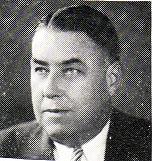 For the third time the Council selected its presiding officer from the faculty of Catholic University.
Grand Knight Scullen was born in Little Falls, N. Y., and came to Washington Council by transfer from the
council of that city. A graduate of Rensselaer Polytechnic institute, he was at this time professor of Civil
Engineering at our University. He had served as a delegate to the Chapter and as Deputy Grand Knight for two
years before his promotion; he was always very active in important committee assignments. He was later
appointed District Deputy.
For the third time the Council selected its presiding officer from the faculty of Catholic University.
Grand Knight Scullen was born in Little Falls, N. Y., and came to Washington Council by transfer from the
council of that city. A graduate of Rensselaer Polytechnic institute, he was at this time professor of Civil
Engineering at our University. He had served as a delegate to the Chapter and as Deputy Grand Knight for two
years before his promotion; he was always very active in important committee assignments. He was later
appointed District Deputy.
With no neglect of interest in matters of serious Catholic and civic import, the Scullen administration
recognized especially the desires of the younger element in the Council for more social and athletic affairs. The
bowling league continued to flourish; gymnasium classes were organized; boxing bouts were frequent. There was
a colorful Halloween party, a "German Night" followed by a supper of German dishes, an "Old Timers' Night",
and an "Advertisers' Night" at which there were drawings for forty-one prizes donated by the merchants of
Washington Council. The St. Patrick players, under the direction of Father Hurney, presented an enjoyable
entertainment. On Easter Monday, 1928, the Council held a charity ball for the benefit of Archbishop Curley's
scholarship fund, and earlier participated in a joint kermis for the same cause. An appropriation of fifty dollars
was made to Archbishop Curley's Jubilee Fund.
Grand Knight Scullen reorganized the Knights of Columbus Club at Catholic University, and received in
return a large number of applications from the students. There was also formed, by State Deputy Darr, a club of
Past Grand Knights of all the councils in the city to guide and promote the activities of the Order in this
jurisdiction. Whether it was thought that such an organization would overlap the work of the Chapter, or because of
lack of interest, the club did little to justify its brief existence.
The 1928 Anniversary Banquet was held at the Willard, April 23. Past Grand Knight Colliflower acted as
toastmaster; Brother Harrington spoke f or the charter members and Brother Tomlinson for the newly-initiated.
The address of the evening was given by Past Grand Knight Stock who spoke on "The Historical Background of the
Catholic Question." The thirty-second anniversary dinner was given, April 30, 1929, at the Hamilton Hotel. Brother
Leahy was toastmaster, and Past Grand Knight Rover as principal speaker took as his theme, "The Value and
Necessity of Keeping the Faith."
The depression continued to touch all phases of American life. Fraternal organizations were not immune
from its effect. Washington Council, for this and other reasons, was soon to enter a period which, for several years,
required careful planning and budgeting. Already a decrease in membership was beginning to show in most of the
councils in this area. Past Grand Knight Fitzgerald, at the meeting of May 14, 1929, spoke on the subject and
believed this loss was chargeable to the action of the Supreme Council in raising the minimum age for associate
membership from twenty-one to twenty-six years. A resolution in favor of restoring the former age was passed and
ordered to be presented to the State Council for reference to the approaching national convention. This was done,
but that body continued the higher age limit. The actuating motive, of course, was to increase the insurance
membership.
What May be considered the prelude to the movement for a new and separate home for Washington
Council, which culminated in the acquisition of our present quarters, was the dissatisfaction which was being
voiced at this time over the disproportionate share which the Council was paying for the maintenance of the 10th
Street building. On motion of Brother Crosson, a committee was appointed to consider this matter. Its report
disclosed that, based on the number of meetings permitted to be held during the year ending December 31, 1928, to
operate and maintain its share of the cost per meeting of the Council was $295.18, or $590.36 each month. A long
and acrimonious debate followed on the folly of such an -arrangement, on the lark of fair consideration to
Washington Council shown by the State Council, and on the unequal burden carried by the Council in maintaining
the building.
During the consideration by Congress of a "blue law" for the strict observance of Sunday, a resolution
passed by the Council termed the measure an unnecessary interference with the personal liberties of the people of
the District of Columbia." This action was part of the large body of protest which helped to defeat the bill.
During this administration a lecture w as given by the Rev. Dr. George
Johnson, of Catholic University, on "Problems of Catholic Education" and a course of Lenten instructions
by Chaplain Father Joseph Denges included a timely discussion of "'The Importance of the Catholic Press."
Return to History Index
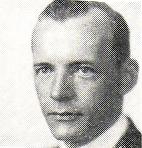 The gavel was next placed in the hands of a brother who, because of his active work in the Council, was
highly deserving of the honor. Brother Cook was initiated in 1922 and at once became interested in the membership
committee. In the short space of two years he was elected to the office of Advocate, and as such headed the
committee to revise the by-laws of the Council. In 1925 he became Chancellor, all the time continuing his work on
the membership committee. He was appointed chairman of a committee to revise the Monthly and contributed much
to the improvement of that publication which he and his committee made self-supporting. In 1927 he was elected
Deputy Grand Knight and held that position for the two years preceding his elevation to the Grand Knight's chair.
The gavel was next placed in the hands of a brother who, because of his active work in the Council, was
highly deserving of the honor. Brother Cook was initiated in 1922 and at once became interested in the membership
committee. In the short space of two years he was elected to the office of Advocate, and as such headed the
committee to revise the by-laws of the Council. In 1925 he became Chancellor, all the time continuing his work on
the membership committee. He was appointed chairman of a committee to revise the Monthly and contributed much
to the improvement of that publication which he and his committee made self-supporting. In 1927 he was elected
Deputy Grand Knight and held that position for the two years preceding his elevation to the Grand Knight's chair.
The meetings during this administration were of a varied and interesting nature. A resolution of sympathy
was sent to the widow on the death of the Chief Justice, former President Taft, who had honored the Order by his
presence on the eve of his retirement from the White House. When a bill was pending in Congress to insure free
school fares for the public school children of the District, a resolution and letter were sent to the proper committees
urging that the bill be widened so as to include parochial school pupils in the intent of the measure. Thereafter a
committee was appointed by the Council to report on all congressional action affecting Catholics or the Church.
The Council voted to participate in the work of the National Conference of Catholic Charities; a donation was made
to the Catholic Hour; and membership was renewed in the National Council of Catholic Men. At the meeting of
February 10, 1931, announcement was made of the departure of Past Grand Knight Gallery to the Jesuit novitiate.
Socially, the usual Thanksgiving and Christmas parties were held; Halloween was colorfully celebrated;
there were midwinter balls; refreshments were served on the nights of the general election; there was a drawing for
tickets to the opening American League baseball game of the 1930 season; and an appropriation was made to share
the expenses of the bowling league team at the National Duckpin Congress held at Waterbury, Conn. The
midsummer meetings of August, 1930 and 1931, were held at the Congressional Country Club. Two other meetings
of more than ordinary entertainment were those of April 8 and May 13, 1930. The former was Catholic University
Night which was featured by some talks and by the appearance of the University's fine glee club. The latter meeting
was Columbus University Night when much talent was displayed by the participants.
The two anniversary celebrations of the Cook administration deserve more than passing notice. During the
week of the thirty-third anniversary the three degrees were exemplified, there was a memorial Mass at St. Matthew's followed by a breakfast at the Mayflower, and on April 29, the anniversary banquet was held at the same
hotel. On this occasion, with Past Grand Knight Rover as toastmaster, the Council paid tribute to several of its
members who had received distinction during the year: Brothers Rover as United States Attorney for the District of
Columbia; Harleigh H. Hartman, Vice-Chairman of the Public Utilities Commission;
William F. Montavon, Legal Director of the National Catholic Welfare Conference, who had recently been
made a Knight of St. Gregory by His Holiness; and Charles A. Russell, Solicitor of the Federal Power Commission.
Brother J. Harry Welch spoke on behalf of the newly-initiated members. The principal speaker of the evening was
Representative John W. McCormack of Massachusetts, who discussed the national and international problems
confronting the nation, and stressed the need for concerted action in upholding the Constitution. The entertainment
features were furnished by Brother George O'Connor and Father Hurney's Players.
The Mayflower was again the scene of the thirty-fourth anniversary banquet, held April 28, 1931. The
always popular Brother "Bill" Leahy acted as toastmaster. Brother Rev. W. Coleman Nevils, S.J., President of
Georgetown University, who was a member of the anniversary class, in an eloquent talk, termed the Knights of
Columbus "the greatest Catholic organization in the United States." Brother J. Joseph O'Donnell spoke for the new
class. Brother Joe Cronin of the Washington Baseball Club briefly addressed the gathering. He said if the Christian
Brothers had taught him one thing it was this: "To fight and fight hard, fight clean and win, but if you lose be a good
loser. But don't lose!" Bishop McNamara, the next speaker, urged those present to give as well as receive; the man
who gives is the man who lives, and he should give, not alone in substance, but of himself. Past Grand Knight
Crosson closed the speaking with a stirring address in which he castigated "Godless education, prohibition, birth
control, and the critics of Catholicism." Father Hurney again arranged the program of entertainment.
When the usual testimonial of the Council was presented to the retiring Grand Knight, Deputy Grand Knight
Sothoron thus voiced the Council's opinion of Past Grand Knight Cook: "He has given to every office to which he has
been elected unstintingly of his time, and sacrificed personal convenience to the end that Columbianism might be
further developed and fostered."
Return to History Index
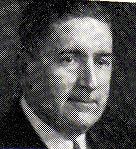 Sensing another exciting election, the members crowded the Council chamber on the night of June 9, 1931,
when the officers for the ensuing year were to be chosen. Earlier nominations had indicated several conflicts. But it
all ended peacefully and without hard feelings. The unexpected withdrawal from the race for Deputy Grand Knight by
Brother Racioppi resulted in the unanimous choice of Brother Sothoron. When Brother Harleigh Hartman, who had
been nominated one of three for the office of Chancellor, insisted upon declining the contest because of the publicity
given in the press against his reappointment to the Public Utilities Commission, Brother Racioppi defeated the third
candidate. There was also a contest for the office of Advocate which resulted in the election of Brother McGarraghy
who had been in the Council but one year.
Sensing another exciting election, the members crowded the Council chamber on the night of June 9, 1931,
when the officers for the ensuing year were to be chosen. Earlier nominations had indicated several conflicts. But it
all ended peacefully and without hard feelings. The unexpected withdrawal from the race for Deputy Grand Knight by
Brother Racioppi resulted in the unanimous choice of Brother Sothoron. When Brother Harleigh Hartman, who had
been nominated one of three for the office of Chancellor, insisted upon declining the contest because of the publicity
given in the press against his reappointment to the Public Utilities Commission, Brother Racioppi defeated the third
candidate. There was also a contest for the office of Advocate which resulted in the election of Brother McGarraghy
who had been in the Council but one year.
There was no opposition, either by nomination or election, to popular Brother Murray who had been elected
Deputy Grand Knight in 1929, and who had been most conscientious as chairman of the sick and relief committees.
A subject that was always certain to inspire instantaneous and fiery debate in the Council was a proposal for
the consolidation of the councils. Heretofore such suggestions, after some vocal fireworks, had been quickly
and effectively consigned to the grave. Now, however, the matter was made more formidable by the action
of the Supreme Convention of 1931, when authority was proposed to be given to the Supreme Knight and the Board
of Directors to order the consolidation of any councils whenever it should be deemed to the interest of the Order.
The question was to receive final determination at the 1932 convention. At the Council's meeting of October 13,
1931, the matter was presented for discussion. The feeling between Washington Council and the State Council had
not been friendly for some time. This proposed action, therefore, was to Brother Crosson further evidence of the
latter's plan to wreck the Council. He insisted that the State Council be informed in no uncertain terms that the
Council would never consent to amalgamation, for in his mind the whole scheme was hatched by that body.
Chancellor Racioppi, in opposing the national body's action, showed that Washington Council was paying: one-half
of the expenses of maintaining the building. Brother Costigan of the Building Company read a report which
disclosed that three councils were over a year in arrears in meeting their assessments. Trustee Garofalo suggested
that the Building Company should demand payment from the delinquent councils or that Washington Council
should foreclose on the trust it held against the home. A committee of five was then appointed to consider the
subject from all angles. By way of instruction to this committee, Brother Crosson urged that "we should stop being
the big, .generous brother, and follow a path of our own."
The report of this committee was made October 27, 1931. It reviewed the entire question, stressed the
position and strength of Washington Council, and believed that any question o� merger should be left to the
discretion of the councils involved. The committee further agreed that it would not be to the best interests of
Washington Council nor to the Order to consolidate with any council or councils; that the Council had in the past
rejected all such proposals; and that if the Supreme Knight acted as authorized by the proposed amendment, it
would be "an unjust and undeserving penalty against Washington Council which has more than half of the total
membership in the District of Columbia, is paying more than half of the cost of maintenance of the home, and
which, in addition to its equity in the building, has invested $15,000 in the property." The report was ordered filed.
The Supreme Convention took no further action, so for a while longer the question did not arise to plague the
Council. Eventually the Council settled the matter to its own satisfaction. But the feeling against the State Council
continued; in fact, Brother Crosson saw no reason for sending delegates to the following State convention since
"they will get no recognition." But they were finally elected.
The National Convention of 1932 was held in Washington. With Brother Fred Rice as State Deputy,
there was much discussion at the meetings concerning plans for this event and for the unveiling of the statue of
Cardinal Gibbons which had been erected on Sixteenth Street in front of Sacred Heart Church, which ceremony
was to take place at the same time. For some time there had been agitation for the transfer of the national
headquarters from New Haven to the Nation's Capital. Washington Council, at its meeting of January 12, 1932,
adopted a motion to appoint a committee of five to form a definite plan to lay before the approaching convention.
This committee reported favorably, recommending that a copy of the resolution and of the report be sent to the
State Council and the other councils in the jurisdiction, and that if concurrence was voted a general committee
should be appointed to prepare a suitable resolution for consideration by the supreme convention. National head-
quarters are still in New Haven.
The year 1932 was also the fiftieth anniversary of the founding of the Order. This fact added interest and
significance to the National Convention which met here, August 15-17 of that year. Past Grand Knight Cook was
general chairman of the convention committee. The ceremonies were preceded by the unveiling of the Cardinal
Gibbons statue, on Sunday, August 14. The parade was marshaled by Col. John J. Phelan. The Fourth Degree had
several hundred men in line, immediately followed by the Knights of Columbus of the District behind the new
banner and flag of Washington Council. Other contingents added numbers to the procession. The parade was
reviewed by Major General Paul H. Malone and his staff. On the reviewing stand with him were the Apostolic
Delegate, the Most Rev. Pietro Fumasoni-Biondi; Bishop John M. McNamara, President and Mrs. Hoover,
Governor Ritchie of Maryland, Supreme Knight Carmody, Miss Margaret Gibbons Burke, a grandniece of
Cardinal Gibbons, who unveiled the statue; Hon. Arthur M. Hyde, Secretary of Agriculture; Hon. Wm. N. Doak,
Secretary of Labor; and Mayor Jackson of Baltimore. That evening there was a banquet at the Mayflower, with
Frank Hogan, Esq., as toastmaster. On Monday morning the convention opened with Mass at St. Matthew's. At
one of the sessions, State Deputy Rice, on behalf of the trustees of Columbus University, presented to the
Supreme Officers a continuing scholarship in law, to be awarded at their discretion to some young man or young
lady residing outside the District of Columbia. Other entertainment provided by Past Grand Knight Cook and his
committee included a boat trip down the Potomac, visits to the Catholic University, the Monastery, and the Shrine
of the Immaculate Conception; a ball, and a sight-seeing trip about the city. This extended reference to these
events is perhaps irrelevant to the history of Washington Council, but the Council participated largely in them and
therefore they are really a part of the record of its activities.
Previously, in April of this same year, the Council celebrated its thirty-fifth anniversary. The
outstanding feature of the week was the banquet at the Mayflower, April 25. The toastmaster was Past Grand
Knight Cook. Brother Rossa Downing spoke for the charter members and Brother Kinsella for the anniversary
class. There were remarks by the Hon. John Philip, Fourth Assistant Postmaster General and Master of the Fourth
Degree of Texas; by Father Nevils, S. J., President of Georgetown, who regretted that he did not become a Knight
earlier in life; by State Deputy Rice, by State Chaplain, Rev. Francis X. Cavanaugh, and by Bishop McNamara.
The speaker of the evening was Brother "Bill" Leahy who forsook his usual role of toastmaster to speak more
seriously. "Happiness, security, and peace", he said, "will be followed by prosperity only when those principles
which vitalize the Knights of Columbus come into the lives of the people of the American nation." It was a real
loss to Washington Council when Brother Leahy refused promotion beyond the office of Chancellor. This history
suffers from the omission of the pages that should have recorded his administration as Grand Knight. His brothers
are happy to congratulate him upon the honor which Holy Cross College has recently and deservedly conferred
upon him by awarding him the honorary degree of Doctor of Laws.
The social affairs which by now had become traditional were continued during this administration. In
addition there was a Halloween masked ball, two roast beef suppers, an entertainment furnished by the St. Gabriel's
players, and a lecture by Brother Montavon on conditions in Spain. May 26, 1932, a large number of members
motored to Bryantown, Md., where they were entertained by that council.
The continued depression was at this time bringing serious worry to the officers and the Council. Some
years were to intervene before the clouds scattered. Hard times affected initiations; the Building Company's reports
were pessimistic; action of some kind seemed imperative. In the hope of securing new members, at the suggestion
of Financial Secretary Wilkinson the initiation fee was reduced from fifteen to ten dollars. In an effort to recover
lapsed memberships, the Council also reduced the reinstatement fee to five dollars; insurance members, however,
were obliged in addition to pay such assessments as were in arrears at the time of suspension. But the principle of
charity was still alive as was evidenced by the response to Brother Crosson's appeal for clothing for the "bonus
army" then in the city.
Return to History Index
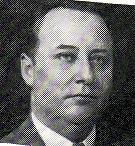 The only contest in the election of June 14, 1932, was for the position of Advocate, in which Brother
McGarraghy defeated Brother Tobin, 62-18. Deputy Grand Knight Sothoron was properly elected Grand Knight
without opposition. The new Grand Knight was born near Hughesville, Md.; he enlisted in the Navy for the duration
of the first World War; then practiced law in the District of Columbia and in his native State. Transferring to
Washington Council in 1923, from the Arkansas Valley Council, he served the Council well on important
committees, as editor of the Monthly, and as Advocate, Chancellor, and Deputy Grand Knight. His popularity in
Maryland brought him political honors; during the past several years he has served in the state legislature, at
present representing his district in the state senate.
The only contest in the election of June 14, 1932, was for the position of Advocate, in which Brother
McGarraghy defeated Brother Tobin, 62-18. Deputy Grand Knight Sothoron was properly elected Grand Knight
without opposition. The new Grand Knight was born near Hughesville, Md.; he enlisted in the Navy for the duration
of the first World War; then practiced law in the District of Columbia and in his native State. Transferring to
Washington Council in 1923, from the Arkansas Valley Council, he served the Council well on important
committees, as editor of the Monthly, and as Advocate, Chancellor, and Deputy Grand Knight. His popularity in
Maryland brought him political honors; during the past several years he has served in the state legislature, at
present representing his district in the state senate.
In his first message as Grand Knight, Brother Sothoron stated that the main objective of his administration
would be an increase in membership. While some success in this endeavor of his very active committee was noted,
it is plain from the frequent appeals made in the Monthly that the returns were not entirely satisfactory in spite of
the reduced fees for initiation and reinstatement. "A lack of interest, a feeling of stagnation seems to prevail", was
the complaint of one officer. Yet Washington Council maintained its membership above the average, at a time when
the Order at large and all other fraternal organizations were suffering serious losses. The Supreme Knight ordered
meetings on January 8, 1933, of every Grand Knight of the 2,539 councils, on which date every man holding an
office, from the Supreme Knight to the Outside Guard, was expected to pledge himself to present one new
application to his council before January 15. Thus was begun a huge drive for membership during that year. A joint
meeting of the five councils was called for February 17 to launch the membership campaign, at which Bishop
McNamara, national and local officials spoke.
At this time the Council was in debt to the Building Company to the amount of $4,386.50. Small wonder
that Brother Crosson could say that "dry rot had set in"; or that a committee was appointed to meet
with the Building Company to consider the question of finances and the curtailment of expenses. Lack of
interest was further shown on October 27, 1932, when approximately only one hundred Knights appeared to
participate in the Fraternal Day parade held in connection with the George Washington Bicentennial celebration.
But all was not gloom within the Council. There was a Halloween dance, the usual Thanksgiving and
Christmas parties, a Monte Carlo night, the Bryantown Council was entertained with a buffet supper, an
automobile pilgrimage visited Past Grand Knight Gallery at Woodstock, and a young ladies' debating team from
Columbus University appeared at the meeting of April 11, 1933. Past Grand Knight Stock lectured on Columbus.
October 11, 1932.
The thirty-sixth anniversary of the Council's establishment was marked by the exemplification of the
three degrees, a memorial Mass at St. Matthew's, a dance, and a banquet at the Mayflower, April 23. The speaker
was Congressman James M. Meade who spoke on the then popular subject of the New Deal.
Other Council business included important changes in the by-laws by Brother McGarraghy's committee;
an appropriation of fifty dollars toward the cost of installing electricity in the home of the Little Sisters of the
Poor; and the usual defeat of a motion to instruct delegates to the State Convention to vote for consolidation of
the councils.
Return to History Index
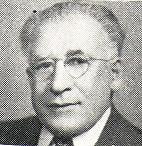 The proper and satisfactory custom of promoting a conscientious Deputy Grand Knight to the highest
office of the Council was followed in the next election. Brother Racioppi had given general satisfaction while
occupying the lower chairs; he had served on many important committees with good judgment and prompt
attention to the business at hand; and he had from the floor participated in the discussion of affairs, always with
the best interests of the Council at heart.
The proper and satisfactory custom of promoting a conscientious Deputy Grand Knight to the highest
office of the Council was followed in the next election. Brother Racioppi had given general satisfaction while
occupying the lower chairs; he had served on many important committees with good judgment and prompt
attention to the business at hand; and he had from the floor participated in the discussion of affairs, always with
the best interests of the Council at heart.
When Past Grand Knight Racioppi was asked to state to your historian what he considered significant in
his administration, he replied: "The most gratifying and important accomplishment of my term was that at last the
Council got out of debt." Mention of the gloomy conditions of the preceding few years and their causes has been
made. Through careful management, thrifty curtailment of expenditures, the promotion of dances and other forms
of entertainment for the benefit of the ailing treasury, and the gratifying results of the membership campaign then
in progress, the Council at last recovered from its depression. Throughout this push for financial independence,
Trustee Garofalo never let the Council forget its financial status.
It was evident that, under existing conditions, the Tenth Street home had become too much of a burden
for the Council to support and that if the drain on the treasury was to be effectively stopped, consideration must
be given to that situation. A committee had been appointed to investigate Washington Council's relationship to the
Building Company. This committee made its report at the meeting of October 24, 1933, in which it was stated that
the building had a limited use; that its rent-ability at present was remote; that its present fair value was not in
excess of $45,000; that the past year had shown a deficit of nearly $4,000 in the operation of the home; that on the
basis of the present membership of the five councils this deficit would continue; and that the withdrawal of the
Council from the
building would result in an annual net saving of $4,300. The report further stated that the Council could
meet at the Willard for twenty-five dollars per meeting, or $600 a year, and recommended that future meetings be
held at this hotel, the Council's fixed charges to the Building Company to be paid until the building was sold or
leased. Following a motion to reject this report there was a long debate in which at least a dozen brothers
participated. Financial Secretary Wilkinson informed the Council that of 427 insured members only 239 had paid
their assessments in full, and that there were 125 inactive associate members. Unfortunately the Recorder failed to
record the result of the vote on the motion. We do know, of course, that later our meetings were held at the Willard.
The tercentenary of the founding of Maryland was observed at the first meeting in January, 1934, by a
lecture on Maryland and its Catholic background given by Brother Dr. Guilday. The chaplain, the Rev. Paul A.
McNally, S. J., gave several talks throughout the year, including' one on "Knights as Catholic Gentlemen." When it
was proposed to secure a congressional charter for Columbus University, there was some objection and a proposal
was made to withdraw the Council's support of the institution, but a motion prevailed that representation on the
board of trustees be retained. At the suggestion of Father McNally, a committee was appointed to visit Archbishop
Curley to offer him the services of the Council in promoting Catholic Action.
The leading social event of the year was a smoker, September 12, 1933, in honor of Clark Griffith,
president of the Washington Ball Club, and his manager, Brother "Joe" Cronin. The guests were welcomed by
Brother Rover. The thirty-seventh anniversary was featured by a banquet, April 22, at the Willard, with Past Grand
Knight Rover as toastmaster.
At the June elections, 1934, for Advocate Brother Garofalo defeated Brother James Fowler, and for
Warden Brother Fields won over the incumbent, Brother Johnson. All other nominees were elected without oppo-
sition.
Return to History Index
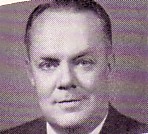 The new Grand Knight came to Washington from his birthplace, Milford, Mass. Initiated into the Council,
October 23, 1919, he at once took an active interest in its affairs, serving as Chancellor and Deputy Grand Knight,
and contributing extensively to the Monthly. His administration looms large in the history of the Council, and was
so fruitful in accomplishment that an adequate account of it demands more than the brief, modest account which he
prepared for these pages.
The new Grand Knight came to Washington from his birthplace, Milford, Mass. Initiated into the Council,
October 23, 1919, he at once took an active interest in its affairs, serving as Chancellor and Deputy Grand Knight,
and contributing extensively to the Monthly. His administration looms large in the history of the Council, and was
so fruitful in accomplishment that an adequate account of it demands more than the brief, modest account which he
prepared for these pages.
Grand Knight Jones assumed office at a time when the fortunes of the Council were at low ebb. True, most
of the basic financial difficulties were removed during the preceding administration, and some beginning: had been
made toward increased membership; but time ran out on Past Grand Knight Racioppi and much remained to be
done. Grand Knight Jones, with the able and enthusiastic support of his chaplain, Dr. Guilday, and with the
cooperation of his officers, undertook a vigorous and successful campaign to rebuild the Council's fortunes. To gain
new members, he organized parish committees. With a group of entertainers and a good speaker, the Grand Knight,
with the consent and support of the pastor, invaded each parish where the objectives and accomplishments of the
Knights of Columbus were told to the Holy Name men and other possible
candidates. By initiation, reinstatement, or transfer, the happy result of this method was the addition of
about four hundred members to the roster of the Council. These additional fees and dues greatly relieved the condi-
tion of the treasury. Further financial gain came from the insistence of the Council that the by-laws of the Building
Company be amended so as to permit the councils to pay their respective assessments on the basis of one-half of the
dues collected rather than on the basis of one-half of the dues collectible. The Council was in the mood to foreclose
on the mortgage of $15,000 which it held on the building, unless this change were made.
This administration featured many timely and instructive talks at the meetings. The Chaplain, now
Monsignor Guilday, gave several eloquent addresses, which stirred his hearers. He frequently brought as guests
priests from the University who spoke to the brothers. It was at this time that all clergy in the Council were made
assistant chaplains and were exempted from the payment of dues. Other addresses given during the year were by
Rev. Father Bonaventure, O. F. M., the Rev. Dr. John Cartwright, Dean Fox of the Catholic University Law School,
and by Father Nevils, S. J., President of Georgetown. There was an illustrated lecture by Brother Dr. Frischkorn on
a medical topic; the Rev. Father Justin McManus, O. P., Prior of the Dominican House of Studies, answered the
question, "Why Obey the Catholic Church?"; and Past Grand Knight Stock told of "Some Obscure Phases of Civil
War History."
It was a happy night when the Council met to do honor to our Chaplain, the Rev. Dr. Peter Guilday, who
had recently been made a domestic prelate by Pope Plus XI. The Council's felicitations were tendered by Past Grand
Knight Stock, who presented the Monsignor with a purse as a token of our affectionate esteem. Several officials of
the University attended.
In connection with this interesting administration mention should be made of a Vesper service at the
Franciscan Monastery, September 23, 1934, held in connection with the thirty-fifth anniversary of the
establishment of the Monastery; of a letter read September 11 of that same year from the Supreme Secretary, highly
commending the long and faithful service of Brother Wilkinson as Financial Secretary; of a flag presented to the
Council by the widow of Brother McCrink, in memory of her late husband; and of a meeting at which the George
Washington University's Newman Club attended as our guests.
Brother "Jack" Coyle was an unusually original and efficient Lecturer for the Grand Knight. Dinner
meetings, arranged by specified brothers who prepared both the meal and the entertainment, were most enjoyable
affairs. In this series there was an Irish Night, a German Night, an Italian Night, and a Latin American Night. In
addition, there was a crab feast, an oyster roast, and a boat trip. At an "Old Timers' Night", December 11, 1934,
reminiscent talks were given by Brothers Crosson, Koones, Wilkinson, Charles O'Connor, Downing, Tom Costigan,
Eckert, Robb, "Jimmie" Sullivan, Racioppi, Bennett Jones, Stanton, Wally Morris, Monsignor Guilday, and several
visiting guests. But the most enjoyable time of all was shown to a group of children of St. Ann's who were taken to
the circus.
Finally, a Georgetown Night was held, at which Father Vincent McDonough, S. J., of the faculty, spoke,
and the glee club entertained; and a Catholic University Night when, in addition to student entertainment, the Rev.
Dr. Maurice Sheehy gave an address.
Return to History Index
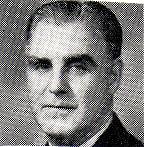 The tempo of the Jones administration was maintained by Grand Knight McGarraghy who, initiated
with the anniversary class of 1930, had in the short space of five years occupied the chairs of Advocate, Chan-
cellor, Deputy Grand Knight, and Grand Knight.
The tempo of the Jones administration was maintained by Grand Knight McGarraghy who, initiated
with the anniversary class of 1930, had in the short space of five years occupied the chairs of Advocate, Chan-
cellor, Deputy Grand Knight, and Grand Knight.
This efficient Past Grand Knight thus evaluates his administration: "During this year, the Council
stood third in the entire Order for increase in membership, both through new members and through reinstate-
ments. The total admitted to membership during that year was 352. This record was made possible through a
most cooperative spirit on the part of all, and especially through the outstanding spiritual leadership of Father
Aloysius J. Burrgraff, Chaplain, who later became President of St. Paul's College at Catholic University, and
who instituted in the Council a series of religious discussions held on the first meeting of each month, at
which the speakers were outstanding Church leaders and in which the members took an active part. In
addition, the outstanding social programs offered by Lecturer Alfred P. Neff, who later became Grand Knight,
added much to the enjoyment of the year. Our membership campaign was broken up into parish units, headed
by Past Grand Knight Thomas F. Fitzgerald, who held what were known as `cheese and cracker meetings',
which meetings aroused such enthusiasm in the committee as to make the results so outstanding as to merit the
commendation of our Supreme Officers."
Some additional notes should be added to this enviable record. The Rev. Father Jacoby of Louisiana
frequently attended the meetings with the Chaplain, and spoke on important topics. Dr. George McCabe, of the
Department of Economics, Catholic University, gave a timely address on Socialism and Communism. The
debating, team of Columbus University was present at one meeting; another Catholic University night was held;
the Council presented the play, "When Irish Eyes are Smiling"; and endorsed a resolution of Keane Council in
favor of reorganizing the Knights of Columbus Band, to consist of members only. At the anniversary dinner,
one of the main speakers was Supreme Treasurer Brother D. J. Callahan.
In 1936, the Mississippi floods made necessary some relief for its victims. The Order voted
850,000 for this purpose. A per capita levy of ten cents was placed on the membership to raise this sum. The
Council sent its check for $120, and voted an additional $100 the following year. Brother McGarraghy, since
leaving office, has been a power for good in the Council. Active and prominent in religious and civic affairs, he
has always found time to serve the Council whenever called upon. He is to be especially commended for his
interest in the orphans.
Return to History Index
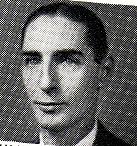 Having made the customary progression from chair to chair, the Deputy Grand Knight was elected to
succeed as Grand Knight. Brother Cromelin came from Hackensack, N. J., and was initiated in 1928 with rich
Washington Council inheritance. His father, Brother Paul Cromelin, was a member of the Council for many
years as were his uncles, Brothers Henry Sohon and John H. Robb.
Having made the customary progression from chair to chair, the Deputy Grand Knight was elected to
succeed as Grand Knight. Brother Cromelin came from Hackensack, N. J., and was initiated in 1928 with rich
Washington Council inheritance. His father, Brother Paul Cromelin, was a member of the Council for many
years as were his uncles, Brothers Henry Sohon and John H. Robb.
With approximately 750 initiations and reinstatements gained during the past two years, it could not be
expected that the increase in membership should continue at this rate. Satisfactory gains, however, were made
and the Council had a most successful year under the new administration; this in spite of some lagging
of interest on the part of the members which necessitated the appointment of a committee to suggest measures to
remedy the situation.
A surprising action was taken by the Council at this time which, in the absence of more detailed minutes,
is more confusing because the promoter of the measure was Brother Garofalo who had previously opposed any
suggestion of this kind. Now he moved a merger into not less than three councils, and requested a canvass of
every member in the district on the subject. Strangest of all, the motion passed without a dissenting voice! The
resolution was adopted by the State Council, and when that body, which had heretofore urged such action, failed
to respond, Brother Garofalo, then Grand Knight, was instructed to interview the State Deputy to find out why the
poll had not been taken. The entire incident was so full of contradiction and was such a complete volte-face by
the Council, which heretofore had ridiculed such proposals, that the explanation must be found outside the
evidence at hand. There is reason to believe that this was part of the larger plan to secure for the Council a
building of its own.
There were several talks of interest given during the year. When Monsignor Guilday returned from his
European trip he was welcomed in an open meeting, October 27, 1936, at which he gave a firsthand account of
foreign conditions. Rev. Father William Russell of Catholic University spoke on the "Human Side in the Life of
Christ"; Father Joseph Brunini on "The Church in the Missionary Section of the South"; Father Miltenberger gave
several talks on the ritual of the Mass; and there was an address by Father Aycock of the University.
A lawyer by profession, Past Grand Knight Cromelin served during the Second World War with the rank
of Major.
Return to History Index
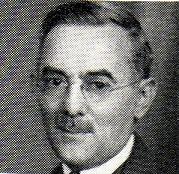 Trustee, Advocate, Chancellor, Deputy Grand Knight, Grand Knight, afterwards Treasurer, and
Treasurer of the board of trustees of Washington Council Home, Inc. -- such is the useful and competent record of
the succeeding Grand Knight. Back of it all stand many references to generous and able participation in the
business of the Council. As acceptable as was his progressive administration as Grand Knight, it is a
complimentary statement to make that his continuing services to Washington Council, since his transfer from
Weymouth Council, Massachusetts, in 1919, comprise his most useful contribution to its welfare.
Trustee, Advocate, Chancellor, Deputy Grand Knight, Grand Knight, afterwards Treasurer, and
Treasurer of the board of trustees of Washington Council Home, Inc. -- such is the useful and competent record of
the succeeding Grand Knight. Back of it all stand many references to generous and able participation in the
business of the Council. As acceptable as was his progressive administration as Grand Knight, it is a
complimentary statement to make that his continuing services to Washington Council, since his transfer from
Weymouth Council, Massachusetts, in 1919, comprise his most useful contribution to its welfare.
Past Grand Knight Garofalo thinks that the two "high lights" of his administration were:
"1. The adoption of the present membership identification card; and
2. The purchase of a new home for the Council was first proposed by me during my term as Grand Knight. The matter was first considered by the Council during that period and the subject was kept alive until its adoption in 1940."
It is true that the proposal for a separate Washington Council home was much discussed during the Garofalo
administration. It is also worthy of record that other matters of consequence received consideration. A committee of Past
Grand Knights, with Brother Jones as chairman, was appointed to work for the designation of Columbus Day as a legal
holiday in the District of Columbia. This committee took its assignment seriously and made several reports, but in spite of
appeals and personal inter-views with those in authority, the objective was not attained.
Support was given to several phases of Catholic Action. E1 Council Catholic Evidence Guild was
organized, with caulis for volunteers; the Boys' Guidance Association received an appropriation as did Father Felix,
O. S. L., for his work in connection with the Defenders of the Faith; a copy et Dr. Fulton Sheen's pamphlet on
Patriotism was sent to every member of the Council; and, at the request of the Supreme Council, the motion picture,
"Blockade," was condemned as propaganda for the Loyalist cause in Spain. Father Joseph Thorning, of Mt. St.
Mary's College, gave an informative lecture on the Spanish Civil War. Flag Day, June 14, 1938, was celebrated with
impressive and elaborate exercises, followed by a stirring address on the Flag by Monsignor Guilday.
The summer meeting of August, 1937, was held at Kenwood Country Club. The anniversary dinner of 1938
was given at The Mayflower with Brother William E. Leahy as the principal speaker.
In financial policy, Brother Garofalo has always carried out the principles of such men as Brothers
Harrington, Repetti, Crosson, and others. He preached the gospel of economy and thrift in ever)- position he held.
His insistence in guarding the treasury and in discouraging extravagance was to some degree responsible for the
beautiful home we now occupy.
Return to History Index
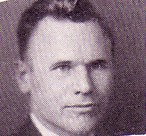 The succeeding Grand Knight occupied the chair for only about half of his elected term. The nature of his
position with the National Council of Catholic Men necessitated his spending so much time out of the city that, on
February 14, 1939, actuated by the good of the Council, he resigned. But during his brief administration he
accomplished much. Outstanding was the Catholic Radio Guild which flourished as a phase of the work of the
Council's Catholic Activities Committee. Started by Brother Bowen several years before, it operated at this time
under the chairmanship of Brother John A. K. Donovan and, later, Brother Denis Lane. Past Grand Knight Bowen
thus describes the work of the Guild:
The succeeding Grand Knight occupied the chair for only about half of his elected term. The nature of his
position with the National Council of Catholic Men necessitated his spending so much time out of the city that, on
February 14, 1939, actuated by the good of the Council, he resigned. But during his brief administration he
accomplished much. Outstanding was the Catholic Radio Guild which flourished as a phase of the work of the
Council's Catholic Activities Committee. Started by Brother Bowen several years before, it operated at this time
under the chairmanship of Brother John A. K. Donovan and, later, Brother Denis Lane. Past Grand Knight Bowen
thus describes the work of the Guild:
"The Radio Guild consisted of from six to eight Knights who met every week to study Catholic doctrines
and practices with a view toward broadcasting explanations or dramatizations of them over the air.
"Father Charles A. Hart, of Catholic University, was appointed Moderator of the Guild by Archbishop
Curley of Baltimore and censured all talks or dramatizations before presentation. In the course of its existence the
Guild presented programs at one time or another over each of the four major radio stations in Washington."
Addresses were mad: during this term by the Chaplain, the Rev. Father Arthur A. O'Leary, S. J.; by
Father Sohon, S. J., also of Georgetown; by Father Michael Mathis, C. S. C., and by Monsignor Guilday. There
was held a "Father and Son Night" a,"; an oyster roast was among several other enjoyable evenings. Finally, the
by-laws were amended, requiring each candidate to pay five dollars of the initiation fee upon filing his application.
Return to History Index
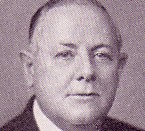 The resignation of Grand Knight Bowen was followed by the election of Deputy Grand Knight Neff as
his successor; at the same time Chancellor
Handley was promoted to Deputy Grand Knight. The new presiding officer served only the remaining
months of this term when he announced he would not stand for re-election; he was, however, re-elected for a full
term in 1943. He was the only Past Grand Knight to return to the chair, after intervening administrations, since the
second term of Brother Harrington in 1909, and there has not been another incident of its kind since.
The resignation of Grand Knight Bowen was followed by the election of Deputy Grand Knight Neff as
his successor; at the same time Chancellor
Handley was promoted to Deputy Grand Knight. The new presiding officer served only the remaining
months of this term when he announced he would not stand for re-election; he was, however, re-elected for a full
term in 1943. He was the only Past Grand Knight to return to the chair, after intervening administrations, since the
second term of Brother Harrington in 1909, and there has not been another incident of its kind since.
The following events are noted for the remainder of this year. A committee was appointed to combat the
sale and distribution of obscene and indecent literature; a Study Discussion Club was organized which met prior
to the monthly meetings of the Council; and Past Grand Knight Rev. Eugene Gallery, S. J., was presented with a
set of vestments on his ordination.
Return to History Index
 During Grand Knight Handley's administration the movement for a Washington Council home was given
definite impetus. This matter had been before the Council for several years, but beyond empty debate and futile
resolutions and motions nothing was done. Now a committee was appointed to consider the question of remaining
in the old building or of withdrawing, and to report within thirty days. This committee reported at the meeting of
February 13, 1940. For some reason the nature of this report is not recorded. A copy was sent to the State Deputy
and to the other councils; and the State Council, the executive committee, and the delegates to the Building
Company were invited to meet with the executive committee of the Council and our delegates to the Building
Company to consider the report. Earlier, January 9, 1940, on motion of Past Grand Knight Cromelin, the Building
Company was requested to have an appraisal made of the clubhouse and land, to be reported within sixty days, but
the company advised the Council that, because of the expense involved, it was inadvisable to make such an
appraisal. Then, on March 11, Brother Cromelin moved that the Council should instruct its delegates to the
Building Company to vote for the sale of the building at a price which would accord with a fair appraisal. On
April 23, Brother Garofalo sponsored a motion which carried, that Washington Council request from the Building
Company the payment, by August 31, of the $15,000 note held by the Council and long overdue. The last step
taken during this administration was on May 14, 1940, when Past Grand Knight Jones put through a motion that it
was the sense of Washington Council that the Building Company should sell the building for $65,000, which
amount had been offered by the Police Boys' Club. The Building Company referred the offer to the councils for
consideration. When it was refused, the Council felt the way was now cleared for the purchase of a home for its
sole use.
During Grand Knight Handley's administration the movement for a Washington Council home was given
definite impetus. This matter had been before the Council for several years, but beyond empty debate and futile
resolutions and motions nothing was done. Now a committee was appointed to consider the question of remaining
in the old building or of withdrawing, and to report within thirty days. This committee reported at the meeting of
February 13, 1940. For some reason the nature of this report is not recorded. A copy was sent to the State Deputy
and to the other councils; and the State Council, the executive committee, and the delegates to the Building
Company were invited to meet with the executive committee of the Council and our delegates to the Building
Company to consider the report. Earlier, January 9, 1940, on motion of Past Grand Knight Cromelin, the Building
Company was requested to have an appraisal made of the clubhouse and land, to be reported within sixty days, but
the company advised the Council that, because of the expense involved, it was inadvisable to make such an
appraisal. Then, on March 11, Brother Cromelin moved that the Council should instruct its delegates to the
Building Company to vote for the sale of the building at a price which would accord with a fair appraisal. On
April 23, Brother Garofalo sponsored a motion which carried, that Washington Council request from the Building
Company the payment, by August 31, of the $15,000 note held by the Council and long overdue. The last step
taken during this administration was on May 14, 1940, when Past Grand Knight Jones put through a motion that it
was the sense of Washington Council that the Building Company should sell the building for $65,000, which
amount had been offered by the Police Boys' Club. The Building Company referred the offer to the councils for
consideration. When it was refused, the Council felt the way was now cleared for the purchase of a home for its
sole use.
For the second year the Council attained membership in the Century Club, by obtaining 126 members.
Some novel meetings were held during the year. One was devoted to honoring newly created monsignori: McAdams, Barrett, Shehan, and Guilday. There was a "quiz program," November 28, 1939, when ten brothers won
one dollar each for correct answers to the questions asked. A lecture was given by Monsignor Guilday on
"American Representation at the Vatican"; Bishop Mekkelholt and Father Neilen of the Netherland missions
spoke, April 23, 1940, of their work; and Father Walsh, chaplain of Walter Reed Hospital, recounted his
experiences in the Philippines. The August, 1939, meeting was held at the Kenwood Country Club; and the forty-
third anniversary was celebrated as usual, closing with a dinner at the Willard Hotel.
Return to History Index
 The new home became a reality during the administration of the newly-elected Grand Knight who, largely because of the negotiations under way in connection with this project, broke the precedent of recent years and served two successive terms.
The steps heretofore taken by the Council to withdraw from the Tenth Street building have been noted in the accounts given of previous administrations, especially in the history of the movement under Past Grand Knight
Handley. As was there stated, the offer of $65,000 made by the Metropolitan Police Boys' Club for the building was
rejected. At this time there were outstanding notes against the property of some $30,000, including- one of $15,000
held by Washington Council, the only council in the jurisdiction which had made an investment in the building.
The Council was not long in taking action. September 24, 1940, Brother Garofalo moved that all future payments to the Building Company be withheld until the Council's note was paid. When a point of order was raised
on the ground that the motion was in violation of the by-laws, the decision of the Grand Knight sustaining the objection was defeated by appeal, and the original motion carried. Thereafter the many demands of the Building
Company for payment of the Council's assessments were refused. and a committee, composed of the Advocate, Deputy Grand Knight, Chancellor, and Past Grand Knight Cook, was appointed for the purpose of determining the
Council's rights and obligations under the existing agreement. As a result of this inquiry, February 11, 1941, by a vote of 97 to 24, the Council adopted Brother Cook's motion that no further payments be made to the Building
Company and that the Council send notice that on March 1 it would withdraw from the building.
A Ways and Means Committee, consisting of Past Grand Knights and others, under the chairmanship of
Past Grand Knight Sullivan, was then appointed with plenary power to acquire temporary quarters for regular
meetings and to purchase a new home "when the opportunity presented itself." Through the cooperation of Brother
Harry Sommerville, then manager of the Willard Hotel, and at a low, nominal rental of less than $100 a month, the
monthly meetings were transferred to one of the ball rooms of that hotel with a decided increase in attendance.
More than forty pieces of property were viewed by the committee as a possible site for a permanent home.
The assessments against the members for the Building Company were set aside and earmarked for the purchase of
suitable quarters. At one time it was recommended that the property at 1719 N Street, N. W., be purchased at a cost
of $25,000, but in the end the option taken on this house was declined.
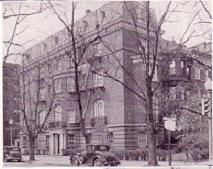 Finally, at the meeting of December 9, 1941, Chairman Sullivan reported the purchase of 1601 R Street; the action of the committee was at once approved. One further difficulty had to be surmounted. The house was at
the time occupied by a fraternity against which legal action had to be taken for possession. On December 23, 1942, the Council took legal possession of the property. An offer of the United States Government to rent the premises for
$400 a month was refused.
Finally, at the meeting of December 9, 1941, Chairman Sullivan reported the purchase of 1601 R Street; the action of the committee was at once approved. One further difficulty had to be surmounted. The house was at
the time occupied by a fraternity against which legal action had to be taken for possession. On December 23, 1942, the Council took legal possession of the property. An offer of the United States Government to rent the premises for
$400 a month was refused.
A corporation was formed to administer and operate the new home. The original nine trustees elected for this
purpose were: Brothers Crosson, Garofalo, "Archie" Myers, F. B. Myers, McGarraghy, Neff, Scullen, Simmons,
and Sullivan. The home was blessed by Monsignor Guilday, Sunday March 14, 1943; an open house followed.
Grand Knight Myers, two nights later, called to order the first meeting to be held in the building. At this meeting Past
Grand Knight Sullivan was singled out as worthy of especial thanks for making a reality of the Council's dream of
many long years. Also mentioned were Brothers Joseph McCann, Gingras, McKenna, and various contractors who were
members of the Council.
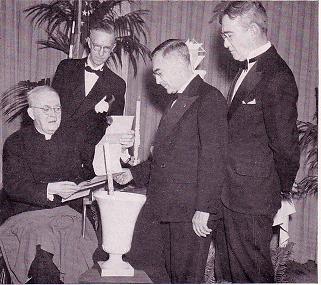 Since this is to be a permanent record of the Council's history, the account of the acquisition of this present home, and its improvement, would not be complete without a statement of the finances involved. The following items are taken from the report presented on the occasion of the burning of the mortgage by Past Grand Knight Garofalo as treasurer of the board of trustees:
| Purchase price of Home |
$27,500.00 |
| Repairs, etc. |
13,323.45 |
| Furniture and furnishings |
7,584.73 |
| Household effects |
4,288.57 |
| Boiler, oil burner, apartment repairs |
2,446.76 |
| Total |
$55,143.51 |
In addition to paying all these expenses and all other expenses incurred during the period, March 14, 1943
to March 24, 1947, there is on deposit to the credit of the Home Trustees an amount practically the same as our
original savings of $15,000. This does not include a balance of some $11,000 in the treasury of the Council.
The second feature of the McKenna administration was the number of really outstanding lectures given during
these two years. Monsignor Guilday returned as Chaplain and was characteristically active in securing speakers. He
himself gave several, including one on the Four Hundredth Anniversary of the Founding of the Jesuits, and another on
the Church in Japan. October 22, 1940, Dean Martin McGuire of Catholic University spoke on the Condition of the
Church in Latin America; November 12, Father Gabriel of the Carmelites on the Knights of Columbus Welfare Work in
Rome; December 10, the Rev. Dr. James A. Magner made his first appearance before the Council and spoke on the
Catholic Church in Mexico. He joined the Council that year and has since taken an enthusiastic interest in our
activities, serving as Chaplain and speaking on many occasions. He founded the Charles Carroll Forum of Washington,
of which Washington Council has always been a sponsor besides furnishing several of its officers and assistants. At the
Christmas party of 1940, Father Reilly, director of the Shrine of the Immaculate Conception, spoke on the Significance
of Christmas; Past Grand Knight Gallery, S. J., was present at the 1941 celebration and gave the address on the Spirit
of Christmas. During 1941, also, lectures were given by Father Wilfrid Parsons, S. J., on the European Situation; Rev.
Dr. Lallou, of Catholic University, on Catholic Liturgy; Rev, Dr. Thomas B. Mitchell, dean of the University's School
of Social Sciences, on the Contribution of the Church to the Social Advancement of the Nation; Chaplain Father
Durocher of the Marine Corps, on the Problems of
the Service Men; Rev. Paul B. McNally, S. J., of Georgetown, an illustrated lecture on South America;
and Father Vincent Donovan, O. P., on Conditions in Europe.
The membership on May 1, 1941, stood at 1086. The campaign for members, which ended June 30, 1942,
resulted in a large increase and seventh place for the Council among all the councils in the entire country. For this
effort the choice was offered by Supreme Headquarters of a new set of robes or flags. The former were selected
and the old robes given to Prince George Council, No. 2809.
The second World War brought its problems which were met and solved with little or no detriment to the
Council. The dues of members incapacitated by ill-health were remitted, and those of enlisted and drafted men were
waived. When Deputy Grand Knight Lane was forced to resign because of his induction, a gold token was presented
to him. Chancellor Myers was elected to succeed him. A well-intentioned and sensible proposal of Washington
Council to aid both the war efforts and the Order was, unfortunately, not accepted. At the meeting of May 12, 1942,
a motion prevailed that the State Council recommend to the Supreme Directors that for the duration of the war the
annual national conventions be cancelled; that the present board of directors transact the business of the Order at
the regular meetings; that all funds usually provided for the expenses of the conventions be set aside to pay the
assessments, contributions, and per capita tax of the members of the Order who were in the armed services; and that
such appropriated funds be invested in defense stamps and war bonds.
On November 25, 1941, the minstrel troop made its first appearance. This organization, under the
leadership of Brother Neff, with Brother Arthur McCreight as accompanist and later Brother Bober as musical di-
rector, was the means of raising funds for worthy causes and of securing financial assistance for the new home.
There was nothing amateurish in the performances given; many of the features offered could not be surpassed by
any professional company. This group performed every two weeks during the winter months for the various Holy
Name societies of the parishes, and also gave several benefit performances. The only compensation asked on these
occasions was the opportunity to save something on the advantages of joining the Knights of Columbus. A benefit
for the new home was given in. St. Patrick's Hall which netted over $700. The members of the organization
personally contributed the sum necessary to equip the pool room on the fourth floor of the home. When Brother
Neff was elected Grand Knight, Brother McKenna succeeded him as head of the organization. Through lack of
interest and support this interesting group was eventually forced to disband.
There were some contests in the election of June 9, 1942, with Brothers Simmons, Mahar, Bober, and
Johnson successful in winning the respective offices of Chancellor, Advocate, Recorder, and Warden. There was
no opposition to the choice of Deputy Grand Knight Frank B. ("Barney") Myers as Grand Knight,
Return to History Index
 As has been stated, the honor of presiding over the first meeting in the new home came to Grand Knight Myers, in
whose administration legal possession was taken of the property. The new chief came from Danville, Pa., where he must
have acquired such Pennsylvania-German traits as thoroughness, industry, and friendliness, all of which were reflected in the
conduct of his office.
As has been stated, the honor of presiding over the first meeting in the new home came to Grand Knight Myers, in
whose administration legal possession was taken of the property. The new chief came from Danville, Pa., where he must
have acquired such Pennsylvania-German traits as thoroughness, industry, and friendliness, all of which were reflected in the
conduct of his office.
He was fortunate in securing the services of Doctor Magner as Chaplain, who upheld the best traditions of
that office. He gave frequent talks of substance and timely content at the meetings, and one particularly suggestive
lecture on "The Catholic Challenge of the War." As chairman of the Charles Carroll Forum he increased the interest
of the members in Catholic thought and doctrine as expounded by the authoritative speakers on that program.
Through him we were introduced to his illustrious brother, Bishop Magner of Marquette, who spoke at one of the
meetings. The recent demise of this _latter prominent churchman called forth an ocean of sympathy to his and our
devoted Brother, Doctor Magner.
The war continued to find place in the Council's affairs. The "Casey Committee" donated a carton of
cigarettes each month to all members in the armed forces, with the compliments of the Knights of Columbus of
Washington. A letter of commendation was sent to Brother Goetzinger for his capture of the escaped prisoner,
Eklund. An appropriation of $85 was made to the U. S. O. for a dinner to service men. A committee was appointed to
solicit contributions to the Community War Fund in the area covered by 14th St., 15th St., and New York Avenue to
K St. Three teams were formed and raised 105 per cent of the quota allotted. Our quota of the War Band campaign
had been fixed at $77,500; we pledged $142,550. Brother Gass donated to the home, in memory of his mother, a
service plaque which was placed in the foyer and blessed and formally dedicated by Dr. Magner. During the war,
"The Star Spangled Banner" was sung in place of the official odes.
At the meeting of July 28, 1942, the sad announcement was made of the death of Past Grand Knight Edward
I. Harrington. His was an exemplary life. He was a fighter, but he fought for the best interests of Washington
Council. To him is due much of the credit for the position which Washington Council holds today in the annals of the
Order. His interest in the Council continued to the end, for by will he left it a legacy of $1,000 which has been used
to outfit a lounge room in the home which his example of thrift and economy helped to make possible. Later, his es-
tate thoughtfully returned to the Council the sterling pitcher and tray which had been presented to him at a testimonial
when he retired as Grand Knight.
Two testimonial dinners were given this year: one to the retiring President of Georgetown, Brother Father
O'Leary, S. J.; the second to Monsignor I'. J. McCormick, the newly appointed Rector of the Catholic University of
America.
A generous donation to the home by a young initiate should be given permanent acknowledgment in these
pages. At the meeting of January 12, 1943, it was announced that Brother Father Lawrence P. Gatti, now serving St.
Stephen's parish, this city, had given for the furnishing of the Chaplain's Room, the generous sum of $500. It is
unnecessary to say that this memorial has served a most useful purpose.
Under the direction of Past Grand Knight McGarraghy, parties with refreshments and movies were given
to the boys and girls of St. Joseph's and St. Vincent's. Every Monday night in the ballroom of the Willard,
"Quizzo" parties were held for the benefit of the home; and a "Showboat" excursion was given under
the chairmanship of Past Grand Knight Handley. Also, there were talks by Sergeant John F. Ryan, in charge of
auxiliary police, Metropolitan Police Department; Col. John J. Sullivan, Past Grand Knight of Seattle Council,
on Catholic Manhood; and an illustrated lecture by Father Larkin on the "Life of Father Damien, the Leper of
Molokai."
A practical testimonial to Grand Knight Myers' successful efforts came in the report from National
Headquarters that in membership gains for the year, Washington Council had stood fifth, and would receive an
award of $100. The Council's gain in membership was over 300. The Grand Knight received also the "Five-Star
Certificate" from the Supreme Knight.
Return to History Index
It was fitting that Brother Neff, who did not stand for re-election after he had completed the unexpired
term of Grand Knight Bowen, when the latter resigned, should be recalled to serve as Grand Knight in his own
right.
It was an active year. New activities were undertaken in the new home, such as dancing classes for the
children of the members, bridge for the ladies, etc. The library was assembled and many additions made to it.
Some future librarian should make an effort to form a collection of all the books published by the members of
Washington Council, past and present, which would show their contribution to literature, history, and the
sciences. It would be an impressive list, for the names are many. Near by, of course, should be bound files of the
Monthly, the Bulletin, the News Letter, and anything else that will illustrate the history of the Council. On
March 14, 1944, the end of the first year in the home was celebrated with an elaborate program of entertainment,
speeches, and refreshments.
It was a year in which the orphans were given more than the usual attention. There were basket picnics,
athletics, practical gifts of clothing, and other events offered to the boys of St. Joseph's Home and School and to
the girls of St. Vincent's. The former were our guests at the Boystown-Gonzaga football game, at a Redskins
game, and the girls enjoyed the Shrine circus.
Our war efforts continued along the usual lines. In addition, some 1500 rosaries and other religious
articles were collected and given to Father Diamond for distribution among service men. On Armistice night there
was a patriotic address by Colonel Grogan. The annual Communion Mass was held at St. Paul's, November 28,
1943, with breakfast served in the new home, at which the speaker was Brother Joseph Casey, former member of
Congress from Pennsylvania. The sermon at the Mass was given by Monsignor McCormick, Rector of the
University. Columbus Day was celebrated that same year with a radio address by Past Grand Knight McGarraghy,
and with a dinner in the evening at which Brother Rover was toastmaster and Congressman Gearhart the speaker.
The Forty-Seventh Anniversary was held at the Mayflower; there were no speakers.
The testimonial to the retiring Grand Knight took the form of a comfortable chair for Mrs. Neff -- a unique
tribute to one of the "Knights of Columbus widows" who keep the long silent watches while their husbands, in the
adapted form of the words of the Poet Galsworthy, "go down to see!"
Return to History Index
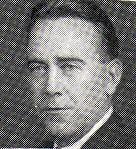 The election of Brother Simmons as Grand Knight was a popular one. "Ben" was well liked; he had shown
ability in his work for the Council, was gracious and friendly, and was a speaker of no mean quality as was
demonstrated particularly in a later radio address on Columbus Day. He had the willing support and cooperation of
his Council, so that his administration was a successful one. Initiations were frequent; Washington Council ranked
ninth that year among the subordinate councils of the Order in acquiring new members.
The election of Brother Simmons as Grand Knight was a popular one. "Ben" was well liked; he had shown
ability in his work for the Council, was gracious and friendly, and was a speaker of no mean quality as was
demonstrated particularly in a later radio address on Columbus Day. He had the willing support and cooperation of
his Council, so that his administration was a successful one. Initiations were frequent; Washington Council ranked
ninth that year among the subordinate councils of the Order in acquiring new members.
The war came closer to home when, at the meeting of August 8, 1944, the death of Brother Edwin Warren
was announced, the first member of the Council to be killed in action; and when the following year former Deputy
Grand Knight Denis Lane was reported wounded. Many hundreds more rosaries and religious articles were given to
Father Diamond on behalf of the Council; the members responded generously to the "blood bank"; and another
substantial contribution was made to Father Dade's U. S. O. dinner for men in the armed services.
On the intellectual side, besides frequent talks by the Chaplain, Father Burns, there were addresses of
interest by Brothers Dr, Magner, Father Monahan, Father Buckley of St. Francis Xavier's, and Brother Azarias of
Edmonston Council, Alberta. The State Council scholarship fund committee announced, May 8, 1945, that
four scholarships for a full term of four years each had been established at St. John's, Gonzaga, Holy Cross, and
Immaculata.
Socially, there was a full schedule. The usual parties were given to the orphans; a boat trip netted over
$1750; the bowling team, basketball, and softball all flourished; a bazaar, or "Barbary Coast" party, added con-
siderably to the treasury. The second anniversary of the occupation of the home was celebrated, March 13, 1945,
with speaking-, entertainment, and a buffet supper. There were talks by State Deputy Considine, Past Grand Knight
Rover, and Brother Flood, member of Congress from Pennsylvania. The entertainment was furnished by Brother
George O'Connor, Brother "Bernie" Fitzgerald, Fred East, and others. The address of welcome was made by Past
Grand Knight McKenna, and Past Grand Knight Garofalo, treasurer of the home trustees, in reporting on the
financial situation, said that 146 members of the "$17.50 Club" had subscribed $3158. The 48th Anniversary dinner
was held, with Father Diamond as the speaker. Entertainment and dancing followed.
At Grand Knight Simmons' last meeting, two pleasing contributions were made to Washington Council:
Past Grand Knight Handley for the "Casey Committee" presented a check for $500, as the Council's share of
the surplus of $2500, to be used for charity; and it was announced that the retiring Grand Knight had been
appointed District Deputy.
Return to History Index
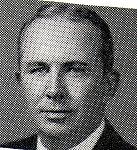 This story has now been brought down to the eve of the Anniversary Year, when "Dick" Mahar was Grand
Knight. Because of the writer's close association with Past Grand Knight Mahar as chairman of the Souvenir
Program, of which this account forms a part, and because of the opportunity this association gave the writer to
observe his capable qualities of vision, industry, and attention to details, it is easy to interpret his administration in
terms of these and other qualities, and to give it deserving praise. Old in
the Council's service, yet young in enthusiasm, Brother Mahar was steeped in the traditions of the past
but was not bound to tradition in his forward-looking policy. This policy sponsored events that combined
entertainment and importance.
This story has now been brought down to the eve of the Anniversary Year, when "Dick" Mahar was Grand
Knight. Because of the writer's close association with Past Grand Knight Mahar as chairman of the Souvenir
Program, of which this account forms a part, and because of the opportunity this association gave the writer to
observe his capable qualities of vision, industry, and attention to details, it is easy to interpret his administration in
terms of these and other qualities, and to give it deserving praise. Old in
the Council's service, yet young in enthusiasm, Brother Mahar was steeped in the traditions of the past
but was not bound to tradition in his forward-looking policy. This policy sponsored events that combined
entertainment and importance.
The year, unfortunately, brought to the Council the loss of the services of its two financial officers,
Treasurer Harry Brooks and Financial Secretary Doctor Wilkinson. Brother Brooks had been in the Council for over
forty-eight years, for most of which period he had served as Financial Secretary and Treasurer. Against the
insistence of the Council that he once more receive the unanimous ballot for his reelection, his wish to retire was
respected. In September, 1945, a testimonial dinner was given in his honor at the Council home, with Past Grand
Knight Sullivan as chairman and Past Grand Knight Colliflower as toastmaster. Past Chaplain Rev. Dr. Magner
expressed the thoughts of the Council on the occasion. An engrossed citation was presented to Brother Brooks,
expressing appreciation for his long service as officer and member.
Near the close of the Mahar administration, Washington Council's most loyal and lovable officer,
Financial Secretary Dr. A. D. Wilkinson, acting under his doctor's orders, reluctantly relinquished at the age of 84,
the office he held so long and so efficiently. Shortly after his retirement, he was presented with a bound volume of
testimonial letters from officers and brothers, which voiced the endearing affection and appreciation of the writers.
During his final illness he was made happy by the action of the Council in establishing a Catholic high-school
scholarship for his grandson, Alfred Dominic Wilkinson, 3d. Nothing need here be added to the tribute paid earlier
in these pages to the character of this outstanding Catholic gentleman whose record of service is without parallel in
the Order. He did not live to observe our Golden Anniversary. "To live in hearts we leave behind is not to die."
An outstanding event in this administration was the Council's tribute to the living Past Grand Knights, in
October 1945. The program was dignified and had special significance to the brothers who remembered their first
lessons in Columbianism as exemplified by their particular Grand Knight. One of the younger knights, Brother John
J. Leahy, spoke eloquently for the Council, and Past Grand Knight Rover responded in happy vein for his confreres.
Past Grand Knight emblems were then presented to the honored guests, after which there was entertainment and a
buffet supper.
The spiritual needs of the members were well cared for throughout the year by the Chaplain, Father
Samuel Cummings of the Society of the Atonement. Besides his frequent messages at the meetings he conducted a
series of seven inspirational talks on Thursday evenings under the general title, "Know Your Church." Discussion
periods followed these reviews of Catholic teaching and doctrine. These group meetings were open to members,
their families and friends, and were popular .
Another custom, inaugurated by the Grand Knight, was that of holding at homes" on several Sunday
afternoons during the autumn and winter months, when members unable to attend the regular meetings could fore-
gather, and when the ladies were given the opportunity of visiting our beautiful home and of getting acquainted
with one another. These gatherings were informal; there was music and light refreshments were served.
Special attention was given to the Thanksgiving and Christmas Parties, The latter was particularly
unique in the decorations, the central motif of which was a ten-foot reproduction of the familiarly clad Santa
Claus sitting in a white and gold sleigh, surrounded by hundreds of colorfully wrapped gifts, all against a
background of red draperies. Behind this artistic pageantry it was easy to observe the directing hand of Brother
"Joe" McCann, always a willing worker for the Council. Brother "Andy" Oehmann also cooperated with the
Grand Knight.
An active dance committee provided relaxation by arranging bimonthly dances in the Council home. On
March 17, 1946, a successful St. Patrick's Day party was held for the worthy cause of raising a fund for the
education of priests. This new venture, because of its purpose, is worthy of a fixed place on the Council's program.
The traditional "Ladies' Nights" were also held. Because of the limited floor space of the home, these dances were
held at one of the large hotels, as at present.
To enlarge the finances of the Council's reserve fund, the usual boat trip was held in August which netted
over $1200. In the following May a second event of the same nature brought another substantial amount to this
purpose. In June through the generosity of Brother John H. Mahoney, an automobile raffle was made possible, from
which approximately the sum of $5,600 was realized.
Two enjoyable evenings had a military background. On November 13, 1945, Armistice Day was
celebrated, when the Council was favored with an interesting address by Chaplain Capt. Frederick W. Meehling of
the Marine Base at Quantico, Va. Father Meehling accompanied the President on several of his trips abroad, and
was on the only convoy to reach Murmanski, Russia, in the early days of the war.
The other event was one of rejoicing, for it marked the formal return of our brothers who had served in the
armed forces. On May 6, 1946, appropriate certificates were presented to the servicemen of the five councils in this
jurisdiction. A stirring address was made by Brother Leahy, chairman of the District of Columbia Selective Service
Board. Entertainment and a buffet supper followed.
The forty-ninth anniversary was celebrated in the traditional manner, with a banquet at the Mayflower.
Right Reverend Lawrence J. Shehan, Auxiliary Bishop of the Archdioceses of Baltimore and Washington, former
pastor of St. Patrick's, and a member of Washington Council, was the speaker on this occasion.
With the enthusiastic interest of a united Council, as displayed during this by and fruitful administration
of Grand Knight Mahar, the success of the forthcoming Golden Jubilee could not be doubted.
Return to History Index
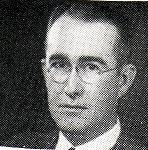 The honor of presiding over Washington Council during the year of its fiftieth anniversary was a
distinction, the memory of which Brother Kehoe will cherish all his life. In turn he will have the satisfaction of
knowing that in the judgment of his committees, his colleagues in office, and the membership at large, he did not
fail the Council in this momentous year. In his administration was centered the glorious record of fifty years; the
deeds and memories of the founders and their successors, and of the giants of old who with lofty purpose worked,
not that they might glorify themselves, but that the Council might be better for their having worked for it.
He forged the closing link in a chain which reached back to the days of the first Grand Knight, Brother
Bridget.
The honor of presiding over Washington Council during the year of its fiftieth anniversary was a
distinction, the memory of which Brother Kehoe will cherish all his life. In turn he will have the satisfaction of
knowing that in the judgment of his committees, his colleagues in office, and the membership at large, he did not
fail the Council in this momentous year. In his administration was centered the glorious record of fifty years; the
deeds and memories of the founders and their successors, and of the giants of old who with lofty purpose worked,
not that they might glorify themselves, but that the Council might be better for their having worked for it.
He forged the closing link in a chain which reached back to the days of the first Grand Knight, Brother
Bridget.
Grand Knight Kehoe lost no time in preparing for the eventful year. As an advisory committee he
appointed all living Past Grand Knights, with Brother Colliflower as chairman, Brother McGarraghy as vice-
chairman, and Brother Jones as secretary. This committee held frequent meetings, adopted a tentative program for
the Council's consideration, appointed sub-committees for the several projects, and worked out all the details of
each. The success of the celebration gives proof of the faithful, tireless work of this general committee. Always it
had the full cooperation of the Grand Knight and his officers. At the Council meeting of May 13, 1947, Chairman
Colliflower was presented with a diamond-studded Fourth Degree pin in appreciation of his work in connection
with the anniversary celebration.
The program of the anniversary events is printed elsewhere in this booklet. Only one of these was held in
the home -- the "Home Coming" meeting, March 25, when three floors were necessary to care for the members. A
public address system was installed so that all could hear. Instead of the opening ode, "Happy Birthday" was
appropriately sung, both because of the nature of the event and in honor of Monsignor Guilday, whose natal day it
was. Some regular business was attended to, after which Past Chaplain Guilday gave a short address. The principal
speaker was ex-Senator Brother Danaher of Connecticut who was both eloquent and witty. Past Grand Knight
McKenna reviewed the history of the acquisition of the property, after which Treasurer Garofalo presented a
detailed financial report of the undertaking. Good entertainment was provided, including an excellent "Barber Shop
Quartette," after which there was a buffet supper and the cutting of a huge birthday cake, appropriately decorated.
The main feature of the evening was the burning of the mortgage on the home.
The Father and Son night was held in the capacious gymnasium of Catholic University under the
chairmanship of Past Grand Knight Sullivan. Outstanding figures in the sports world were guests, including Clark
Griffith, president of the Washington Ball Club, who not only autographed numerous baseballs and athletic
equipment given to the youngsters, but also presented to every "son" present a pass to one of the ball games. In
addition to other entertainment movies were shown of some of the leading sporting events. Then the youngsters
were filled with soft drinks, sandwiches, etc.
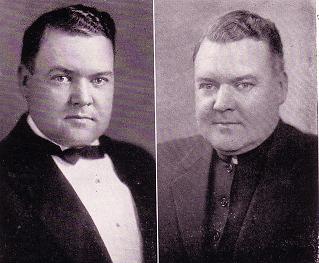 The Memorial Mass was celebrated in the Shrine at Catholic University. It was largely attended, so our
departed brothers were not forgotten in our days of jubilation. The sermon , preached by Past Grand Knight Father
Gallery, S. J., is herein printed. Following the Mass, breakfast was served in the University dining room. The
address of the speaker on this occasion, our Chaplain, Father Cummings, is also published.
The Memorial Mass was celebrated in the Shrine at Catholic University. It was largely attended, so our
departed brothers were not forgotten in our days of jubilation. The sermon , preached by Past Grand Knight Father
Gallery, S. J., is herein printed. Following the Mass, breakfast was served in the University dining room. The
address of the speaker on this occasion, our Chaplain, Father Cummings, is also published.
Two ballrooms of the Statler were necessary to accommodate those who came for the Council dance,
which was open to all Knights in the jurisdiction and their ladies.
Washington Council was the guest of the other four councils at a reception given in the Tenth Street home.
Felicitations were offered by State Deputy James C. Naughten and other distinguished and official guests, and after a
most cordial and well-worded address by Past Grand Knight
Walter I. Plant of Potomac Council, Brother William H. Collins of Spalding Council, on behalf of our
sister Councils, presented a valuable and beautiful grandfather's clock to our Council as a birthday gift, with the
best wishes of our sister councils. The clock stands in our home as testimony of the true fraternal spirit existing
in this jurisdiction, and as a living reminder of our permanent password. A bountiful repast followed this
meeting.
The culmination of our anniversary celebration was, of course, the dinner at the Mayflower. Never was
there a more brilliant event in the Council's history. The decorations, under the supervision of Brother McCann,
were elaborate; the music exceptionally satisfying, the entertainment far above amateur quality, and the menu one
to be remembered. After introductory remarks by Grand Knight Kehoe and Chairman Brother Colliflower, and the
congratulations of State Deputy Naughten and Commissioner Young of the District of Columbia, Brother Leahy,
who was especially felicitous that night in the role of toastmaster, introduced the speaker of the evening, Past Grand
Knight Rover. Brother Rover's stimulating and eloquent address appears in these pages. It should be read by all as a
prominent lay Catholic's interpretation of the subjects it covers.
But other things were happening in the Council during this administration which were not directly
connected with the anniversary. The effort was made to secure 500 new members during the year -- ten for each
year. If this goal was not reached there was, at least, a large increase in membership. Twice honorary membership
was conferred on brothers who had passed their 65th year and who had been continual members for at least
twenty-five years. October 22, 1946, with proper ceremonies, lapel buttons designating this distinction were given
to thirty-four members; February 25, 1947, 121 more were also honored, because of twenty-five years of
membership.
At different meetings throughout the year congratulations were expressed to five brothers who had
received recent recognition: Brothers Rover, for his appointment as a member of the Parole Board of the District
of Columbia; Leahy, who had been decorated with the medal of merit for his outstanding work in organizing and
maintaining the Selective Service Board in the District; John O'Dea, who had been chosen as People's Counsel;
Lecturer McDonnell, recently elected president of the Washington Section of the Holy Name Society; and Lester
Moss, who was selected secretary of the same group.
A word of praise should be given to our Chaplain, Father Cummings, and his associates in the Society of
the Atonement for their splendid and inspiring work. In this connection it should be noted that the profit from the
charity dance, held March 15, 1947, was turned over to these Friars for the education of a student for the
priesthood. Other speakers during the year were Brother Koka who spoke on conditions in his native country of
Albania; Rev. Dr. Russell of Catholic University, whose topic was the "Dignity of Man"; Father McNally, S. J.,
Vice President of Georgetown; and Brother U. S. Senator Francis J. Myers of Pennsylvania, who discussed the
proposed aid to Greece and Turkey.
A letter was sent by the Council to President Truman in protest of the trial and conviction of Archbishop
Stepinac of Yugoslavia. An etching of the deathbed scene of Columbus was presented to the Council by Cal.
J. K. Stacey. The death of Archbishop Curley, always a friend of the Order, was properly mourned, and
an extensive spiritual bouquet asked of the members.
Council matters of importance received consideration during this term. A committee was appointed to
consider all appeals for aid before presenting them to the Council. This procedure not only saved much time at the
meetings, but discouraged unwise appropriations. Another committee was named, under Brother Kinsella, to
consider the question of reviving the Columbian Squires.
Finally, a special meeting was held on May 20, 1947, to discuss and vote upon certain recommendations
of the trustees, all of which were passed. These were:
- That the salary of the Financial Secretary be changed from $900 a year to eight percent of all dues
collected, plus two and one-half percent on new insurance contributions.
- That an assistant to the Financial Secretary be appointed who was to be paid out of the commissions
of the Financial Secretary.
- That all official mail received be addressed to the home, 1601 R Street, N. W. and that sent to bear this same address,
- That the official records of the Council be retained and kept in the Council's home.
- That the Council trustees be authorized to modernize and simplify the keeping of the records of the Financial Secretary and Treasurer.
At the annual election, Deputy Grand Knight Eugene C. Baczenas was chosen to begin the work of the second fifty years of the Council's existence. This present Grand Knight is one of ideas, vision, and energy. Judging from his work in the past, it is certain that the historian fifty years hence will write his record large in the annals of the Council.
Return to History Index