David Waite
David Waite fact file 1951: Born in New South Wales 1973: Wins
first Australian cap 1978: Retires due to injury 1996: Appointed
coach at St George-Illawarra 1999: Takes team to NRL Grand Final
2000: Becomes RFL coaching consultant 2001: Appointed head coach
and technical directorHe turned to coaching and built a reputation as a
man with a good technical grasp of the game. After a spell with Newcastle
Knights, he went on to guide St George-Illawarra to the Australian championship
final in 1999. He was reportedly offered the job as New Zealand coach in
2000 but instead came to Britain to work on the RFL's nine-year World Class
Plan. The former schoolteacher, who combines the role of coach with that
of technical director, sees his administrational skills as being one of
his main attributes. "I've been an advocate of planning - that's one of
my strengths," he said. Part of his role will be to pinpoint a British-born
coach to succeed him when his contract expires in 2004.
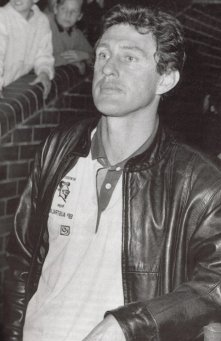
|
PLAYING CAREER
Position: Winger
Junior Clubs: Canterbury Juniors
Senior Clubs: Western Suburbs,
Wollongong Cronulla 1974-75 Western Suburbs 1978
Country Seconds 1972
Country Firsts 1973 NSW 1973-74
Kangaroo Tour 1973 - played six Tests for Australia
COACHING CAREER
Australian Schoolboys 1984-86
Canterbury U23’s 1985-87
Newcastle Reserve Grade 1988-91
Newcastle First Grade 1991-94
Current Great Brittain National side coach |
Waite a former International winger and the clubs development officer
and reserve grade coach, was made caretaker coach for the remainder of
the 1991 season when the knights finished 13th and took over his "own"
side for the season 1992. The Knights were revitalised and besides
qualifying for the play offs for the first time, shared the 1992 club Championship
title with Brisbane, with the reserve grade also making the end of season
play offs.
The Knights beat Western Suburbs 21 - 2 in the first semi final then
were beaten 3 -2 by St George to miss a position in the final. The
1993 season saw the Knights drop from fourth to ninth and Waites term came
to an end in 1994 when the club lost the final seix games of the season
after the players had been told Waite would not coach the following year
and had been replaced by Malcolm Reilly. Waite ended his term with
the Knights with 34 wins, 40 losses and two draws for this 76 matches.
Waite went to St George and started coaching.
Paul "Chief" Harragon on David Waite,
As a former schoolteacher, David was very organised, ordered and articulate.
He came from the Warren Ryan school, as did Alan McMahon, and was big on
skills and drills and the technical side of the game. Everything had its
place with Waitey and he followed a formal structure. At half time he rarely
got upset about anything and it was mostly figures and percentages. When
directing ballwork, he usually referred to players by numbers. Paul Marquet,
Robbie McCormack and Marc Glanville would be addressed as, 11, 9 and 13
- that sort of thing. Waitey always tried tto deflect criicism away from
his players, another reason why he found himself offside with some supporters
and sections of the media. By quoting statistics or perhaps raising another
aspect of the game, he was seen to be a coach who made excuses for a loss
rather than addressing individual player performances. For that he had
the players respect, because he was basically just trying to protect us
from a public bagging. Away from the media spotlight he would then address
any particular deficienceies or problems with the player individually,
at training or in the video room.
Season 1991
Season 1991 started well with the Knights winning the sevens competition.
The season 1991 started with the Knights leaner and faster than ever before.
Players were more confident in their attacking and there was some direction
in the Knights play. Newcastle only won 6 out of the 22 premiership
games, drawing 3 in the first seven games and losing 13 games. In
1988, 33 percent of the Knights graders players graduated from local
clubs. By 1991 they were running at 61 percent local content. A typic Newcastle
team in 1991 would have been similar to this; Michael Hagan (c),
Ashley Gordon, Tony Kemp, Jeff Doyle, Robbie McCormack, John Schuster,
Steve Linnane, Marc Glanville, Mike McLean, David Boyd, Peter Johnston,
David Mullane, Mark Sargent. Interchange: Paul Marquet, Jason Hoogerwerf,
Adrian Brunker, Sam Stewart.
Newcastle regularly looked beyond the Winfield cup for affordable attacking
genius, as most of these players came with a huge price tag the knights
could not afford. One of these players was John Schuster from the all blacks
who played all but one game scoring 11 tries and becoming a crowd favourite
on the hill.
David Waite was Development officer and reserve grade coach, no one
in the club knew the young talent in the club better than him. Planned
that investing on the junior talent thtat would one day save Newcastle
expensive shopping expenditure in the transfer market. Given the
level of clubs debt, the higher percentage of local products playing the
better Newcastles bank balance. Brad Godden after 16 reserve grade games
was given a chance in first grade and played two games until he injured
a knee. Players recruited were, Mike McLean (Easts), Sean Kelly (Parramatta),
Jason Hoogerwerf (Saints) and David Woods (Canberra). Ivan Henjak
had signed a letter of intent to join the Knights in 1991, however later
on he stayed with Canberra disappointing the Knights fans.
By mid season Hagan played half and Tony Kemp played five eighth, a
combination that served Newcastle well. Both Marc Glanville and Michael
Hagan played all 22 matches, Hagan played a state of origin match also
in season 1991. The organisation had been sorely tested, but had
come through the other side. Having a hard look at the playing resources
the knights had to look at the real worth of the players. Waite knew
from history that developing local talent was the key to winning premierships.
Bonds with a club that run all the way back to their schoolboy cannot be
bought, nor can they be broken.
KNIGHTS STARS TO STAND BY WAITE - The Sun
Herald
NEWCASTLE'S hard core of experienced players have stressed their support
for David Waite as the axe hangs over the coach's head. The Knights' board
is mulling over whether to reappoint Waite for next season. Reserve-grade
coach Robert Finch, former Wigan coach John Dorahy and Canberra reserve-grade
coach Dean Lance are all in contention as possible replacements. Captain
Mark Sargent, Robbie McCormack, Marc Glanville and Paul Harragon all had
positive things to say about Waite. There is no doubt their comments are
genuine because each was offered a chance to avoid being quoted.
Former NSW hooker McCormack said he hoped Waite would be reappointed.
"I reckon David is up there with the best of coaches," he said. "I support
him for sure and I think he has done everything right in preparing the
side. "Results haven't gone our way lately, but the coach can only do so
much. The players have to take a lot of the responsibility. I have a lot
of time for the coach and I'd like to see him reappointed."
Glanville agreed the players had a lot to answer for, especially as
Newcastle this season have tended to play well against good sides but struggle
against ordinary teams. "That comes down to the mental approach of the
players," Glanville said. "I think David has done a fine job and I'd like
to see him reappointed. "There are other blokes out there who would like
the job and that's fine. But have any of them got stronger claims to it
that Waitey?"
Sargent admitted he had been involved in a few run-ins with Waite over
the years, but said that was only natural in a coach/player relationship.
He said Waite had the support of the players. "The club has got every right
to have a look at alternative coaches,"Sargent said. "But I've got no problems
with David. I would be quite happy for him to be reappointed and you might
realise that I re-signed for Newcastle at a stage when it looked like David
was a certainty to be here next year."
Harragon also said he was happy with Waite: "I support David in the
job and I would continue to support him if he stayed. But I'd like to add
that if someone else gets the job, I would support them as well."
KNIGHTS' COACH 'TEST' MATCH - 04 Jul 1991,
Sydney Morning Herald
Newcastle coach David Waite has a lot to prove for a man who has had
his job for only three days. When his Knights take to the field against
Brisbane tonight, the man who has never previously coached a first-grade
team will try to show he has smoothed over the side's difficulties. Waite
was thrust into the job of first grade coach on Tuesday when Allan McMahon
resigned from the club under speculation that pressure from the media and
player dissatisfaction had made his job impossible. Waite was promoted
from his position as reserve-grade coach and given only three days to bring
together a side badly lacking in form and morale.
Last night at training a tired David Waite said he had done all he
could to bring the Knights together and ready them for the match. He said
that despite the limited preparation time for the game he was confident
the team would put in a good performance. "When Australian sporting sides
are placed under pressure they tend to bounce back," he said. "We haven't
had enough time to prepare, but the match is already sold out and that
sort of support will help us."
Although this is Waite's initial posting to coaching first-grade he
is no newcomer to that type of role. As a winger with the 1973 Australian
representative side he played in six Tests. He coached the Australian Schoolboy
side before joining the Knights, and since 1988 has been Newcastle's reserve-grade
coach and development manager. For the Brisbane Broncos team, discord in
the Knights camp could not have come at a better time. They are struggling
to gain a top five place after losing form in recent matches and need to
beat Newcastle to remain semi-final contenders. The Knights' lack of preparation
may provide the Broncos with the edge they need. But Bronco spokesman Kev
Keliher was cautious about tonight's match and said the Knights were now
an unknown quantity. "We are going to approach it like any other game,"
he said. "The trouble they have had may bring them closer together and
make them harder to beat." Knights chief executive Mike Armstrong confirmed
yesterday that Waite would finish the season as coach but said beyond that
his position was not yet decided.
Men of Steal - Newcastle Morning Herald 1991
Captain Michael Hagan, a former Canterbury player who rated the Newcastle
pack recently as superior to the great Bulldog pack of 1984-85. John
Schuster, the former All Black centre who in June was snared by the Knights
at huge expense, has yet to play first grade, and the explanation is simple.
A gifted attacking player, Schuster said this week: "I'm having trouble
adjusting to the defensive patterns. I've missed too many tackles."
"Allan had a reputation as a Ryan-style coach ... big on defence. And
we knew that in order to build up local support, we could not afford to
get thrashed consistently early on. "He also impressed us when we spoke
to him. He was young, fresh -lots of ideas. He wasn't a member of the old
coaching brigade." Moreover, both McMahon's style as a player and his personality
were consistent with the Newcastle self-perception: strong, resilient,
unpretentious. He had a major say in the players the club recruited to
begin its adventure in the Winfield Cup. He wanted young, ambitious men
whose best football was ahead of them. Commitment and dedication would
take priority over flashiness and flair; reserve grade status was meaningless
provided the player had character.
The Knights were so named because they would be "men of steel", and
that is precisely what McMahon demanded. Says a Knights insider: There
are no players with God-given talent. Just guys with guts who are willing
to graft." There were two criticisms of Newcastle during the first two
years: an inability to attack, which was disputed, and to win away games,
which could not be.
According to Hagan, the decision to leave a day early gradually produced
rewards. "It's pretty well accepted now that to embark on anything longer
than an hour's journey is to give something away to your opposition," Hagan
says. "I know I despise having to go down on a bus, but by leaving a day
before... when you arrive you can play cards, walk around, have a good
feed and a good night's sleep, then the next day you're ready to play football."
Every Monday night, McMahon and the players share a drink and watch
the local League round-up at the Cricketers Arms, a pub in Cooks Hill.
Barbara Morley, wife of one of the publicans says: "The players call Allan
BFM-Big Fat Mac. They're all equals, and there's not a lair among them."
Talk about team spirit can be almost meaningless. All first-grade sides
have it but, as a result of a unique set of circumstances, Newcastle perhaps
have more than most.
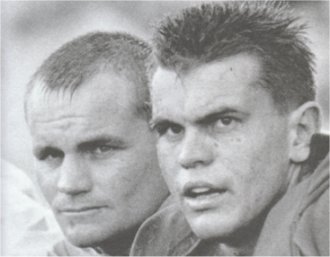
Waite was blessed with Sarge and Chief leading the pack.
The pairing of forwards Mark Sargeant and Paul Harragon was established
in late 1991. Their respective returns from injury allowed Newcastle
to regain the forward power of old.At the end of the 1991 season Sargeant,
Harragon and Gladville were subject to intense interest from rival clubs,
all three players stayed.
THE DRAW - The luck of the draw seems to
have favoured Newcastle. Unlike most clubs who have three and sometimes
four matches against the top clubs in succession, the Knights clashes with
the big name clubs are fairly well spaced. The only time Newcastle have
to back up against the top clubs is in the sixth and seventh rounds and
in the last two when they play Brisbane and Canberra. Newcastle players
know they have to win matches to regain the support they lost last season.
While the Newcastle public are strong supporters of their team, they do
like to win. Newcastle has squeezed every dollar they can from sponsorships
to raise money. Unlike the Sydney clubs, they do not have the backing of
a licensed leagues club so their performance can mean financial success
or disaster.
"To really be competitive we must be scoring at least 20 points a week."Davids
waite's assessment of the realities playing in the Winfield Cup. When waite
came into the main job with 8 games remaining, Newcastle were averaging
11 points a game and conceding 19. The challenge of the new season
was to score 20 or more points a game, Newcastle needing to move the ball
wider to create more opportunities. Waite saw that the average play the
ball back in 1977 was eight to nine seconds. He was coaching in an
era of three second play the balls and sides that score 30 points a game
against the best defensive teams in the competition. Waites strategy
meant that the 1992 squad would have to become the most aggressive trained
groups of players in the competition, enabling the team to play the full
80 minutes, and not running out of petrol in the second half. 1992
saw a quest for mobiltiy as some of the heavy weights were cut from the
playing staff and others having sacrifice bulk for speed and agility.
Paul Harragon shed some bulk dropping from 120kg down to 109kg, rediscovering
the speed and agility he lost in his quest for bulk. The arrival of Brad
Godden from reserve grade filled the full back position and Mathew Rodwell
possessed a good assessing game, ball skills and most important a accurate
kicking game. It was fair to say that Newcastle has one of the worse
kicking games in the league before Rodwells arrival. The Knights
started spreading the ball a fraction more than in the past and results
came. With Hagan call the tune at the pivot, and the outside backs
revelled in their greater involvement. Inside them, Schuster with
his amazing step and skilful hands were setting up passages to the try
line. Ashley Gordan was venturing in to the backs looking for midfield
breaks and supplying finishing power the knights needed. Adrian Brunker
played confidently outside of Schuster and was defensively strong. Many
Novocastrians have linked the resurgence of their unbeaten first-grade
team to Harragon's injury-free status. In the Newcastle game against Manly
in Auckland, Harragon nearly flattened Martin Bella in one tackle, but
his keen running and ability to take the ball up quickly are his strongest
attributes. In round two, and working in tandem with his close mate Mark
Sargent, the Chief managed to shut down the renowned Penrith pack to set
up the Knights'most inspiring victory.
Robbie O'Davis was recruited from Queensland and was destined to play
plenty of first grade games. Mark Sargent played all 24 games, scoring
24 points. A promising season for the Knights that could have been
much better, eventually finishing 4th. The Reserve grade side finished
2nd, being Grand Finalists.
KNIGHTS: FITTER AND MEANER - 08 Mar 1992,
The Sun Herald
There is an a new look about the Newcastle approach to rugby league
this season, a greater emphasis on attack without losing any of the tough
grinding defence that was the team's trademark. Coach David Waite would
like to borrow the best parts of the styles of the Canberra, Penrith and
North Sydney teams and blend them into his own side. Waite rates Canberra
the best attacking side in the premiership, Penrith as the masters of the
percentage game coupled with outstanding attack while Norths have their
own version of the old percentage game with a lot of running from dummy
half. "We are a long way ahead of where we were in fitness at this stage
last season. This is pleasing but it does not win games of football," Waite
says. With the drama of last season pushed aside when coach Allan McMahon
and his assistant Alan Bell had to stand down, Newcastle should have a
better season in 1992. At the start of last season, Newcastle seemed a
strong semi-final chance with two wins and three draws from the first five
matches. The victories were against Cronulla and South Sydney and the draws
against Penrith, Balmain and Eastern Suburbs. But then came the horrific
36-6 loss to Canterbury and while the wheel did not actually fall off,
it became loose culminating in a 41-12 hiding by Western Suburbs at Campbelltown.
There are changes at Newcastle this year. Some of the long service players,
Jeff Doyle, Peter Johnston, Steve Walters, Gary Wurth and Steve Carter
are gone and so are Steve Linnane, David Woods and Mike McLean. A number
of interesting newcomers in the Newcastle line-up are Jamie Ainscough and
Jamie Corcoran along with former winger John Allanson and the former Eastern
Suburbs utility back, David Smith. Also returning to the Newcastle fold
is the Kiwi, James Goulding, who will be an asset providing he sticks to
a strict training schedule. There is still a vast amount of power in the
pack headed by Kangaroo front-rower, Mark Sargent, whose training form
is particularly encouraging. Hooker David Mullane is another gritty player
while David Boyd continued to improve and Marc Glanville earned a lot of
accolades for his displays. Hagan is a very good player and an outstanding
captain. He shifted from five-eighth to halfback last season without any
loss of form or initiative.
LEAGUE'S MAN MOUNTAINS - 18 Apr 1992,
The Sun Herald
SCIENCE is making the 1990s rugby league stars bigger, faster and harder.
Even traditionally "small" players like halfbacks and wingers are bulking
up by using latest techniques. The sport is developing a race of young
giants, not only in the forwards but also in the backs. And the strength
building programs are not confined to the senior players. There are similar
programs for all the junior representative players so that when they move
into grade they have the foundation to be built on. Most forwards in the
Winfield Cup this year have put on weight - while still gaining speed and
agility.
DAVID WAITE, the Newcastle coach, said technology was the main difference
between the past and the present in rugby league. "The game has opened
up, it is faster because the athletes are better,"Waite said. "In the early
1980s defence was the winner and attack the loser and the game really wasn't
that quick. "But the game slowly but surely moved towards where the attack
started to overcome the style of defence. "Now because of rule changes
the best players in the world are given what they want - time and space
- and when this happens the game speeds up.. "There is no place in the game
now for the plodding front rower and the move to slot backs into the hooking
role is indicative of the way coaches are responding to the demands for
speed. "The fact that clubs now either have fulltime or semi-professional
trainers is an indication that coaches no longer take that responsibility.
They have handed this area over to those who have greater expertise."
A comparison between a 1990s forward and those from previous eras is
an accurate indication of one of the major differences in the game.
NEWCASTLE Total 598
Mark Sargent 107 David Mullane 92, Paul Harragon 108, David Boyd
101, Paul Marquet 94, Marc Glanville 96
Newcastles bench was strengthen with Sam Stewart continuing his role
as the "Super Sub" finally free of his painful hip problem which caused
him alot of problems in season 1991. Sam Stewart only started in one game,
coming off the bench 18 times.
19 Jun 1992, Sydney Morning Herald - Waite claimed. "Our
attack is 60 points better and our defence 40 points better," he said.
"You'll find we're the only team who have managed a 100-point swing." Newcastle
are scoring just below the 20 points a game Waite announced as their aim
at the start of the year. They are averaging fractionally more than 18
points a game, which is commendable, but Waite said he was not satisfied
with the attack. "We strive for perfection," he said. "You get few opportunities
in this game, so your execution has to be perfect all the time."
Knights Season review - Sydney Morning Herald
The transformation of the Newcastle Knights should continue in 1993:
from the artistically limited but brutally defensive team that survived
the tough early days, through last year's more confident and enterprising
outfit, to a polished, technically sophisticated side with a realistic
chance of appearing in this year's grand final. Well, that's the theory
if only the Knights can fix their obvious failing from last season: a below-average
ability to score points. Newcastle earned plaudits for their defence
last season, their failure to score any tries in the minor semi-final 2-3
loss to St George was merely a reflection of their mediocre attacking record
in the premiership, which was the ninth best. A disappointed coach David
Waite knew this as he walked out of his team's Sydney Football Stadium
dressing-room after the loss to St George, muttering to himself sadly:
"We just couldn't score any tries." Since then, Waite and some players
have hinted that Newcastle will produce more variety and sophistication
in attack this season. The Knights have not secured any other significantly
talented senior players, despite the widespread belief late last season
that they needed a fast, incisive centre.
BATTLING KNIGHTS AXE TWO - 13 Apr 1993,
Sydney Morning Herald
Newcastle coach David Waite has reacted savagely to his team's second
consecutive loss last weekend, dropping two big-name players and relegating
Australian prop Mark Sargeant to the fresh reserves bench. Waite has recognised
the pressing claims of Robbie O'Davis at fullback rather than wing, and
promoted irrepressible reserve- grade five-eighth Matthew Johns. World
Cup squad member Brad Godden and Rookie of the Year Matthew Rodwell have
been relegated to reserve grade to make way for the two. Sargeant has been
given the coaches' sure-fix remedy for sluggish performances - a stint
on the fresh reserves bench - with Tony Butterfield taking his place in
the starting line-up. The high-profile axings have been partly forced by
some outstanding performances from the Knights' reserve-grade team. Currently
leading the table, the team has scored the most points for of any side
in the three competition tables.
Matthew Johns, along with his brother, halfback Andrew Johns, has contributed
mightily to the reserves' standing and his promotion was only a matter
of time. So was O'Davis's switch to fullback. He becomes more involved
from the custodian role, and his failsafe hands have had him earmarked
for Godden's spot for some time. Tony Herman has been named on O'Davis's
former flank. Waite has promoted Matthew Johns alongside halfback Jason
Martin and lock Michael Hagan.
KNIGHTS JOUST WITH THEIR OWN - 7 Aug
1994, Sydney Morning Herald
Match days of late for the Newcastle coach, David Waite, have followed
a familiar script: sit on the sideline, watch your side be beaten, then
return to the dressing room to make guarded remarks about the unfavourable
penalty count and your less than firm grip on your job. So it was yesterday
when Manly beat Newcastle 32-16 in a torrid match at Brookvale Oval. Desperate
to protect their top-three position from a rampaging Canberra, Manly have
nearly half their side in doubt for next Saturday's home match against
Cronulla. A decision by the Newcastle board on Waite's future is imminent,
although the club's president, Terry Lawler, denied a report that a decisive
meeting was scheduled for Wednesday. Amid signs the protracted coaching
issue was causing division and hostility at board level, Waite blamed it
for destabilising his team and, by association, undermining the Knights'
finals campaign, which ended with yesterday's loss.
There were reports in Newcastle papers at the weekend a board member
had been pressured to resign for allegedly leaking information to the media.
It was reported, also, that Lawler recently met the editor-in-chief of
the Newcastle Herald, Paul Ramadge, to complain about the weekly column
of Newcastle's former coach, Allan McMahon. McMahon, who was replaced by
Waite in 1991, is perceived by some members of Newcastle management to
be excessively and persistently critical of his successor in his column.
Lawler denied there was friction on the board, and would not comment about
a meeting with Ramadge. Waite said: "It has been destabilising. You don't
need speculation surrounding your career. It is hard to maintain an environment
conducive to success. Forces working against it should be recognised for
what they are." The match was as brutal as any this year, the defensive
ferocity rising through the afternoon. Newcastle players became aware of
a Manly call, "Red Dog", which was used in defence and preceded attempts
at savage tackles. The Knights' forwards, particularly prop Paul Harragon,
determined to adopt a similar tactic, their resolve hardened by a conviction
of harsh treatment from referee David Manson, who blew an 11-3 penalty
count in Manly's favour.
A HEALTHY LEGACY AT NEWCASTLE, SAYS WAITE - 23 Aug 1994,
Sydney Morning Herald
Sacked Newcastle coach David Waite said last night he felt he had been
responsible for making the Knights one of the healthiest rugby league clubs
in the world. Waite maintained his silence over Monday night's appointment
of Great Britain coach Mal Reilly as his replacement, but spoke for the
first time about the board's decision not to renew his contract after seven
years with the club. He declined to comment on suggestions he had earlier
been promised the job for 1995 and was considering legal action. "When
the dust is settled and I am able sit down and gather my thoughts, I think
- as someone who's been here for seven yearrs - I'll be comfortable commenting
on where the club has been, where we set it going and where it might end
up," Waite said. "But right now, I want to get past the game against Illawarra
on Friday night first."
Waite said he was proud of his role in making the Knights successful
over the past three years, and felt he would hand over a club which may
well qualify for the first-grade semi-finals next year - despite almost
$2 million of debt. "The reserves side (this year) will be the Knights'
sixth grade side in the last three years to make the semi-finals - that's
the best record of any club," he said. "We've won the junior club championship
for two of the three years. In 1992 we were the strongest club in the world
with Brisbane, tying for the club championship. And we achieved that without
the sort of finance necessary to compete on the top shelf for players.
Until the club can compete for$200,000-a-season players, you have to judge
success taking into account factors other than making the first-grade semi-finals."
Waite said he took great pride in his record for developing players
and coaches. Along with the likes of Paul Harragon, Andrew and Matthew
Johns and others, coaches John Dorahy (Wigan) and Grant Bell (North Queensland)
have graduated from Waite's tutelage to high-profile positions. "We had
the winner of one Norwich Rising Star Award, the runner-up in the next
and I dare say we'll have someone finish first or second this year,"Waite
said. "All of these things don't just happen. You need someone with vision.
If Newcastle is not the most healthy club in rugby league, it has to be
one of them and I believe I got it to that position."
Waite said the timing of Monday's decision had left him without any
premiership coaching options and he had not had time to consider his future.
His release was difficult for his family, he said. "It's hard, from the
simple point of view that you're out of a job," he said.
A decade of the Knights - 1997
In the euphoria of Newcastls first premiership win, David Waite could
not forget the clubs formative years, "One phone on the table, being shared
by three guys for about three months. Now thats tough." recalls Waite,
the Knights inaurgural development officer and second grade coach. "We
were the initial players in the dreams of so many novacastrians.
We knew it was a rugby league stronghold and we knew Newcastle had more
than 6000 players in the city. "But we also knew there weren't many
players there in 1987 who were going to play their part in the first grade
side the following year. I think the people in Newcastle thought back then
it was just a matter of putting a jumper on these guys, and they would
compete. Those three key men back in 1987 - when the knights were accepted
into the newly structured 16 team Winfield Cup along with Brisbane and
the gold coast - were Waite, first grade coach Allan McMahon and marketing
manager Leigh Maughan. All three have since departed, but their legacy
most certainly remains. When the club kicked off in 1988 only 30 percent
of local talent constituted the first grade side. Within five years
in was more than 70 percent. Last Sunday, nine of those champions
in the knights starting side had been juniors in the local area. Waite
believes the secret of their success back then was allowing, rather than
forcing, the cream to float to the top. "It was not a matter of finding
the talented kid and spending a lot of time on him, it was more a matter
of spending time with the officials who were dealing with the talented
kids. What I believe we brought to the area was a professional approach
to identifying the talent, and then nurturing it. This was done through
great coach education." Waite said. while many were dwelling on the
success of the premiership side - and Waite certainly was one of them -
the former knights coach reflected on how the Newcastle "system" had produced
more than just a championship side. "In the euphoria of the win everyone
will be over the moon for the players, and rightfully so. But the
system has also produced a number of first grade coaches, Allan McMahon
went on to coach at Illawarra, Grant Bell coached the Cowboys, John Dorahy
had great success in England and the same with Robbie Tew at the moment,
Peter Sharp has won reserve grade premierships at both Newcastle
and Parramatta. So the development of a club is not solely based
on producing players. And thats the view we had back in those days.
We Built the club from the bottom up, primarily because we didnt have the
money to build it from the top, but also because we believed that was the
way it had to be done for the long term benefit of Newcastle."
Waite took many cherised memories from his eight years at the club,
including sharing the club championship with Brisbane in 1992 and making
the semi finals that same year. "But the highlight for me was when the
horse was allowed into the stadium for our second appearance in the finals
in 1992, Like this year, the authorities would not let him go to
the stadium the first week of the finals. But Leigh Maughan 'bashed
them' to enable the horse to get there the second week. We were in
the dressing rooms and heard this almighty roar, and then someone told
us the horse had just hit the stadium. to have that same noise as
we were used to at marathon stadium, multiplied by the emotions of the
novacastrians with a smell of what the finals was line, was just a fabulour
experience."
Honest Knights the one to beat over last furlong
- 10 Sep 1997. Newcastle Herald ;
FORMER Knights coach David Waite was always fond of coining phrases
to describe particular aspects of our game. I remember him often describing
the rugby league season as a marathon, a long and arduous journey through
the depths of winter. A pretty fair summation of the premiership season,
you might think, and you'd be half right. Waitey's marathon analogy fails,
however, to recognise the vagaries of the season. The jostling for positions
early in the piece, the front-runners making an early sprint in the hope
of catching the others unawares, or the mid-season wobbler who comes home
with a wet sail.
Old Newcastle boys still keeping it in the club; Roach
on Monday; Herald. Jun 1, 1998.
THERE'S one thing about Novocastrians: they look after their own. That
is about the only reason I can see for bringing Warren Ryan back to his
home town to coach the Newcastle Knights in the National Rugby League (NRL)
premiership next season and for the Newcastle Breakers to appoint Ken Kaiser
this week as coach of the city's national league soccer side. Ryan
comes back to Newcastle under exceptional circumstances. Premiership-winning
coach Malcolm Reilly is heading back to the Old Dart to look after his
mother and probably also to turn around the fate of English football, such
is his expertise. The Knights certainly are better for him being here.
To me Ryan's appointment last week by chairman Michael Hill was about as
stunning as making West Australian politician and Labor Opposition Leader
Kim Beazley club patron. A done deal straight out of left field. Just at
a time when the Knights are surging forward, and leading the NRL premiership,
I wonder if it is the right move to go backwards in appointing a coach
from yesteryear when there are so many young stars on the horizon in the
same field. Coaching in sport is a bit of a merry-go-round. The same names
seem to do the circuit, changing clubs as often as buying a new suit.
Ryan's record is outstanding, enough for him to warrant the overused
tag of 'super coach' which gets bestowed on any rugby league mentor who
takes out a premiership. The former Hamilton Marist Brothers student and
Australian Commonwealth Games representative shot putter was always
destined to coach the Knights. In fact, he should have been the club's
first, not fourth, following his proteges, Allan McMahon and David Waite,
and now Reilly. Hill and Leigh Maughan, the two men credited with the formation
of the Knights, had old mate Wopsey pencilled in to start in 1988, but
he already had a job, going from Canterbury to Balmain, and was unavailable.
Now the opportunity has come again to slip him into the position, not exactly
a job for the boys, but something along the same lines as other appointments
over the past 10 years at the club. I hope he does a great job. The Hunter
area needs to have its football side firing to lift its spirits.
But I would be just as keen to have given the job to someone more in
tune at present, like former Knights reserve-grade coach and now Eels second-in-charge
Peter Sharpe, or bury the hatchet and ask Robert Finch, or even try former
Mariners mentor Graham Murray. Being away from the game for four years
in a day-to-day coaching role must be a disadvantage, although Brisbane
Bullets National Basketball League (NBL) coach Brian Kerle, who won the
first three NBL titles as coach of St Kilda in 1979-81 then took Brisbane
to the same honours in 1985-87, has successfully returned to take the Bullets
into this season's play-offs after a similar stint off the court and behind
a microphone. The Knights office has certainly saved on stationery in filling
top positions.
Old man of coaching will do it his way, as usual;
League 2000; Herald. Feb 16, 2000.
KNIGHTS coach Warren Ryan moves closer to retirement age tomorrow but
I doubt that thought will spoil his 59th-birthday celebrations. Last week
it may have been different. Maybe if he had stayed a school teacher the
former Hamilton Marist Brothers boy would have been counting down the days
to qualify for the Commonwealth pension. Then again, under the Pension
Bonus Scheme he could last until he is 75 or so before relying on handouts,
such is his present fitness and enthusiasm. This time next year Wopsy could
be lining up for his Seniors Card, travel concessions and Health Care Card.
It would enable him to travel to matches on a $1 bus fare, ride between
Sydney and Newcastle on the train for only $3 and get his prescriptions
cheap. Then again, the 1962 Commonwealth Games shot putter could still
be at the helm of the Knights, steering them towards a second straight
premiership. There isn't really a retirement age for sporting gurus.
But few last past normal retirement age because of the stresses and
strains of a career in coaching sport. At one stage last week it seemed
Wok could have been heading for an earlier-than-expected life of leisure,
or to just continue casual work as a commentator on the ABC and newspaper
columnist. Turmoil within the Newcastle troops, reminiscent of the 1991
season when inaugural coach Allan McMahon marched out of Marathon Stadium,
had the media smelling another blood letting. Macca took the easy way and
blamed the Media for his resignation after the players rebelled against
his tough coaching techniques. Wok took it on the chin as he has at every
other club he has coached where turmoil is just second nature. His criticism
of players, rugged training sessions, and the timing of video sessions
seemed to have ruffled the feathers of some Knights players so used to
being mollycoddled. But I doubt Ryan was to blame for the travel and seating
arrangements for spouses and families at matches, which was another contentious
point among the senior squad. The Newcastle-born veteran of six grand finals
and two premierships (1984-85 with the Canterbury Bulldogs) survived and
still has plenty of tricks to play and teach in his second season as Knights
coach. He even seems more relaxed and serene a fortnight into the season
than at the corresponding period last season. A continuation of the stunning
form the Knights displayed in their 38-6 drubbing of defending NRL champions
the Melbourne Storm would certainly keep him in that frame of mind.
Humble Waite remains in the background; Inside League
- League 2000 Herald. Mar 27, 2000.
WHAT a shame St George-Illawarra co-coach David Waite didn't attend
the after-match press conference on Friday night after his team beat the
Newcastle Knights 25-18. There was a simple reason it wasn't his
turn. Waite and co-mentor Andrew Farrar share the after-match spotlight
week. It would be an intersting study to determine which coach, in turn,
made the most appearances after a win or after a loss. Waite is an interesting
character. He takes defeat personally and doesn't publicly gloat over victory.
As a former schoolteacher, he had some radical ideas and has always been
good for a short, sharp quote. He certainly didn't bask in the glory of
Friday night's victory, which was the Dragons' second in a row after a
humiliating loss to the Melbourne Storm. He accepted a few shakes of the
hand as he quietly departed with the other players and officials. But it
would have given him some satisfaction beating his former club on their
home ground for the second time in 12 months. Only Sydney City Roosters
have achieved the feat in the same period.
Waite had a topsy-turvey career while he was in Newcastle. You could
almost say he departed on acrimonious terms after being badly treated.
He was at Marathon Stadium from day one, first as development officer and
minor-grade coach behind Allan McMahon before getting his chance with the
top team after McMahon's mid-season resignation in 1991. Most of the talent
who took the Knights to victory in the 1997 grand final was developed by
Waite, then Peter Sharp. Waite was the first coach to get the Knights to
the play-offs when they also won the club championship in 1992. He got
his marching orders in 1994 as the Knights crashed out of contention in
the last few weeks after it became public knowledge Waite was on the way
out and England coach and former Manly player Malcolm Reilly was to take
over. It almost took legal action for Waite to get his payout from the
club after nearly eight years of service, the Knights coming good with
the money almost two months after he handed back his car keys and mobile
phone. He then helped develop the game in Adelaide before getting the St
George posting and he almost won the premiership in 1996. Last year Waite's
dream was shattered by the last-minute penalty try in the 20-18 loss to
the Storm.
Nothing will make up for those grand final losses except a premiership,
so it will be interesting, if it happens this year with the Dragons now
on a winning run, to see if Waite and Farrar stick to their after-match
interviewroutine.
Britain's long Waite for success - 18 October,
2001
David Waite won six caps for Australia in the 1970s. Given the
glut of foreign coaches in charge of British sports teams, the appointment
of Australian David Waite as head coach should have come as no surprise.
But there was a predictable barrage of criticism following the 50-year-old's
appointment last February.
Even though Waite holds a British passport, courtesy of his father
being born in Leicester, Hall of Famers Alex Murphy and Roger Millward
slated his selection.
I don't have a crystal ball but I have confidence in the future of
the game in this country David Waite Garry Schofield and Malcolm
Reilly - former Great Britain captain and coach respectively - were not
happy men either. Yet Waite is no stranger to the Rugby Football League
set-up, having joined the organisation as a technical director following
a spell as a coaching co-ordinator in 2000. And he is relishing taking
on his fellow countrymen and hopefully steering Britain to their first
Ashes win for 31 years. "I love challenges and this is a big one," he said.
"I am under no illusion about the task. I'm not worried about the past,
only the future, but the buck stops with me. I don't have a crystal ball
but I have confidence in the future of the game in this country."
Waite has experienced Ashes success as a player, winning six caps as
a winger for Australia. Injury forced his premature retirement, but he
was not about to turn his back on the game.
Win for Great Britain ensures Waite will take on Kangaroos
- November 25 2002
Great Britain 16 New Zealand 10
After speculation his tenure as Great Britain coach would be cut short,
Australian David Waite may now be offered a contract extension.
Waite enjoyed one of his finest moments when Great Britain drew their
series against New Zealand by beating the Kiwis 16-10 at JJB Stadium on
Saturday, the first time in nine years against any opposition that the
Lions have avoided defeat over three Tests. The win ensures the former
St George Illawarra boss will be around to face the 2003 Kangaroos - and
Rugby Football League executive chairman Richard Lewis would not rule out
trying to keep him beyond that.
"David and I speak every couple of months," Lewis said amid celebrations
of Great Britain's first win over the Kiwis since 1993. "We will sit down
and have a chat about things towards the end of the year. I think he's
done a magnificent job."
Waite hinted he was intent on walking away from coaching in December
next year, even if by then he had plotted the end of his homeland's 25-year
dominance of the international game. "I came here to do something, for
players aged 12 to 32 ... I'm not a quitter, never have been," said Waite,
first reported to be under pressure after the 64-10 loss to Australia on
July12. "If I can leave some legacy of structures where players come through
and prizes are won, then I'll be happy. I finish in December next year.
I came here for three years."
Asked whether he would consider staying on, Waite said: "You never
say never but I think the future may not necessarily be with coaching for
David Waite."
Without 11 top-liners because of injuries and other misfortune and
reeling from revelations that centre Clinton Toopi broke his hand last
week by punching a teammate while out drinking, the Kiwis entertained until
the end. Down to 12 men with Lance Hohaia in the sin bin and trailing 10-0
with 26 minutes left, they conjured a try from nowhere when man of the
series Stacey Jones finished a 70-metre movement. But man of the match
Keith Senior beat Henry Faafili on a roaring run down the left flank with
14 minutes left, the ball spinning back for five-eighth Paul Sculthorpe
to throw a dummy and cross for the clincher.
Waite for it: coach plans for long term -
October 26, 2003, The Sun-Herald
"I'm not employed to make predictions," David Waite warns. So you won't
read here about the arrogant Poms predicting Ashes success for the first
time in 33 years. What former Newcastle and St George-Illawarra boss
Waite is employed by the British Rugby Football League to do is fill its
most difficult posts - performance director and Great Britain head coach.
Despite his high profile in England, Waite doesn't make many headlines.
The former schoolteacher measures his words and they don't include bold
statements or racy speculation. But he's got plenty to say about the way
the game should be headed - and it all makes sense. "A lot
of people get carried away and want rabbit-in-the-hat short-term results,
but what you have to do is work hard at processes to get change," Waite
said. "What we are about is developing and making the changes we think
are necessary to deliver - over time - the team capable of winning a Tri
Nations and Ashes series against the world's best, and then repeat it."
You might think Great Britain's stunning humiliation in the one-off
Sydney Test last year suggests Waite's changes aren't happening.
He disagrees, and routinely ticks off his highlights: a Test win over Australia
(in the 2-1 series reverse in 2001), his side being the first to take any
silverware in a generation (the 2002 drawn series with the Kiwis) and producing
an Australia-beating side for the first time in two decades (2002 England
schoolboys). And he has made a point of ensuring no one involved
in the Sydney debacle has trotted out any easy explanation for that 64-10
result. "You didn't hear anyone make any excuses," he said. "We were
responsible for that and a football team takes responsibility for their
actions. "The significant point was to judge them on the next time
they played with a prize up for grabs and how did they go? They grabbed
the prize. You can't ask for more than that."
That was his side's much more impressive series against the Kiwis,
which combined with the emergence of some stunning teenage talent this
summer - Danny McGuire (Leeds) and Gareth Hock (Wigan) are two who may
figure in the Tests - has renewed confidence on these shores. Waite
is more measured. "I'm happy with the progress," he says. "We've
had two poor performances - the second Test in 2000 and the one-off game
in Australia last year. The rest of the performances have, I think, been
good indicators of the fact that things are improving - the fact we got
our hands on a trophy at senior level, beat the schoolboys for the first
time ever, been to New Zealand and won there at under 18s for the first
time ever."
Waite arrived in England as a "coaching consultant" during the 2000
World Cup. Soon he became arguably the most powerful figure in British
football. These days, little mention is made of the fuss that followed
a foreigner winning the Great Britain job ahead of local candidates like
John Kear and Malcolm Reilly. "It's not something that has
worried me," Waite recalls. "Everyone has a right to their opinion, but
I get on with whatever job I am given."
He travels on a British passport, but responds typically about how
English he feels: "I feel 50 per cent English, because my dad is English
and my mum's not - that's science." What attracted Waite to the Old
Dart in the first place - rather than another NRL role or a similar post
with the NZRL - were the "possibilities" he saw for the game here.
There is some pressure on Waite. It will be his last series as coach and
he has only 14 months left on his technical director deal. Waite plans
to return home but doesn't envisage a return to senior coaching. Development
work is more likely. If asked, he'd say his legacy would be
his nine-year plan for all levels of the British game, or the raft of young
coaches and good young kids coming through. But everyone in the British
game would settle for the Ashes.
Waite calling it a day against Aussies -
21 November, 2003
GREAT BRITAIN coach David Waite insists he will not change his mind
over stepping down after the final Ashes Test with Australia in Huddersfield
on Sunday (AEST). With the series already lost 2-0, the Australian-born
coach is adamant that the game will be his last in charge. "When
I first came to this country the agreement was that after three years I
would make a recommendation to the Rugby Football League's board of directors
about my successor, and that's what will happen," said Waite. "Whether
they decide to accept those recommendations is, of course, up to them but
Saturday's Test could be my last in charge of the Great Britain team the
way things stand at the moment."
Waite said he would like a British coach to succeed him in the role,
and is delighted with the progress and impact of young coaches since his
arrival in the country in 2000. Australia coach Chris Anderson, whose
team won the first two matches 22-18 and 23-20 said that the British set-up
is making progress. "They have been two competitive Tests and I don't think
they are that far away from us," said Anderson. "They have got some things
they have to address over here, and if they do that I think they can be
very competitive. "They will be disappointed they haven't won. They have
seen it as a big opportunity for them to win a series, so they will be
disappointed in that."
Waite keen on French potential - 20 December,
2004
Former Great Britain coach David Waite is confident the establishment
of a Super League club in France will lead to a stronger international
game.
Waite leaves his present job as the Rugby Football League's performance
director at the end of the month and will take up a post with Super League
franchise club Perpignan. The former Australian international will have
the task of preparing the club for their entry to the elite competition
in 2006 as director of football.
Waite said: "I am more than happy to take on this challenge. The evolution
of Perpignan to 2006 and beyond is very exciting. "I have always been supportive
of expansion and if we can get a Super League in France that is competitive
there is no way the international game is not going to improve. I think
Perpignan is an exciting project and there are lots of positives for the
game."
Two clubs will be relegated from Super League next year to make way
for the introduction of the French outfit. France were included in the
original Super League vision in 1996 but the hastily-created Paris St Germain
folded after just two years of competition. This time Union Treiziste Catalan
- the established club which will become knnown as Perpignan from 2006 -
have been given three years to prepare for entry. Waite moves to Perpignan
after four years with the RFL as Great Britain coach and performance director.
He will still be retained by the RFL as a consultant, a job he expects
to take up around one third of his time.
Waite on his way; The Daily Telegraph. Sep 6, 2006.
INJURED Knights skipper Andrew Johns touched back down on Australian
soil yesterday after spending the past few weeks holidaying through Europe
and Britain with his partner, Cathrine. Johns, who is running straight
lines but is no chance of playing again this season, took in the sporting
and cultural sights of some the world's most famous cities. "We had a great
time," said Johns, who ignored jetlag to venture out to EnergyAustralia
last night and watch Newcastle take on the Dragons. Johns visited the Louvre,
toured Lord's, and watched Arsenal beat Manchester United 3-1 in the Community
Shield. Knights juniors Kade Snowden and Jarrod Mullen have continued their
sensational season with standout performances for the Australian Schoolboys
in the past week. Snowden, a talented back-rower, scored a hat-trick of
tries and was man of the match in Australia's 62-12 victory over the BARLA
(British Amateur Rugby League Association) Young Lions in Brisbane last
Saturday night. Mullen scored two tries against the Lions and backed up
with another "meaty" in their 50-20 win against French Schoolboys at Oki
Jubilee Stadium on Tuesday. Their biggest test will come against the touring
Great Britain Academy side at 6pm today at Western Weekend Stadium, St
Marys. Former Knights and Great Britain Test coach David Waite is in charge
of the Academy team, which contains mostly professional or semi-professional
players who have experience with English Super League teams. Snowden captained
Newcastle's premiership-winning SG Ball (under-18) team, of which Mullen
was a key contributor at five-eighth, earlier this year. They are contracted
to the Knights for another two years and are widely regarded as two of
the hottest junior properties in the game.
Waite puts Knights out of equation; Excalibur to get a
bang out of Ned; Herald. Sep 9, 2006.
FORMER Knights coach David Waite did little to endear himself to footy
fans in his old home town during a radio interview this week. Waite left
Newcastle in acrimonious circumstances at the end of 1994 and went on to
coach St George to the 1996 grand final and, with co-coach Andrew Farrar,
the joint venture St George Illawarra to the 1999 decider. The Dragons
were beaten in the big one by Manly and Melbourne respectively. Waite continued
his coaching career overseas, including stints as the Great Britain Test
mentor and his current position as football director at English Super League
club Les Catalans Dragons.
Chatting with Big Sports Breakfast hosts Terry Kennedy and Richard
Freedman on 2KY on Thursday morning, Waite was asked who he thought were
the main contenders for this year's NRL crown. Waite, who is returning
to Australia and has been linked to the coaching positions at the Roosters
and the Sharks, tossed up the Storm, Broncos and Bulldogs as his three
main hopes. He suggested the Eels and Raiders had overachieved to make
the finals and should be satisfied with getting as far as they did, and
that he still had a "soft spot" for the Dragons. There was no mention at
all of the Knights, a club he helped put together as their foundation coaching
and development manager and reserve-grade coach. Waite took over as first-grade
boss midway through 1991 when foundation coach Allan McMahon resigned,
and he guided the Knights to their first semi-final series the following
season. Newcastle missed the semis in his following two seasons and, after
they lost their last seven games in 1994, Waite's contract was not renewed
and he was replaced by former Great Britain coach Malcolm Reilly. Excalibur
to get a bang out of Ned FORMER Western Suburbs Magpies and Australian
enforcer Noel "Ned" Kelly will be guest speaker at the Excalibur Club's
annual presentation lunch on Friday, September 22, at Harbourview Function
Centre. Kelly, who played 25 Tests from 1959 to 1968 and went on three
Kangaroo tours, was recently named in the NRL/ARL Team of the '60s. As
was the case during his career as a fearless front-rower, Kelly has a reputation
for pulling no punches when voicing his opinion, so guests can expect an
entertaining afternoon. Tickets are $70 and selling fast. |