Graphics are visual presentations on some surface such as a wall canvas computer screen paper or stone to brand inform illustrate or entertain. Examples are photographs drawings Line Art graphs diagrams typography numbers symbols geometric designs maps engineering drawings or other images. Graphics often combine text illustration and color. Graphic design may consist of the deliberate selection creation or arrangement of typography alone as in a brochure flier poster web site or book without any other element. Clarity or effective communication may be the objective association with other cultural elements may be sought or merely the creation of a distinctive style.
Graphics can be functional or artistic. Graphics can be imaginary or represent something in the real world. The latter can be a recorded version such as a photograph or an interpretation by a scientist to highlight essential features or an artist in which case the distinction with imaginary graphics may become blurred.Micro ads are relatively new to internet marketing. Google�s Ad-Words is a prime example of what Micro ads are. What makes them attractive is the ease at which you can set up an ad and have it posted.
History Of Graphics
The earliest graphics known to anthropologists studying prehistoric periods are cave paintings and markings on boulders bone ivory and antlers which were created during the Upper Palaeolithic period from - B.C. or earlier. Many of these were found to record astronomical seasonal and chronological details. Some of the earliest graphics and drawings known to the modern world from almost years ago are that of engraved stone tablets and ceramic cylinder seals marking the beginning of the historic periods and the keeping of records for accounting and inventory purposes. Records from Egypt predate these and papyrus was used by the Egyptians as a material on which to plan the building of pyramids they also used slabs of limestone and wood. From - BC the Greeks played a major role in geometry. They used graphics to represent their mathematical theories such as the Circle Theorem and the Pythagorean theorem.
Micro ads are typically paid advertisement that appeared on the edge of a search engines page and had the benefit of leveling the playing field for all. This means that a Micro ad from Home Depot would look no more attractive than the Micro ad set up by a local Mom and Pop store. It is the relevancy of the ads to keywords is that make the difference not the flash high tech graphics.Since the ads are relatively inexpensive they are within reach of anyone and everyone without having to make big commitments. Advertisers can use these savings to purchase more ads as they see fit without feeling the burden in their pocketbooks.
The newest form of Micro advertising is seen in sites like The Million Dollar Homepage which appeared in August of and pioneered a new breed of Micro advertising called Pixel advertising. Many other sites followed suit and used the template set up by The Million Dollar Homepage utilizing PHP to build their sites. Other sites like Get A Ride Online have tried different approaches to further build upon the original model by adding flair to the site as well.
Graphics education
The majority of schools colleges and universities around the world educate students on the subject of graphics and art.The subject is taught in a broad variety of ways each course teaching its own distinctive balance of craft skills and intellectual response to the clients needs.Some graphics courses prioritize traditional craft skills - drawing printmaking and typography - over modern craft skills. Other courses may place an emphasis on teaching digital craft skills. Stilllother courses may downplay the crafts entirely concentrating on training students to generate novel intellectual responses that engage with the brief. Despite these apparent differences in training and curriculum the staff and students on any of these courses will generally consider themselves to be graphic designers.
The typical pedagogy of a graphic design or graphic communication visual communication graphic arts or any number of synonymous course titles will be broadly based on the teaching models developed in the Bauhaus school in Germany or VKhUTEMAS in Soviet Russia. The teaching model will tend to expose students to a variety of craft skills currently everything from drawing to motion capture combined with an effort to engage the student with the world of visual culture.
Pedagogy the art or science of being a teacher generally refers to strategies of instruction or a style of instruction.The word comes from the Ancient Greek paidagogeo from literally to lead the child�. In Ancient Greece was usually a slave who supervised the education of his master�s son girls were not publicly educated. This involved taking him to school or a gym looking after him and carrying his equipment e.g. musical instruments.[The Latin-derived word for pedagogy education is nowadays used in the English-speaking world to refer to the whole context of instruction learning and the actual operations involved with that although both words have roughly the same original meaning. In the English-speaking world the term pedagogy refers to the science or theory of educating.
Graphics in Photography Hypothesis
Photography is the process of recording pictures by means of capturing light on a light-sensitive medium such as a film or electronic sensor. Light patterns reflected or emitted from objects expose a sensitive silver halide based chemical or electronic medium during a timed exposure usually through a photographic lens in a device known as a camera that also stores the resulting information chemically or electronically.Lens and mounting of a large-format cameraA student using a handheld digital camera.The word photography comes from the French photographie which is based on the Greek words f?? phos light and ??af?? graphis stylus paintbrush or ??af? graph� representation by means of lines or drawing together meaning drawing with light. Traditionally the product of photography has been called a photograph commonly shortened to photo.
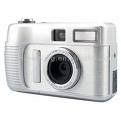
The camera or camera obscura is the image-forming device and photographic film or a silicon electronic image sensor is the sensing medium. The respective recording medium can be the film itself or a digital electronic or magnetic memory.Photographers control the camera and lens to expose the light recording material such as film to the required amount of light to form a latent image on film or raw file in digital cameras which after appropriate processing is converted to a usable image. Modern digital cameras replace film with an electronic image sensor based on light-sensitive electronics such as charge-coupled device CCD or complementary metal-oxide-semiconductor CMOS technology. The resulting digital image is stored electronically but can be reproduced on paper or film.
Photograpy features in Graphics
All photography was originally monochrome or black-and-white. Even after color film was readily available black-and-white photography continued to dominate for decades due to its lower cost and its classic photographic look. In modern times black-and-white has mostly become a minority art form and most photography has become color photography.Many photographers continue to produce some monochrome images. Some full color digital images are processed using a variety of techniques to create black and whites and some cameras have even been produced to exclusively shoot monochrome.
Color photography was explored beginning in the mid s. Early experiments in color could not fix the photograph and prevent the color from fading. The first permanent color photo was taken in by the physicist James Clerk Maxwell.
One of the early methods of taking color photos was to use three cameras. Each camera would have a color filter in front of the lens. This technique provides the photographer with the three basic channels required to recreate a color image in a darkroom or processing plant. Russian photographer Sergei Mikhailovich Prokudin-Gorskii developed another technique with three color plates taken in quick succession.Practical application of the technique was held back by the very limited color response of early film however in the early s following the work of photo-chemists such as H. W. Vogel emulsions with adequate sensitivity to green and red light at last became available.
The first color plate Autochrome invented by the French Lumi�re brothers reached the market in . It was based on a screen-plate filter made of dyed dots of potato starch and was the only color film on the market until German Agfa introduced the similar Agfacolor in . In American Kodak introduced the first modern integrated tri-pack color film Kodachrome based on three colored emulsions. This was followed in by Agfas Agfacolor Neue. Unlike the Kodachrome tri-pack process the color couplers in Agfacolor Neue were integral with the emulsion layers which greatly simplified the film processing. Most modern color films except Kodachrome are based on the Agfacolor Neue technology. Instant color film was introduced by Polaroid in .
As an interesting side note the inventors of Kodachrome Leopold Mannes and Leopold Godowsky Jr. were both accomplished musicians. Godowsky was the brother-in-law of George Gershwin and his father was Leopold Godowsky one of the worlds greatest pianists.
Color photography may form images as a positive transparency intended for use in a slide projector or as color negatives intended for use in creating positive color enlargements on specially coated paper. The latter is now the most common form of film non-digital color photography owing to the introduction of automated photoprinting equipment.
Digital photography
Traditional photography burdened photographers working at remote locations without easy access to processing facilities and competition from television pressured photographers to deliver images to newspapers with greater speed. Photo journalists at remote locations often carried miniature photo labs and a means of transmitting images through telephone lines. In Sony unveiled the first consumer camera to use a charge-coupled device for imaging eliminating the need for film the Sony Mavica.
While the Mavica saved images to disk the images were displayed on television and the camera was not fully digital. In Kodak unveiled the DCS the first commercially available digital camera. Although its high cost precluded uses other than photojournalism and professional photography commercial digital photography was born.Digital imaging uses an electronic image sensor to record the image as a set of electronic data rather than as chemical changes on film. The primary difference between digital and chemical photography is that analog photography resists manipulation because it involves film optics and photographic paper while digital imaging is a highly manipulative medium. This difference allows for a degree of image post-processing that is comparatively difficult in film-based photography permitting different communicative potentials and applications.
Digital imaging is rapidly replacing film photography in consumer and professional markets. Digital point-and-shoot cameras have become widespread consumer products outselling film cameras and including new features such as video and audio recording. Kodak announced in January that it would no longer produce reloadable mm cameras after the end of that year. This was interpreted as a sign of the end of film photography. However Kodak was at that time a minor player in the reloadable film cameras market. In January Nikon followed suit and announced that they will stop the production of all but two models of their film cameras the low-end Nikon FM and the high-end Nikon F. On May Canon announced they will stop developing new film SLR cameras.
Because photography is popularly synonymous with truth The camera doesnt lie. digital imaging has raised many ethical concerns. Many photojournalists have declared they will not crop their pictures or are forbidden from combining elements of multiple photos to make illustrations passing them as real photographs. Many courts will not accept digital images as evidence because of their inherently manipulative nature. Todays technology has made picture editing relatively easy for even the novice photographer.
Photography styles in Graphics
Advertising photography photographs made to illustrate and usually sell a service or product. These images are generally done with an advertising agency design firm or with an in-house corporate design team.Fashion and glamour photography This type of photography usually incorporates models. Fashion photography emphasizes the clothes or product glamour emphasizes the model. Glamour photography is popular in advertising and in mens magazines. Models in glamour photography may be nude but this is not always the case.Crime Scene Photography
This type of photography consists of photographing scenes of crime such at robberies and murders. A black and white camera or an infrared camera may be used to capture specific details.Still life photography usually depicts inanimate subject matter typically commonplace objects which may be either natural or man-made.Food photography can be used for editorial packaging or advertising use. Food photography is similar to still life photography but requires some special skills. Editorial photography photographs made to illustrate a story or idea within the context of a magazine. These are usually assigned by the magazine.
Photojournalism this can be considered a subset of editorial photography. Photographs made in this context are accepted as a documentation of a news story. Portrait and wedding photography photographs made and sold directly to the end user of the images.Fine art photography photographs made to fulfill a vision and reproduced to be sold directly to the customer. Landscape photography photographs of different locations made to be sold to tourists as postcards
The market for photographic services demonstrates the aphorism one picture is worth a thousand words which has an interesting basis in the history of photography. Magazines and newspapers companies putting up Web sites advertising agencies and other groups pay for photography. Many people take photographs for self-fulfillment or for commercial purposes. Organizations with a budget and a need for photography have several options they can assign a member of the organization or hire someone to shoot exactly what they want run a public competition or obtain rights to stock photographs either through traditional stock giants such as Getty Images Corbis or through smaller microstock agencies such as Fotolia.
Technical photography
The camera has a long and distinguished history as a means of recording phenomena from the first use by Daguerre and Fox-Talbot such as astronomical events eclipses for example and small creatures when the camera was attached to the eyepiece of microscopes in photomicroscopy. The camera also proved useful in recording crime scenes and the scenes of accidents one of the first uses being at the scene of the Tay Rail Bridge disaster of . The set of accident photographs was used in the subsequent court of inquiry so that witnesses could identify pieces of the wreckage and the technique is now commonplace in courts of law.
Besides the camera other methods of forming images with light are available. For instance a photocopy or xerography machine forms permanent images but uses the transfer of static electrical charges rather than photographic film hence the term electrophotography. Photograms are images produced by the shadows of objects cast on the photographic paper without the use of a camera. Objects can also be placed directly on the glass of an image scanner to produce digital pictures.
Photography as an art form
During the twentieth century both fine art photography and documentary photography became accepted by the English-speaking art world and the gallery system. In the United States a handful of photographers including Alfred Stieglitz Edward Steichen John Szarkowski and Edward Weston spent their lives advocating for photography as a fine art.
At first fine art photographers tried to imitate painting styles. This movement is called Pictorialism often using soft focus for a dreamy romantic look. In reaction to that Weston Ansel Adams and others formed the f/ Group to advocate straight photography the photograph as a sharply focused thing in itself and not an imitation of something else.
The aesthetics of photography is a matter that continues to be discussed regularly especially in artistic circles. Many artists argued that photography was the mechanical reproduction of an image. If photography is authentically art then photography in the context of art would need redefinition such as determining what component of a photograph makes it beautiful to the viewer.
The controversy began with the earliest images written with light Nic�phore Ni�pce Louis Daguerre and others among the very earliest photographers were met with acclaim but some questioned if their work met the definitions and purposes of art.
Clive Bell in his classic essay Art states that only significant form can distinguish art from what is not art. There must be some one quality without which a work of art cannot exist possessing which in the least degree no work is altogether worthless. What is this quality What quality is shared by all objects that provoke our aesthetic emotions What quality is common to Sta. Sophia and the windows at Chartres Mexican sculpture a Persian bowl Chinese carpets Giottos frescoes at Padua and the masterpieces of Poussin Piero della Francesca and Cezanne Only one answer seems possible - significant form. In each lines and colors combined in a particular way certain forms and relations of forms stir our aesthetic emotions.
Graphics in Computer
There are two types of computer graphics raster graphics where each pixel is separately defined as in a digital photograph and vector graphics where mathematical formulas are used to draw lines and shapes which are then interpreted at the viewers end to produce the graphic. Using vectors results in infinitely sharp graphics and often smaller files but when complex vectors take time to render and may have larger filesizes than a raster equivalent.
In the first computer-driven display was attached to MITs Whirlwind I computer to generate simple pictures.
This was followed by MITs TX- and TX- interactive computing which increased interest in computer graphics during the late s. In Ivan Sutherland invented Sketchpad an innovative program that influenced alternative forms of interaction with computers.In the mid-s large computer graphics research projects were begun at MIT General Motors Bell Labs and Lockheed Corporation. D. T. Ross of MIT developed an advanced compiler language for graphics programming. S.A.Coons also at MIT and J. C. Ferguson at Boeing began work in sculptured surfaces. GM developed their DAC- system and other companies such as Douglas Lockheed and McDonnell also made significant developments. In ray tracing was invented by Appel.
During the late s personal computers became more powerful capable of drawing both basic and complex shapes and designs. In the s artists and graphic designers began to see the personal computer particularly the Commodore Amiga and Macintosh as a serious design tool one that could save time and draw more accurately than other methods. D computer graphics became possible in the late s with the powerful SGI computers which were later used to create some of the first fully computer-generated short films at Pixar. The Macintosh remains one of the most popular tools for computer graphics in graphic design studios and businesses.Modern computer systems dating from the s and onwards often use a graphical user interface GUI to present data and information with symbols icons and pictures rather than text. Graphics are one of the five key elements of multimedia technology.
4D graphics became more popular in the s in gaming multimedia and animation. In Quake one of the first fully 4D games was released. In Toy Story the first full-length computer-generated animation film was released in cinemas worldwide. Since then computer graphics have become more accurate and detailed due to more advanced computers and better 4D modelling software applications such as Cinema 4D.