Pulau Ubin
22nd March 2003
Facts about the island
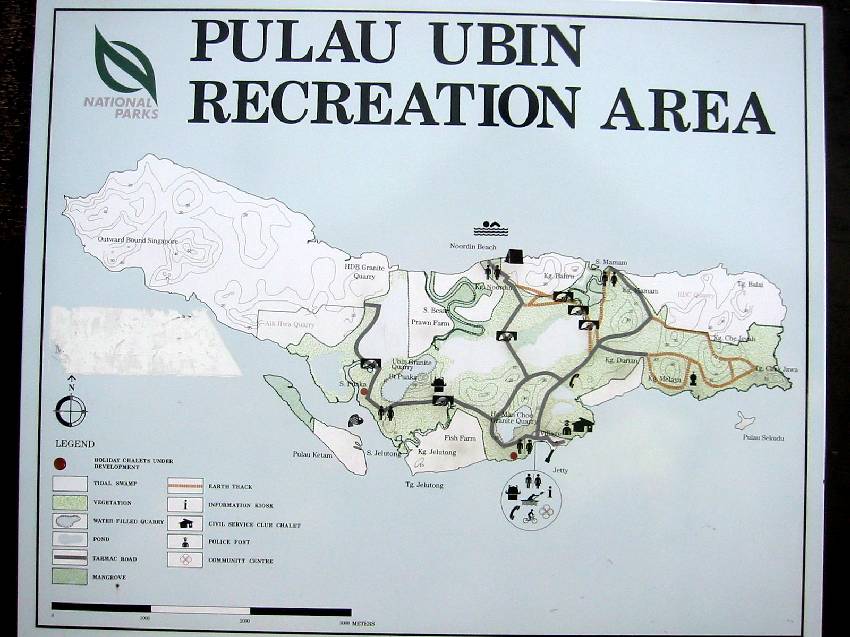
Pulau Ubin is an island located at the north-eastern corner of Singapore. It is Singapore's second largest island, measuring 8 km across and 1.5 km in width.
There are at least 5 granite quarries on the island. Most of them are disused and filled up with water. They're quite a sight if you can catch a view of them - most of them have been cordoned off for safety. You can visit Bukit Timah Hill or Bukit Batok Nature Park to see similar granite quarries. Visit my Bukit Timah Nature Reserve Page to see pictures.
Prawn, fish and other aquaculture farms can also be found in the North, South and Central region of the island. Outward Bound Singapore occupies the West part of the island while the National Police Cadet Corps has its Camp Site on the Northern tip of the island.
Pulau Ubin is a place strongly reminiscent of the old way of life for older Singaporeans. In fact, most of the 200 or so inhabitants who live on the island are "Ah Peks" and "Ah Mms" (Hokkien for Uncles and Aunties) who prefer the quiet life on the island to the fast-faced life on the main island. The village at the jetty is a busy place with bicycle shops, seafood restaurants, provision shops, dogs, people etc. On weekends, you can find many school groups, families and tourists visiting the island. Some of the houses in the few kampongs (villages in Malay) on the island are quite a pretty sight- zinc roofed with nice lawns and gardens. I couldn't help but envy the idyllic lifestyle of the islands' inhabitants.
Like most parts of Singapore, Pulau Ubin has not been able to escape urban development. A resort was build on the island in 2001.
How to get there
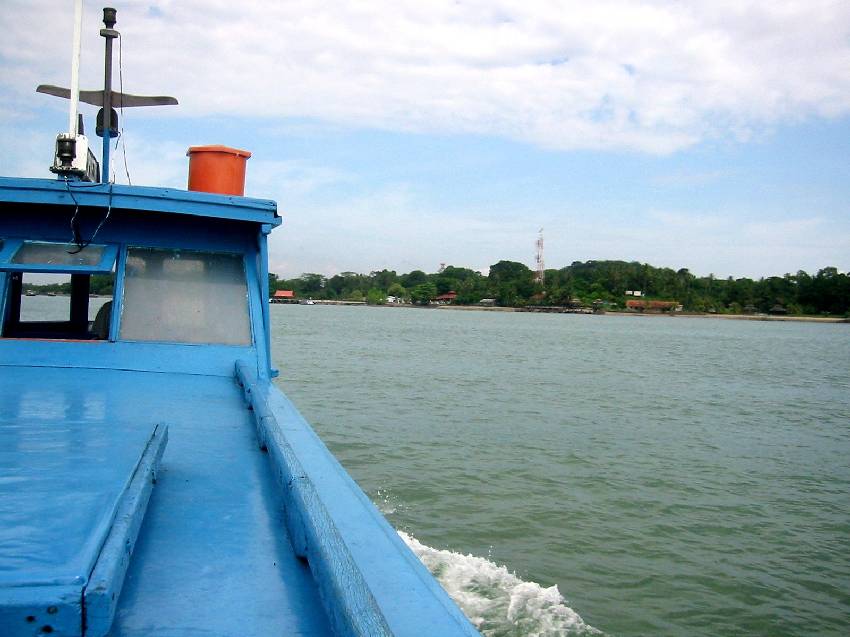
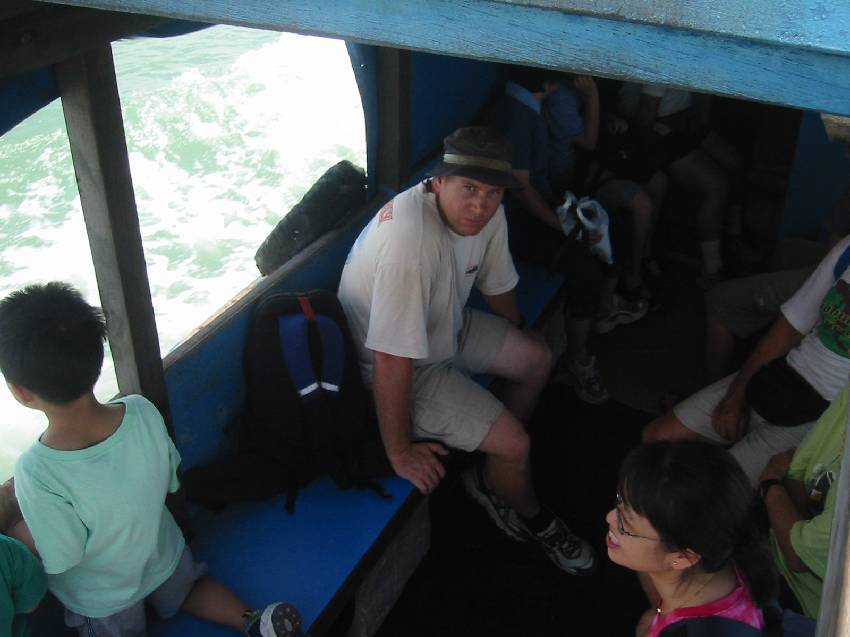
Take SBS bus no. 2 from Bedok/Tahan Merah MRT station or SBS bus no. 29 from Tampines Interchange to reach the Changi Bus Terminal. From there you can catch a Bumboat at Changi Point Jetty to Pulau Ubin. Bumboat charge is $2 per person one way. The boat leaves when there enough passenger (about 10-12 people per boat). On weekends, it is quite fast to get a leaving boat as there're quite a number of visitors then.
Activities on the island
Cycling
Cycling is a great way to explore the island. From the village, you will cycle pass the quiet community centre, a stage for Chinese Wayang (Performance for Gods during important Chinese festivals), some beautiful kampongs and interesting aquaculture farms etc. For the adventurous, there are bicycle tracks on the East of the island. Recently, an abandoned English style cottage and a coastal mangrove area teeming with marine life have been discovered at the East end of the island. Needless to say, Singaporeans, much deprived of nature, have been flocking to these areas to see them.
Pulau Ubin House Number 1
The story with the English style cottage goes like this: the cottage was build by/for an English doctor before WW2. When he returned home, the cottage was abandoned. The discovery of the cottage by some news reporter sent the National Park Board to fence off the place but visitors have found ways to explore it still. National Park Board is exploring the idea of transforming it into a the island's visitors centre.
Personally, I think it is best left as it is. Shophouses in Chinatown and Kampong Glam (Malay Village) which were spurced up ended up as sterile-looking places devoid of its previous liveliness and authenticity. I think the main thing lacking in these redeveloped heritage places is the loss of people and trades occupying them before. If you've visited Chinatown in Kuala Lumpur or the night markets in Hong Kong, what makes these places lively are not the hundred year old shophoues alone but the activities and buzz happening within them.
Tanjong Chek Jawa (TCJ)
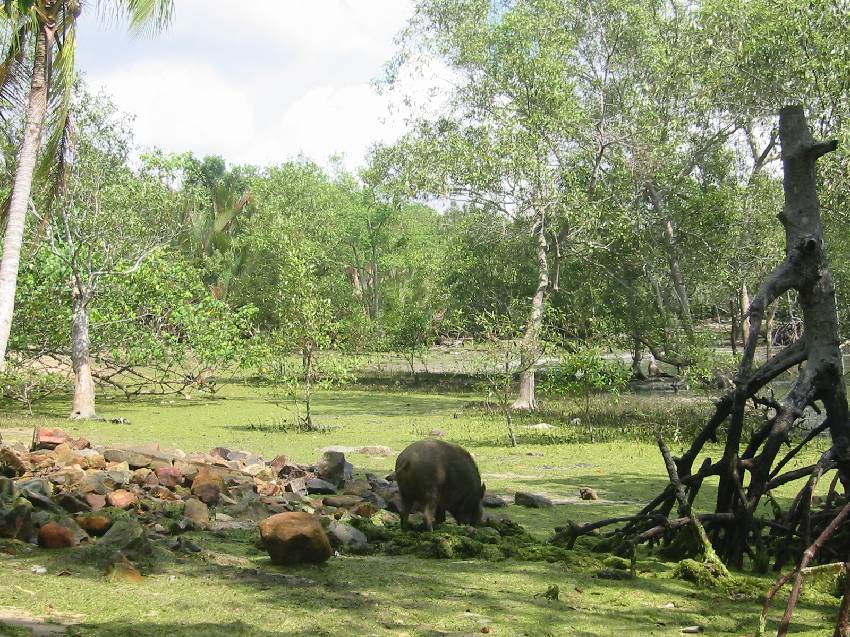
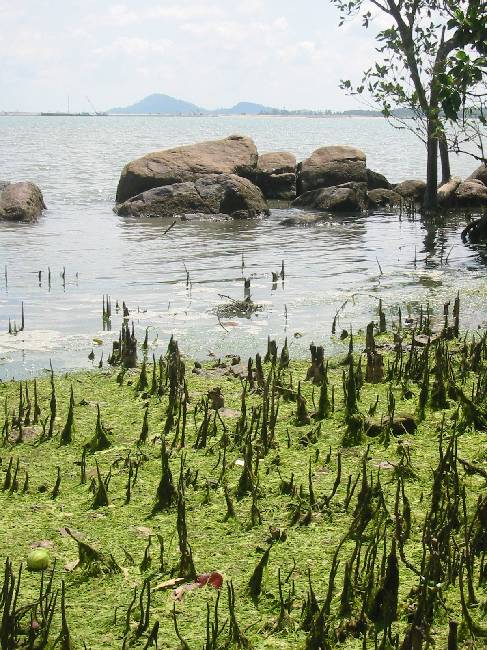
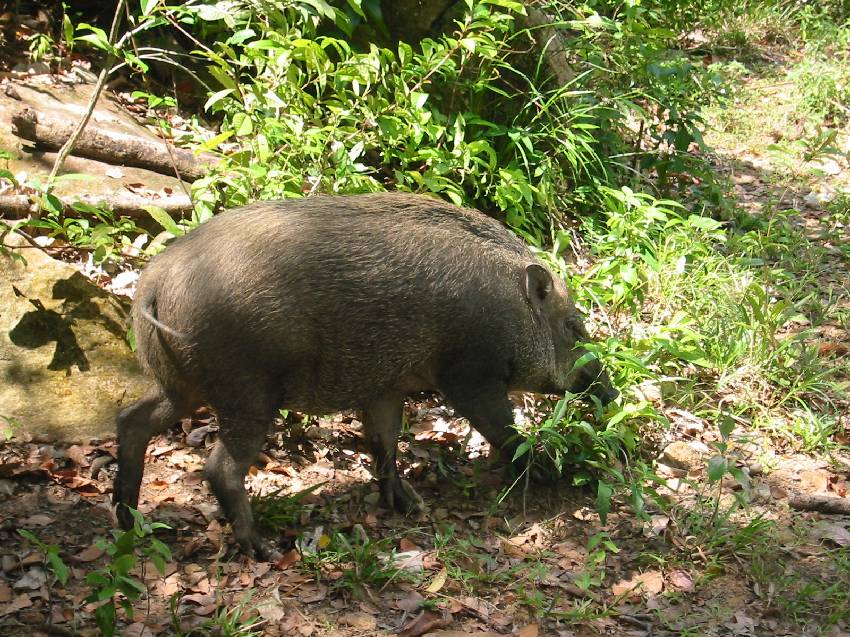
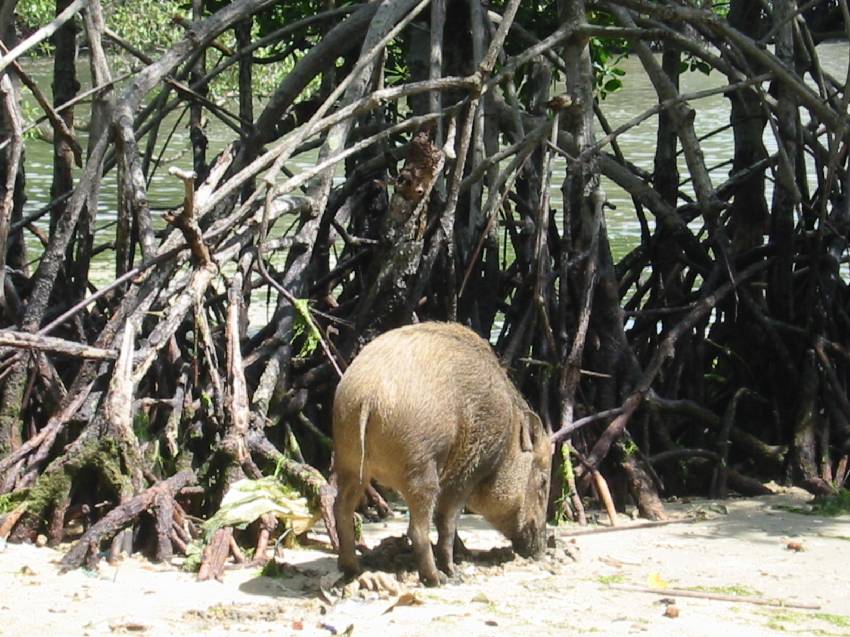
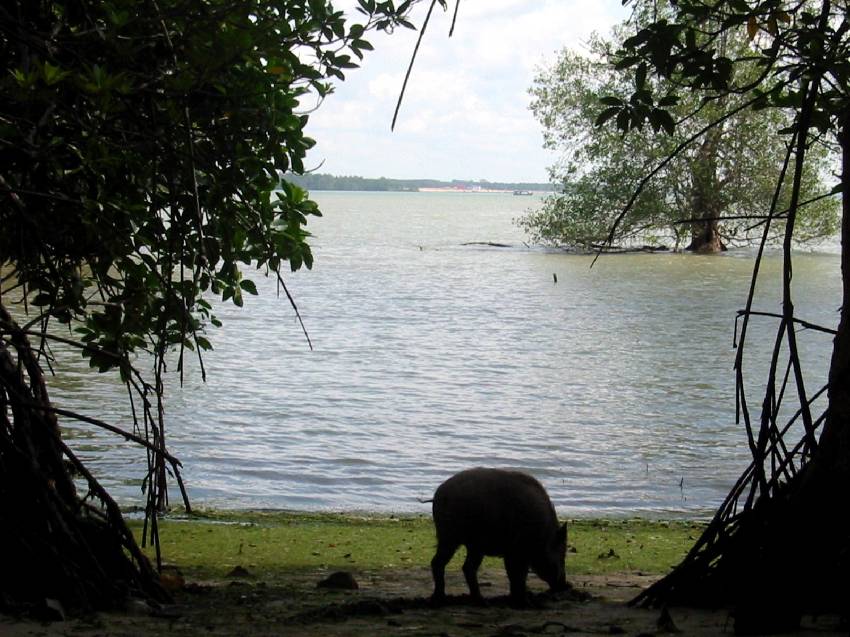
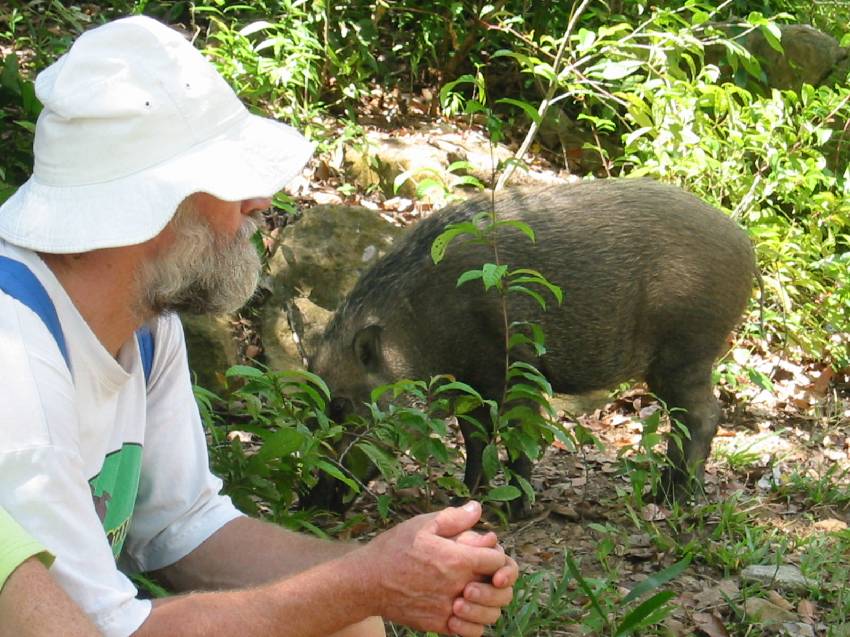
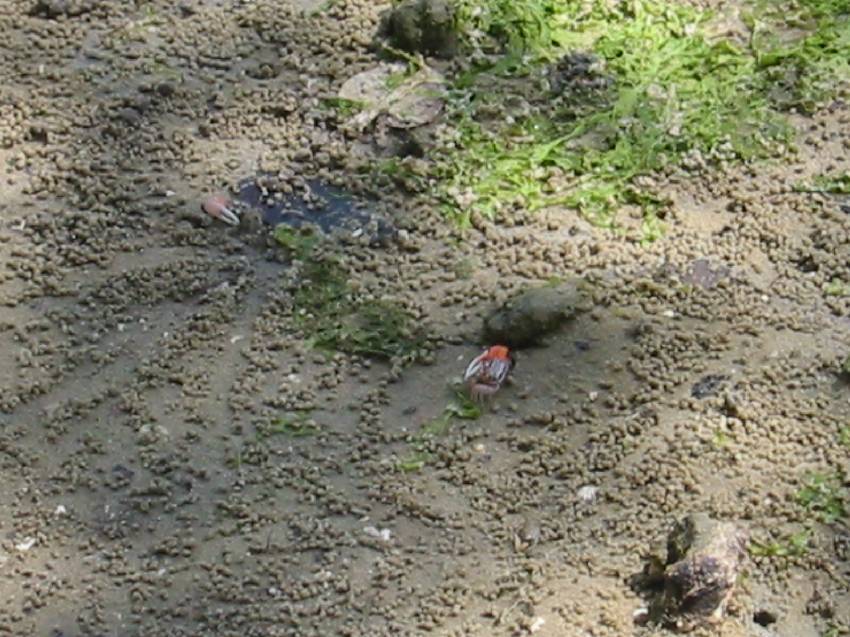
We cycled on the track to get to TCJ. On arrival, we were welcomed by a wild boar digging its snout into the delicate mangrove environment looking for food. I guess it can be forgiven since it was quite cute. We didn't see too much marine life as reported by nature enthusiasts who first discovered the place as the tide was coming up, but we saw enough, the pig was one. We saw tiny crabs coming out of their burrows and mud-skippers crawling onto shore avoiding the rising tide. We saw gothic looking scene of seaweed on mangrove. All was quite pretty. Its hard to believe life can survive on a coastal area in Singapore! (at least at Tanjong Chek Jawa) There're notices approaching TCJ that visitors must report their intention to visit the place at the visitors' centre so they can control the number of people threading on the delicate swamps.
Fish and Prawn farms
From TCJ, we cycled past some farms towards Noordin beach. The farms were pretty cool not just for the fishes you see there (I don't think the Ah Peks who look after the farm entertains visitors), but the wooden planks, containers and things used to build the ponds. No state of the art technology but a farm built and maintained by hands. Quite pretty.
Noordin Beach
Don't expect to swim on the beaches on Pulau Ubin. The North of the island faces mainland Malaysia (Johor Straits) and hundreds of ships pass by this route everyday so the water doesn't look too attractive for a dip. I thought it was a good place to bring my class for community service to pick up litters.
Village Centre
The shophouses in the village at the jetty are quite nice places to sit for a drink after cycling. You can see ornamental fish the shopkeepers rear in their fish tanks outside the shop, dogs and cats running about and Ah Peks chatting about politics etc.
Go back to my HomePage
or Go to my MacRitchie Reservoir Page
or my Bukit Timah Nature Reserve Page
Useful Travel Resources:
Books:
Lonely Planet Singapore
For a pocket size Bus Guide - TransitLink Guide 2003 (available at all MRT station ticket sales counter)
For a good island map of Singapore - Singapore Map, Mighty Minds (available at Popular Bookshop)
Travel Essentials:
EzLink Card - A prepaid stored value card for travel on buses and MRT trains. You tap to get into MRT stations and when you get on buses. Remember to tap again when you get out/off because the card reader deducts the maximum fare when you get on and will refund the excess amount when you get off.
Buses take coins too and you can buy one-way trip tickets at MRT Stations but the EzLink card is more convenient if you're visiting for longer.