On being a positive deviant
Luděk Štěrba and the exciting world of NGOs
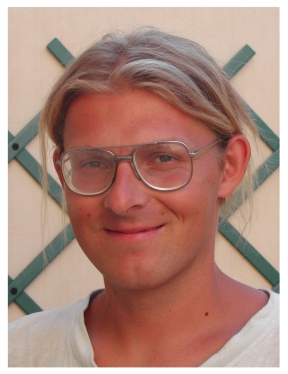 Adrian
Grima talks to Luděk Štěrba who is in Malta training with the local
fair trade cooperative with the support of the
Leonardo Programme of the
EU.
Adrian
Grima talks to Luděk Štěrba who is in Malta training with the local
fair trade cooperative with the support of the
Leonardo Programme of the
EU.
-
What made you choose to work with a fair trade cooperative and why Malta?
I’ve been interested in the fair trade movement for quite a long time. In my country, the Czech Republic, we are in the very beginning in this area so one can get only theoretical background from books or the internet, so I was looking for some practical experience abroad which could help me later on to start something similar in my NGO which we established in 2003.
I chose Malta because it is an EU accession country like the Czech Republic (CR) and you have many similar problems to solve, particularly in the field of fair trade. As far as I know, compared to other accession countries, you are the best. Malta seems to be a few steps ahead of us in this area and sometimes it has almost the same problems as we have. So I suppose it will be very helpful to share our experience and solutions.
I didn’t want to go to Germany or the UK because fair trade there has advanced so much and face very different problems. I suppose it will be very helpful to share our experience and solutions and co-operate in the future as well so as to get new ideas for our future work in CR.
-
What does your work in Malta consist of?
I work mainly on projects like the cooperative’s new supporting member scheme, the scheme promoting Cafedirect and other promotional activities, and I’m also working on a book about fair trade. Besides I’m usually in the world shop L-Arka in Valletta two to three times a week, doing everything needed there. In the summer I participated in the One World educational programme held once a week for children attending summer school.
-
You have been in Malta for five months now. Have your experiences here actually met your expectations?
I feel very well in Malta. As I come from a land-locked country, I have really enjoyed the sea: it’s quite “exotic” and wherever you are it’s never far away. I really enjoy great Maltese ħobż u ġbejna tal-bżar, pastizzi, Kinnie, bettieħa tax-xitwa and Israel, dulliegħa and granita. I like the rocky coast, the beaches and landscape, the churches and festas and the old narrow village streets with balconies. I love the streets of Valletta as well as the open views from the coast of Delimara and Dingli Cliffs and fairy-tale-like Filfla rock. Ghawdex is an island that I have really fallen in love with.
I didn’t have big expectations and I’m trying to live my experience here day by day, so I have to say that my expectations have almost all been fully satisfied. This is also because of the very friendly and helpful people in KKĠ, the Third World Group, Inizjamed and Kopin, and almost all the Maltese I have met until now.
-
Your first University degree was in Social Work. What attracted you to that course and what has it given you?
I did my civil service (which is obligatory in my country – you have to choose between military and civil service) in Caritas with homeless people and although it was sometimes exhausting work, I liked it very much. Every day was full of surprises and incredible life stories… but I felt I needed some knowledge, some background for such work.
At university I decided to concentrate more on issues related to people from different cultures in CR. My thesis was about the Vietnamese minority in CR. It gave me a lot, I met many nice people from different NGOs and other institutions during different practices (in prison, children homes, gypsy children kindergartens, antidrug centres, and so on) and found this kind of work very challenging and fulfilling.
-
As a student at Masaryk University in Brno, you are writing your Masters thesis about fair trade. What made you specialize in fair trade?
A few years ago I participated in a Summer school on development co-operation in my country where somebody mentioned Fair trade as a viable opportunity for fairer relationships between North and South. I was very interested in it, but was very surprised to find that almost nothing had been done in CR in this area. There is also a complete lack of information for people who don’t have access to materials in foreign languages. So I think my Masters thesis can help to fill this gap a bit, as well as the website that we have created (www.fairtrade.zde.cz – it’s in Czech). It’s very exciting to be part of the worldwide fair trade movement and and my long-term aim is to help introduce fair trade to my country. This is why, together with my friends we have set up an NGO called Society for Fair Trade and Development Education in CR.
-
What do you think are the greatest virtues of fair trade and what are its limitations?
I think fair trade connects people who would never be connected without it; it helps people to understand each other’s problems and it helps to lower this incredible gap between the rich global North and the poor South. It gives people hope for a better future. And the best thing - it gives them dignity. And as a reward you can see the real life stories of people who grew your tea or made your mug by their hands in Zimbabwe – this can never happen if you buy products by TNCs (transnational corporations).
The limitations are obvious: for various reasons, not everybody who would like to can participate in the fair trade movement. And not all people can live from exports to the North. Transporting products from the South to the North also has its negative, if contained environmental impact.
-
What is your position on the issue of labelling of fair trade products?
I’m not sure. On the one hand it’s good to have standards for products that anybody can reach and to see fair trade products on supermarket shelves, where people who never go to world shops can buy them. But on the other hand to see people drinking fair-traded coffee at the annual meeting of the World Bank or in the offices of TNCs is a bit strange. I really don’t know. Personally, the way of the wide fair trade movement like in Italy, where the fair trade label is given to an organization rather to an individual product, is closer and more exciting for me than the way of, for example, the very successful Austrian labelling initiative.
-
What are your views on world trade in general and the growth of poverty?
I think that world trade as we know it today is essentially a mistake because it is being run by economists with a perspective which is far too narrow. The majority of them are concerned only with financial costs and benefits or growth of GDP, and increasing or decreasing numbers are for them sufficient to “produce” wellbeing for people. Their economics ignore do not take into account real people, cultural diversity, the environment; and social and environmental capital. Although there are plenty of economists who are aware of this, they still don’t have their say in the most important organizations and governments.
-
What has attracted you to the world of NGOs?
As I said I have met very nice people in many NGOs, who we used to call “positive deviants”, a kind of people interested in many things, aware of specific issues, hardworking, extremely committed to what they do. What excites me very much in the world of NGOs is that you never know what will happen next month or who you’ll meet and start a project with. It reminds me of sports which require a strong dose of adrenaline – it’s a sort of bungee jumping or parachuting – it’s sometimes stressful, but always full of life.
-
What should be the role of NGOs from the Czech Republic and from the other new members in the enlarged EU? What new experiences can they offer to those who have been members of the Union for many years?
 I think we
could learn from one another, from our experiences. We have bad
experiences with the social experiment of communism, so we are very aware
of some practices of group thinking. We also have experiences with Russia
and do not share the idealism of some current members of the EU who are
dealing with Russia as if it were a democratic state or even a future EU
member. Russia is not Europe and its behaviour in Chechnya shows that it
has a long road ahead of it.
I think we
could learn from one another, from our experiences. We have bad
experiences with the social experiment of communism, so we are very aware
of some practices of group thinking. We also have experiences with Russia
and do not share the idealism of some current members of the EU who are
dealing with Russia as if it were a democratic state or even a future EU
member. Russia is not Europe and its behaviour in Chechnya shows that it
has a long road ahead of it.
-
In Brno you have set up an NGO that deals with Development Education and fair trade. Is this the first fair trade organization in the Czech Republic? What is the connection between Development Education and fair trade? How do you intend to operate?
No, there is already one fair trade shop in Prague, selling only crafts imported through the German Fair trade organization Gepa. We are keeping in touch with them and sometimes we borrow their stock for our activities. In the future we would like to help to set up a world shop in our city of Brno, which has the same population as Malta – which is another reason why I chose Malta, the similar dimensions. For the moment we have decided to focus on promotional activities, educational programmes for schools, local officials and NGOs.
-
In June 2003 you took part in a seminar on fair trade organized by Italy’s largest fair trade organization, CTM-Altromercato. What were the themes that you found particularly interesting? What about the experiences of fair trade of the other activists who took part in the seminar?
It was an extremely joyful experience to see the wide blossoming fo the fair trade movement in Italy. And it was also very helpful to network with participants from Poland, Slovakia, Estonia, Lithuania and Slovenia, since they are in very similar situations or even in the worst stage of things, the very beginning. CTM-Altromercato seems to be very open to co-operation so we hope to be able to establish closer ties with them and to share experiences.
-
How has the law for NGOs helped you in setting up and running your organization? What are the most important rights and duties of an NGO according to Czech law? When was the law enacted? Does it conform with EU law on NGOs?
At first I have to say, that it’s unbelievable for me that you don’t have a particular law for NGOs. I cannot imagine how we could exist without it. As a recognized NGO we can apply for the different grants and projects, and take part in official dealings as a partner. Offices have the obligation to ask us about different issues and inform us about dealings. Unfortunately the law didn’t bring many new rights; it mainly brought more duties. But obviously, as usual, it’s more about people, some are very helpful and some are obstructive, and no law can change this attitude. I think the law is a necessary base, but belief in civil society or fear of civil society in the minds of particular stakeholders is more important. It is also fully compatible with EU law on NGOs.
-
In 2000 you worked for two months with people seeking asylum and refugee status in the Czech Republic. What stories do you remember from that experience? What impressed you most? How have the stories of the people you worked with affected you? What memories do you have of those two months in the two centres in Bělá and Červený Újezd? Where they welcome centres or detention centres?
I remember very well the story of a refugee from Belarus who escaped to CR to work against the regime of the Belarus dictator Lukashenko (who himself announced in public his respect to Hitler). After more than a year in an asylum seekers camp where he almost couldn’t do anything, finally got his asylum, and also the opportunity to work against the regime in his country.
But there were mainly sad stories of people trying to escape poverty with no chance to get asylum sanctioned by law, who just crossed from one country to another both legally and illegally on their never-ending odyssey, like Ahasvers… The camps are not very nice places to stay, and although they were improved, as former barracks of the Russian army they can only provide basic necessities. Their location is quite bad: one of them is in the forest, 7 km from the nearest town with no bus connection; another one is in an area with a very high unemployment rate.
-
In February 2003 you were in Galicia to help with the cleaning up of the mess left by the oil tanker Prestige.
Yes, it was a big experience, to work quite hard every day cleaning the rocks on what was once a most beautiful sea coast, and then to go back to the local sport hall where 150 volunteers lived without big conflicts; the atmosphere was very similar to that one during big floods a year ago in CR. If people want and are really committed they can live peacefully in very limited space and only with basic necessities. Which reminds me that the real issue behind most things is motivation and how to motivate people. And choosing simplicity and limiting consumption is also part of the solution to the North-South gap. The problem is that people who never have enough probably never opt to have less. I’m afraid that only people who find out that having many things doesn’t really help them to live a better life are the people who have much and have chosen to get rid of it. But in the meantime, the majority who has not enough will destroy the Earth. And promoting European and American consumer lifestyles in developing countries as paradise on earth is one of the worst things we do.
-
You have been involved in the organization of summer camps for children and young adults in the forest. What are the aims of such camps and why have you chosen to participate in the organization?
The main aim of these camps is to allow people to learn about the ecosystem of the forest, how to protect it and to live in peace with, not to be enemies. These camps allow people to change our common views of the forest. And of course to show the beauty and colour of natural forests in comparison with tree plantations. Our mentality is still the mentality of the farmer who fights hard against nature, against the evil forest that wants to destroy his harvest and reconquer his field. We still have such a mentality in our minds, and this is the way we have looked at things for centuries. But the situation now is completely different, because man is more powerfulthan the forest and nature. And the more powerful we are the more responsible we should be.
-
What would you like to do in the coming months?
I would like to finish my Masters thesis and when I return home I would like to start work on fair trade issues in CR in a serious and long-term way.
-
What changes would you like to see in Malta in the near future?
I would really like to see common separation of waste, which is now very hard to do, as well as to see the waste management system function well, including removing and reprocessing the terrible Maghtab hill and recycling construction waste. I would those people who leave their old fridges, stoves and other stuff to rust in the countryside to realize that if everybody does this, you will have soon 2200 rusty things on every square kilometre of this as yet beautiful island. And I’m looking forward to see hunters realizing that if they want to fulfill their passion for shooting, they can shoot at “clay pigeons” with the same pride they probably feel when they shoot birds.
-
What is the future of fair trade in Malta?
I believe that fair trade in Malta will be getting “wider” and more common as is happening in the more developed fair trade countries. And I wish that more members and volunteers will join soon, because the harvest is plentiful but the workers are few!
23 August, 2003
revised 29 Dec. 03


