tep
tep  rawdown
  ests
ests
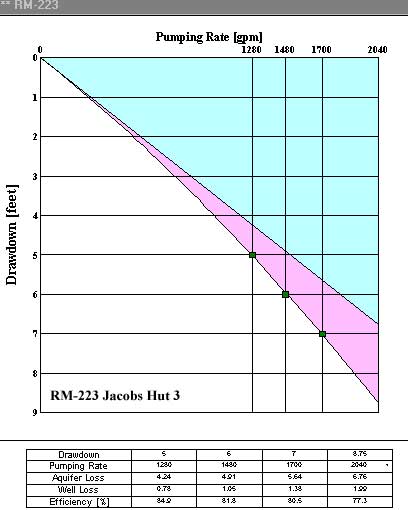
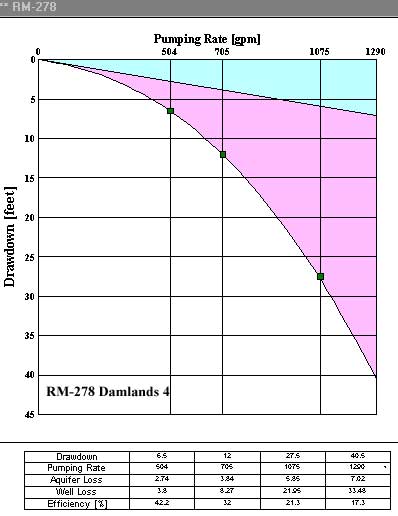
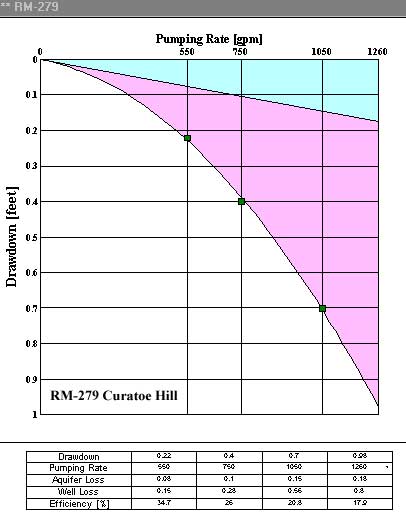
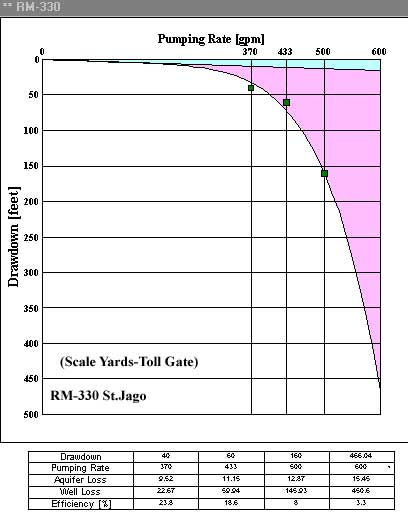
Step drawdown test is normally done after a well is completed. It is used to decide on permanent pump capacity and rates to be applied in actual production.
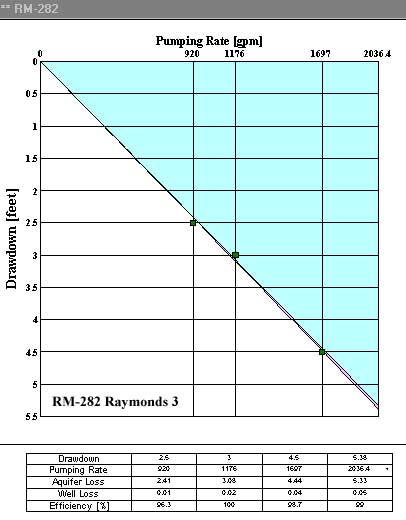
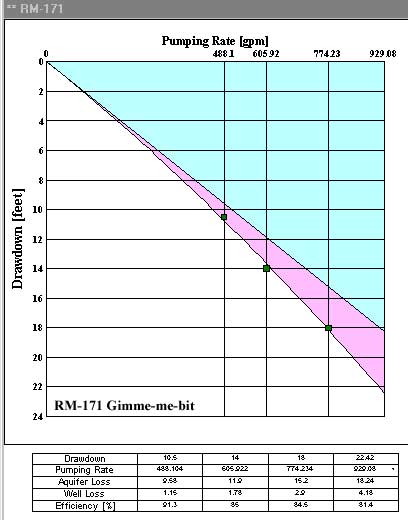
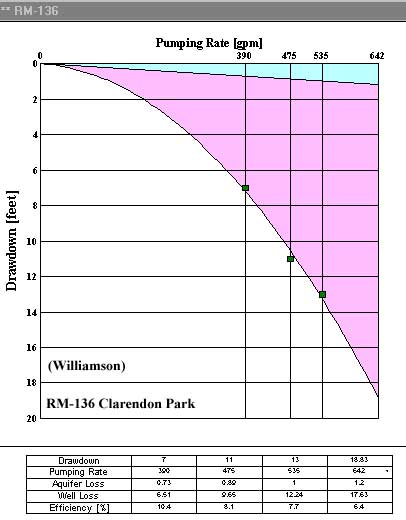
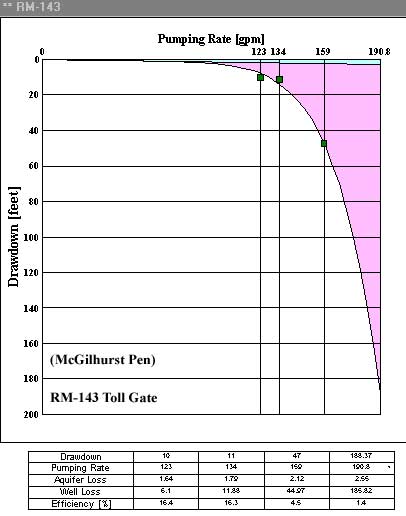
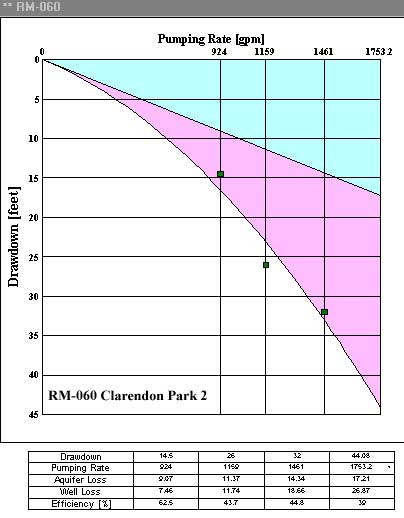
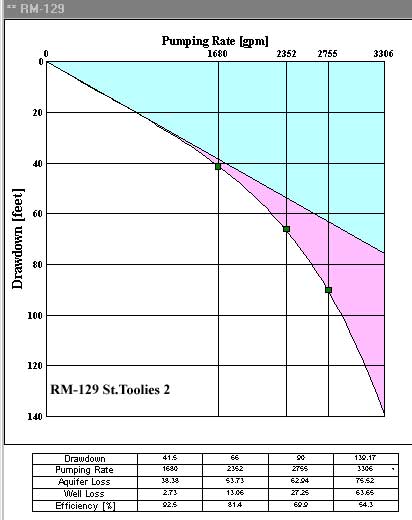
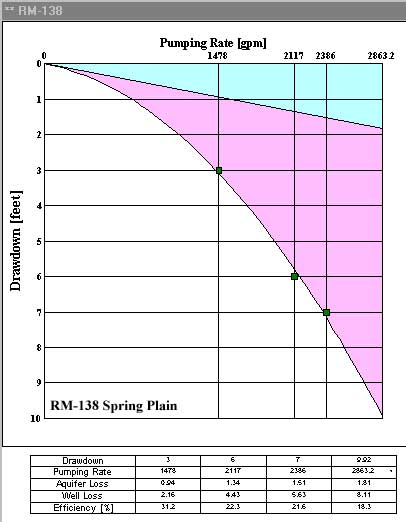
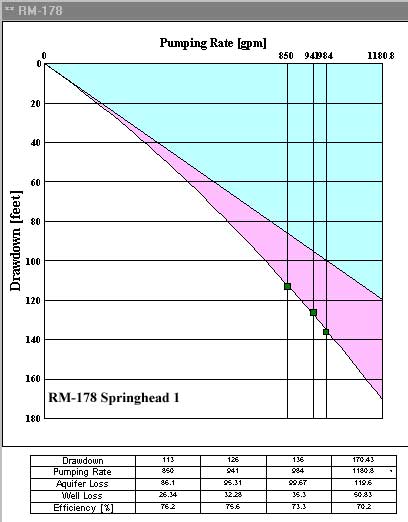
The total drawdown after a certain time is composed of two components: (a) Aquifer Loss (inevitable, due to flow toward a well and loss of head by resistance to flow offered by porous medium) and (b) Well Loss (a loss due to improper construction, screen settings, screen characteristics, poorly developed well, etc.).
The wells tested, which are presented below, range from perfectly constructed wells (e.g., RM-282 - Raymonds 3, with well efficiency 99.4%, and RM-171 - Gimme-me-bit, with well efficiency 88.7%) to very poorly performing wells (e.g., RM-136 - Clarendon Park, well eff. 10.89%, and RM-143 - Toll Gate, well eff. 17.18).
Nowadays, some wells are in need of "rehabilitation", which if properly applied would restore the original production rate. In limestones, the "rehabilitation" is normally done using concentrated HCl.