

Hookworms I Roundworms I Tapeworms I Whipworms
Roundworms
in Dogs
These intestinal parasites can often be found in young puppies and kittens. They
measure two to six inches in length and look like very thin pieces of spaghetti.
Roundworm infections often cause puppies to appear pot-bellied or bloated,
anemic, have diarrhea, weight loss and vomit. The puppies are often less lively
and do not grow as well as uninfected puppies. Coughing is also an occasional
symptom of roundworm infections.
Since the parasites can travel from the mother to the unborn,
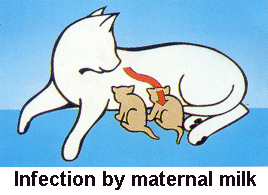
puppies are often born with roundworms. Young puppies can also become infected
while nursing. (Roundworm larvae are passed in the mother's milk.) Adult dogs
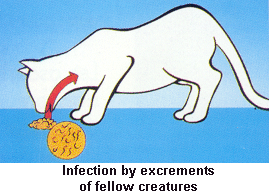
become infected by ingesting material contaminated by feces or by ingesting
small rodents. (Rodents are carriers of roundworms.) After hatching in the dog's
intestine, roundworm larva are carried by the bloodstream to the lungs. From the
lungs, the larvae crawl up the windpipe and are swallowed. Once the larvae are
in the intestine, they grow to adulthood. Coughing occurs when the larvae are in
the throat.
Accurate diagnosis of roundworms is important since they can
cause serious problems. Puppies can die from severe roundworm infections. As a
precautionary measure, many veterinarians routinely treat young puppies for
roundworm infections.