
| http://www.geocities.com/kirstysburns |
| Caledonian Road & Barnsbury Timebank | newsletter february/march 2003 |
| welcome to the Cally timebank web pages |
| Issue 1 |
Over the next six months a number of environmental initiatives will be started in the Caledonian Road & Barnsbury Timebank (Cally Timebank) area.
In the next few weeks we will be conducting a questionnaire, which will be used to establish the current environmental impact of people living in the timebank area.
A summary of findings will be included in the next issue, followed-up by another questionnaire in the third issue to determine the impact of this timebank initiative.
Recycling
Last summer a survey was conducted in the Westbourne Estate to gauge the willingness of residents to participate in a door-to-door recycling scheme. The green box scheme provided by Islington Council for street properties is not available to tenants living in council estate blocks or estates. The Council say that they plan to install mini-recycling points on estates, however in the meantime CallyTimebank has been piloting a recycling collection.
Credit
For every hour residents spend sorting their waste a timebank credit is earned (a �Cally�). So far about 100 kilograms of recycling has been completed through the pilot stage of this scheme. Newspapers, bottles and cans are taken to the recently installed recycling bins on Caledonian Road but since the closure of Islington's Recycling Centre at Ashburton Grove most of the remaining stuff needs to be taken to the Camden Recycling Centre (Regis Road in Kentish Town, NW5).
As well as glass, cans & paper the recycling centre at Regis Road provides facilities to recycle cardboard, clear and opaque plastic bottles, textiles, motor oil, aluminium foil, car batteries, books, green waste, metal, spectacles and mobile phones.
Where does it go?
There is limited information available on the Camden website but it is likely to be similar to Islington. Glossy magazine paper is recycled at the Aylesford Mill in Aylesford, Kent. The British Glass Recycling Company in Harlow recycle glass bottles & jars. Aluminium and steel food and drinks cans are collected from the Recycling Centre by GD Metals, a Greater London recycler. Textiles are collected from the Recycling Centre from LM Barry & Co.
Paper Banks are serviced by Cheshire Recycling, and glass banks are temporarily serviced by Islington's Cleansing Services Ltd. The glass collected is currently used to manufacture glass jars and bottles.
Textile banks are serviced by the charity SCOPE which re-sells some of the materials in its shops, sends some to countries that can use them and sends some for recycling as, for example, rags.
Freightliners City Farm & Culpeper Community Garden both operate composting schemes. Any fruit or vegetable peels that you save for recycling will be taken for composting which will help enrich the soil at these two valuable local green oases.
In London as a whole 3.208 million tonnes of waste was sent to landfill, 90% of it disposed outside London. 887,000 tonnes of municipal waste is incinerated (2000/01 figure) at the Edmonton Solid Waste Incinerator at Enfield and SELCHP in Lewisham. By participating in the timebank scheme you can help reduce these figures while earning credits for yourself.
Other Recycling incentives trials
Two pilot studies were carried out over a six-month period between June and December 2001 to investigate the impact of financial incentives. �10 was offered to householders who recycled at least half of the time on recycling tonnages and participation rates. The pilot was carried out through recycling sites on the Tulse Hill Estate in Lambeth and through a door-to-door collection in an area of Brent. The tonnage recycled over the period of the trial increased by 27% in Lambeth and 34% in Brent.
An Incentive For You
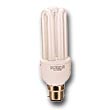
Whilst the Cally Timebank incentive will not involve cash payments, you can obtain advice for implementing energy efficiency measures to help cut your fuel bills and earn compact fluorescent lightbulbs.
A compact fluorescent lightbulb costs about 10 times as much as the traditional incandescent bulb. This discourages many people, but they perhaps aren't aware of the cost of the bulb over its lifetime. The compact fluorescent lightbulb uses only a fifth of the electricity to produce the same amount of light.
The following example shows that although an ordinary lightbulb costs much less than a compact fluorescent it will use up much more electricity over the months and years, meaning it will cost more in the medium and long term. By recycling and participating in the timebank you will be able to earn compact fluorescent lightbulbs.
Saving Energy
A light used for an average of 6 hours a night for 11 months of the year will save about �4 by buying a compact fluorescent lightbulb. Over the course of 10 years you will save over �100. This is partly because compact fluorescent lightbulbs last at least 10 times longer & so there a much less costs in terms of replacement bulbs.
| |
| Initial Price: �7.99 | Initial Price: �0.79 |
| Lifetime cost: �45.00 | Lifetime cost: �152.00 |
|
Over one year |
Lightbulb Type |
|
|
|
Compact
fluorescent |
Incandescent |
|
Power
used (Watts) |
25 |
100 |
|
Initial Cost (the
price of the bulb when bought) |
�7.99 |
�0.79 |
|
Watts
used over week (assuming 42 hours switched on) |
1050 |
4200 |
|
KiloWatts
used over year (assuming 6 hours per day for 330 days) |
49.35 |
197.4 |
|
Cost
of lightbulb electricty |
�3.70 |
�14.81 |
|
Overall cost (lightbulb +
electricty) |
�11.69 |
�15.60 |
|
Over ten years |
Lightbulb Type |
|
|
|
Compact
fluorescent |
Incandescent |
|
Power
used (Watts) |
25 |
100 |
|
Initial
Cost (the price of the bulb when bought) |
�7.99 |
�3.95 |
|
Watts
used over week (assuming 42 hours switched on) |
1050 |
4200 |
|
KiloWatts
used over year (assuming 6 hours per day for 330 days each year) |
493.5 |
1974 |
|
Cost
of lightbulb electricty |
�37.01 |
�148.05 |
|
Overall cost (lightbulb +
electricty) |
�45.00 |
�152.00 |
There are now new technologies being developed which will eventually help us all save more energy. Light Emitting Diodes (LEDs) are currently being introduced for traffic lights - it is possible to create arrays of LEDs which produce as much light as ordinary lightbulbs from a fraction of the electricity consumption.
Within a few years time the development of light emitting polymers may allow us to have walls that light up. In the meantime, compact fluorescents are the one of the most cost-effective ways of reducing our energy costs.
Buying energy efficient ("A" category) household appliances (refrigerators, washing machines etc) will save energy over the years, but the initial outlay is much higher. In the course of time it is hoped the timebank will be able to help people in many other ways like this.
Eyes for Islington
Eyes for Islington is a recently introduced scheme in which people report problems they discover on the streets of the borough by phone, post or e-mail. If you would like to get involved with the environmental side of Eyes for Islington (for instance reporting abandoned cars, faulty street lights, damaged trees and other forms of vandalism) you may soon be able to earn timebank credits. More details will follow in the next newsletter issue.
Get Involved
If you have any spare time and energy you can help with the recycling. Whatever you choose to do to help the local community you will earn credits for each hour contributed. For instance, if you want to save your own waste you will earn credits for the extra time you estimate it takes you to sort it. If you are willing to help collect recycling we now have a couple of trolleys to facilitate the collection & transport of recycling.
For every hour spent on doing any timebank work you will earn one Cally. If you join, you will earn a Cally as an incentive for completing the questionnaire: with this you can obtain an energy efficient lightbulb.
Questionnaire
If you are keen to fill in this survey please contact Kirsty Burns by phone (020 7 700 0486) or e-mail
[email protected]. The survey can be viewed online here: questionnaire. You can request a copy of the survey in word format via e-mail & replying to the survey online will help save paper.
Website
In the next few weeks a new Cally Timebank website will be launched. Details will be available in the newsletter & you will be able to follow a link from this website.
The Caledonian Road & Barnsbury Timebank is a member of the Islington Timebank Network, supported by the Neighbourhood Renewal Fund.