Technical Writing
Project Outline: Technical Description
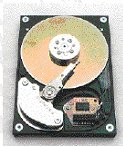
Hard Drive Composition
It is beneficial to anyone that has a computer to know how the hard drive works. This component of computer hardware is a storage device made of one or more hard disks, coated with a magnetic substance. It is the primary communication device to the rest of the computer because it stores most of the computer�s information. Hard drives are called hard because in contrast to the original 5-� floppy disks, the disks that actually hold the information are hard. Hard drives can be compared to the trunk of a car in the way that they are used to store material but the space has a limit. Hard drives are located inside the case of the computer in a metal-sided physical enclosure called the drive bay. Drive bays are either 5-1/4� or 3-1/2� long with a width and height approximately halved. All hard drives share the same basic structure and are different only in how each part is used and the quality of the parts themselves. Hard drives store data and programs with 6 main parts:
- Case
- Platters
- Data
- Spindle Motor
- Controller
- Read / Write Heads
A hard drive can be seen like a multiple level record player. It has parts that resemble the case, the needle, the record, and even the concentric circles on the record itself.
Case
The case of a hard drive eliminates internal air contamination. By using special air filters to equalize pressure, the case is sealed against the outside world. Since it encases the platters, spindle motor, heads, data, and controller, the chamber it creates is often called the Head Disk Assembly (HDA). A small particle of dust could cause the head to crash. �Crash� is the term used when the head touches the disk and scrapes off the magnetic coating.
Platters
Platters are the hard disks themselves. Most drives have two or more platters. They are comprised of three main parts: the physical material, the magnetic material, and a protective layer. The physical material is aluminum alloy with a coating of the magnetic material less than .000001 mm thick. Aluminum alloy is easy to work with, lightweight, and stable. But the newest drives make use of a new technology of glass/ceramic platters, which are even more lightweight and stable because the glass has enough ceramic within to resist cracking. The characteristics of both the glass and the alloy help the disk rotate at speeds of 4,000, 7,200, or 12,000 revolutions per minute, depending on the type of disk. The aluminum alloy or glass forms a base upon which the actual recording media is deposited.
The media layer is a very thin coating of magnetic material which is where the actual data is stored. This layer is typically only a few micro inches in thickness. It is a mixture of compound syrup poured on the platter and rotated to evenly distribute the film over the entire platter. This substance has iron oxide as a main ingredient, explaining why many platters you may see will be brownish-orange
Each platter is covered with the third part, which is an extra-thin, protective, lubricating layer on top of the media layer. This material is used to protect the disk from damage caused by accidental contact from the heads or other foreign matter that might get into the drive.
Data
The data is stored in two different ways to maximize efficiency and space. First, each disk has tracks formed in concentric circles that are similar to the annual rings of a tree. Then the track is further broken down into sectors. A sector is normally the smallest individually addressable unit of information stored on a hard disk. To visualize this pattern, imagine that the tracks are a section of a tree that has a pizza directly above it. The slices represent the portions of the track that are sectioned.
Spindle Motor
The Spindle Motor is an axle responsible for turning the hard disk platters, allowing the hard drive to operate. These devices must be precisely controlled and quiet. They are set to spin the platters at a set rate, ranging from 3600 revolutions per minute (RPM) to 7200 RPM. The axle�s speed depends on the type of driver it has. A simple comparison to a �beanie� hat draws similarities between the spindle motor and the stem of the hat directly beneath the propeller.
Controller
When information is read from the disk, it must be converted from magnetic information to digital information. The integrated controller built into the hard drive does this work. It also controls the drive�s motors.
Read/Write Heads
The Read/Write heads are mounted on the end of the actuator arm as shown in Figure 3. The arms are controlled using a device called an actuator that positions the arms in unison to the appropriate track on the disk. There is one head per side of each platter, and each head is spring loaded to force it into the platter it reads. But the read/write heads do not touch the platter when the platter is spinning at full speed; instead, they float on an extremely thin cushion of air (10 millionths of an inch). The platters generate this cushion; when they spin at full speed, they cause air pressure to lift the heads off the surface. Since the cushion is so small, it is obvious why a particle of dust could ruin the accuracy and sensitivity of the hard drive.


