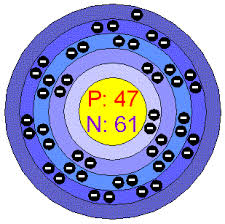
The Element Silver


47AgSilver107.8682
Atomic Number: 47
Atomic Weight: 107.8682
Melting Point: 1234.93 K (961.78°C or 1763.20°F)
Boiling Point: 2435 K (2162°C or 3924°F)
Density: 10.501 grams per cubic centimeter
Phase at Room Temperature: Solid
Element Classification: Metal
Period Number: 5    Group Number: 11    Group Name: none
What's in a name? From the Anglo-Saxon word seolfor. Silver's chemical symbol comes from the Latin word for silver, argentum.

Say what? Silver is pronounced as SIL-ver.

History and Uses:

Archaeological evidence suggests that people have been using silver for at least 5000 years. Silver can be obtained from pure deposits, from silver ores such as argentite (Ag2S) and horn silver (AgCl), and in conjunction with deposits of ores containing lead, gold or copper.

Silver and silver compounds have many uses. Pure silver is the best conductor of heat and electricity of all known metals, so it is sometimes used in making solder, electrical contacts and printed circuit boards. Silver is also the best reflector of visible light known, but silver mirrors must be given a protective coating to prevent them from tarnishing. Silver has also been used to create coins, although today other metals are typically used in its place. Sterling silver, an alloy containing 92.5% silver, is used to make silverware, jewelry and other decorative items. High capacity batteries can be made with silver and zinc and silver and cadmium. Sliver nitrate (AgNO3) is light sensitive and is used to make photographic films and papers. Silver iodide (AgI) is used to seed clouds to produce rain.

Estimated Crustal Abundance: 7.5×10⁻² milligrams per kilogram

Estimated Oceanic Abundance: 4×10⁻⁵ milligrams per liter

Number of Stable Isotopes: 2   (View all isotope data)

Ionization Energy: 7.576 eV

Oxidation States: +1