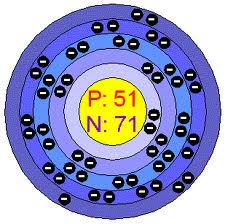
The Element Antimony


51SbAntimony121.760
Atomic Number: 51
Atomic Weight: 121.760
Melting Point: 903.78 K (630.63°C or 1167.13°F)
Boiling Point: 1860 K (1587°C or 2889°F)
Density: 6.685 grams per cubic centimeter
Phase at Room Temperature: Solid
Element Classification: Semi-metal
Period Number: 5    Group Number: 15    Group Name: Pnictogen
What's in a name? From the Greek words anti and monos, which together mean "not alone." Antimony's chemical symbol comes from its historic name, Stibium.

Say what? Antimony is pronounced as AN-the-MOH-nee.

History and Uses:

Antimony has been known since ancient times. It is sometimes found free in nature, but is usually obtained from the ores stibnite (Sb2S3) and valentinite (Sb2O3). Nicolas Lémery, a French chemist, was the first person to scientifically study antimony and its compounds. He published his findings in 1707. Antimony makes up about 0.00002% of the earth's crust.

Antimony is a brittle metal and is a poor conductor of heat and electricity. Very pure antimony is used to make certain types of semiconductor devices, such as diodes and infrared detectors. Antimony is alloyed with lead to increase lead's durability. Antimony alloys are also used in batteries, low friction metals, type metal and cable sheathing, among other products. Antimony compounds are used to make flame-proofing materials, paints, ceramic enamels, glass and pottery. The ancient Egyptians used antimony, in the form of stibnite, for black eye make-up.

Estimated Crustal Abundance: 2×10⁻¹ milligrams per kilogram

Estimated Oceanic Abundance: 2.4×10⁻⁴ milligrams per liter

Number of Stable Isotopes: 2   (View all isotope data)

Ionization Energy: 8.64 eV

Oxidation States: +5, +3, -3The Element Antimony
[Click for Isotope Data]

51SbAntimony121.760
Atomic Number: 51
Atomic Weight: 121.760
Melting Point: 903.78 K (630.63°C or 1167.13°F)
Boiling Point: 1860 K (1587°C or 2889°F)
Density: 6.685 grams per cubic centimeter
Phase at Room Temperature: Solid
Element Classification: Semi-metal
Period Number: 5    Group Number: 15    Group Name: Pnictogen
What's in a name? From the Greek words anti and monos, which together mean "not alone." Antimony's chemical symbol comes from its historic name, Stibium.

Say what? Antimony is pronounced as AN-the-MOH-nee.

History and Uses:

Antimony has been known since ancient times. It is sometimes found free in nature, but is usually obtained from the ores stibnite (Sb2S3) and valentinite (Sb2O3). Nicolas Lémery, a French chemist, was the first person to scientifically study antimony and its compounds. He published his findings in 1707. Antimony makes up about 0.00002% of the earth's crust.

Antimony is a brittle metal and is a poor conductor of heat and electricity. Very pure antimony is used to make certain types of semiconductor devices, such as diodes and infrared detectors. Antimony is alloyed with lead to increase lead's durability. Antimony alloys are also used in batteries, low friction metals, type metal and cable sheathing, among other products. Antimony compounds are used to make flame-proofing materials, paints, ceramic enamels, glass and pottery. The ancient Egyptians used antimony, in the form of stibnite, for black eye make-up.

Estimated Crustal Abundance: 2×10⁻¹ milligrams per kilogram

Estimated Oceanic Abundance: 2.4×10⁻⁴ milligrams per liter

Number of Stable Isotopes: 2   (View all isotope data)

Ionization Energy: 8.64 eV

Oxidation States: +5, +3, -3