
     
| When neoliberal policies affect service-oriented institutions 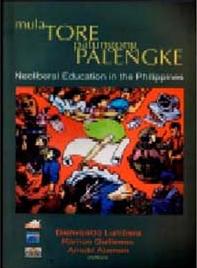 The message was clear. The message was clear.A neoliberal education system reinforces the existing social system in our society that protects its economic interests. At least this was the gist of the new book published by IBON Foundation, the Alliance of Concerned Teachers (ACT), and the Congress of Teachers/Educators for Nationalism and Democracy (CONTEND) entitled Mula Torre Patungong Palengke: Neoliberal Education in the Philippines. The book which was launched last June 27 at the Faculty Center of the University of the Philippines (UP) Diliman, is a compilation of critical essays on neoliberal education as discussed by speakers during the forum. Dr. Edberto Villegas, Vice President of ALL UP Academic Union, stressed the great influence of neoliberalism in Philippine education and how it perpetuates the ruling class� capitalist desires. Villegas added that the commodification of education almost equates to selling knowledge as he strongly pushed for the fight against global capitalism. On the other hand, Danilo Arao, a Journalism professor at the UP College of Mass Communication, discussed deregulation at the expense of quality education. The professor said that it was easy to determine whether it was a matter of �liberation or subjugation� as the current Philippine education is bent on explicitly producing globally-competitive graduates as a tenet of globalization. UP Sociology Professor Sarah Raymundo enumerated the instances of marketization and the true needs of the Philippine education system. �Education has become a private good, not a public good. The administration mistakes tuition increase as the solution,�Raymundo added. Jonnabelle Vidal Asis, a UP Sociology instructor, thoroughly demonstrated the power relations existent in the propagation of the idea of globalization. She emphasized that the fact that 76% of the tertiary schools are private in the Philippines is justification enough of the faulty education system. �The neoliberal approach to education is just a symptom of a greater problem we face. You have to link this with the larger struggles in the social movements in order to come up with the alternative or solution,� Asis said. In other words, neoliberal practices such privatization and marketization turn schools, which are supposed to be service-oriented institutions, profit-oriented for the sake of globalization. Educators should be encouraged to determine and analyze when the education system is actually being penetrated by globalization. It is with this kind of consciousness can a vital and heedful education sector be initiated. |