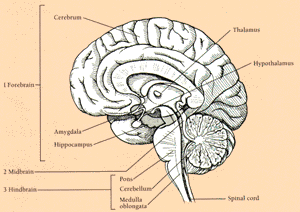
A larger, higher resolution version of the
graphic is available
here. Illustration by Lydia Kibiuk, Copyright © 1996 Lydia Kibiuk.
Treatment and Prognosis
Children with brain tumors should be seen at a multi-disciplinary medical center, staffed with the following: pediatric neurosurgeon, pediatric neuro-oncologist, pediatric hem-onc, pediatric neuro-radiolgoist, and a pediatric neuropsychologist. All too often children with brain tumor are not treated at centers that have the experience to handle all aspects of the disease.
The treatment and prognosis depends on the type, grade, and location of the tumor. Type and location are explained above paragraphs. The grade of the tumor indicates the degree of malignancy: its tendency to spread, its growth rate, and its similarity to normal cells when viewed under a microscope. Tumors with distinct borders are considered "grade I", are sometimes referred to as benign or mildly malignant. These tumors either do not grow or grow very slowly. Infiltrating tumors are those that tend to grow into surrounding tissue. Of the infiltrating tumors, the terms low-grade, mid-grade, and high-grade are frequently used. A "high grade" tumor is considered highly malignant. However, the exact system used to grade tumors varies with each specific family of tumors.
Brain tumors are treated with surgery, radiation, and chemotherapy. Depending on the type of tumor and the promptness of diagnosis.
Surgery.
The purpose of surgery is to remove as much of the tumor as possible, to establish an exact diagnosis, to determine the extent of the tumor, and sometimes to provide access for other treatments, such as implants or radiation. As mentioned above, some tumors are inaccessible to the neurosurgeon.
Chemotherapy - and how it works?
Chemotherapy drugs act on DNA- the genetic material found within each cell. The drugs alter the ability of tumour cells to copy their DNA and reproduce.
All cells follow a regular pattern of growth called the cell cycle. The cycle consists of five successive steps, or phases. Each cell that completes the cycle reproduces itself as two new cells. The two cells produce four new cells, four cells produce eight cells , and so on.
In order for a cell to produce normal cells, it must complete specific jobs during each phase of the cell cycle. Each cell must make proteins and enzymes needed to fuel its reproductive process, then duplicate and separate its set of chromosomes. A cell that spends to much or too little time in a phase might not successfully complete the job of that phase. For example, a cell might produce too many proteins or not enough enzymes. The abnormal cell continues along the cell cycle. Each abnormal cell is capable of producing two new abnormal cells. Those two cells produce four abnormal cells, four produce eight, until there are enough abnormal cells to form a mass or lump-called a tumour. Chemotherapy is effective when it stops abnormal cells from going through the cell cycle.
Actively dividing cells are the most vulnerable to chemotherapy. Most tumour cells and some normal cells fall into that category. The effect of chemotherapy on normal cells causes unwanted side-effects. Chemotherapy is usually given in cycles, and the cycles are repeated over a specific period of time. The cycle schedule is designed to allow sufficient time for effected normal cells to recover between treatments.
Definition of Neutropenic- This is when there is a reduction in the number of Neutrophils. The most likely cause of this is the Chemotherapy treatment. A Neutrophil is an important type of white blood cell used for fighting infection. When a child has a reduction in the number of Neutrophils then they are Neutropenic.
Radiotherapy
Tumors of the central nervous system (CNS) are the most common solid tumor of childhood. The incidence has increased from 2.4 cases per 100, 000 lives (1973-1982) to 3.3 cases per 100,000 lives in 1986. Radiation treatments for pediatric CNS tumors has lagged behind our treatment strategies for other childhood cancers. Thus CNS tumors are the second most common cause of cancer-related deaths in children less than 15 years of age.
Radiotherapy is the treatment of cancer and other diseases with high energy (ionizing) radiation. Ionizing radiation damages or destroys cells in the area being treated making it impossible for the cancer cells to continue to grow and multiply. Most radiotherapy is delivered from the outside of the body (external beam radiotherapy) usually in the form of high energy X-rays or sometimes as Gamma rays. For certain cancers a radioactive implant can be placed next to the tumor inside the body (internal radiotherapy). As radiotherapy can damage normal cells as well as cancer cells there can be potential side effects, these may depend on the radiotherapy dose, site's of treatment, age and other factors.
One of the major limiting factors in treatment is the
sensitivity of the young brain (normal tissue) to the effects of conventional
external beam radiation (XRT). Although conventional radiotherapy is the most
effective therapy available to date, late effects on normal brain may
significantly affect the quality of life in long-term survivors.
The younger the child at the time of treatment, the size and location of the
radiation field necessary to cover the tumor, radiation dose and number of
treatments all play a role in cognitive, endocrine and neurologic sequellae
(complications).
Another major concern of physicians and parents is the induction of secondary
tumors in long-term (10+ years) survivors of CNS tumors. It appears that for the
immediate future, XRT will continue to play a major role in the treatment of
pediatric CNS tumors.
Radiosurgery (cobalt60 or linear accelerator), used for appropriately selected
patients, can minimize side effects and maximize the benefits of XRT. The
ability to precisely focus radiosurgery treatments and minimize surrounding
normal brain radiation dose should diminish those consequences in follow-up
research. In addition, the ability of radiosurgery to deliver higher doses of
radiation to the primary tumor site should provide better long-term tumor
control or possible cure.
The avoidance of secondary tumors to date never reported after radiosurgery in
children and adolescents is another significant benefit of this technology.
The most common cause for spontaneous intracranial bleeding in children and
adolescents is due to a vascular malformation such as an AVM. The use of
radiosurgery (specifically cobalt60 Gamma Knife) in these non-tumor settings is
particularly suited to children because of the minimization to mental and
endocrine development to the normal surrounding young or immature brain.
The use of Gamma Knife radiosurgery has been used rarely, if ever, in children
with functional disorders because they rarely are seen in this age range.
Pediatric Technical Issues
In adults, radiosurgery is not limited by the age factor. In children less than
24 months old, for whom radiosurgery may seem most attractive due to the higher
sensitivity of normal brain tissue to ionizing radiation, we are limited by the
lack of skull thickness. Placement of the stereotactic localization frame for
treatment is limited to infants older than 20 months of age. Although on the
surface it may seem feasible to place the stereotactic skeletal fixation frame
on a younger child, the presence of a growing skull with open sutures (growth
plates) would result in the skull deforming as the frame is placed for
treatment, thereby losing an amount of precision which is likely to be
unacceptable for radiosurgery treatment.
We have routinely been able to treat infants 20
months or older with the Gamma Knife radiosurgery instrument without
compromising precision or penetration of a pin through the skull. In young
children, the use of long placement pins are necessary because of their small
head circumference, making placement of the frame more critical than in
adolescents and adults. Because of the need to use long pins, special care must
be used when moving the child for scanning and during interlocking the frame to
the appropriate treatment helmet. "Gentle" is the key word to
remember.
All infants and children as well as many adolescents prefer to have their
treatment under anesthesia. Preoperative teaching is important so the procedure
can go as planned. All children and their parents should be educated by treating
staff prior to the date of radiosurgery.
Mild oral sedation, to calm the child, is given prior
to intubation or intravenous (IV) line placement and the parents are allowed to
remain with their child during the initial phase of anesthesia. Anesthesia is
usually accomplished with a continuous IV drip of Propofal (Diprivan), which
allows the child to awaken immediately at the end of the procedure with little
or no lasting effects. In older children and adolescents, the option to have
deep sedation for frame placement only with monitored anesthesia during
scanning, planning and treatment is evaluated.
The decision to intubate is based on the ability of anesthesia to always have a
secure airway. Once the treatment frame is placed, safe intubation is excluded.
Therefore, if there is any question regarding the child's ability to tolerate
the entire procedure, intubation is chosen rather than accepting the risk of
aborting the procedure. Local anesthesia at the pin sites is only used in
patients being sedated for frame placement and not in those patients having the
procedure under general anesthesia.
Patients with vascular malformations do not tolerate the length of the entire
treatment procedure, therefore all are intubated and remain sedated with the
drug Propofal until the frame is removed. This strategy has been successful in
more than 150 pediatric patients undergoing Gamma Knife radiosurgery.
Disease Development
Although radiosurgery can deliver high doses of
radiation to small areas in the brain without significant exposure to
surrounding normal brain, it is limited by dose volume (size) constraints.
In all large cooperative clinical group trials to date, the extent of surgical
resection has a profound influence in response to treatment and survival.
Therefore microsurgery (open skull surgery) plays a major role in the treatment
of pediatric CNS tumors. In addition, aggressive surgical removal should make
more tumors amenable to radiosurgery.
However, to date, there has been no prospective randomized trial to evaluate the
efficacy of radiosurgery as the primary treatment for selected partially removed
tumors, as an adjunct treatment to chemotherapy or as a boost to conventional
external beam radiotherapy. It is reasonable to conclude XRT's curative
potential is presently limited by the tolerance of surrounding normal structures
and the ability of a particular tumor to spread from its primary site. To date,
our inability to control a tumor at its original site of occurrence (local
control) is the major obstacle we face in neuro-oncology.
Within the radiosurgery industry, there are several types of technology
available. Each technology brings with it advantages and limitations in
treatment. Each child should be first be evaluated for radiosurgery treatment
with the cobalt60 Gamma Knife technology. This particular technology is capable
of targeting the radiation dose to the brain with the highest degree of
precision at this time. If treatment is deemed to not be appropriate with the
Gamma Knife, it is then recommended that treatment with linear accelerator
equipment be evaluated. The following is an attempt to outline the present as
well as the potential uses we see for radiosurgery with young children.
Low Grade Tumors
Total surgical resection of a low-grade tumor should be the goal of
microsurgery. However, tumors in certain locations within the brain make this
goal unobtainable. Many tumors presenting in the basal ganglia or brain stem are
not resectable without significant neurologic deficient. Small focal low-grade
astrocytic tumors of the brain stem or basal ganglia that either are deemed
unacceptable operative risks or which have a residual tumor nodule after
microsurgery are excellent candidates for radiosurgery if the remaining tumor
volume is less than 3cm in size.
The area where radiosurgery is not generally applicable in young children is the
region of the optic nerves and optic chiasm. Astrocytic tumors grow directly
within these critical structures and cannot be excluded from the treatment
volume during radiosurgery treatment. However, other intra- and parasellar
tumors are amenable to radiosurgery if there is 2 mm or greater distance between
the region to be treated and the optic pathways. Many focally residual or
recurrent craniopharyngiomas (benign tumors near the pituitary stalk),
particularly intrasellar recurrences or recurrences within the cavernous sinus,
are treatable with radiosurgery with minimal risks.
For patients who have not received prior conventional external beam radiation,
the dose to the optic chiasm should remain below 9 g-y. If prior XRT has been
given, the dose planning becomes critical and each case must be evaluated
individually. Knowing the prior radiation doses and fields treated are critical
information to the radiosurgery team as the feasibility of treatment is accessed
and a safe radiosurgery treatment plan is developed.
With pituitary tumors, similar results as seen in adults are expected in
children. Those tumors that are not cured by surgery or medical management are
treatable with radiosurgery. The dose limiting structure is still the optic
pathways.
Children with neurofibromatosis (NF) type I but especially type II are excellent
candidates for radiosurgery. NF type II is associated with bilateral acoustic
neuromas and intracranial meningiomas, often multiple sites. The chance for
deafness in bilateral acoustic neuromas is very high. Radiosurgery with Gamma
Knife in these cases has achieved 90 percent or greater tumor control rates.
More importantly, hearing preservation in children with useful hearing is twice
as likely with Gamma Knife radiosurgery than microsurgery. In addition, facial
nerve preservation is better.
Meningiomas tend to occur along the skull base and
as in adults, the cavernous sinus is a frequent site. Surgical resection is
likely to impart significant cranial nerve defects, but complete removal of the
tumor is unusual. Even with the most careful microsurgical technique,
complications " such as cranial nerve deficit or vascular flow injury
" are significant. External beam XRT, even with advanced planning programs,
is likely to deliver a significant dose to the temporal lobes with possible
delayed recent memory deficits or progressive carotid artery occlusion
(blockage) such as moya moya syndrome, developing three to 10 months after
radiation therapy. (Moya moya is a rare disorder in which the main blood vessels
leading to the brain are blocked or severely constricted.)
Radiosurgery results in a tumor control rate of 95 percent with no mortality and
complications in 3 to 5 percent of cases. In order to have these positive
results with radiosurgery, it is important to identify appropriate candidates
before surgical intervention has taken place and particularly prior to the use
of any external beam radiation therapy.
Young patients with NFII should be evaluated for Gamma Knife radiosurgery as a
primary treatment whenever they are initially diagnosed or when a new tumor
develops.
Similarly, other patients with hereditary neurocutaneous disorders (of the skin,
nerves or central nervous system) should be evaluated for radiosurgery. Patients
with tuberous sclerosis (TS) develop giant cell astrocytomas within the
ventricular system. The pathology of these tumors is rarely in question and a
biopsy is not beneficial. With radiosurgery being highly effective for this
vascular benign tumor, no invasive surgery may be required. Patients with von
Hippel-Lindau disorder are prone to develop multiple highly vascular tumors
called hemangioblastomas.
These tumors are well circumscribed and usually round. Careful radiosurgery
planning can control the majority of these tumors without microsurgery or the
need for external beam XRT or embolization procedures.
Gamma Knife Surgery
The Gamma-Knife is not a knife in the conventional sense, but uses a focused array of 201 intersecting beams of gamma radiation to treat lesions within the brain. The technique was invented by a Swedish neurosurgeon, Professor Lars Leksell and provides an alternative method of treatment for a number of conditions, for which open neurosurgery may be either not practicable or carry a high risk of complications.
Within the central body of the Gamma Knife there is an array of 201 separate cobalt sources and each of these produces a fine beam of gamma radiation. The sources are evenly distributed over the surface of the hemispherical source core so that each beam is directed at a common focal spot at the center. The resultant intensity of radiation at the focus is extremely high whilst the intensity only a short distance from the focus is very low . This enables a high dose of radiation to be delivered to the abnormal tissues whilst sparing the adjacent healthy brain tissue.
Stereotactic Radiosurgery
Radiosurgery is a surgical procedure in which narrow beams of radiation are targeted to a volume of tissue within the brain. This highly focused and destructive dose of radiation is given in a single session and avoids potentially harmful radiation to surrounding brain structures. Stereotaxis refers to an accurate targeting technique for intracranial structures (such as brain tumors) using an external reference frame fixed to the head. Modern imaging by CT and MR technology and computer advances has made stereotaxis a very potent aid in brain tumor diagnosis and treatment. Since 1968, non-invasive Gamma Knife radiosurgery for the treatment of brain tumors and vascular malformations has enjoyed incredible success. More than 65,000 patients have been safely treated with focused gamma rays worldwide.
Radiosurgery differs from conventional radiation therapy in several respects. With standard external beam radiation therapy techniques, tumors and much or all of the surrounding brain are treated to the same dose of radiation. The radiation dose is given in small increments over several weeks to allow normal brain tissue to recover from its effect, while tumor tissue is less likely to recover. Ultimately, the brain can absorb only a maximal dose of radiation, beyond which no further treatment is advisable. There is increasing evidence that over long periods of time, high doses of radiation are harmful to normally functioning brain. The technique of Gamma Knife radiosurgery, however, treats only the abnormal tissue. This treatment occurs in a single session, without significant radiation to adjacent brain. There is no evidence that radiosurgery has led to the development of other malignant tumors since the introduction of the GK more than 25 years ago.
Stereotactic techniques can also be used to accurately aim fractionated doses of gamma rays or x-rays to a target; administering the treatment in small doses over days to weeks. This technique is a compromise between radiosurgery and conventional radiotherapy and is termed stereotactic radiotherapy.
What Brain Disorders Can Gamma Knife Radiosurgery Treat ?
Modern brain imaging with CT and MR techniques and sophisticated computers allow GK radiosurgery for many tumors, vascular abnormalities, and pain problems which are now treated by open surgery. The results of treatment are very beneficial in most cases, optimistic in others, and under going continuing evaluation in all cases.
Summary
Gamma Knife radiosurgery is playing a
larger role than ever in children with specific neurosurgical disorders and
tumors. It is likely its use will expand in the treatment of both low-grade and
malignant intracranial tumors. Its use as an adjunct treatment to surgery and
external beam radiation has become more defined in recent years. In some
instances, it may replace surgery and/or standard fractionated (over time)
radiation therapy. It will remain the gold standard for treating many AVMs.
Future uses of radiosurgery in functional disorders such as epilepsy, obsessive/
compulsive disorder and the rare movement disorder in childhood will probably be
explored in the near future, as they are now being explored in adults.
Treatments for diagnosis previously not considered in the past may be suitable
in the future for radiosurgery. These include ocular tumors such as
retinoblastoma, childhood nasal pharyngeal and skull base tumors, giant cell
tumors, etc. Future uses for radiosurgery with young children may include
combination treatments with intracranial immuno-therapy, regular and
radiosensitizing chemotherapy and new fractionation schemes in conjunction with
external beam radiotherapy.
The future for radiosurgery remains exciting, especially in children where
limiting radiation to normal tissue is a critical issue. Patients and families
are better informed than ever before in the history of medicine. The Internet
and support groups provide information allowing families to seek out the
treatment centers with the most experience in treating childhood tumors. Gamma
Knife radiosurgery will be demanded as part of the armentarium in treating
children and providing hope for cure.
Stereo tactic Needle Aspiration
Stereo tactic needle biopsy: A biopsy in which the spot to be biopsies is located three-dimensionally, the information is entered into a computer, and the computer calculates the information and positions a needle to remove the biopsy sample.
Angiogram Or Arteriogram
After injection of a contrast material into a deep artery, x-rays follow the flow of the material through the blood vessels of the brain. This test usually requires prior sedation, as it can be uncomfortable. The angiogram shows the position of the blood vessels near the tumor and the extent of the tumor's blood supply. (vascularity)
MRI angiography will be available at many medical centers in the near future. This will, to a great extent, replace invasive arteriography.
Shunt
Some patients with Brain Tumors develop increased intracranial pressure (IICP). To relieve the pressure, a shunt procedure to drain excess or blocked fluid might be required.
A shunt is a narrow piece of flexible tubing (called a catheter) which is inserted into a ventricle in the brain. The other end of the tubing is threaded under the scalp toward the neck, then, still under the skin ,threaded to another body cavity where the fluid is drained and absorbed. The body cavities used for drainage are the right atrium of the heart and, more commonly, the abdominal cavity.
A system shunt includes:
a ventricular catheter, which can be detected by x-ray.
an optional reservoir, which allows access to the cerebrospinal fluid (CSF), and can be used to test the shunt device.
a longer catheter , leading to the drainage area.
a valve system, which permits CSF flow in a single direction only (away from the brain).
When compared to other Brain Tumor Surgery, the surgery to implant a shunt is relatively minor. A small burr hole is drill in the skull through which the catheter is threaded into a ventricle. The shunt valve is tested and then inserted under the scalp. A small incision is made in the abdomen or the chest, depending on which cavity is used for the drainage. The other end of the catheter is threaded under the skin to the cavity and then fastened.
Shunts might be temporary-left in place until the brain tumor is surgically removed : or they may be permanent. Shunts are often left in place even after successful surgery.
Following shunt insertion many patients, particularly children, show dramatic improvement within days. In others, symptoms might remain for a period of several weeks.
Shunts will require revision or replacement if they are blocked, disconnected, displaced, or if they become infected and do not respond to antibiotic treatment. The need for a shunt revision is not uncommon.
Seizures
What is a seizure?
A seizure is a set of symptoms resulting from a burst of abnormal nerve messages in the brain. The brain contains millions of nerve cells (neurones). These send tiny electrical messages down nerves to all parts of the body. Thousands of messages are sent each minute in a controlled way. Different parts of the brain control different functions such as movements, sensations, behavior, consciousness, etc. If an abnormal burst of messages occurs in a part of the brain, it may set off a seizure. Seizures can take different forms which are discussed below. (Older words for seizures include convulsions and fits).
Different types of epilepsy and seizures
Epilepsy can be classified by the type of seizure that occurs. Seizures can take different forms. However, they are divided into two main types - generalized and partial.
What is the outlook (prognosis)?
This varies from person to person. There are different types of epilepsy with different causes. The chance of successful control of seizures by medication varies depending on the type of epilepsy. For example, people with 'idiopathic epilepsy' (no underlying cause identified) have a high chance that medication can fully control their seizures. On the other hand, seizures due to some underlying brain problems may be difficult to control. However, the overall outlook is better than many people realise. The following figures show how well seizures can be controlled. These figures are based on studies of people with epilepsy that looked back over a five year period.
If no seizures occur over a 2-3 year period, a trial without medication may be an option. Attitude is important as some people do not wish to risk stopping treatment. Other people would like to stop treatment if there is a good chance of remaining free of seizures. If a decision to stop treatment is made, a gradual reduction of the dose of medication is usually advised over several weeks. Never stop taking medication without first discussing things with a doctor. (The above section on outlooks (prognosis) relates just to seizures. Some underlying brain conditions that cause seizures may also cause additional problems).
|
|
When someone compares learning a new skill to learning how to ride a bike they imply that once mastered, the task seems imbedded in your brain forever. Well, imbedded in the cerebellum to be exact. This brain structure is the guru of coordinated movement and possibly even some forms of cognitive learning.
Two peach-size mounds of folded tissue at the base of the brain form the cerebellum. Damage to this area leads to motor or movement difficulties. Some scientists have discovered cognitive problems as well. This, along with other studies suggest that the cerebellum is involved with these two functions.
Scientists believe the structure coordinates movement of muscles and joints by synthesizing data from the brain stem, the spinal cord, and another brain area called the cerebral cortex along with sensory input from muscles and other areas. The brain stem and spinal cord provide information on body positioning and the cerebral cortex is responsible for all conscious experience, including perception, emotion and planning.
Some scientists suspect that there are two main information pathways in the cerebellum that interact to synthesize incoming information. One carries a large amount of data from different brain and body areas and contains memory cells. The other originates in the brain stem and interacts with the first pathway to learn new patterns of movement based on incoming information. New skills are learned by trial and error and then coded into the cerebellar memory. Clinical observations suggest that mental activities also are coordinated in the cerebellum in a similar manner.
