|
Billion
Children Affected by War, Famine, Disease
Kids Almanac - December 19, 2004
In its annual State of the World's Children report, UNICEF says half
of the world's population of children suffer from poverty, violence
or AIDS. 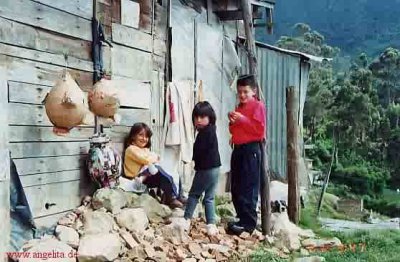
Acording to the United Nations Children's Fund report, more than one-billion
children worldwide are suffering from severe hardships that are denying
them a healthy and secure upbringing.
UNICEF says the 1989 Convention on the Rights of the Child is routinely
violated, and blames governments for their failure to prevent human-rights
abuses and carry out economic reforms.
UNICEF Executive Director Carol Bellamy says while progress has been
made in some areas, overall, countries around the world have failed
their children. “I have seen many things in my 10 years at UNICEF,”
says Ms. Bellamy, “Many great achievements for children but frankly,
I have seen many more opportunities missed and deliberate acts of greed
and knowing shortsightedness… The state of the world's children is not
what it should be or not what it could be and not what it ought to be,
not what we have promised it would be.”
Carol Bellamy blames the governments, and urges citizens to become more
active in demanding greater accountability from their representatives.
“Childhood is under threat not for mysterious reasons that strain our
imaginations, but because of deliberate choices made by governments
and others in power,” Ms. Bellamy says, “Poverty does not persist because
of nothing. War does not emerge from nowhere. HIV/AIDS does not spread
by choice of its own. These are our choices. How we allocate our resources,
how we assess the impact of our decisions, how we consider children
in our choices, these are the moments that matter.”
Although the UNICEF report paints a bleak picture, Carol Bellamy says
she is confident that improvements can be made if governments act to
change their priorities and reassign their resources. “Although they
may seem intractable, poverty, conflict and AIDS can be curtailed,”
she says, “They can be slowed. They can be bent to our will. Once we
decide in favor of protecting childhood, we can accomplish nearly anything.”
UNICEF urges government to meet their commitments under the U.N. Millenium
Development Goals of reducing child mortality by two-thirds by 2015.
A Cheap Antibiotic Halves Death Rate of HIV-Infected children
Kids Almanac - November 18, 2004
Researchers have hit on what may be an inexpensive way to prevent death
from infections in children with HIV until anti-retroviral drugs become
affordable in the developing world. In an article published in the Lancet,
investigators report how they slashed the death rate of children infected
with AIDS by nearly half using a common, cheap antibiotic drug. 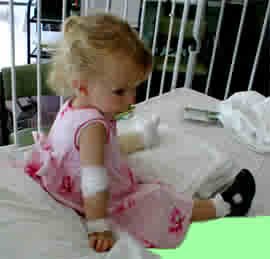
The 20-month study involved more than five-hundred HIV-infected children
between the ages of one and 14 in Zambia. In an effort to prevent life-threatening
infections in immune-compromised children, investigators gave daily
doses of the inexpensive and widely available drug, co-trimoxazole,
to half the children. The rest received a placebo or sugar pill.
When the initial results showed that the antibiotic reduced the death
rate by 42 percent, the study was stopped and all the children were
put on co-trimoxazole therapy.
Co-infections in people with AIDS , such as tuberculosis, are a main
cause of death. The benefit of co-trimoxazole taken preventatively is
that it keeps such infections in check, even though bacteria have become
resistant to the drug. The study author is Diana Gibb of England's Medical
Research Council. “We're not talking about this drug actually having
a direct affect on the HIV itself,” she says, “It's having an effect
on what we think is the bacterial infections there, despite in the test
tube, if you like, where there's evidence of resistance.”
Dr. Gibb notes that co-trimoxazole stacks up well against anti-retroviral
drugs, in reducing the death rate from HIV. Until anti-AIDS drugs become
widely available in poor countries, Dr. Gibb says, the antibiotic can
be very useful. “It's not in that sort of order, but it's still a very
good start, she says, “And it's a good reason for testing children,
getting them into follow-up, giving them nutritional help and co-trimoxazole
which is cheap.”
Dr. Gibb believes that co-trimoxazole should be given to all HIV-infected
individuals, no matter how old they are or how sick, to prevent life-threatening
infections.
Pollution Endangers Children’s Health
Kids Almanac - 10/28/04
Teenagers raised in heavily polluted environments can grow up with reduced
lung capacity. That's the finding of a new study that followed school
children in Los Angeles, California, one of America's most polluted
cities.
Among those at greatest risk are children with asthma, the most common
chronic childhood disease in the United States. But the long-term effects
of breathing pollution could impact a much wider group of young people,
despite some well-meaning efforts to clear the air. 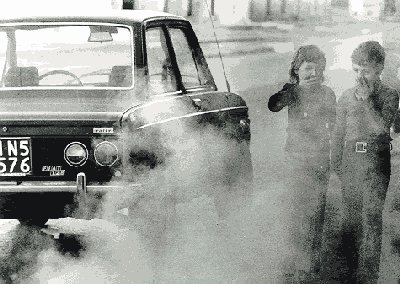
A low electronic tone alerts students at Carrick High School in Pittsburgh,
Pennsylvania, that it's time to change classes. For the next five minutes
the entire student body or some 14-hundred teenagers is on the move
through a maze of hallways that extends for over a city block.
Some may race to the gym, swim center or music studios, which were part
of a major renovation a few years ago. As they hurry to class, most
students are unaware of the upgrades that make Carrick a healthier place
to study. Linda Mihalic, who managed the renovation project, says some
newly installed devices make the air better to breathe. “The main thing
is that there is more circulation,” she says, “Indoor air quality is
a big issue with buildings and schools and that (means) circulating
the air that people breath. There is a goal that we have to try to provide
30 percent outside air into the classrooms, and it is has made a measurable
difference.”
According to Linda Mihalic, 5-centimeter pleated filters are part of
the solution. “The pleated design allows for more air to get through
and for more surface media for particulate (matter) to get trapped in
the filter,” she says, “So, that is definitely is something that we
spend a little bit more money on here, but it improves the air quality
and also improves the efficiency of the unit.”
But James Gauderman, associate professor of preventative medicine at
the University of Southern California, says the pleated filter won't
stop the smallest and potentially most dangerous - outdoor particles,
which can pass through the filter as easily as a gas.
Mr. Gauderman is lead author of a study on the effects of outdoor air
pollution on children's respiratory health. The study - which monitored
children from ages 10 to 18 - found reduced lung capacity as the young
people grew older. “By the time they reach age 18 they were five times
more likely to have clinically low function at that time compared to
children who were breathing cleaner air,” Mr. Gauderman says.
The 18-year olds had twenty percent less lung function compared with
what was expected for their age. Long-term exposure to dirty air would
put young people at greater risk for cardiac and respiratory problems
later in adult life. James Gauderman says the research showed the same
health problems in a wide cross section of people. “We found equally
large effects in non-asthmatic children,” he says, “We saw the effects
in non-smokers, and we saw similar effects in both boys and girls. So,
it really indicates that for some of these more chronic effects like
the development of lung function, the whole population is potentially
at risk, not just susceptible groups.”
While the study focused on twelve areas in South California, the results
could apply to any urban environment, according to James Gauderman.
“The pollutants that we found most closely associated with these deficits
were nitrogen dioxide and fine particles and these are pollutants that
would be present in any urban environment,” he says, “They are the byproducts
of fossil fuels, mostly around here from vehicle emissions as the big
source, but any time you have industrial pollution, trucks, cars (and
other vehicles) you are going to have elevated levels of these pollutants.”
James Gauderman says despite overall improvements in air quality over
the last several decades, air pollution still has potentially serious
health effects, especially for young people. He says tougher clean air
policies can serve as preventive medicine.
The study was published in the New England Journal of Medicine.
Health Experts
Recommend Ways to Reverse US Youth Obesity Epidemic
Kids Almanac - September 30, 2004
A panel of U.S. public health
experts says the country's epidemic of childhood obesity threatens to
set back the medical advances that have decreased child mortality and
extended life spans in the past century. The panel recommends that every
sector of the nation work to reverse the rapid rise in youth obesity
as ambitiously as anti-smoking efforts.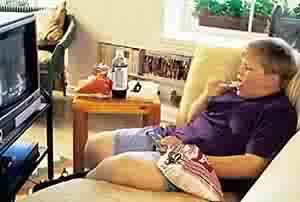
The expert recommendations come in response to a request from Congress,
which is seeking ways to reverse the overweight epidemic lest it become
an unrelenting health burden to the country. Since the 1970s, the prevalence
of obesity has more than doubled among U.S. pre-school children and
teenagers and more than tripled for youth aged 6 to 11.
Dr. Jeffrey Koplan, vice president for health affairs at Emory University
in Atlanta, is chairman of the expert panel appointed to study the problem
by the U.S. National Academy of Sciences. “These trends mirror a profound
increase in obesity among adult Americans as well as a concurrent rise
internationally in both developed and developing countries,” says Dr.
Koplan.
Summarizing the panel's new report, Dr. Koplan says reversing the obesity
epidemic will require a multifaceted approach by schools, families,
communities, the food and entertainment industries, and governments
at all levels. “This report is calling for fundamental changes in our
society,” he says, “This is a collective responsibility and we as a
nation need to move toward a healthier environment in which our children
and youth can grow up.”
The panel calls on schools to improve the nutrition of the food they
serve and require at least 30 minutes of student physical activity a
day. The report says parents should encourage physical activity by reducing
their children's' television and computer time, and communities should
provide more recreational facilities.
It says the food and entertainment industries, which spend more than
10 billion dollars a year marketing high calorie foods to children,
should adopt voluntary advertising guidelines limiting this exposure.
It asks Congress to give the government authority to require compliance
with such marketing guidelines.
The experts estimate the current annual U.S. health care costs of adult
obesity are between 100 and 130 billion dollars because of the heart
disease, diabetes, and other diseases to which it contributes. One panel
member, Dr. Thomas Robinson of the Stanford University School of Medicine
in California, says these costs could soar if today's obese children
become fat adults. “Many of us are extremely scared about what is going
to happen in the future to children's health because of this,” he says,
“We're looking at the adult chronic diseases start to enter into the
teen years and into childhood. As pediatricians and family health care
physicians and other child health care providers, we're really not,
in many ways, equipped to try and address this morbidity in the population
as a whole.”
The panel chairman, Dr. Koplan, says the cost of implementing its recommendations
would be small compared to the immensity of the health costs if they
are not put into effect.
Exhibit Looks at
Lives of Ancient Greek Children
Kids Almanac - September 15, 2004
Sports, schoolwork, play, and other activities of childhood were as
important in the ancient world as they are today. An exhibit called
"Coming of Age in Ancient Greece" at the J. Paul Getty Museum
looks the world of children more than 2,000 years ago. 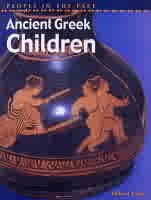
Dolls with movable arms and legs, a miniature horse on wheels, a rattle
and spinning top are toys that any modern child would be happy to play
with. But they are ancient artifacts, among 160 in the exhibit at the
Getty Museum.
Janet Grossman is the museum's associate curator of antiquities. “The
show really traces the life of ancient children from birth on through
the time at which they had reached adulthood,” he says.
For girls, adulthood came at about 15, when they might marry. For boys,
it arrived at 18, when compulsory military training began.
Until then, children lived in a world of parents and grandparents, siblings
and friends. Later, tutors would teach them the alphabet. A volunteer
docent explains to a modern child how a Greek student used a stylus
to inscribe letters on a wax tablet.
This story of childhood in ancient Greece is told through terracotta
figures, illustrations on pottery, and carvings and inscriptions on
object like gravestones. They come from across the classical world,
from the Greek settlements on the coast of modern Turkey to the Greek
colonies of southern Italy.
While much in the exhibition is familiar, some things are not. The curator
says elaborate rituals were intended to safeguard the health of children,
or commemorate those who had died. “It's been estimated that one in
three children did not reach maturity, and so there were a lot of rituals
having to do with magic and the protection of children,” says Ms. Grossman.
This exhibition began at the Hood Museum of Art at Dartmouth College
in New Hampshire, and made stops in New York and Cincinnati before coming
to California.
It has been expanded on the West Coast to include objects from the Getty
Museum's antiquities collections. A so-called "Family Zone"
was added, featuring reproductions of ancient games, and musical instruments
like the lyre.
Viviane Meerbergen designed this part of the exhibit, which also has
reproductions of draped period clothing, which children and their parents
can try on. And there is a game that children can play called "knucklebones."
“That's a game that's similar to our jacks or dice today,” she says,
“And knucklebones are actually bones from sheep that kids used to play
these games.”
Each side of the bones has a numerical value and the children keep score
as they throw the bones on the ground to determine the winner.
Museum curator Janet Grossman says the exhibit offers a snapshot of
the lives of ancient children, and is aimed at modern children and their
parents.
The exhibit "Coming of Age in Ancient Greece" can be seen
at the J. Paul Getty Museum in Los Angeles through December 5th.
Education for Gifted
Children
Kids Almanac - August 18, 2004
In the United States, decisions about public education often leave parents
of the brightest students, their educators and the students themselves
dissatisfied.These students rank in the 97th percentile or higher in
verbal ability or math or both. They learn differently and think differently
from students with lesser abilities.
One way to supplement their education is through summer programs such
as those offered by the Johns Hopkins University's Center for Talented
Youth. 
These students are completing a college level engineering course in
just three weeks.
They build bridges out of strands of uncooked spaghetti after first
doing complicated mathematical calculations to figure out how to build
the strongest bridge. Instructor Jack Bartholomew says the course helps
these students make career decisions. “It allows them to think and breathe
as an engineer would and try out the field and see if it is something
they want to pursue,” he says.
The program is designed to challenge these students intellectually,
but director Liz Albert says it does more than that. She refers to The
Center for Talented Youth as CTY. “What the students tell us over and
over again is that in a CTY summer program, they find the first place
where they don't feel different, where they don't feel they have to
hide who they are, and they can be who they are both in the classroom
and out of the classroom, and that is a relief for them,” she says.
And while the students talk about how much fun they have and the friends
they make, they also talk about the courses they are taking. "Last
year I took philosophy of the mind and this year I'm back for cognitive
psychology,” one student says, “and I had such a great time and I really
wanted to come back.” “I am interested in engineering,” another student
says, “And this course has really opened up the horizons for me, has
shown me what it's really like, and all hard decisions you have to make
the factors that go into your decisions like how you build your design
and where you build stuff. It's really complicated. It really sparked
my interest more than it already was.”
Nearly 10-thousand children from the US and abroad attended this summer's
programs
either at Johns Hopkins University in Baltimore, Maryland, or at one
of its other sites.
Some other American universities offer similar programs because most
public schools fail to meet the needs of exceptionally gifted students,
according to Charlene Harr, President of the Education Policy Institute
in Washington, D.C. “We should recognize the talents of intellectually
superior children just as we recognize the superior talents of athletes
who are competing at the Olympics, but we don't do that,” she says.
Some people think the greatest effort should be made to educate the
majority of children, whose abilities do not match those of the gifted
students. They think gifted students should not receive special help,
which is wrong, according to Charlene Haar. “We haven't been giving
them the challenges that they need to excel intellectually,” she says,
“And, after all, these are our future leaders. These are our future
entrepreneurs. These are our future intellectual geniuses. These are
the people who are making decisions that will be affecting the world
and certainly American society in the future.”
Because many of these classes depend on computer research, during the
school year, some of the students can take advantage of distance learning.
Johns Hopkins and other colleges and universities offer distance learning
programs to exceptional students.
Charles Beckman with the Johns Hopkins University Center for Talented
Youth has seen a dramatic increase in enrollments as personal computers
become more widely used throughout the world. “Our enrollments have
zoomed from several hundred six or seven years ago, to five thousand
within the past year,” says Mr. Beckman, “There's no live instructor
in front of the kids, but the kids are connected with a very qualified
tutor through the internet and they correspond very frequently on different
topics.”
He says there is almost no limit to the number of gifted students who
can benefit from distance learning programs. The main obstacle is funding
so all gifted students can receive the education that best addresses
their abilities.
International Children's
Digital Library
Kids Almanac - June 17, 2004
 Looking
for a good children's book? Internet users can find hundreds of them.
These books are from around the world. And they are free of charge.
The project is called the International Children's Digital Library.
The goal is to offer electronic versions of more than ten-thousand children's
books in at least one-hundred languages. Looking
for a good children's book? Internet users can find hundreds of them.
These books are from around the world. And they are free of charge.
The project is called the International Children's Digital Library.
The goal is to offer electronic versions of more than ten-thousand children's
books in at least one-hundred languages.
Project developers have been working with children to design easy ways
to search the collection and read the books. An image of each page appears
on the computer. Users can also print copies on paper.
Officials say the project has been designed for two main groups of users.
The first is children between the ages of three and thirteen, along
with their teachers and parents. The second group is researchers in
the area of children's literature.
The books chosen for the collection are meant to help children understand
the world in which they live. Literature is one way to teach young people
about new ideas. The idea behind the collection is that an interesting
story not only helps children understand who they are. It may also influence
their desire to explore the world.
Project organizers say they have chosen books that show the similarities
and differences in ways of life around the world. The aim is to create
a greater understanding of other people's cultures and beliefs. The
International Children's Digital Library is also an attempt to use technology
to strengthen libraries around the world.
The digital library is a project of the University of Maryland and the
Internet Archive. The Internet Archive is building an electronic library
of Internet sites and other digital collections as a cultural record.
The children's library project is supported by the National Science
Foundation and the Institute of Museum and Library Services. The Library
of Congress and other organizations are also involved. The first materials
appeared in two-thousand-two.
The goal is to have all ten-thousand books online in 2007. So far, the
collection contains more than five hundred books.
The address of the International Children's Digital Library: www.icdlbooks.org.
History of Children's
Television
Kids Almanac - May 24, 2004
Television became popular after World War Two in the nineteen-forties.
Successful radio programs became early television shows. "Howdy
Doody" was one of the first shows for children. The television
show began on N.B.C., the National Broadcasting Company, in nineteen-forty-seven.
Soon, it expanded to five days a week.
Howdy Doody looked like an average American boy. Only he was made of
wood and controlled with strings from above. He had red hair, although
he appeared in black-and-white, like everything else in early television.
And he had a permanent smile.
An actor named Bob Smith, known as Buffalo Bob Smith, started the show
each time with the same words.
In the early days, local television stations all over the country produced
programs for children. Local actors, artists and musicians performed
live. Often they played movies or animated cartoons like "Bugs
Bunny" or "Popeye the Sailor."
But Popeye the Sailor and Bugs Bunny were movie stars, really. In time,
cartoons made especially for television replaced them.
Hanna-Barbera Studios created cartoons like "Huckleberry Hound"
and "Yogi Bear."
Shows like "Yogi Bear" were syndicated. That means local stations
paid for the rights to broadcast the program in different cities.
Tim Hollis is an expert on the history of children's television. He
says that by the nineteen sixties, many shows were franchised. A local
station would pay to use the idea for a show, but then produce it with
local actors.
Two popular franchised shows during the nineteen-sixties were "Romper
Room" and "Bozo the Clown." Tim Hollis estimates that
at one time, the United States had more than two-hundred local Bozo
the Clowns.
Television presented a new way for businesses to market to children
through advertising. However, in the nineteen-sixties, many parents
grew concerned. They thought their children were seeing too many commercials
for products.
As a result, the Federal Communications Commission limited the amount
of commercial time in children's programs. The government also barred
local children's actors from reading commercials. This was meant as
another way to reduce the influence on children. But these actions also
reduced the amount of money that stations earned.
By the early nineteen-seventies, most local television stations stopped
producing their own shows for children. Many replaced them with syndicated
programs like "I Love Lucy" and "Gilligan's Island."
In addition to syndicated programs, local stations used national network
shows to fill their broadcast day.
C.B.S., the Columbia Broadcasting System, launched a children's show
in nineteen-fifty-five. Each day, the star wore a red coat with pockets
on the sides. The pockets were big -- big enough maybe even for a mother
kangaroo to carry her baby. So an actor named Bob Keeshan became known
as Captain Kangaroo.
C.B.S. aired "Captain Kangaroo" for twenty-nine years. In
nineteen-eighty-four, the show moved to public television. There, it
appeared for six more years.
Another popular children's show on the public broadcasting system is
"Sesame Street." This show began in nineteen-sixty-nine. Today,
different versions of "Sesame Street" can been seen in more
than one-hundred-twenty countries.
Public television also brought young children an educational show called
"Mister Rogers' Neighborhood."
It always started the same way. "Mister Rogers" -- Fred Rogers
in real life -- walked through the front door into his television house,
put on a sweater and changed his shoes.
Fred Rogers began the show in nineteen-sixty-eight. "Mister Rogers'
Neighborhood" aired for more than thirty years.
Today, the shows on educational television for young children include
imports like "Teletubbies" from Britain. In general, though,
the programs on American television aimed at children are mainly for
entertainment.
Cable television became popular in the United States in the nineteen-eighties.
There are children's programs twenty-four hours a day, seven days a
week.
One of the most popular cartoons on cable is about a square yellow sea
sponge. He lives deep in the Pacific Ocean, in a city called Bikini
Bottom. His name is SpongeBob SquarePants.
A former marine-biology teacher named Steven Hillenburg created "SpongeBob
SquarePants" in nineteen-ninety-six. The show began on the Nickelodeon
cable channel three years later.
Children consider SpongeBob an honest person -- I mean, creature --
who always sees the brighter, happier side of life. The show is also
aimed at adults, a lot of whom do find it funny.
These days, there are hundreds of channels of broadcast, cable and satellite
television to choose from. Plus there are countless videos and video
games. Children can see all sorts of things, and their parents do not
always supervise.
The American Academy of Child and Adolescent Psychiatry says children
in the United States watch TV an average of three to four hours a day.
The American Academy of Pediatrics says children under the age of two
should not watch any television at all. And it says older children should
watch no more than one to two hours a day.
Many scientists believe that too much television can cause attention
problems for children later in life. Studies have also linked a lot
of television with children becoming too fat and too aggressive.
There are also concerns about the limited number of female heroes on
television for girls to identify with. And critics say children's television
is too often simply a method to sell things to young consumers.
Product marketing tied to shows is a major business. SpongeBob SquarePants,
for example, appears not just on television. He is also on clothes,
bedding, books, school supplies and toys.
Experts urge parents to watch shows with their children and discuss
them. Some of what they see might make them wish for the days of that
puppet with a big smile on his face.
Ideas for Teaching
Young Children About Science
Kids Almanac - January 29, 2004
Experts say students are never too young to think creatively about science.
Educator Karen Meador says early education can help children become
creative science students later in life. Mizz Meador offers some suggestions
for activities. She recently shared her ideas with Gifted Child Today
Magazine.
For example, she describes how students between the ages of about four
and eight can explore the movement of liquid on wax paper. The wax keeps
the water from disappearing into the paper.
In addition to the wax paper, students need small tubes called eye droppers
for the experiment. The students also need water containing red, yellow
and blue food coloring. Using the eye droppers, they place the colored
water onto the wax paper. Then they blow softly into the water. Or they
can blow through a straw, a thin hollow tube, to move the water drops.
The students observe the tension on the surface. They see how it affects
the way the water moves and shapes itself. Even when students blow the
drops of water across the paper, the liquid keeps its round shape. Mizz
Meador says the children like to see how the colors mix when one colored
drop slides into another.
The shape and movement of the water is similar to that of mercury. But
mercury is dangerous to handle.Mizz Meador also says children can study
how water acts on aluminum foil. They can find out if the water will
act the same on a metal surface as it did on wax paper. Before doing
the new experiment, they can write their ideas about what they think
will happen. Or they can record their ideas on tape. Mizz Meador says
this activity prepares them for more difficult experiments.
The children again move the colored water around by blowing directly
onto it or through or a straw. But this time they move it on the foil.
Then they test their theories about how the water would act against
what really took place. Similar experiments can be carried out with
other kinds of paper or glass.
Karen Meador is writer of the book "Creative Thinking and Problem
Solving for Young Learners," published by Teacher Ideas Press.
|
