In the beginning of their history, the funerary rites of the Ancient Egyptians were far simpler than the elaborate rituals that developed later. Eventually, the bodies that were once reverently but simply buried in the fetal position in oval (womb) shaped graves in the desert sand (that naturally mummified the dead) were buried in elaborate and costly tombs. These were built with ever increasing complexity, though they often proved far inferior to the desert burials in preserving the bodies. Bodies buried in the desert were naturally desiccated quickly by the great aridity and heat of the desert whilst the bodies places in cool, damp tombs quickly began to rot and decay.
Rather than returning to the simple burials of the past that proved so effective at mummifying the bodies, the priesthood of Egypt attempted to preserve the bodies themselves. This eventually developed into an extremely complex and highly costly mummification ritual that kept the bodies from decaying into dust, but was never as effective as the desert ultimately was at preserving the dead peasants who were still regularly buried in it. Consequently, all this required an even greater reliance on the services of the priesthood to ensure the final resurrection of the deceased and their eternal life in the hereafter.
As Egyptian funerary rituals became increasingly more involved, the needs for the services of the priests also grew dramatically. The priests were needed to draw up complex funerary texts, perform mummification rituals, and to magically "activate" the mummies of the dead as well as the special artifacts they required in their tombs. Everything placed in a tomb had some ritual significance and was made to serve the dead and ensure their comfort as well as to provide an almost certain guarantee of their eternal life in the hereafter.
Figurines such as wooden shabtis and the ka statues of the deceased were considered useless unless a duly qualified priest blessed them with special incantations and spells that empowered and animated them in the spirit world. Even more, the priests were paid to perform special rituals (by those who could afford it) in perpetuity for the deceased lest their life in eternity cease when people forgot their names.
The Ancient Egyptians believed there was great magical power in a person's name and that their name was an extension of their own life force. Therefore, if that name ceased to be uttered and remembered after a person died, they too would cease to exist. So eternal life was only guaranteed to the dead by how well they were remembered by the living. This of course led to the monumental building projects of nobles and kings who were mightily determined to be remembered for all time through their grand mortuary temples and other phenomenal building projects.
In time, the Ancient Egyptians became increasingly more obsessed with ensuring eternal life by their own devices, developing complex rituals and lengthy spells that were created to entice the gods into believing that the deceased had spent every waking moment of their lives living in Ma'at and being an upright and moral individual. While this was of course a patent lie (no one is perfectly righteous), the gods were supposed to believe this since it was uttered aloud in an incantation. This stemmed from the odd notion that anything uttered in a magical word formula was supposed to come true, especially if a priest uttered those words! This inevitably led to a belief that it was what one knew (or rather affirmed about oneself) rather than how one behaved that ensured one's place in heaven. Ma'at could therefore be fulfilled by boasting about oneself rather than living a good and righteous life.
As a result of this desire to ensure immortality through magical affirmations, much funerary literature was developed. These ritualized incantations and magic spells ensured the eternal life of those who were named in them when that name was uttered aloud. The first of these texts were the pyramid texts, magical formulas inscribed on the walls of the pyramid tombs of several pharaohs from the 5th to the 8th Dynasties. Later, these texts were expanded upon and simplified to create the coffin texts. These abbreviated funerary texts were inscribed and illustrated inside coffins, ostensibly to be read by the deceased so they could find their way to the West and the Field of Reeds via the circumpolar stars, where Osiris was believed to dwell and reign.
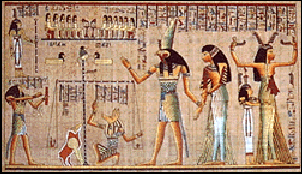
A Scene from the Book of the Dead
showing the Heart being weighed
in the Judgement Hall of Osiris
Among the funerary literature of the Egyptians that became known as the Book of the Dead, or the Book of Going Forth by Day, there were specific texts that were appropriate for the various stages of navigating through the Amduat (ie: netherworld). Some of this literature was quite interesting and entertaining to read, filled as it was with powerful mythical visions and beings. All of these writings were about some portion of the Sun God Ra's perilous journey (a journey in some sense paralleled by the soul at death) through the twelve hours of the night so that he could rise again with the dawn. To begin the journey, "The Book of Gates" was first uttered or inscribed on the walls of the tombs at the entrance. "The Book of Caverns" followed this, then still others all the ways down the descending passage, culminating with "The Book of Amduat" (or "Book of What is in the Netherworld"). This book was inscribed on the walls and ceiling of the room where the sarcophagus rested.
The Books of the Dead always identified the dead person in some way with the mummiform figure of Osiris, so that like him they could likewise conquer death through the use of divine magic and then be resurrected with immortal bodies in the netherworld. Of course, this resurrection was not guaranteed unless the principles of Ma'at were satisfied. Ma'at was a goddess who represented an ancient system of ethical and harmonious rules for living and was often represented in art by a single feather or a woman with a single feather atop her headdress and great feathered wings outstretched on either side of her.
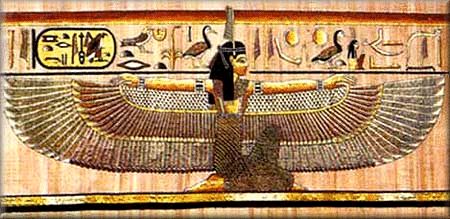
The Winged Goddess Ma'at
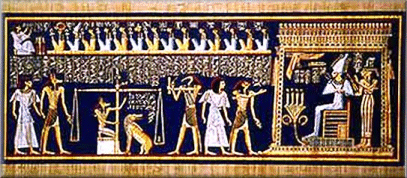
The most perilous part of the dead soul's very long and involved journey through the Amduat was to be found when the judgement of the soul of the deceased took place against the feather of Ma'at in the Judgement Hall of Osiris. If the soul of the dead person (represented by their heart) was found wanting in some way, it would weigh more than the feather of Ma'at, wherein it would promptly be thrown by the god Anubis into the waiting jaws of the hideous and fearsome monster called Ammut. Ammut was the mythical devourer of unrighteous souls and was depicted as part alligator, part hippo and part lioness.
If the heart of the person weighed equal to Ma'at, that person's soul earned the right to dwell with and serve Osiris forever while they enjoyed a privileged and eternal life of luxury in the blessed netherworld. However, as mentioned previously in this article, this life of ease and pleasure was not guaranteed even after passing the Judgement Hall unscathed. Rituals needed to be performed and the soul remembered by the living to ensure the eternal bliss of the dead. This left a huge weight of responsibility on each individual person alive to honor the dead with elaborate and costly rituals. What this did eventually was create a society that was perpetually preoccupied with death. One's life was often spent accruing enough wealth to buy all the trappings and ritual requirements of ensuring one's own immortality after death. Not only that, but the living had to continue to ensure the immortality of the countless others who had died before them in temple rituals that the many priests of Egypt were handsomely paid to perform.
This did, of course, eventually lead to much corruption and excess within the ranks of the priesthood. It is my belief that the misuse of the great power wielded by those who controlled the priesthood was the greatest single factor leading to the eventual downfall of the once proud and mighty civilization we know today as Ancient Egypt. There were certainly other factors that led to Ancient Egypt's fall from power, but time and history has proven that any nation that has lost its spiritual and moral foundation will most certainly fall. Many great civilizations eventually made that very same mistake and had already fallen from corruption and immorality within before any foreign power overwhelmed their borders.
There are several differing ideologies espoused by scholars concerning what the Ancient Egyptians actually believed about death and the afterlife. The views that I have presented here are those that most closely reflect what I believe the Egyptians to have thought about the hereafter.
If you would like to learn more about the Funerary beliefs and Mortuary rituals of the Ancient Egyptians and come to your own conclusions, I invite you to do more research on this fascinating subject. Please use the handy links below for this purpose. At the end of the links I have also listed a few books that I found very useful in writing this essay and that you might enjoy utilizing to learn more about Ancient Egyptian Funerary beliefs.