|
Volume 2, Issue 2 - August 1st, 2001 |
|
Volume 2, Issue 2 - August 1st, 2001 |
By: Anukis
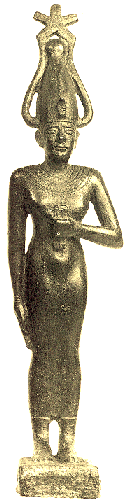
SOPDET
|
The star Sirius was gone from the observable evening sky in Egypt for the last 70 days of the Egyptian year. After 70 days, when Sopdet reappeared in the sky then vanished just as the sun went up, it indicated the beginning of the New Year. This is called the Heliacal rising. This event not only marked the New Year, but also indicated that soon the Nile would once again rise in the annual flooding called the inundation. Sopdet was an important deity as far back as Egypt's first Dynasty, and probably even earlier than that. She is written in the Pyramid texts where she is the king's guide into heaven. In the Pyramid texts, in order for the pharaoh to enter the land of the Blessed in the netherworld, the king must unite with his "sister" Sopdet. The star Sirius (Sopdet) was closely related to the constellation we call Orion. Orion was known to the Egyptians as the god Sah, or Osiris. The Ancient Egyptians viewed Orion as the heavenly personification of the god Osiris. The god Soped was the son bred of the union between Sah (Osiris) and the goddess Sopdet. This triad formed by Sopdet, Sah, and Soped later came to be identified with Isis and Osiris and their child Horus. Sopdet was often pictured as a woman wearing the white crown of Upper Egypt with a star symbol atop it. Her main worship centre (and that of her son Soped) was in the town of Per-Soped in the 20th Nome of Lower Egypt. Sopdet's festival was around the 25th of July. |