
 Organization La Solidaridad, La Liga Filipina
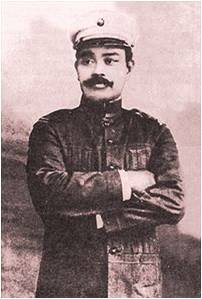
Antonio Luna
Organization La Solidaridad, La Liga Filipina
Antonio Luna
Antonio Luna y Novicio (October 29, 1866 - June 5, 1899) was a Filipinopharmacist and general who fought in the Philippine-American War. He was also the founder of the Philippines's first military academy.
Family background
Antonio Luna was born in Urbiztondo, Binondo, Manila. He was the youngest of seven children of Joaqu�n Luna, from Badoc, Ilocos Norte, and Spanish mestizaLaureana Novicio, from Luna, La Union. His father was a traveling salesman of the products of government monopolies. His older brother, Juan, was an accomplished painter who studied in the Madrid Escuela de Bellas Artes de San Fernando. Another brother, Jos�, became a doctor.
Education
At the age of six, Antonio learned reading, writing, and arithmetic from a teacher known as Maestro Intong. He memorized the Doctrina Cristiana (catechism), the first book printed in the Philippines.
His early schooling was at the Ateneo Municipal de Manila, where he received his Bachelor of Arts degree in 1881. He went on to study literature and chemistry at theUniversity of Santo Tomas, where he won first prize for a paper in chemistry titledTwo Fundamental Bodies of Chemistry. He also studied pharmacy, swordsmanship, fencing, military tactics, and became a sharpshooter. On the invitation of his brother Juan, Antonio was sent by his doting parents to Spain, to acquire a licentiate and doctorate in Pharmacy.
He obtained the degree of Licentiate in Pharmacy from the University of Barcelona. He pursued further studies and in 1890 obtained the degree of Doctor of Pharmacy from the Universidad Central de Madrid.
Reform propagandist
In Spain, he became one of the Filipino expatriates who mounted the �Propaganda Movement� and wrote for La Solidaridad, published by the reformist movement of the elite Filipino students in Spain. He wrote a piece titled Impressions which dealt with Spanish customs and idiosyncrasies under the pen-name "Taga-ilog".
Luna was active as researcher in the scientific community in Spain, and wrote a scientific treatise on malaria titled El Hematozoario del Paludismo (Malaria), which was favorably received in the scientific community. He then went to Belgium and France, and worked as assistant to Dr. Latteaux and Dr. Laffen. In recognition of his ability, he was appointed commissioner by the Spanish government to study tropical and communicable diseases.
In 1894, he went back to the Philippines where he took the competitive examination for chief chemist of the Municipal Laboratory of Manila, came in first and won the position. He also opened a sala de armas, a fencing club, and learned of the underground societies that were planning a revolution, and was asked to join. Like other leaders, he was in favor of reforms rather than independence as goal to be attained. Nevertheless, after the Katipunan's existence was leaked in August 1896, the Luna brothers were arrested and jailed in Fort Santiago for their participation in the reform movement. Months later Jos� and Juan were freed, but Antonio was exiled to Spain in 1897, where he was imprisoned at the C�rcel Modelo in Madrid.
His more famous and controversial brother Juan, who had been pardoned by the Spanish Queen Regent herself, left for Spain to use his prestige to intercede for Antonio. With Juan's influence working, Antonio's case was dismissed by the Military Supreme Court and was released.
Antonio prepared himself for the revolutionary war he had decided to join. First, he went to Madrid and other cities in Germany and Belgium, studied field fortifications, guerrilla warfare, organization, and other aspects of military science. He studied military tactics and strategy underGerard Leman in Belgium.
In Hong Kong, he was given a letter of recommendation to Emilio Aguinaldo by the Filipino revolutionaries. He returned to the Philippines in July 1898, wary of American treachery.

