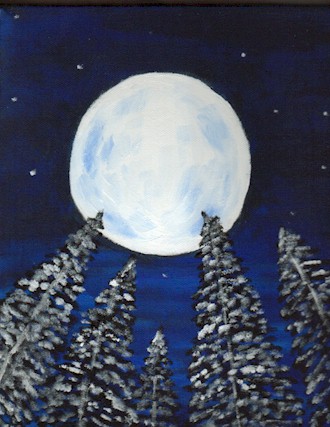
Picture by Vincent Koczurik
Lunarol
Picture by Vincent Koczurik

Map
To follow - accurate cartography is extremely rare, so maps found must be viewed with extreme caution.
History
Lunarol is one of the
oldest surviving nations in Erythia. It's
origin is lost due to a lack of evidence, but popular legend suggests that
Lunarol was originally founded about a thousand years before the present date.
The legend tells of a night that lasted for three nights, the sun not
appearing at all. The lands that
are now called Lunarol had been the home of a group of tribes who worshipped the
sun as their god, and the failure of the sun to rise threw the tribes into first
panic and then conflict, each blaming the other for the death of their god.
A visitor to the land stood between the tribes as they gathered to fight,
and pleaded with them for peace to remain.
He told them that he knew how to restore the sun, and bade them to put
down their weapons and gather around, while he explained what had happened.
As the legend tells it,
the man told the tribes how their worship of the Sun as their god had offended
the Moon, who was the loyal wife of the Sun.
In anger at their behaviour, she had locked him away in their house,
which lay beyond the edge of the world, and was refusing to release him until
they paid her the respect worthy of her. The
tribes conferred amongst themselves, and decided to try the advice of the
stranger. For two days, the tribes
offered sacrifices to the Moon as their Nocturnal Queen.
Finally, the Moon relented and the Sun rose again in all His glory.
In relief at this, the
tribes made the stranger the High Priest of their religion.
He instructed them to found a great city called Solarol in honour of the
Sun, but to name the lands where they held sway Lunarol in honour of the Moon,
for while the Sun is the strongest and brightest thing in the sky, still the
Moon holds responsibility for the household in which the Sun lives and thrives.
After some generations,
the High Priest grew in power until he became the de
facto ruler, and eventually must have actually become the ruler as the
ruling system has changed from a religious one to a monarchy.
It is unclear whether the modern boundaries of Lunarol are the same as
the ancient ones, but the names have remained, even though Solarol itself has
been razed to the ground on two recorded occasions.
Lunarol was nearly
completed conquered during the Second Divine Struggle, when a massed army of
goblinoids and forces from the now defunct Charlemagne Confederacy stormed
through from the west. Solarol itself fell after a two-year siege, with King Francis
perishing in the storming of the palace, and the city was razed to the ground
when the generals found it hard to get their troops to move on from the
pillaging. The shattered armies of
Lunarol were rallied by the young prince Bernard, who forged the remnants into a
small force, training them to excel in guerilla tactics.
He successfully drew off the majority of the invaders back into the
rougher western terrain, keeping them occupied for over two years when an Elvish
force arrived, helping to tip the balance and force the invaders north, where
the Imperial Legions had gathered en masse
by an arrangement forged by the Emperor and Bernard.
The result was a slaughter, the invaders taking almost complete losses,
with only a few escaping, unfortunately including two of the five generals, who
would cause difficulties for the new alliance later in the campaign.
After the Second Divine
Struggle, Bernard sought to restore Lunarol to it's former self.
He was crowned King Bernard III, and set about to easing the pressure on
his surviving subjects. He was
aided to a great extent by the Convocation of Mages, who settled the Arcane
Academy off Lunarol's eastern shore, and proceeded to use their magic to help
rebuild what had been destroyed. Bernard
III is now one of the most famous monarchs in the history of Lunarol, although
he is a very old man now, kept alive by some of the most renowned physicians in
the land, and is widely expected to not last for much longer.
After the death of Prince Francis (named after his grandfather), the
crown will go to Bernard's eldest grandson, Edward, who is still young and
inexperienced. Currently, the Royal
Council, led by Regent Hershel, aid Edward in governing Lunarol
Government
The government of Lunarol
is a strict monarchy. The Crown
passes down the generations with precedence given to gender and age - males are
preferred, but, in the absence of a direct male heir, a direct female heir is
preferred to an indirect heir, such as a sibling or cousin to the current King.
The royal family and the
aristocracy hold titles and land, mostly rural estates.
They are very wealthy due to the intrinsic value of land, and tend to
form the upper section of society. These
feudal lords hold responsibility for the government of their estates and of
those who abide within them, collecting taxes and sending on the requisite
amount to the Crown, keeping the remainder, which is supposed to be spent on
improving their estate.
The Royal Council is appointed by the monarch, with the intention of forming a largely advisory body of skilled politicians and experts in their chosen field. It tends to number about twelve people, and generally includes representatives from the Convocation of Mages and some of the many churches. Current Councillors include Regent Hershel, the ambassador from the Convocation of Mages, Vana Nuisa BM, Sir Archibald Trandistock (a Knight of the Silver Lance), Wyrax Thom from the Merchant's Guild, Panogh Rewse of the Church of Gabidon, Viscount Melchiot de Carinesse, Prince Edward's closest friend and son of the Regent, Captain Keit Jhaerin of the Royal Guard, Generals Bertram Fewerthan and Ingrius Harkel, and Dalindrel Terigar, the Elven Ambassador.
Military
The Lunarol Royal Army is
a small, highly trained force largely used to garrison the various
fortifications spread througout the land. It
was reformed during the Second Divine Struggle by the current monarch, but over
the past few years King Bernard's illness has meant that little attention has
been paid to the Army, which has helped contribute to a dwindling in the numbers
it can muster. It has recently been
supplemented by a series of mercenary companies, who tend to fulfil the duties
that the regular forces cannot spare the men for. It tends to have five generals - one of whom is always a
Knight of the Silver Lance, while two more tend to provide military advice for
the monarch through positions on the Royal Council.
The three not in the Council tend to be in charge of troops on the
western or northern borders, or on the seaboard. Lunarol also maintains a small navy, commanded by the general
in charge of the seaboard. This is
used strictly for defensive purposes, in an attempt to restrain the Gornian
pirates from making too damaging an effect on the economy.
The current generals are Bertram Fewerthan, Ingrius Harkel (both assigned to Solarol and the Royal Council), Sir Benedict Pugh, Lord Farnborough, and Shipmaster Davil MacGhee.
Religion
The citizens of Lunarol tend to follow the standard established Pantheon, but also give special honours to Zacharia as the goddess of the Sky due to events in Lunarol's past. The established Pantheon gained sway over four hundred and fifty years from the present date, before which the only gods worshipped were the Sun and the Moon, who they now believe to be Zacharia's unruly twin children. Two of the most prominent religious holidays are Midsummer's Day and Midwinter's Eve, for these are the times when each of the twins are at their strongest.
Currency, Trade & Foreign Affairs
As one of the larger and better established countries in Erythia, Lunarol holds an important position in commerce. While the currency of Lunarol is physically slightly smaller than the Imperial coinage, it is still widely accepted as being of the correct size, weight and content for use in trade, which explains it's spread throughout the lands of Erythia in trade. Traditionally, the Imperial coin is worth slightly more than that of Lunarol, but both currencies are highly stable and reliable for merchants to carry with them, as the Royal Mint is careful to not water down the currency overmuch with baser metals in order to avoid devaluation.
Lunarol trades with most of the civilised nations, acting as the southern hub of Erythian trade. They trade for metals and minerals from the dwarves, fine timbers and woodland products from the elves, all sorts from the halflings and gnomes and are willing to trade for the main produce of their neighbours, especially priding the leather produced by their northwestern nomadic neighbours. While not a mass producer, Lunarol trades with pretty much every other nation through the Merchant's Guild.
Traditionally, Lunarol has been one of the major Erythian powers - more so since the self-destruction of the Charlemagne Confederacy to the west. Lunarol maintains close links to Petitone, and keeps cordial relations with the elven and dwarven nations. The current Octarian Emperor is regarded well within the palace, but he has not been on the Imperial Throne for long enough for any alterations to past foreign policy to be apparent. Unfortunately, due to both ancient and recent shipping issues, the island state of Gornior is not well regarded in Lunarol, but as yet King Bernard has not launched any new initiatives in that long-running dispute.
Language
"The populace of Lunarol speak the common tongue - there are few dialects of note to be aware of, so it is quite easy to communicate with them." Excerpt from the Guide to Foreign Parts, issued by the Imperial Travel Office