
Poodles in Art
Companion Poodles
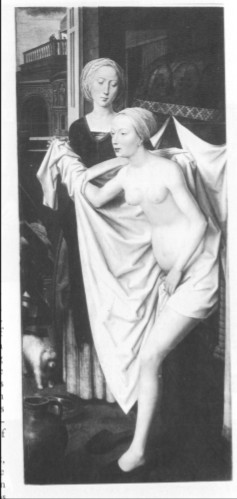
Left: Bathsheba (Hans Memlinc, 1484.) Her elongated body is typical of Flemish art from this period.
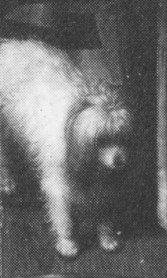
Below: Detail of Bathsheba's Poodle. Note the topknot and carefully trimmed feet.
Poodles have been depicted as the supreme canaine companion for centuries. They are used to help indicate rank, class and style.

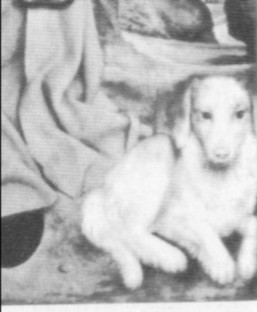
Left: The St. Anne Altarpiece (Detail)
(Quinten Metsys, 1507-1509) Joachim's offer of a third of his wealth is rejected by the Angel, symbolizing the Temple; only his Poodle accepts him.
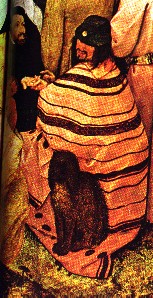
Below Left: The Semon of St. John the Baptist(Detail) (Pieter Bruegel, 1566) This image is from the central foreground of Bruegal's work. Bruegel is best known for his paintings illustrating popular sayings. It is believed that he included many well-known locals in this painting.
Here, the man in the striped robe is a fortune teller. His large Poodle guards his back, staring watchfully at the viewer.
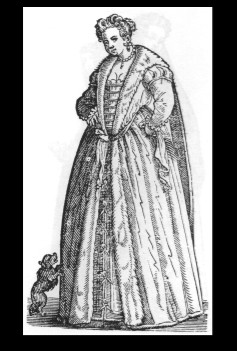
Right: A Venetian Prostitute in Wintertime (Cesare Vecellio, 1589) This lady comes from Vecellio's famous Compendium of World Costume, which is considered the first historical costume book. This woodcut shows one of the Venetian women and her stylish Poodle companion--one of only a handful of animals depicted in the book.