 |
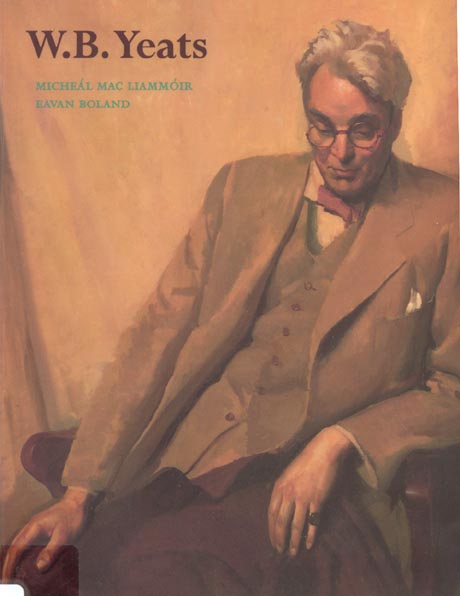
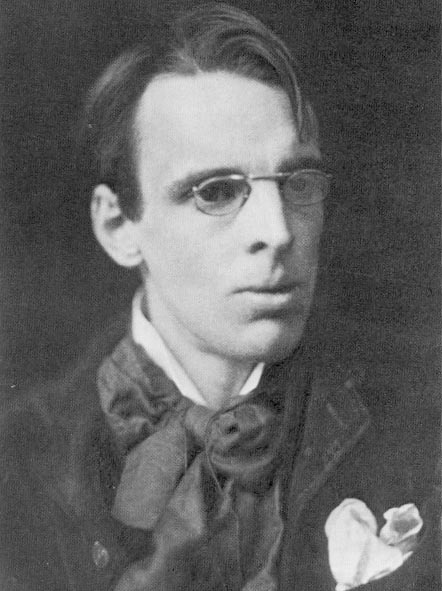
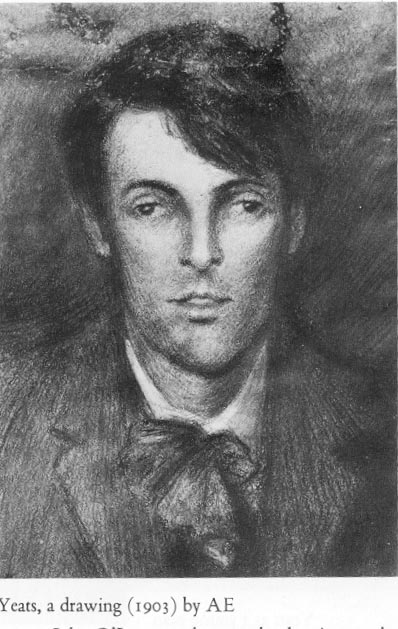
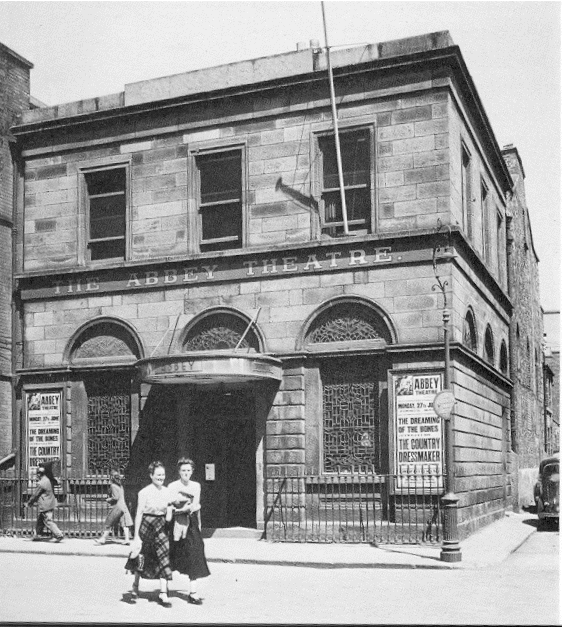
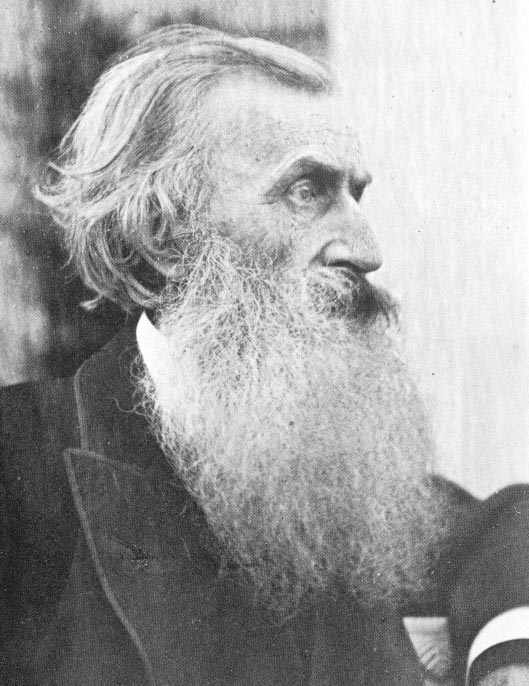
| William Butler Yeats, born in Ireland, lived in a very volatile time for his country. After being prosecuted by Anglican English, the Irish were left without any real traces of thier past. The only exceptions were the peasents, out of the reach of the English, who retained some of the language and stories. It was these that Yeats turned to to fight the bonds of the English and incite a new sense of nationalism within his countryman. Yeats was born to John Butler Yeats and Susan Pollenfen in Dublin, Ireland, where he remained until 1868 when the family moved to London so his father could study to be a professional painter. On holidays the family would return to Ireland to visit their grandfather, William Pollexfen, in Sligo County. It was as this place that Yeats was introduced to the wonders of the old Irish tales and mythology. At the age of eleven Yeats began his education at Goldophin School where he turned out to be a very shy boy, not very interested in studies but rather in far- off day dreaming. In England he always felt as though he did not belong, as it a stranger in a foreign land. When fifteen, Yeats and his family of one brother and two sisters returned to Ireland, taking a house in Howth. It was there, in 1882, that Yeats first began to experiment with poetry. In 1883, after he again moved, this time to a suburb of Dublin, his education continued at the Erasmus Smith High School. He then continued on to the Metropolitan School of Art where his father was a master, yet his passion was writing. There he met George Russell (AE) with whom he began the Dublin Hermetic Society to experiment with magic and occults in search of some sort of religion. It was also when he was there that Yeats had some of his poems published for the first time, in 1885, by the Dublin University Review. It was his acquaintance with Fenian leader John O'Leary, AE, and Katherine Tynan that brought Yeats into the political spectrum of Ireland and raising within his a strong sense of nationalism. His friendship with Maude Gonne, an entertainer and nationalist, was also very influencial. He fell madly in love with her and asked for her hand many a time, only to be turned down. Skipping to the late 90's, Yeats met Lady Gregory, a writer of Irish Legends. It was at her estate, known as Coole, tht he spent the better part of a year and it had a large effect on the second part of his poetic career. It was then that he decided what Ireland needed was a theatre to spead his political/nationalistic message. With the help of Lady Gregory, Yeats and others created the Abbey Theatre, in Dublin, despite much protest. A number of his plays were preformed there as well as John Millington Syinge, Sean O'Casey, and other Irish writers, usually preformed by Maude Gonne, and did cause mild trouble, though others caused riots. Abbey Theatre is often attributed with starting the Irish Dramatic Movement and Irish Literary Renessance. Due to popularity with his fellow countrymen which Yeats gained through the theatre, plays, and poetry, when Ireland became the Irish Free State, he was given a seat in the Senate. He served there for six years. His outstanding reputation also won him the nobel Prize in Literature in 1923. In 1911 Yeats met his future wife, George Hyde-Lees, and they were married in 1917. They had two children, a son and daughter, Michael and Anne. George had a large effect on Yeats' poems for he often used ideas she found through her newly discovered automatic writings. Many of these peoms were published in The Vision in 1925. As Yeats grew older he continually expanded his poetry. His new style was seen in The Tower (1928) and The Winding Staircase (1933). He continued to write until he died. It had been some time that Yeat's health had been failing him and when he returned from a tour of America it was not much better. He died in 1939 at a hotel in Cap Martin in the French Riviera. His body was then transported to Ireland at Drumcliff, County Sligo in 1948. |
| Biography for W. B. Yeats |
|
 |
 |
 |
 |
 |