Nekojarashi

November / December 1998 No.16

Back
Topics People Learn How to E-tegami


Let's do "E-tegami!

Have you ever of "E-tegami"? "E" means a picture and "tegami" a letter or postcard. So the typical "E-tegami" is a postcard on which you yourself draw or pain a picture and put some brief message in words. "E-tegami" has gathered a quiet following these 2 or years. The principle of "E-tegami" is "don't care about the poorness of the pictures or handwriting" or "the poorness is the pleasure." That means "everything is just OK!" Would you like to try your hand at "E-tegami" for your Christmas cards and season's greeting cards this year? Why not?

See How to E-tegami


Topics

The Christmas International Exchange

The Fujimi Highland International Club is going to has its yearly enjoyable event - a Christmas Party! This year, a lecture will be given followed by a friendship exchange with snacks and drinks. The admission fee will be around 500 yen. We're sure you'll enjoy this at-home get-together.

Date and Time: Dec. 6, 1998 (Sunday) 2:00 p.m. to 5:00 p.m.
Place : Fujimi Community Plaza, 2F

Why don't you enjoy the Chinese cinema in this season of art?

The Cinema Club will hold a large screen show. The Film is the Chinese movie "Hen-men", made in 1996.

Date and Time: Nov. 28, 1998 (Saturday) from 2:00 p.m. and from 7:00 p.m.
Place : Fujimi Community Plaza, 2F AV. Hall
Advance Ticket : Adults 1,000 yen / Students and Members 800 yen
On-the-day Ticket : 1,200 yen

It is a heart-warming movie expressing the soul-to-soul rapport between a solitary old artist and a small girl in the nature setting of the Yangtze River, Szechwan. China.

How to enjoy "The Princess Mononoke" in Fujimi

This summer there was a great animated hit in Japan. It was "The Princess Mononoke" produced by HAYAO MIYAZAKI. It's now on video, so there are some who has seen it that way. There is also a plan to have it dubbed in English and shown in the U.S. Wouldn't that be something to look forward to?

By the way, do you know this movie has a little connection with Fujimi? For example, some of the characters have unique names such as EBOSHI GOZEN, OKKOTONUSHI, which are also the names of some communities in Fujimi. And the priest's name JIKOBOU is the name of a mushroom that is popular in Fujimi.

It is said the motif of this movie comes from the Muromachi period Izuomo and Tohoku regions. In order to depict great fantastic nature the production team visited Yaku Island. This movie is not connected with Fujimi directly, but we can imagine that there were images of Fujimi in Director MIYAZAKI's visions, because HAYAO MIYAZAKI has a cottage in Fujimi. It is good news, isn't it?

Let's try making KADOMATSU & SHIMENAWA!

KADOMATSU & SHIMENAWA classes are held at community centers every year. They are necessary for the new year days. Experts in Fujimi will teach you how to make them, so you can make wonderful KADOMATSUs and SHIMENAWAs that no body has ever seen! Information about how to apply will be broadcasted through "yusen" and other means at the end of November. The numbers to be admitted are 10 for KADOMATSU and 20 for SHIMENAWA in the order of applications received, so that earlier you apply, the better.

Date : a Sunday in mid-December
Place : OKKOTO FURUSATO TAIKENKAN
Fee : KADOMATSU 3,000 yen
SHIMENAWA 2,000 yen

* The above mentioned is last year's classes' plan, so there might be a few changes.


How to "E-tegami" for the lazy

Stamps


One of the most popular handmade stamps is "Imo-ban" or the potato-stamp. Some time ago, many children used to make their own New Year's cards by carving an image in the flat cut surface of a potato with a carving knife, dipping it in ink and stamping it on blank postcards. Recently the potato has been substituted by rubber erasers which are easier to carve.

If you feel it difficult to use a carving knife, our recommendation is to just cut various vegetables such as lotus roots, green peppers, onion, okra,etc.; dip the cut ends in some ink or paints and stamp them on a piece of paper.

If you still feel it troublesome, try the above with any things around you; a peace of corrugated cardboard, bottle cap, etc. The sponge used for washing dished is another recommended material - cut it pieces and stamp it with ink and you can enjoy soft images.
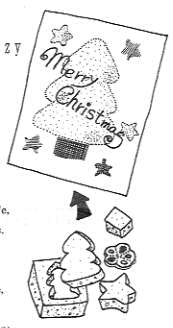
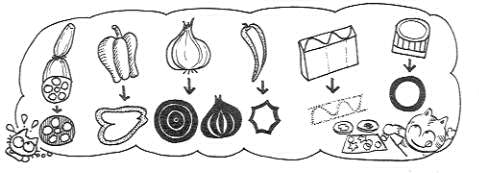
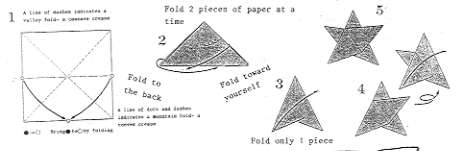

Make your Christmas and greeting cards by yourself - it's easy!

Origami

You might know about the beautiful "Wa-shi"
(Japanese paper), with a one-of-a-kind beauty. We, in the country of the culture of this beautiful paper, have been familiar with "Origami" paper craft since a long time ago. One of the most popular Origami works is a crane(bird). Here, we will introduce you how to make a star, which is easier to fold and which you can put on your postcard.


Books

"Gold Medal Messages"
-- A Collection of E-tegami Postcards from Around the World --

In the northern part of Nagano Prefecture is a small village, "Sakae-mura." Sakae-mura is renowned as "the village of E-tegami" and is continuing its various activities. Taking advantage of the occasion of the Nagano Winter Olympics and Paralympics, they proposed to hold the E-tegami Olympics, and as a result, as many as 80 thousand E-tegami postcards were gathered from 117 countries and territories around the world. The book "Gold Medal Messages" introduce all of these E-tegami including those from Syrian children under a war-like situation who are not familiar with drawing pictures, those from Nepalese children who used crayons for the first time and so on. Many of them are full of their dearest wishes for peace. You can find the book in the Fujimi Town Library.


People

For this issue we interviewed Mr. Erik Froyland.

From the beginning, he made us relaxed with a joke, that was "Watashi wa furo iran."(Froyland) This means "I don't need a bath." Do you get it?

A missionary, he came to Japan 19 years ago. Last December he moved to Fujimi from Tokyo, and he experienced a heavy snow here. As he was born in Norway, he didn't worry about it. But we heard that he was amazed by the difference of coping with snow between Norway and Japan. He told us humorously it was 'interesting' that a lot of people in the area removed the snow from the road, and about 200 people went through huge efforts to remove it from the skating rink, but snow piled up again right away. When we asked him "You don't like hot summer in Japan, do you?" he said, "It's good for me to able to perspire from within myself." We found him to be a person who could enjoy life.

By the way, there are four people in his family - a nice Japanese wife , two cute daughters and he. He said that it really would take an hour and a half to talk about the process how he got married to his wife, Noriko, but he shortened the talk to 7 minutes for us. It goes like this : Two years had passed since he happened to meet her, and he begged her parents in the Japanese manner for their permission to marry her. Three years later, he was finally allowed to marry her. He ended up waiting for five years in all. We heard that there is Norwegian proverb like this, 'The one who wait for something good doesn't wait in vain.' He did just that, we think.

Now he is arranging "retreats" for Christian Church at a pension in Hara Village four times a year. He also welcome people who are not Christian to be retreats as well as he invite to his home in Fujimi people who like to learn about the Bible when they are free. In addition, he introduces good fruit tea.

Through his talk, we first new that both "Telemark" of "Telemark skiing" and "Hardanger" of "Hardanger embroidery" were place names in Norway; we know only the famous artist Edvard Munch and a few others. We hope you will feel closer to the faraway country Norway through Mr. Erik Froyland.


Learn to Japanese (Suwa Dialect)

Who am I?
This time we'll explain to you ways people call certain people.


ONEESAN

Originally ONEESAN means "older sister," but sometimes the others call a young woman in such way. And in Shinshu wives are also called ONEESAN by people from other families. Even if she isn't so young any more, she is called "x x family's NEESAN (ONEESAN)" while her mother-in-law is still living.

OKAASAN

Originally OKAASAN means mother, but sometimes the others call a middle-aged woman in such way. They mean to be friendly by calling you OKAASAN. But if you are offended by that, it's all right to say.

"I was not born by you." In Shinshu sometimes the mother-in-law calls her son's wife OKAASAN. In this case it is because she has friendly feeling toward her, and she relies on her.


Back

Hosted by www.Geocities.ws

1