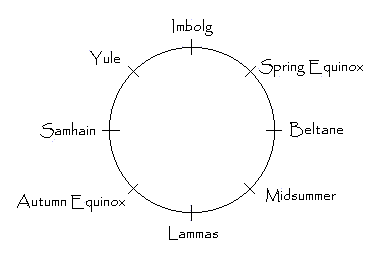
These are the names of the Sabbats, including variations, and a little bit of information about them. By clicking on the name of the Sabbat below you will find a few examples of rituals for that particular Sabbat.
Imbolg-February 2ndImbolg is also known as Candlemas or the Feast of Lights. This holiday signifies the first stirrings of Spring within Mother Earth. This is a festival of fire, but it is more the light of fire rather than the heat that is being celebrated. The warm power of the God fertilizes the Earth, and so the earliest beginnings of spring occur. This is a Sabbat of purification, a festival of light, and fertility. It's also a traditional time for initiations into covens and self-dedication rituals. This Sabbat is associated with the Goddess Brid.
Spring Equinox-March 21stSpring Equinox is also known as Ostara and Eostar. It is sacred because the light and darkness are again equal with light overtaking the darkness. It is the beginning of Spring. This Sabbat is often overlooked because of it's similarities with Beltane and association with the Christian holiday of Easter.
Beltane-May 1stBeltane is a very potent and powerful Sabbat. It is also known as May Eve. The celebration of this Sabbat begins at sundown on April 30th and continues until dawn on May 1st. It is a true fertility holiday, filled with power. It is a very special celebration of the union of the God and Goddess to create light. The May Pole is a phallic symbol, and the ribbons or vines represent the fertile womb of the Goddess. People usually give flowers to their friends and loved ones. There is also a bonfire usually. The fire can be jumped for luck or to increase one's fertility. This is a widely celebrated holiday in the pagan world. Beltane is a very common time for handfastings/marriages to be preformed.
Midsummer-circa June 22ndMidsummer is also known as Litha, or the Summer Solstice. This Sabbat is a classic time for magick of all kinds. The most common form of celebration is to adorn oneself and the altar with flowers. If there is dancing, the Spiral Dance is usually preformed. This dance is significant of the turning of the wheel of the year. This Sabbat is not celebrated by all groups, nor even in the same way.
Lammas-August 1stLammas is also known as Lughnassadh and the Feast of Bread. While it can be celebrated with a ritual, it is generally a time of baking and preparing for the winter to come. It is the time of the year when the Goddess sadly watches the God fade from the sky, but cherishes the life growing inside her.
Autumn Equinox-September 21stThe Autumn Equinox is also known as Mabon. This is the weavers festival, and a braiding of cords is done in the process of casting a spell to add good to ones life, each person weaving what they wish. With a coven, the group then weaves all the cords together to unite the power and efforts symbolically. The autumn equinox is the completion of the harvest begun at Lammas. Once again the day and night are equal, but this time with darkness conquering the light. The God prepares to leave and the begin a great adventure into the unseen, a preparation for his rebirth at Yule.
Samhain-October 31stSamhain, also known as Feast of the Dead, Feast of Apples, All Hallows Eve, and of course Halloween, once marked the time of sacrifice. It was the time of year when animals were slaughtered to ensure food throughout the winter. The God fell as well to ensure our continued existence. This is a time of reflection and coming to terms with the one thing in life which we have no control-death. On this night the Veil between the worlds of the Physical and the Spiritual is at it's thinnest. It is a time for dimensional workings, and a celebration of the life and death of the year king. It is a somber holiday, one of thoughts for the dead. It is said that those of necromantic talents can speak with the dead at this time. It is a time of endings of bad situations. A time of remembrance of our ancestors and all those who have gone before. A truely potent Sabbat. Remember those who have gone before, and cherish those who will come after.
Yule-circa December 21stYule is also known as the Winter Solstice. This is the longest night of the year. It is the time when the Goddess gives birth to the Sun God. It is often associated with a fire. This time it is a celebration of the heat and light of the fire and sun. The Yule Log (usually of Oak), mistletoe, and holly are traditional symbols of this Sabbat. This is a time of feasting and exchanging of gifts.