In ancient Ireland, the Samhain festivities centered around Tara, which was the symbolic center of the land, and the seat of the High King. On the eve of the festival, everyone would put out their household fires, symbolizing the death of the year. Then, a Samhain bonfire was lit--at Tlachtga, twelve miles from Tara, and remembered as the burial place of a druidic sorceress. After the gathered people threw offerings into Tlachtga's fire, they lit torches from the flames, and carried them to Tara to light a bonfire there, and to their own homes. Thus, the flame of the new year began at the Goddess's sacred place, representing the Otherworld, and was then brought to the tribal center and to the people. It was at Tlachtga that the year began.
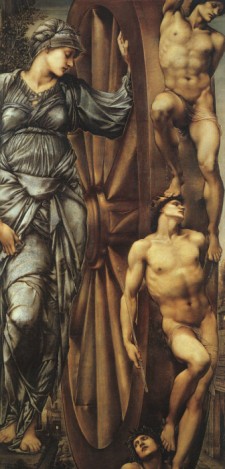
But who was Tlachtga? A poem remembers her as the daughter of a blind Druid named Mog Roith (meaning Devotee of the Wheel), and herself a mistress of magic. She learned everything her father had to teach, and created some interesting objects, among them a stone, a pillar, and a great Rolling Wheel. The wheel brought blindness to any who saw it, deafness to any who touched it, and death to any who tried to take a piece of it. She and her father worked with a sorcerer named Simon Magus (a Christian import), and Simon's three sons raped Tlachtga, leaving her pregnant with triplets. She died giving birth to Muach, Cumma, and Doirb at the hill which came to bear the unfortunate lady's name; it is said that Ireland is safe from destruction as long as Tlachtga's sons are remembered.
Let us remember them, and remember Tlachtga herself, as she turns the wheel to renew the year every Samhain.