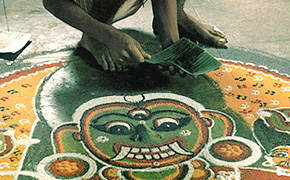
The kalam is a unique drawing also called dhulee
chithram or powder drawing. The artist uses the floor as his canvas.
Kalamezhuthu pattu is performed as part of the rituals to worship and
propitiate gods like Kaali, Ayyappan or Vettakkorumakan.
This ritualistic art is a common feature of temples as well as noble households.
The kalams or drawings are erased at the end of the ritual to the accompaniment
of musical instruments like ilathalam, veekkan chenda, kuzhal, kombu and
chenda.
The coloured powders used for the kalam are prepared from natural
products only. The pigments are extracted from plants - rice flour (white),
charcoal powder (black), turmeric powder (yellow), powdered green leaves
(green), and a mixture of turmeric powder and lime (red). It often takes more
than two hours to finish a kalam drawing with appealing perfection.
Decorations like a canopy of palm fronds, garlands of red hibiscus flowers and
thulasi or Ocimum leaves are hung above the kalam.
The figures drawn usually have an expression of anger, and other emotions.
Kalamezhuthu artists are generally members of communities like the
Kurups, Theyyampadi Nambiars, Theeyadi Nambiars and Theeyadi Unnis.
The kalams drawn by these people differ in certain characteristics.
The Kalamezhuthu is a forty-day ritualistic festival beginning with the
first of Vrischikam (Scorpio) in most Bhagavathy temples in Kerala