Kenzaburo Oe � Biography
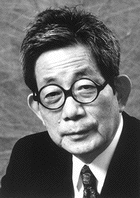
Kenzaburo Oe was born in 1935, in a village hemmed
in by the forests of Shikoku, one of the four main islands of Japan. His
family had lived in the village tradition for several hundred years, and
no one in the Oe clan had ever left the village in the valley. Even after
Japan embarked on modernization soon after the Meiji Restoration, and
it became customary for young people in the provinces to leave their native
place for Tokyo or the other large cities, the Oes remained in Ose-mura.
Maps no longer show the small hamlet by name because it was annexed by
a neighbouring town. The women of the Oe clan had long assumed the role
of storytellers and had related the historical events of the region, including
the two uprisings that occurred there before and after the Meiji Restoration.
They also told of events closer in nature to legend than to history. These
stories, of a unique cosmology and of the human condition therein, which
Oe heard told since his infancy, left him with an indelible mark.
The Second World War broke out when Oe was six. Militaristic education
extended to every nook and cranny of the country, the Emperor as both
monarch and deity reigning over its politics and its culture. Young Oe,
therefore, experienced the nation's myth and history as well as those
of the village tradition, and these dual experiences were often in conflict.
Oe's grandmother was a critical storyteller who defended the culture of index1.html
the village, narrating to him humourously, but ever defiantly, anti-national
stories. After his father's death during the war, his mother took over
his father's role as educator. The books she bought him - The Adventures
of Huckleberry Finn and The Strange Adventures of Nils Holgersson
- have left him with an impression he says 'he will carry to the grave'.
Japan's defeat in the war in 1945 brought enormous change, even to the
remote forest village. In schools, children were taught democratic principles,
replacing those of the absolutist Emperor system, and this education was
all the more thorough, for the nation was then under the administration
of American and other forces. Young Oe took democracy straight to his
heart. So strong was his desire for democracy that he decided to leave
for Tokyo; leave the village of his forefathers, the life they had lived
and preserved, out of sheer belief that the city offered him an opportunity
to knock on the door of democracy, the door that would lead him to a future
of freedom on paths that stretched out to the world. Had it not been for
the drastic change the nation underwent at this time, Oe, whose love of
trees is one of his innate qualities, would have remained in his village
as his forefathers had done, and tended to the forest as one of its guardians.
At the age of eighteen, Oe made his first long train trip to Tokyo, and
in the following year enrolled in the Department of French Literature
at Tokyo University where he received instruction under the tutelage of
Professor Kazuo Watanabe, a specialist on Francois Rabelais. Rabelais'
image system of grotesque realism, to use Mikhail Bakhtin's terminology,
provided him with a methodology to positively and thoroughly reassess
the myths and history of his native village in the valley.
Watanabe's thoughts on humanism, which he arrived at from his study of
the French Renaissance, helped shape Oe's fundamental view of society
and the human condition. An avid reader of contemporary French and American
literature, Oe viewed the social condition of the metropolis in light
of the works he read. Yet, he also endeavored to reorganize, under the
light of Rabelais and humanism, his thoughts on what the women of the
village had handed down to him, those stories that constituted his background.
In this sense, he was again living another duality.
Oe started writing in 1957, while still a French literature student at
the university. His works from 1957 through 1958 - from the short story,
The Catch, which won him the Akutagawa Award, to his first novel,
Bud-Nipping, Lamb Shooting* (1958) - depict the tragedy
of war tearing asunder the idyllic life of a rural youth. In Lavish
are the Dead (1957), a short story, and in The Youth Who Came Late*
(1961), a novel, Oe portrayed student life in Tokyo, a city where the
dark shadows of the U.S. occupation still remained. Apparent in these
works are strong influences of Jean-Paul Sartre and other modern French
writers.
Crisis struck Oe's life and literature with the birth of his first son,
Hikari. Hikari was born with a cranial deformity resulting in his becoming
a mentally- handicapped person. Traumatic as the experience was for Oe,
the crisis granted him a new lease on both his life and his literature.
Overcoming the agony and determined to coexist with the child, Oe wrote
A Personal Matter (1964), his penning of his pain in accepting
the brain-damaged child into his life, and of how he arrived at his resolve
to live with him. Through the catalytic medium of humanism, he conjoined
his own fate of having to accept a handicapped child into the family with
that of the stance one ought to take in contemporary society, and wrote
Hiroshima Notes (1965), a long essay which describes the realities
and thoughts of the A-bomb victims.
Following this, Oe deepened his interest in Okinawa, the southernmost
group of islands in Japan. Before the Meiji Restoration, Okinawa was an
independent country with its own culture. During World War II, the islands
became the site of the only battle Japan fought on its own soil. After
the war, the people of Okinawa were left to suffer a long U.S. military
occupation. Oe's interest in Okinawa was oriented, politically, toward
the lives of the Okinawans living on what became a U.S. military base,
and, culturally, to what Okinawa meant to him in terms of its traditions.
The latter opened out to a broadened interest in the culture of South
Koreans, enabling him to further appreciate the importance of Japan's
peripheral cultures, which differed from Tokyo-centered culture. This
pursuit provided realistic substance to his study of Mikhail Bakhtin's
theory regarding a people's culture which led him to write The Silent
Cry (1967), a work that ties in the myths and history of the forest
village with the contemporary age.
After The Silent Cry, two streams of thought, which at times flow
as one, are apparent and consistent in Oe's literary world. Starting with
A Personal Matter is one group of works that depicts his life of
coexistence with his mentally-handicapped son, Hikari. Teach Us to
Outgrow our Madness (1969), a two-volume work, painfully portrays
both the agony-laden trials and errors he experiences in his life with
his yet unspeaking infant child, and his pursuit of his father he lost
during the war. My Deluged Soul* (1973) depicts a father who relates
to his infant child who, through the medium of the songs of the wild birds,
has started to communicate with the family, and who empathizes with youths
that belong to a belligerent and radical political party. Rouse Up,
O, Young Men of the New Age!* (1983), a work in which Oe draws upon
images from William Blake's Prophecies, depicts his son Hikari's development
from a child to a young man, and thus crowns the works he wrote about
his handicapped child.
The second group are stories in which Oe relates characters who he establishes
in the theater of the myths and history of his native forest village,
but who interact closely with life in today's cities. This world of Oe's
fiction, starting with Bud- Nipping, Lamb-Shooting and followed
by The Silent Cry, came to shape the core of his entire literature.
Making full use of new ideas of cultural anthropology, these works represent
the totality of Oe's world of fiction, as evidenced in Letters to My
Sweet Bygone Years (1987), a work about a young man who, banking on
his cosmology and world-view of Dante, strives but fails to establish
a politico- cultural base in the forest. Contemporary Games is
a story that alternates between myth and history, which Oe supports with
the matriarch and trickster principles he draws from cultural anthropology.
He rewrote this work in narrative form as M/T and the Wonders of the
Forest* (1986). With the aid of W.B. Yeat's poetic metaphors, Oe embarked
on writing The Flaming Green Tree*, a trilogy comprised of Until
the 'Savior' Gets Socked* (1993), Vacillating* (1994), and
On The Great Day* (1995). Oe has announced that with the completion
of this trilogy, he will enter into his life's final stage of study, in
which he will attempt a new form of literature. The implication of this
project is that Oe deems his effort at presenting his cosmology, history
and folk legend as having been brought to full circle, and that he has
succeeded in creating, through his portrayal of that place in the valley
and its people, a model for this contemporary age. It also implies that
he considers Hikari's becoming a composer, in actuality, surpasses the
importance of his own literature about him.
Oe's winning the Nobel Prize for 1994 has thus encouraged him to embark
on his pursuit of a new form of literature and a new life for himself.
*Tentative English Titles
From Les Prix Nobel 1994.
| Works in Japanese |
| A selection of novels, short stories and essays: |
| Shisha no ogori, Tokyo: Bungei shunju, 1958. |
| Memushiri kouchi, Tokyo: Kodansha, 1958. |
| Miru mae ni tobe, Tokyo: Shinchosha, 1958. |
| Nichijo seikatsu no boken Tokyo, 1963. |
| Kojinteki na taiken, Tokyo: Shinchosha, 1964. |
| Hiroshima noto, Tokyo: Iwanami Shoten, 1965. |
| Man'en gannen no futtoboru, Tokyo: Kodansha, 1967. |
| Warera no kyoki o iki nobiru michi o oshieyo, 1969. |
| Okinawa noto, Tokyo: Iwanami Shoten, 1970. |
| Shosetsu no hoho, Tokyo: Iwanami Gendai Senso, 1978. |
| Natsukashii toshi e no tegami, Tokyo: Kodansha, 1986. |
| M/T to mori no fushigi no monogatari, Tokyo: Iwanami, Shoten, 1986. |
| Chiryo no to. Tokyo, 1990. |
| Works In English |
| A selection of novels, short stories and essays: |
| The Catch, Japan Quarterly, 6-1, 1959. |
| Lavish are the Dead, Japan Quarterly, 12-2,1965. |
| A Personal Matter, New York: Grove Press, 1968; London: W&N, 1969. |
| The Silent Cry, Tokyo: Kodansha International, 1974; London: Serpernt's Tail, 1988. |
| Teach Us to Outgrow Our Madness, New York: Grove Press, 1977. |
| Hiroshima Notes, YMCA Press, 1982. |
| Japans Dual Identity: A Writers's Dilemma, WLT 1988. |
| Literature |
| Michiko N.Wilson,, Oe's Obsessive Metaphor, Mori, the Idiot Son: Toward the Imagination of Satire, Regeneration, and Grotesque Realism, The Journal of Japanese Studies 1981 H. 1. |
| Michiko N.Wilson, The Marginal World of Oe Kenzaburo: A Study in Themes and Techniques, New York, London: Armonk, Sharpe, 1986. |
| Sanroku Yoshida, An interview with Kenzaburo Oe, WLT, summer 1988. |
������ ������� ����� ���������, ����� Oe ��� �����. �������������� ����������� ������������ �� ������ �������� ������ � ������� ������, ��������� ��� ��� ������ � ��������, �������� �� ��� �������� � ��� ��������. ������� Oe, �������, ������� ������������ ��� � ������� ����� ��� ������� �������� �������, � ��� ������� ����� ���� ����� � ���������. ������� �� ���� ����������� ����������, ��� ������� �������� �������, ����������� � ���� humourously, �� �����-���� ���������, ���������������� �������. ����� ������ ��� ���� � ������� �����, ��� ���� ������ ���� ��� ���� ��� �������. ����� ��� ������ ��� - ����������� ����� ������� � �������� ����������� ����� Holgersson - �������� ��� �� ������������, �� ������� ', �� ����� ����� � ������ '.
��������� ������ � ����� � 1945 �������� �������� ���������(������), ���� � ���������� ������� ����. � ������, ����� ����������� ��������������� ��������, ������� ������� ���������� ���������� �����������, �������, � ��� ����������� ���� ��� ����� �����, ��������� ����� ���� ����� ��� �������������� ���������� � ������ ���. ������� Oe ���� ���������� ����� � ��� ������. ����� ������� ��� ��� ������� ����������, ��� �� ����� ������� � �����; �������� ������� ��� �������, �����, ������� ��� ���� � ���������, �� ����� ����, ������� ����� ��������� ��� ����������� �������(��������) � ����� ����������, �����, ������� ����� ����� ��� � �������� ������� �� ��������, ������� ������������� � ����. ��� �� ���� ��� ������������ ���������(������), ����� ����������� � ��� �����, Oe, ��� ������ � �������� - ���� �� ��� ���������� �������, ������� �� � ��� �������, ��������� ��� ������ �������, � ����� ��������� � ���� ��� ���� �� ��� ��������.
� �������� ������������, Oe ������ ��� ������ ������� ������� ������ � �����, � � ��������� ����, ������������������ � ������ ����������� ���������� � ������������ �����, ��� �� ������� ���������� ��� ������ ���������� ����� Watanabe, ���������� �� Francois Rabelais. ������� �����������(������) ��������� �������� ��������, ����� ������������ ������������ ������� �������, ���� ��� � ������������ � ������������ � ��������� ������������� ���� � ������� ��� ������ ������� � ������.
����� ������� �� ���������, �������� �� ������ �� ��� �������� ������������ ����������, ������� ����������� ��������������� �������������(���) �� �������� � ������������� �������(���������). ���������� �������� ����������� ����������� � ������������ ����������, Oe ���������� ���������� �������(���������) ������� � ����� �����, ������� �� �����. ��� ��, �� ����� ������� ��������������, ��� ������ ��������� � ���������, ��� ����� �� ���, ��� ������� ������� �������� � ����, �� �������, ������� ��������� ��� ���. � ���� ������, �� ����� ��� ������ ����������.
Oe ����� ������ � 1957, � �� ����� ��� ��� ��� ������������ ������������� �������� � ������������. ��� ������ � 1957 �� 1958 - �� �������� �������, ���������(�������), ������� ������� ��� �������������� Akutagawa, � ��� ������� ������, ������������ ���������, ������� Shooting* (1958) - ���������� �������� �����, ����������� �� ����� ������������ ����� �������� ��������(����). � ������ - ������� (1957), �������� �������, � � ��������(����), ��� ������� Late* (1961), �����, Oe ������������ ������������ ����� � �����, �����, ��� ������ ���� ������������� ������� ��� ��� ����������. ��������� � ���� ������� - ������� ������� ����� ���������������� ����� ����� � ������ ����������� ����������� �������.
������ ������ ����� �� � ���������� � ��������� ��� ������� ����, ������. ������ ��� ������ � �������� ���������, ��������������� ��� ������������ ��������� �������� - �������. ������������, ��������� ���� ��� ��� Oe, ������ ����������� ��� ����� �������� ������� ������������ �����(�) ��� ����� � ��� ����������. ����������� ������ � ������������, ����� �������������� � ��������, Oe ������� ������ ������ (1964), ��� penning ��� ���� � �������� ������������� ������ ������� � ��� �����, � ����, ��� �� ������ ��� ������� ���� � ���. ����� �������������� ����� ���������, �� ���������� ��� ����������� ������ ������������� ������� ������� ��������� � ��������� � ������� ����� ������� ����������� ��������, � ������� ����������� �������� (1965), ������� ����, ������� ��������� ����� � ����� � ������� ������� �����.
����� �����, Oe ������� ��� �������(�������) � �������, ����� ����� ������ �������� � ������. ����� Meiji ���������������, ������� ���� ����������� ������ � �� ����������� ���������. � ������� ������ ������� �����, ������� ����� �������� ������������� ��������, ������ �������� �� �� ����������� �����. ����� �����, ���� ������� ���� ���������, ����� ��������� ������� U.S. ������� �������. �������(�������) �� � ������� ��������������, �����������, � ������ Okinawans, �������� �� ���, ��� ����� U.S. ������� �������, �, ���������, � ����, ��� ������� �������� � ���� � �������� �� ��������. ���������, ��������� � ������������ ��������(��������) � �������� ����� ��������, �������� ���, ����� ����� ������� �������� ������������ ������� ������, ������� ���������� �� ��������������� ����� ��������. ��� ������������� ���������� �������������� ��������(��������) � ��� �������� ������ ������� ������� ������������ �������� ��������, ������� ���� ���, ����� ������ ����� ���� (1967), ������, ������� ��������� � ����� � ������� ������� ���� � ����������� ���������.
����� ������ �����, ��� ������ �����, ������� ����� �� ������� ����� ��� ����, �������� ���������� � ����������������� � ������������ ���� ��. ����� � ������� ������� - ���� ������ �����, ������� ���������� ��� ����� ��������������� � ��� ��������� �������� �����, ������. ����� ��� ����������� ���� ������� (1969), ������ � ����� ��������, ������� ���������� ���(�) ����������� ������� ���������(����) � ������, ������� �� ���������� � ��� ����� � ��� ��� �� ����������� �������� ��������, � ��� �������������� ��� ����, �������� �� ������� � ������� �����. ��� Deluged Soul* (1973) ���������� ����, ��� �������� ��� ������� �������� ���, ����������� ����� ����� ����, ����� ����������� � ����������, � ��� ����������� ��������(�����), ������� ����������� ������������ � ����������� ������������ �������(������). ������, O, ������� ���� ������ ��������! * (1983), ������, � ������� Oe �����(������) �� �����������(������) �� ���������� ������� ����, ���������� �������� ��� ���� ������ �� ������� �������� ��������, � ����� ������� �������� ������, ������� �� ������� � ��� ������� ���������.
������ ������ - �������, � ������� Oe ��������� ���������(�����), ��� �� ������������� � ������ ����� � ������� ��� ������ ������� ����, �� ��� ��������������� ������ � ������ � ����������� �������. ���� ��� �������������(������) ��, ������������ � �������� - �����������, ���������� �������� � �������������� ����� ������, ������, ����� ����������� ���� ��� ������ ����������. ����� ������ ������������� ����� ���� ������������ ���������� ������������, ��� ������ ������������ ��� ���������� ���� �� �������������(������), ��� �������� � ������� � ���� ������� ������� ����� (1987), ������ � ������� �������� ���, ��������� �� ��� ���������� � ������� �������������(������� ���) Dante, �������, �� ����� �� � ��������� ������������� ���������� - ���������� ������ � ����. ����������� ���� - �������, ������� ���������� ����� ����� � ��������, ������� Oe ������������ � ����������, � �������� ��������� �� �����(������) �� ���������� ������������. �� ��������� ��� ������ � ����� �������� ��� M/T � ������� Forest* (1986). ��� ������ W.B. ����������� �������� ����, Oe ����������� �� ������ ��������� �������� ������ *, ��������, ���������� �� '���������' �������� Socked* (1993), Vacillating* (1994), � �� ������� Day* (1995). Oe �������, ��� � ����������� ���� ��������, �� ������� � �������� ������ ��� ����� ��������, � ������� �� ����� ������ ������� ����� ����� ����������. �������� ����� ������� - ��, ��� Oe ������� ��� ������ ��� ������������� ��� ����������, ������� � ������� ������ ��� ���� ����������� � ������� �����, � ��� �� �������� � ��������, ����� ��� ����������� ���� ����� � ������ � �� �����, ������ � ������� ����� ������������ ��������. ��� ����� �������������, ��� �� ������������� ����������� ������ ����������, � ����������������, ����������� �������� ��� ����������� ���������� � ���.
������(����������) �� ����������� ���� �� 1994 ����� ������� �������� ��� ������������� ��� ������������� ����� ����� ���������� � ����� ����� ��� ����.
--------------------------------------------------------------------------------
*Tentative ���������� �����(��������)
�� Les Prix ����������� 1994.
������ � ������
����� �������, �������� ������� � ����:
Shisha ������� ogori, �����: Bungei shunju, 1958.
Memushiri kouchi, �����: Kodansha, 1958.
���� �� ni tobe, �����: Shinchosha, 1958.
Nichijo seikatsu ������� boken �����, 1963.
Kojinteki na taiken, �����: Shinchosha, 1964.
�������� noto, �����: Iwanami Shoten, 1965.
Man'en gannen ������� futtoboru, �����: Kodansha, 1967.
Warera ������� kyoki o iki nobiru michi o oshieyo, 1969.
������� noto, �����: Iwanami Shoten, 1970.
Shosetsu ������� hoho, �����: ������� ������ �����, 1978.
Natsukashii toshi e ������� tegami, �����: Kodansha, 1986.
M/T � mori ������� fushigi ������� monogatari, �����: Iwanami, Shoten,
1986.
Chiryo �� �. �����, 1990.
������ � ���������� �����
����� �������, �������� ������� � ����:
���������(�������), ������ �������������, 6-1, 1959.
����� - �������, ������ �������������, 12-2,1965.
������ ������, ���-����: �����(������) ����, 1968; ������: W&N;, 1969.
����� ����, �����: Kodansha �������������, 1974; ������: ����� ���������,
1988.
����� ��� ����������� ���� �������, ���-����: �����(������) ����, 1977.
���������� ��������, YMCA �����(������), 1982.
Japans ������� ������������: ������� �������, WLT 1988.
����������
Michiko N.Wilson, ��������� �������� ��, Mori, ��� ������: � �����������
������, �����������, � �������� ��������, ������ ������ ������� 1981 H.
1.
Michiko N.Wilson, ������� ��� Oe Kenzaburo: �������� � ����� � �������,
���-�����, ������: Armonk, Sharpe, 1986.
Sanroku Yoshida, �������� � Kenzaburo Oe, WLT, ���� 1988.
������ �. ������, ������� �� �������: ��������� � ������� � �������������(������)
������ ����� � �� ���������, ���������, Mass.: ������� Univ., 1991.
����� �������, Kenzaburo O�: ��� samourai �� ����������� int�rieure. Figaro
litt�raire, ���� 1993.
Helie Lassaigne, Kenzaburo O� � ses d�mons, Quinzaine litt�raire, 16-31
���� 1993.
������ �����, �������� �� ������������ ��������� ��� ������ �������� ��������,
13 ������� 1994.