
A small village at the end of the bus route in Ilocos Norte
We took a bus north along the west coast of Luzon and along the north coast until it went no further and turned around to go back. There was a small village there where the people survived by daily fishing and farming a small plot of rice. There was no electricity or running water yet it was impeccably clean as opposed to the slums of Manila with an abundance of electricity and running water.
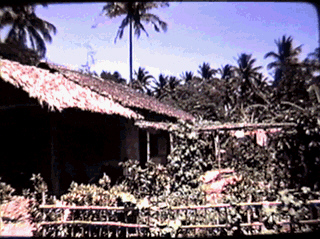
White stones lined the pathways where people walked and I was told that one day a week people worked for the village. There was no sign of litter.
Soon after arriving in the village, we were treated to a local community dance. The women of the village would sold dance tickets; the men stood around the outskirts and drank beer and straight gin from a clear stubby bottle. Ever once in a while a piece of cooked chicken or dogmeat was auctioned off.
A couple of days previously, I had sat on a bus for an endless number of dusty miles. The windows had no glass in them and if it rained there were wooden covers to pull up. The bus was so crowded passengers were even riding on the roof. What nagged my curiosity throughout the whole trip was a large block of ice, wrapped in burlap and sitting in the sun getting smaller and smaller. I kept wondering where the ice was going and for what and where it would leave the bus and would it even get to its destination.
There at the dance was that very same block of ice from which snowballs of fine shavings were scraped off and flavoured with syrup and milk and served up as a treat.