
A Historical View of Kimberley
Overview
The history of Kimberley, British Columbia, Canada, gave a contribution to the industrialization of the world that is yet to be fully appreciated.
Fort Steele was instrumental in the founding of Kimberley and a twist of fate in the 1970's once again caused it to effect a major change in the face of Kimberley. The ghost town that was the old fort was to be made into a Heritage Site and the main highway that went through Kimberley would be diverted past it twenty miles away. This threw the local mercantile sector into a panic and Kimberley went from Home of the Largest Lead/Zinc Mine - Highest City in Canada - to the Bavarian City of the Rockies in an attempt to attract tourism..
First there was the miracle of the geological anomalies that formed a huge crystaline globule of galena that became, in time, by far the largest lead-zinc mine to be discovered in the world, the Sullivan Mine.
Then there was the miracle of four individuals E.C. Smith, John Cleaver, Pat Sullivan, and Walter C. Burchett journeying from Kaslo, British Columbia, across the Kooteny Lake by boat and then by foot across the Purcell Mountains to stake a singular set of claims over that large body of galena.
The year 2000 is the final year of the Sullivan Mine. After a life of one hundred and eight years, the same technological advances that it helped to spawn mined out the last quarter of its deposits in approximately the last seven years.
And finally there was the unlocking of the tighly bound mineral from its sulphide ore just at the time there was a dramatic need for lead and zinc in automobiles, batteries, paint, gasoline and a host of other consumer and industrial items.
Many if not most of those who built the town are dead or dying and the majority of their offspring have scattered throughout the world. The history of Kimberley has almost turned to dust. The events and the dates of the events are permanently recorded, but the tone and timbre of those events are fading with time.
But the history of Kimberley is the history of the people who came to the mountain settlement and who provided the ingenuity and labour to build the Consolidated Mining and Smelting Company into Cominco which became for a period of time a prime economic driving force in the world.
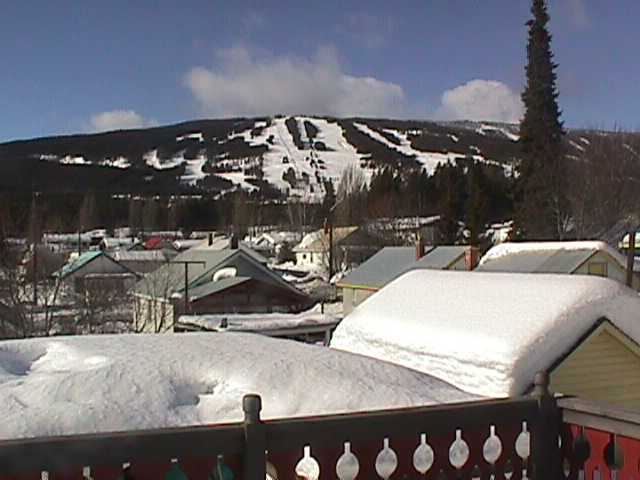
There were several eras that Kimberley passed through. There was the time before mining, when Ktunaxa families picked huckleberries from the east side of North Star Mountain. It was they who showed prospector Joe Bourgeois the glittering rock of galena that led to the North Star Mine discovery and the building of the McGinty trail to the riverboats that plied the Kootenay River. The existence of the North Star allowed the Sullivan to be found which is a facinating story in itself. The mineral was so tightly bound in sulphide that attempts to extract the lead and zinc met with failure until a special flotation process was initiated in 1923 that put Kimberley on the map and the neighbouring village of Chapman Camp a showtown of mining technology. Then came the second world war and the need for munitions. In 1953 a fertilizer plant was added to the Kimberley operations and Cominco Gardens was born.
The facilties such as the North Star Ski Hill that the residents of the community built for their personal recreation have been sold to private interests and the old merchantile sector of goods and services has been replaced with one representing the hospitality industry. The future is yet to be seen.