What is Alpha1 Antitrypsin Disorder All About?
(an-tee-trip-sun)
 |
I am in no way an expert on the body's functions and most of what I describe here is from eight years of science classes and from various books and internet information.
The information displayed here is what I have learned and should only be used as an overview to a medical problem I have.
Should doubts or concerns about your own health arise, a medical professional should be contacted to acquire the most accurate and up-to-date information about Alpha 1 Antitrypsin Disorder/Deficiency.
Before I go into this basic overview of Alpha 1 Antitrypsin Disorder/Deficiency, I want to briefly review the basic function of the lungs. |
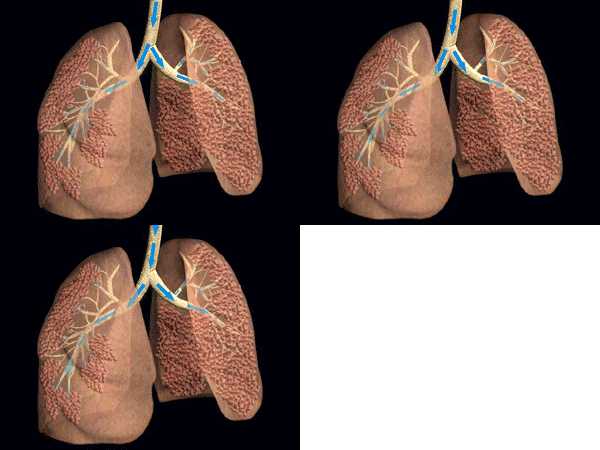 |
Our lungs provide oxygen that our blood needs and also allows for the exhaust of the carbon dioxide that we expend when our bodies use the blood. A natural process; we inhale oxygen from our environment through our nose and mouth. The oxygen travels down the trachea and is divided between the left and right bronchus. The bronchus branches off into, the smaller, bronchi and oxygen passes through these and on to the even smaller branches called the bronchioles. Attached to the bronchioles are little sacs called alveoli.
They kind of remind me of a bunch of grapes. I've removed a lot of them to show the general make up and function in the illustrations to the left.
To continue, in these sacs is where all the action happens. The oxygen is absorbed into the blood through a process that is too long and technical for me to explain. In turn, the oxygen releases its carbon dioxide into the sacs where it is immediately expelled back up through the maze of bronchi as we exhale.
This process goes on billions of times throughout our lives without us having to think about it. That is, until we start having trouble in the lungs and our lives are limited by our inability to breathe. |
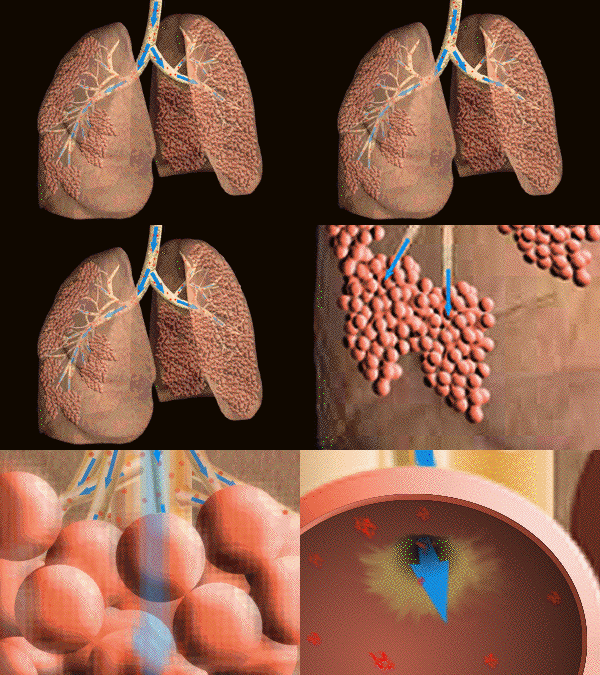 |
As we breathe, we not only take in oxygen, but we also take in our environment. Pollen, sawdust, car exhaust, dander, paint fumes and over-spray, raydon gases, hair sprays, perfumes, household cleansing fumes, tobacco smoke and the list goes on. Unfortunately, our bodies do not have a natural filtering device to keep out these and other pollutants.
So we take in the environment when we breathe. These pollutants (shown as red splotches) travel down with the oxygen (shown as the blue arrows). |
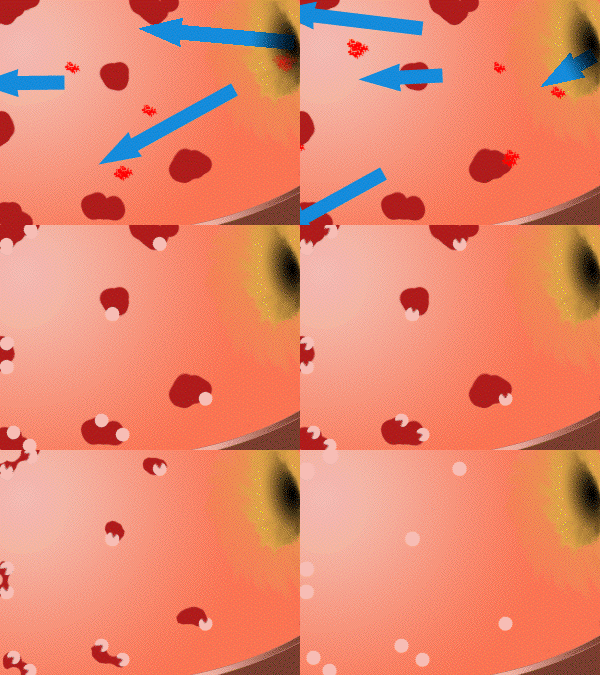 |
The lungs contain these sacs, as I mentioned before and these sacs stretch like millions of little balloons. Taking in what we breathe, expanding to collect as much as they can and then deflating to expell the poisonous carbon dioxide. The pollutants we bring into our lungs, whether voluntarily or involuntarily, become trapped in the lining of these sacs and begin to irritate and sometimes infect our lungs. The lungs natural defense against the irritants is a protein called elastase, which is released by the white blood cells. The elastase (shown as the white dots) attach themselves to the foreign material in the sac and consumes it as well as bacteria in the lungs. This cleansing process is automatic for a large percentage who have normal white blood cells. |
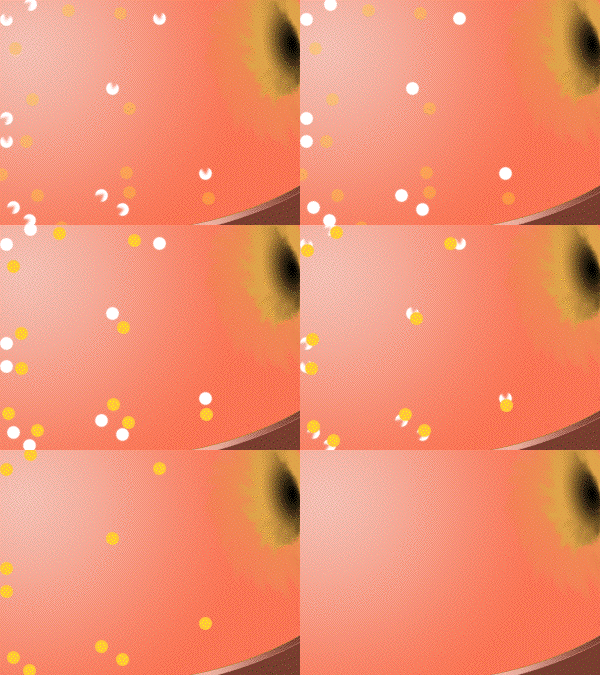 |
Once the lungs have been cleansed, the elastase needs to be chemically stopped. This is the job of the antitrypsin enzyme. Antitrypsin is produced within the cells of the liver. When called upon, the antitrypsin(shown as the yellow dots) locates and binds to the elastase deactivating it and rendering it inert (or dead). Once the elastase is completly consumed it is ejected from the lungs when we cough as sputum. This process goes on as long as our lungs require it. |
 |
Without the antitrypsin enzyme, the elastase continues to consume anything in its path, including healthy lung tissue. As this healthy lung (sac) tissue is destroyed, the once stretchy walls of the sac become stiff and enlarged with air. These enlarged sacs no longer have the ability to exchange oxygen and carbon dioxide with the bloodstream. It also becomes harder to breathe as each drawn breath enlarges the sacs the lungs poor elasticity causes the lungs not to deflate properly trapping air leading to over-inflation of the lungs. This is also known as emphysema. |