
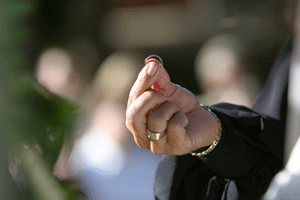

The traditional Jewish wedding is full of traditions and customs to express their culture and love of their faith.
The wedding ceremony begins with the traditional procession of the key wedding party members. To symbolize the importance of family involvement, instead of the bride walking down the aisle with her father, she is escorted by both sets of parents. One common piece of attire in a Jewish wedding is the yamulkes (a white-colored cap), which is worn by the rabbi, the groom, the groomsmen and Jewish male guests. The bride and groom recite their vows under the traditional huppah. Instead of an altar, attaching four poles under which the happy couple declares their love creates this canopy.
After the ceremony, there are still a number of traditions to be celebrated. By stomping on a piece of glass, the fragility of human happiness is being symbolized. The bride and groom are seated in their individual chair and lifted high off the ground over the joyful crowd of guests in the tradition called the hora (which is to symbolize that the bride and groom are the king and queen of the night). By holding on to either end of a handkerchief the bride and groom symbolize their loving union.
The day, which a Jewish wedding is to be held on, requires special consideration. Couples are not allowed to marry on the Sabbath day. Just as working and traveling on the day of Sabbath is frowned upon, so is the tradition of getting married. If a couple wants to celebrate their wedding on Rosh Hoshana either or both the wedding and/or religious celebration may not be given its well-deserved attention.