 |
|
|
|
|
|
|
|
|
|
|
|
|
|
|
|
|
|
|
|
|
|
|
|
|
|
|
|
|
|
|
|
|
|
|
|
|
|
|
|
|
|
|
|
|
|
|
|
|
|
|
|
|
Anorexia Nervosa |
|
|
|
 |
|
|
|
 |
|
|
|
This page is for those who have been unfortunate enough to have had their lives touched by anorexia. My hope is to give people an understanding of this disease, so please, keep an open mind while reading this page and also keep in mind that anorexics don't choose to be anorexic, it is out of their control and all they need is someone to help and try to undertand and listen to what they have to say. |
|
|
|
|
|
 |
|
|
|
|
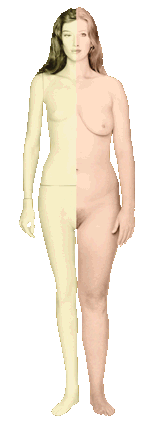
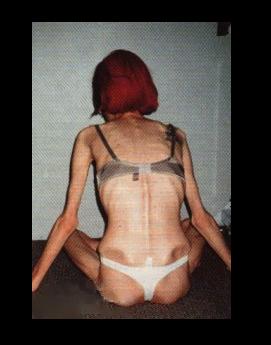
A good example of how anorexics view their bodies |
|
|
|
|
|
Definition of Anorexia: |
|
|
|
|
|
Anorexia is a progressive eating dissorder characterized by the inability to consistently maintain adequate body weight, and intense fear of becoming obese, and an unrealistic, negative body image. Despite an emaciated waif-like appearance, individuals with anorexia "feel fat" and continue to want to lose weight in order to feel more secure. In order to lose the weight, sufferers fast or eat very little. Their preoccupation with food and weight often masks other underlying phsycological problems. One half percent of teenage girls in the U.S. develop anorexia nervosa and up to 10% of those may die as a result. |
|
|
|
|
|
|
Characteristics: |
