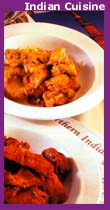
 Indian
cuisine in Penang today takes its influence primarily from Southern Indian
cuisine, although the Northern Indian influence is also quite evident.
Indian
cuisine in Penang today takes its influence primarily from Southern Indian
cuisine, although the Northern Indian influence is also quite evident.
Like their Chinese counterparts, the travels of Indian traders in the Southeast Asian region date back over a thousand years. The 19th century saw large arrivals of Indian migrants into Malaysia. Most were brought in to the country as contract labourers to work in the rubber estates, while others came to work on the railways. Many, too, came to open restaurants, textile shops and small sundry shops.
Indian
cuisine in Penang today takes its influence primarily from Southern Indian
cuisine, although the Northern Indian influence is also quite evident.
Northern Indian cuisine boasts of a diet rich in meat and uses spices and ingredients such as yoghurt and Ghee in dishes that are elaborate without being overly spicy. Furthermore, in Northern Indian meals, bread and chapati (wheat-flour pancakes) replaces rice, which is the centre of most Southern Indian meals. In Southern Indian cuisines, coconut milk, mustard seeds and chillies are widely used.
Indian vegetarian meals are also quite popular in Penang. The vegetarian dishes are cleverly spiced and often combined with coconut milk for extra flavour. Traditionally, an Indian vegetarian meal consists of a mound of rice, some dal, several spicy vegetable dishes, a glass of thin spicy rasam soup, hot sour pickle and yoghurt.
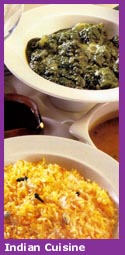 There
are also abundant shops offering nasi kandar, which is basically a combination
of Malay and Indian cuisines although the taste is more robust. This concept
came about when Nasi (rice) hawkers would previously kandar (balance a
pole on the shoulder with two huge containers on both ends) their wares.
There
are also abundant shops offering nasi kandar, which is basically a combination
of Malay and Indian cuisines although the taste is more robust. This concept
came about when Nasi (rice) hawkers would previously kandar (balance a
pole on the shoulder with two huge containers on both ends) their wares.
In Penang, there is an abundance of Indian restaurants and food stalls to whet your appetite. Traditionally, Indian meals are served on a thali, a circular metal tray on which are placed a number of small bowls called katori, also made from metal. Rice or bread is placed directly on the thali while curries and other dishes are served in the bowls. Food is eaten with the fingers. In Southern India, banana leaves are often used as plates where rice is served first in the centre, then various curries and accompaniments are placed around it. These accompaniments include dried fish, pappadams (lentil wafers) and fresh chutneys made from herbs, coconut, acid fruits and other ingredients.
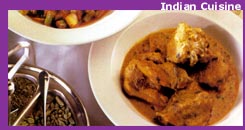 Tea
is the usual drink for every meal, served sweet and milky, or a yoghurt
drink called lassi Indian food is normally cooked in brass or aluminium
pots, while the Northern Indian tandoori dishes are cooked in a clay oven
called tandoori.
Tea
is the usual drink for every meal, served sweet and milky, or a yoghurt
drink called lassi Indian food is normally cooked in brass or aluminium
pots, while the Northern Indian tandoori dishes are cooked in a clay oven
called tandoori.
Spices are the soul of Indian cooking. These vary in quantity for Northern and Southern Indian dishes. Curry powder is almost never used and spices are freshly grounded each day and added to the food in many different combinations. Individual spices which are commonly used are coriander, turmeric, cumin, chilli), fennel and fenugreek. Other fragrant spices added are cardamom, clove and cinnamon.
Penang's Indian hawkers have created unique versions of local dishes, preparing foods which you would not find in India, like Indian mee goreng/ which combines fresh yellow Chinese noodles, beancurd, beansprout and dried shrimp paste. There is also the Indian curry puff, a pastry with a spicy potato fillings.
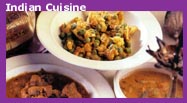 In
Penang, you will never tire of the different Indian cuisines offered on
this island. There are many good and popular Northern Indian restaurants
where you can dine in complete comfort, amidst pleasant surrounding which
depict the rich Indian culture. These restaurants offer moghul food which
are not as spicy as the Southern Indian fare.
In
Penang, you will never tire of the different Indian cuisines offered on
this island. There are many good and popular Northern Indian restaurants
where you can dine in complete comfort, amidst pleasant surrounding which
depict the rich Indian culture. These restaurants offer moghul food which
are not as spicy as the Southern Indian fare.
Bread is the mainstay of most meals in Northern Indian restaurants, so most menus at these restaurants offer a wide variety of breads. Nann (leavened bread with poppy seeds) is a popular choice. The bread dough is rolled out and then slapped on the inside of the tandoori, near the top where it cooks very quickly in the fierce heat. It is then flavoured with onion or garlic. Paratha, meanwhile, is rich, flaky and flavoured with ghee. It can be eaten as an accompaniment or by itself, filled with potatoes and peas. Chapati is also unleavened bread. It resembles flat discs and has a delightful flavour and chewy texture.
For the main course, tandoori dishes are the most
popular in Northern Indian restaurants. Tandoori chicken is always a favourite,
where a whole baby chicken or chicken quarters are roasted in the clay
oven for several hours in advance and then finished off on the barbecue