| |
Heroes And
Mythology
If you happen to be the perfect
home maker living in New York City who loves
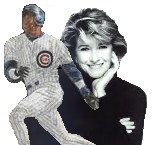
baseball, then it hasn't been a very good couple
of weeks for you: Martha Stewart was indicted for
obstructing justice, the New York Times printed
fabricated stories, and Sammy Sosa got caught
cheating at the plate. These are giants of their
industries, icons to countless millions, wealthy
beyond reason...and they let their followers
down. As it turns out, they are as flawed as the
rest of us, and probably even more vulnerable to
internal demons. So what else is new?
Mankind
has been engaged in hero-worship since time
immemorial, and from beginning to end it's been a
load of rubbish. The ancient Greeks at least had
the good sense to make their champions mythical,
so as to bestow them with attributes and ideals
that wouldn't be compromised by mortal weakness.
Anything more is illogical and far less
instructive, and the Greeks were nothing if not
instructive. The lesson this teaches is that
ideals should be embraced but not assigned, at
least not in a mortal context. What is gained
when heroes fall far short of expectations,
resulting in disappointment, disallusionment and
discust? Who does that benefit, and towards what
end? It suggests that we're frail, insecure
little creatures who find comfort and refuge in
the accomplishments of those we perceive to be
greater than ourselves; we live vicariously
through them, hoping to gain insight and strength
from their example, consequently setting
ourselves up for a fall when they stumble. It
says volumes about our need for
bigger-than-life heroes to provide answers to the
questions that we ourselves not only can't
answer, but don't even know how to ask. And it
says we're looking for these answers in the wrong
places.
None of this should
come as a surprise. In an era of relativism that
values celebrity over substance, where cultural
revisionism keeps moving the goal posts, and
"experts" on everything babble on and
on without any more of a clue about anything than
anyone else, it's no wonder we're confused about
whom, and what, to believe. Absolutes no longer
seem so absolute, nor heroes so heroic.
I interpret these
events as the metastisizing of a malignant value
system, whereby our heroes are turned against us.
Our need for guidance is tempered by a desire for
cultural convenience and metaphysical expedience,
so as not to upset our worship of the superficial
and inconsequential. We want to be fulfilled, but
don't want to do the heavy lifting required, so
we ask others to do the work for us. We project
unto them ideals to which we ourselves don't
aspire, then are dismayed when they turn out to
be as non-ideological as the rest of us. Not only
are our hopes and trust dashed as a result, but
the very ideals themselves seem diminished.
We require more of
our heroes than of ourselves, and therein lies
the problem. Those we elevate above all others
should be every bit as much a reflection of who
we actually are as who we want to be. But that's
not the case. The differential in American
society now is such that as long as our icons are
excellent, then the rest of us can embrace
mendacity and mediocrity, because that's much
easier. But when heroes fail under the weight of
an unrealistic load, rather than blame them, we
should blame ourselves for being hypocrites.
The Greeks avoided
this trap by taking human frailty out of the
equation, thereby assuring that the
representatives of their ideals would remain
steadfast, unswerving and absolute. This would
appear to be a much better way of teaching
classical truths, while keeping heroes honest.
After all, did you ever hear of Ullyses getting
caught corking his bat...?
|
|