
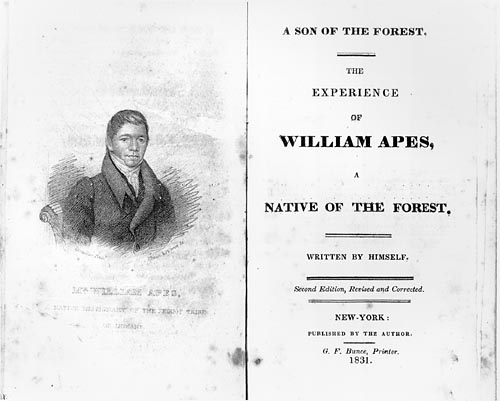
Apes interactions with the white settlers began when he was very young. When Apes was 3 years old his parents separated and he was sent to live with his maternal grandparents to live (Apes 120). While he was living with his grandparents he was beaten badly by his grandmother on several occasions. The most severe beating occurred when he was six years old. His grandmother came home from selling her baskets to the white settlers and proceeded to beat him so badly that his arm was broken in three places. Apes forgives her for this because he believes it is the white man�s fault that she behaved the way she did. His grandmother drank excessively and only beat him when she was drunk (Apes 121). Though she hurt him physically, Apes did not blame her for her drunkenness. However, an uncle who lived in the house with Apes and his grandparents petitioned the town to take Apes as a ward of the town (O�Connell xxx).
He was sent to live with the Furmans, a white family that lived down the street. It was here that he was sent to school for �six winters� and, presumably, learned the basics of the English language. The Furmans also introduced him to religion and allowed Apes to go to Methodist meetings. Apes began to be �inquisitive of many things� which is indicative that he had a passion for learning and religion (Apes 123). The Furman family sold him to another family when he was eleven years old. Apes felt that he was �alone in the world, fatherless, motherless, and helpless, as it were, and none to speak for the poor little Indian boy� (Apes 125). He had been living with one family and then another and he needed stability. His new family, the Hillhouse�s, did not want Apes to continue going to the Methodist meetings that he had become accustomed to since being introduced to religion by the Furmans. They also discontinued his schooling at the age of 11. Apes was soon sold again to another family as an indentured servant. This family, the Williams�s, treated Apes the same way the Hillhouse�s did and Apes resolved to run away (O�Connell xxxii).
Though Apes was only 11 � when he ran away he proceeded to have an addiction to rum. He often fell from the path of God and drank rum to make the pain of living go away (Apes 125). When he was approximately 20 yrs old he began to long for his home again. He traveled back to Massachussets and lived with his father. At this time he began to become acquainted with his brethren, the Pequot Indians.
The Pequots are a tribe of Indians from the New England area that had been forbidden to speak their name again under the Treaty of Hartford in 1638. They were not allowed to return to their homelands. The tribe had legally lost their identity and struggled for centuries until in 1983 they were again recognized under the law.
William Apes was a part of this tribe that had lost their identity. He was a part of a group that was despised by many and thought to be inferior to the white race. There were those white people who believed that the Indians had �no soul to save� (Apes 119).
Next Page
