|
|
|
|
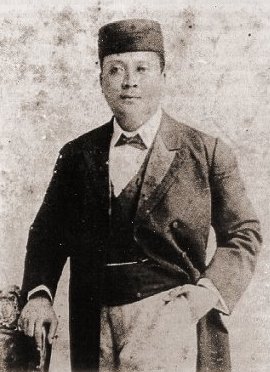
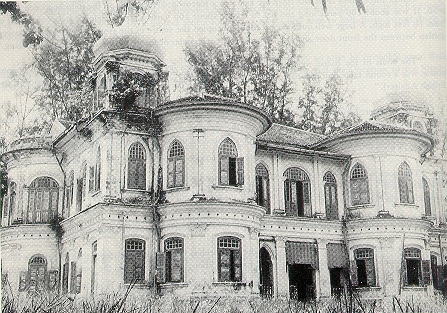
On crossing the Kedah river early in the mornings by Sampan (a wooden, two oared boat), I would, on many occasions, glanced at the distant horizon on my right. There, behind the fringe of tall Nipah palms, one could make out the tower of Tunku Aziz's country house standing tall and aloof in the morning light. The sight, as I remember, was personally very captivating and made me wonder about it's more glorious past when occupied by the Regent. In the 60's and 70's, the house was long abondoned and neglected. I remember making a few visits in the 70's, entering the enclosed compound where tall Cashuarina trees grew. The cones from the trees littered the pathway leading to the porch. There were a few female workers tending to the grounds, though I did not fully comprehend the nature of their tasks. As far as I remember, the compound at the front of the House was not grassed. The air was pleasantly quiet, almost restful. At times, a light breeze from the river would sway the branches of the tall trees emiting a soft rustling and sending more cones down onto the pathway. The main entrance was a heavy wooden door with a glass panel above it painted in proud letters the word PUMPOONG. The artwork was excuisite. Sadly, the house was torn down, if I am not mistaken, in the late 70's or early 80's. The above photograph taken from a book entitled "Bygone Kedah" depicts the rear. The book itself was recently acquired when I was back in Alor Setar for the Eid celebration. It also contains a description of Alor Setar by a French Missionary, Father Page, who visited the town in 1883. Here's an excerpt that pertains to the Tunku's house : "They told me the Sultan had a more beautiful country house farther up the same road. We immediately walked in the direction indicated and soon arrived at the gate of a garden behind an unusually high wall. We were told that it was the Regent's house." "This park was larger than the first. It's rear, fenced with wood, abutted on the river on the banks of which stood a pretty well constructed pavilion. The land around it, however, consisted of sterile sand on which it was impossible to grow plants." "So the
Regent had beautified it by turning it into a 'forest' of flowers in huge
Chinese
flower pots."
|