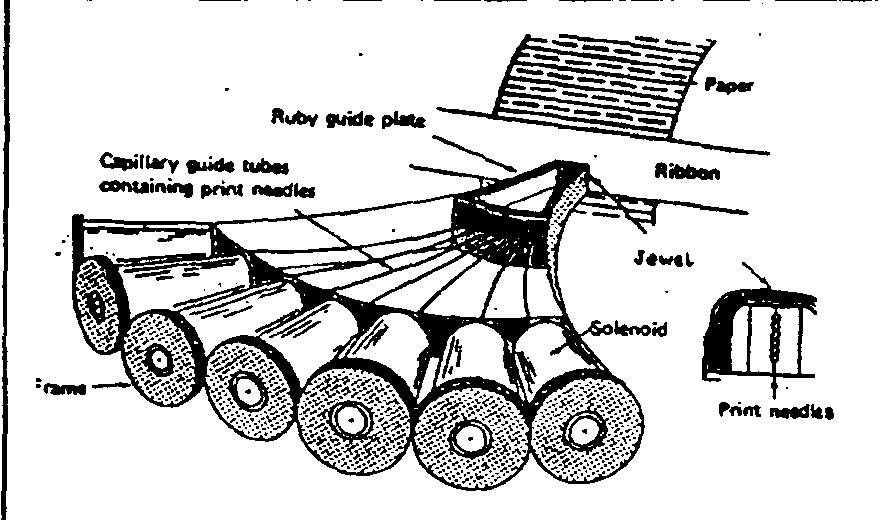
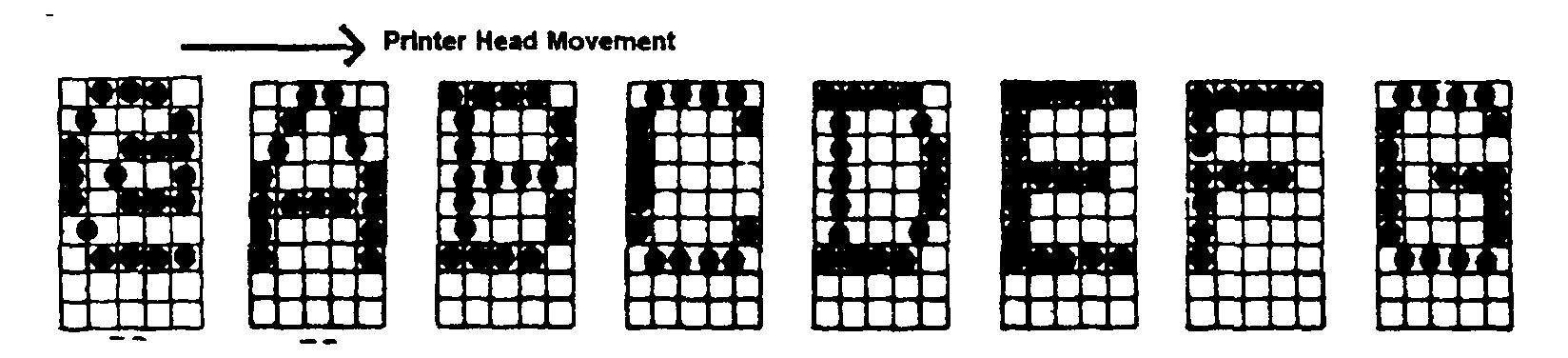
A dot-matrix has a set of 9 pins or needles set vertically in the printer head. When a character is to be printed, the single or group of pins are fired through the printer ribbon hitting the paper and leaving an impression. Different pins are fired in 9 different location going across the page to form a character. For example the word DotMatrix will be formed as follows. For Near Letter Quality (NLQ) print the latest dot-matrix printer will contain 24 pins in the printer head.
Inkjet / Bubblejet
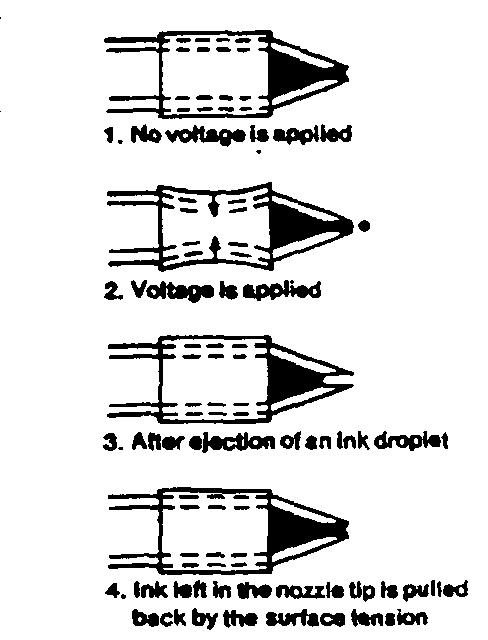
Inkjets and bubblejet printers use the same principle that a blob of ink is fired through a nozzle onto the paper, however the way the ink is ejected is done in two different ways. Inkjet fires the ink by applying a electrical current through a piezoelectric transducer which squeezes the tube , forcing the ink out of the nozzle. The bubblejet on the otherhand heats up a plate set in the printer tube, which boils the ink and caused a bubble to form in the tube. This m turn forces the ink out through the nozzle. The orifice of the printer nozzle is only 0.065mm wide and can easily clog up if not regularly cleaned and the printer head is not kept in its home position. Nb: This is normally done when the printer is switched on.
 |
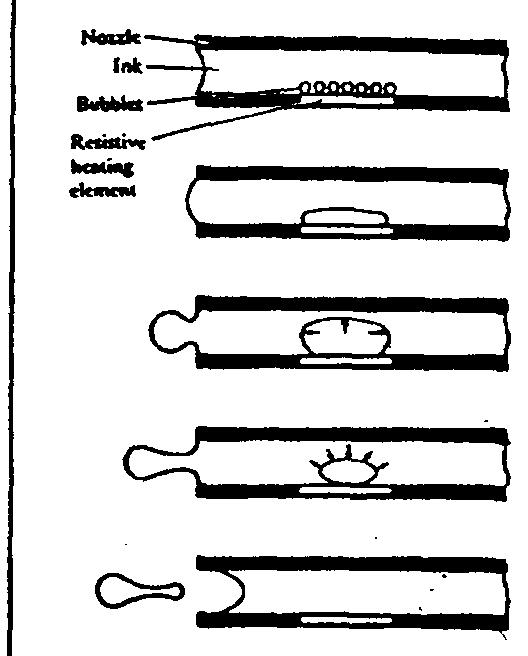 |
| Inkjet Mechanism | Bubblejet Mechanism |
Laserjet
The process of a Laser printer is set in FIVE stages:
- CHARGE
- EXPOSURE
- DEVELOPMENT
- TRANSFER
- FUSING
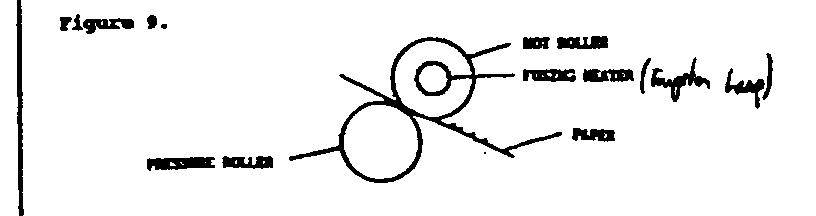
For the toner to be applied to the paper, an OPC (Organic Photoconductor) belt is first negatively CHARGED by passing under a charged corona wire. The belt then passes under the laser which exposes light onto the OPC belt. This ineffect discharges the EXPOSED part of the OPC belt, leaving the rest of the OPC negatively charges and causing a positive imprint on the belt. Toner is a mixture of resin and iron fillings so is magnetically attracted to the negatively charged OPC belt. The toner is then TRANSFERRED from the OPC belt onto the paper by the paper passing in between the OPC belt and another negatively charger corona wire. The toner transfers from the OPC belt onto the paper. Once on the paper the FUSER unit fixes the toner permanently to the paper by heating the paper to a high temperature- Any excess toner on the OPC belt is collect in a reservoir toner tank before starting the whole process over again.
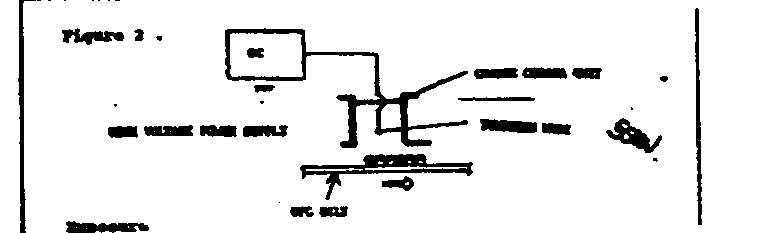 1. Charged |
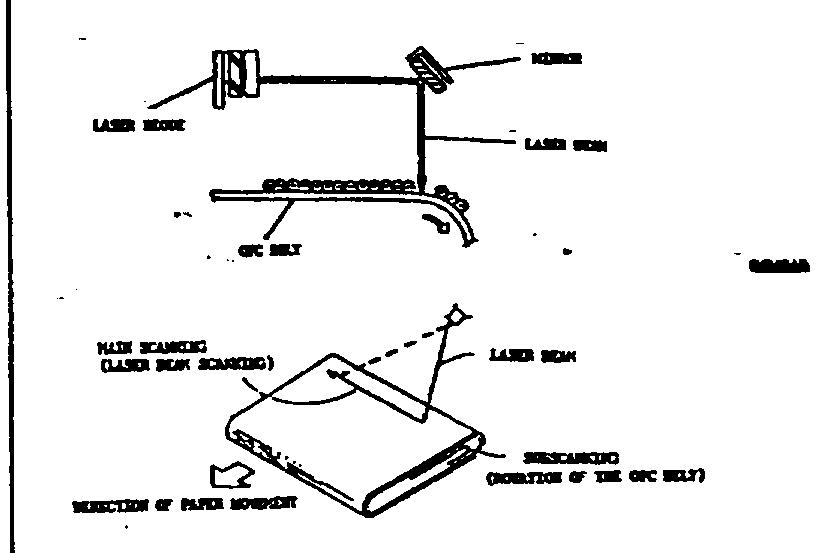 2. Exposure |
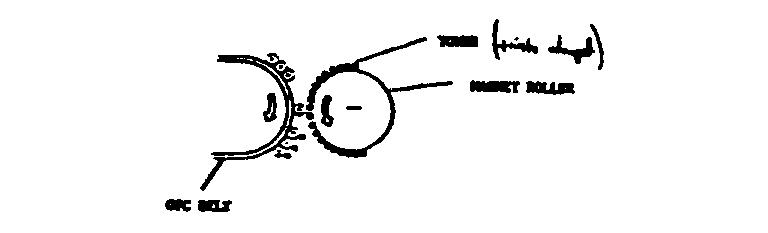 3. Development |
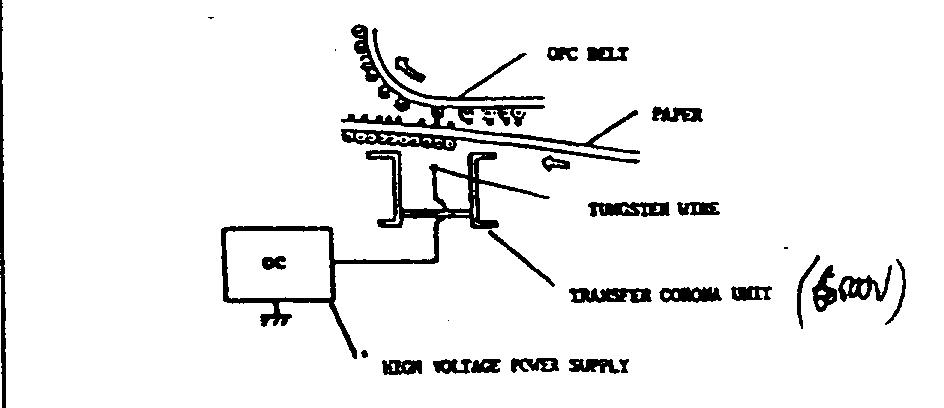 4. Transfer |
 5. Fuser |
|
Thermal Wax
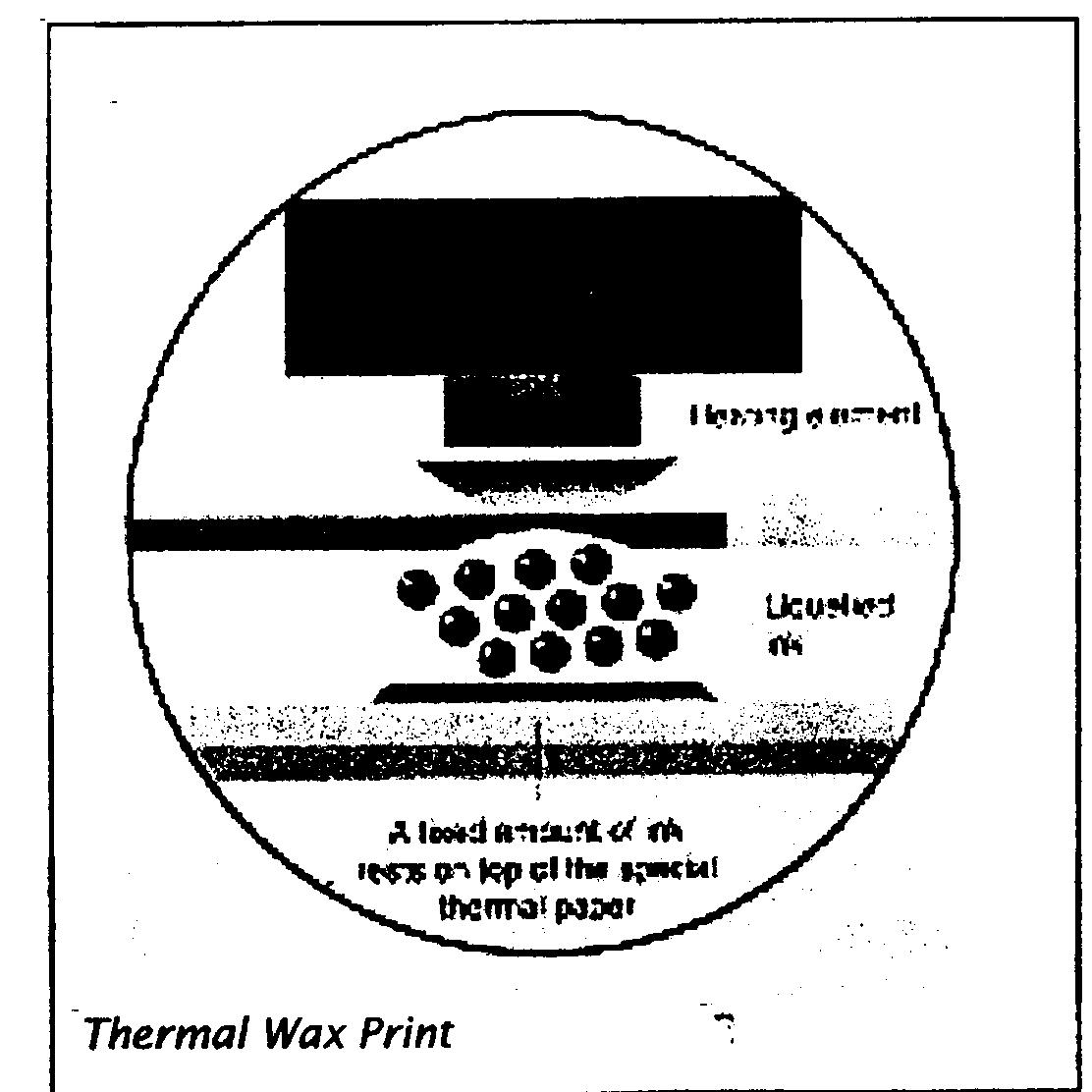
Thermal Wax transfer the solid wax onto the paper by pressing a special heat-sensitive thermographic paper together with a waxcoated ribbon coated in different coloured waxes (Cyan, Magenta, Yellow, Black). A printer head with a matrix of heating elements moves over the ribbon, melting the wax which caused it to adhere to the paper. To create a full colour image, each colour must pass over the paper in sequence so ineffect the printer head passes over the paper four times (once for each colour).
Dye Sublimation
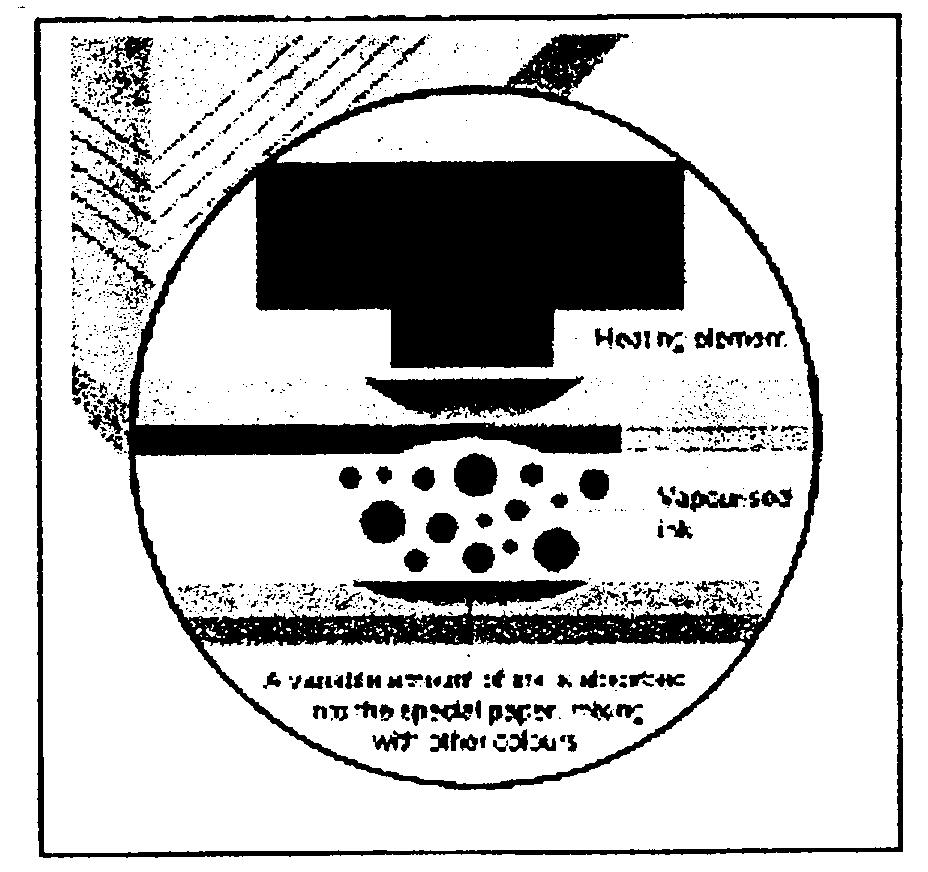
The process is very similar to the Thermal Wax method of printing but the printer ribbon has ink that is vapourised as the printer head passes over it The time the printer head spends heating the ribbon allows a greater control over how much ink is transferred to the paper than the thermal wax method. The special paper is almost photographic paper thickness so not ideal for printing reports.
Summary
| Printer | Paper | Print Quality | Cost |
| Dot-Matrix | Fanfold, A3, A4 | * | <£100 |
| Inkjet / Bubblejet | A4, A3 | *** | <£150 |
| Laser | A4, A3 | **** | Approx £300 |
| Thermal Wax | Special A4 | *** | Approx £600 |
| Dye Sublimation | Special A4 | ***** | Approx £1,000 |