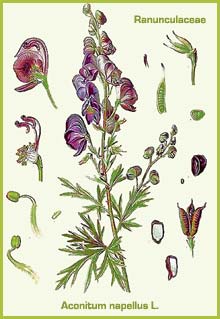
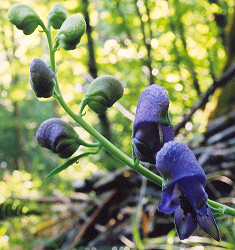
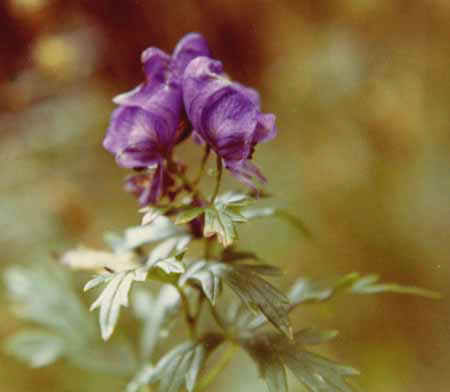
| Aconite, is the name of a group of plants that thrive in cool, northern regions and they are perrenials, meaning they can live for more than two years. There are more than 100 species most of which grow in Asia. Aconite flowers bloom in spring and summer and range in color from purple-blue to yellow and white and grow anywhere from 1-6 ft in height. The upper parts of the flowers resemble hoods or helmets, which is why some also call it Monkshood. Because it resembles a Monk's hood! |
| Historically, Aconite was used in extremely small doses to relieve nerve and muscle pain, rheumatic and arthritic complaints, migraine headache, fever, facial paralysis, and bruises. However, this herb is a very deadly poison and is now only rarely used as safer potions and remedies have now been developed. |
| Another common name for Aconite is Wolfsbane. The name Wolfsbane derives from an old muggle superstition that the plant repelled werewolves. For once the muggles were on the right track... Certain species of Aconite(Wolfsbane) are used in the Wolfsbane Potion, which is said to, if brewed correctly, reduce the dementia that occurs in werewolves on a full moon and if taken correctly can also prevent the transformation into the creature form. |
 |
| HOMEWORK |
| 1. What are the other two names for Aconite? 2. List 4 reasons that Aconite was historically used for. 3. Explain why Aconite is also called these two other names. 4. Where is Aconite most commonly found? 5. How high does the plant reach and what colors are its flowers? 6. Is Aconite an Annual or a Perrenial? 7. What potion is Aconite still used for and what does this potion do? |
 |
 |
| E-Owl me your homework |
| Return to the Lessons Page. |
| Lesson 2 |
 |
 |
 |
 |