...TERROR NEWS...

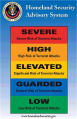
WELCOME TO THE KC9CLR DAILY TERROR NEWS PAGE... TERROR ALERT <<< ELEVATED >>>


TERROR ALERT 


TERROR ALERT- <<< YELLOW ELEVATED >>> - ...KC9CLR TERROR NEWS...    


NEW NEWS ON KC9CLR TERROR NEWS!!! TERROR NEWS FOR MONDAY MAY 8TH 2006 - 5/8/06

Bush says fight against terror is 'World War III'

US President George W. Bush said the September 11 revolt of passengers against their hijackers on board Flight 93 had struck the first blow of "World War III." In an interview with the financial news network CNBC, Bush said he had yet to see the recently released film of the uprising, a dramatic portrayal of events on the United Airlines plane before it crashed in a Pennsylvania field. But he said he agreed with the description of David Beamer, whose son Todd died in the crash, who in a Wall Street Journal commentary last month called it "our first successful counter-attack in our homeland in this new global war -- World War III". Bush said: "I believe that. I believe that it was the first counter-attack to World War III. "It was, it was unbelievably heroic of those folks on the airplane to recognize the danger and save lives," he said. Flight 93 crashed on the morning of September 11, 2001, killing the 33 passengers, seven crew members and four hijackers, after passengers stormed the cockpit and battled the hijackers for control of the aircraft. The president has repeatedly praised the heroism of the passengers in fighting back and so launching the first blow of what he usually calls the "war on terror". In 2002, then-White House spokesman Ari Fleischer explicitly declined to call the hunt for Osama bin Laden's Al-Qaeda group and its followers "World War III." - 5/6/06 - http://www.breitbart.com/news/2006/05/05/060505220719.qnjzncm8.html


"666" sense: Date marked with caution 6/6/06

- A NOTE FROM ZACH. I HAVE BEEN SAYING FOR YEARS THAT SOMETHING WIERD ABOUT 6/6/06 I HAVE BEEN DREADING THIS DAY FOR YEARS. AND NOW HERES SOME FUEL FOR THE FIRE! - - DENVERPOST.COM - 5/3/06 -


While some say June 6, 2006, is a day to fear for its biblical significance, officials see little to dread. By Howard Pankratz Denver Post Staff Writer With June 6, 2006, rapidly approaching, authorities in Colorado and elsewhere are carefully watching to see if that date - 6/6/06 - spurs demonstrations or violent activity. They are aware that 666 signifies the Mark of the Beast or the Antichrist to some organizations and believe June 6 is a date that could trigger problems. "It's been a conscious question among some of our folks, so they've been on the lookout for something," said Lance Clem, spokesman for the Colorado Department of Public Safety. "But they haven't seen anything." Even so, some local police are being vigilant. "The bottom line is that our intelligence unit is familiar with 666 and its significance, but we don't have any information about anything taking place in Colorado Springs," said Lt. Rafael Cintron of the Colorado Springs Police Department. "However, we are certainly keeping our feelers out to see if anything is happening." Some dates and anniversaries can be calls to action for white supremacists, racists, and conspiracy and prophecy theorists. April 19, for example, is the anniversary of the raid on the Branch Davidian compound in Waco, Texas; the Oklahoma City bombing; and the raid on white separatist Randy Weaver's home at Ruby Ridge, Idaho. The Number of the Beast, 666, is mentioned in the Bible's book of Revelation and is believed by some to be when the Antichrist will exercise power over Earth. The Internet is full of websites that predict terrible things could happen June 6. One website warns that the "Bible Code says 2006 A.D. is the Year of the Beast" and predicts that the Antichrist will reveal himself. It also says there may be a holy war against Israel and that the United States and Russia would be drawn into a dangerous conflict as a result. Several major law enforcement agencies in the Denver metro area have seen no signs of trouble and aren't planning to beef up manpower. Since 1970, there have been 60 terrorist attacks on June 6, with just one in the U.S., according to the Memorial Institute for the Prevention of Terrorism in Oklahoma City. Chip Ellis, the institute's research and program coordinator, said he has seen nothing to indicate anything bad will happen June 6. If something does develop, Ellis does not believe it would necessarily involve neo-Nazi, white- supremacist types. Rather it could be "anarchists and anti-globalists" who are tied into the counterculture and relish "the chance to stick their thumb in the eye of the establishment," he said. Laird Wilcox, a Kansas-based expert on domestic extremist groups, believes dates can be overemphasized. He cites in particular the concern about the year 2000. "What I see happening is something like the millennium controversy where everybody was talking about it and then nothing happened," he said. "I think this has occurred on every anniversary. Everybody anticipates some catastrophe, and nothing ever occurs." But Kerry Noble, a Texas businessman whose life has changed dramatically since the days he was second in command of a paramilitary religious group known as the Covenant, the Sword and the Arm of the Lord, said June 6 carries much significance to fringe groups that may be looking to make a statement. "Numbers are important in the movement," Noble said. "So anything you could interpret as being symbolic would be even more important. So a symbolic date like June 6 of this year, being 666, would have the equivalence of a 9/11 date or an April 19 date." Staff writer Howard Pankratz can be reached at 303-820-1939 or [email protected].


Electromagnetic Pulse


June 9, 2005
comments made by Rep. Bartlett of Maryland

The SPEAKER pro tempore (Mr. Mack). Under the Speaker's announced policy of January 4, 2005, the gentleman from Maryland (Mr. Bartlett) is recognized for 60 minutes.

Mr. BARTLETT of Maryland. Mr. Speaker, the subject that I want to spend a few moments talking about this afternoon really began for our country in 1962. We were still testing nuclear weapons then, and for the first time the United States tested a weapon above the atmosphere.

This weapon was detonated over Johnston Island in the Pacific. This was a part of a series of tests called the Fishbowl Series, and this was Operation Starfish in 1962. We had no prior experience with the detonation of a weapon above the atmosphere. We prepared for this test with airplanes and ships using radar and theodelites and instrumentation to measure the effects on the ground from a blast that was some 400 kilometers in altitude.

In conversations just today with Dr. Lowell Wood from Lawrence Livermore Laboratory, I learned more of the details of the results of that test. They had not anticipated the magnitude of the effects at the ground under the blast; so many of their instruments simply pegged and they were not able to get a clear indication of the effects. I might note that the Soviets had extensive testing experience with EMP over their own territory. They had a much larger territory than we and some of it quite remote; so they were able to instrument more extensively and had a lot more experience than we have had. This was our first and only experience with a superatmospheric detonation of a nuclear weapon.

The effects over Hawaii, which was about 800 miles away, included several totally unexpected things; so there was no instrumentation on Hawaii to record the effects.

So all they can divine from the effects is what happened. Some street lights went out, and analysis after the fact indicated that these were the street lights that were oriented so that there was a very long line effect. In other words, the wires feeding the street lights constituted a very long antenna which received the signals from the detonation in space such that there was arcing and some of the street lights went out. This was investigated, and some of the failures were retained and were shown to a commission that I will talk about in a few minutes, Mr.

Speaker, that spent 2 years studying these effects and the risk to our military and to our country.

There were other effects in communications and so forth. As I said, none of this was expected; so there was no instrumentation. We have since tried to determine the effects of what is called electromagnetic pulse produced by a nuclear detonation. We have done that with laboratory devices, some of them quite large that could expose a whole airplane, but none of them obviously large enough to include miles and miles of long-line effect.

The EMP pulse at that distance was estimated to be about five kilovolts per meter. We will have occasion in a little bit to talk about that in light of present capabilities. Because there was intense activity above the atmosphere, the Van Allen belts were pumped up; so there were a number of low Earth orbit satellites that decayed very rapidly as they passed through the Van Allen belts.

Mr. Speaker, I want to kind of put what we are going to say in context. So I want to indicate here some of the seriousness of EMP and its implications. In 1999, I sat in a hotel room in Vienna, Austria. I was there with 10 other Members of Congress and several staff members.

We had there three members of the Russian Duma and a representative of Slobodan Milosevic. This was just prior to the resolution of the Kosovo conflict. We developed with them a framework agreement that was adopted about 5 days later by the G-8, which the Members may remember ended the Kosovo conflict.

One of the members of the Russian Duma was Vladimir Lukin, who was well known to this country because he was the ambassador here at the end of Bush I and the beginning of the Clinton administration. At that time he was a very senior member of the Russian Duma. He was very angry and sat for 2 days in that hotel room with his arms crossed looking at the ceiling. We had not early asked the Russians for help and they felt offended about that, and the statement he made expressing that sentiment was that ``you spit on us. Now why should we help you?'' And then he made a statement that stunned us. The leader of that delegation was the gentleman from Pennsylvania (Mr. *Weldon*), who speaks and understands some Russian. And when Vladimir Lukin was speaking, he turned to me and he said, ``Did you hear what he said?'' Of course I heard what he said, but I did not understand it because I do not understand Russian.

But then it was translated, and this is what he said: ``If we really wanted to hurt you with no fear of retaliation, we would launch an SLBM,'' which if it was launched in a submarine at sea, we really would not know for certain where it came from. ``We would launch an SLBM, we would detonate a nuclear weapon high above your country, and we would shut down your power grid and your communications for 6 months or so.''

The third-ranking communist was there in the country. His name is Alexander Shurbanov, and he smiled and said, ``And if one weapon would not do it, we have some spares.'' I think the number of those spares now is something like 6,000 weapons.

This likely consequence of a high-altitude nuclear burst was corroborated by Dr. Lowell Wood, who in a field hearing at the Johns Hopkins University applied physics laboratory, made the observation that a burst like this above our atmosphere creating this electromagnetic pulse would be like a giant continental time machine turning us back to the technology of 100 years ago. It is very obvious that the population of today in its distribution could not be supported by the technology of 100 years ago. And I asked Dr. Wood, I said, ``Dr.

Wood, clearly the technology of 100 years ago could not support our present population in its distribution,'' and his unemotional response was, ``Yes, I know. The population will shrink until it can be supported by the technology.'' Just a word, Mr. Speaker, about what this EMP is. It is very much like a really giant solar storm. All of us are familiar with solar storms and with the disruption to our communication systems. And this is like a really giant solar storm. It is kind of like really intense static electricity everywhere all at once, all over the whole country.

It

[[Page H4341]]

is sort of like a lightning strike that is not just isolated to one spot. Different than a lightning strike in terms of the intensities and so forth and the spectrum, but it would be everywhere all at once over a very large area.

I have here in front of me the report, and I will have occasion to refer to that again a little later, the report of the Commission to Assess the Threat to the United States from Electromagnetic Pulse (EMP) Attack. This is the executive summary. The report itself is very thick and there is a big classified addendum to the big report. And I just want to turn to one page here, and this is page 4, and it says: ``What is significant about an EMP attack is that one or a few high-altitude nuclear detonations can produce EMP effects that can potentially disrupt or damage electronic and electrical systems over much of the United States virtually simultaneously at a time determined by an adversary.'' I talked a little bit about what EMP is. It produces a large number of Compton electrons above our atmosphere which are trapped by the magnetic fields around the Earth. They move at the speed of light. The prompt effects are such that if the voltage is high enough, all electronic equipment within line of sight is damaged or destroyed.

These are called prompt effects. And, of course, satellites are very soft because it costs about $10,000 a pound to launch a satellite; so they do not launch a lot of hardening on the satellite if they do not need to.

So all of the satellites within line of sight would be taken out by prompt effects. It would not go so high, by the way, as the satellites that are 22,500 miles above the Earth. And it would pump up the Van Allen belts so that satellites that were not in line of sight would die very quickly and one could not reconstitute the satellite network by launching new ones because they also would die quickly.

Let me show a chart here that shows the effects of this bomb exploding over the United States, and this shows a single weapon. This shows a single weapon detonated at the northwest corner of Iowa, and it shows it at about 600 kilometers high, and this would blanket all of the United States. And the concentric circles here, not true circles because there is a little distortion of the electrical fields by the magnetic waves around the Earth, but these represent the intensity of the field that is produced by this. At the center we can see it is 100 percent. But even out at the margins of our country, it is down to 50 percent.

Now, a little later I will show a statement from some Russian generals that were reviewed by the people who put together this report, and they said that the Russians had developed weapons that produced 200 kilovolts per meter. Remember, the effects in Hawaii were judged to be the result of five kilovolts per meter. So this is a force about 200 times higher. The Russian generals said that they believed that to be several times higher than the hardening that we had provided for our military platforms that they could resist EMP.

Others know about EMP. I did not want anybody to believe that we were letting the genie out of the bottle and others did not know about that.

I mentioned earlier the statement by Vladimir Lukin, the Russian member of their Duma, and this is the statement that I referred to here, and that was in May 2, 1999: ``Chinese military writings described EMP as the key to victory and described scenarios where EMP is used against U.S. aircraft carriers in the conflict over Taiwan.'' So it is not like our potential enemies do not know that this exists. The Soviets had very wide experience with this, and there is a lot of information in the public domain relative to this.

``A survey of worldwide military and scientific literature sponsored by the commission,'' that is the commission that wrote this report, ``found widespread knowledge about EMP and its potential military utility including in Taiwan, Israel, Egypt, India, Pakistan, Iran, and North Korea.

{time} 1645

Terrorist information warfare includes using the technology of directed energy weapons. These are little weapons that produce an EMP- like effect, but over a very much more restricted area, and also electromagnetic pulse produced from nuclear weapons.

By the way, an enemy no more sophisticated than Saddam Hussein would need no more than a tramp steamer, a Scud missile and a crude nuclear weapon like is probably available in North Korea or might be bought or stolen from some Russian source. That would not shut down the whole United States, because the Scud missile could not carry it high enough, but it would certainly shut down the whole Northeast.

By the way, this is not like the Northeast blackout that we had a couple of years ago. This would produce damage that you would not recover from simply by turning a switch. It would probably destroy large transformers. These very large transformers are made to order, and if you need one, they will build you one, not in this country, we do not build the big ones anymore, they will build you one over in Europe or Scandinavia, and it will take maybe a year-and-a-half to 2 years to get it. So it is not like you are going to recover from this tomorrow.

Iran has tested launching of a Scud missile from a surface vessel, a launch mode that could support a national or transnational EMP attack against the United States.

We have a second chart which shows more of the evidence that potential enemies out there know that this is a potential weapon.

``If the world's industrial countries fail to devise effective ways to defend themselves against dangerous electronic assaults, then they will disintegrate within a few years. 150,000 computers belong to the U.S. Army. If the enemy forces succeed in infiltrating the information network of the U.S. Army, then the whole organization would collapse, the American soldiers could not find food to eat, nor would they be able to fire a single shot.'' I kind of think they would be able to find food to eat. This is from an Iranian journal, so you know they know about this and they are thinking about this.

``Terrorist information warfare includes using the technology of directed energy weapons, magnetic pulse.'' I referred to that earlier.

Iran has conducted tests with its Shahab-3 missile that have been described as failures by the Western media because the missiles did not complete their ballistic trajectories, but were deliberately exploded at high altitude. This, of course, would be exactly what you would want to do if you were going to use an EMP weapon.

Today we are very much concerned, Mr. Speaker, about asymmetric weapons. We are a big, powerful country. Nobody can contend with us shoulder-to-shoulder, face-to-face. So all of our potential adversaries are looking for what we refer to as asymmetric weapons. That is a weapon that overcomes our superior capabilities. There is no asymmetric weapon that has anywhere near the potential of EMP.

Iran described these tests as successful. We said they were a failure because they blew up in flight. They described them as successful. Of course, they would be, if Iran's intent was practicing for an EMP attack.

Iran's Shahab-3 is a medium-range mobile missile that could be driven on to a freighter and transported to a point near the United States for an EMP attack. I might state that an early use of EMP is a common occurrence in Russia and Chinese war games.

I just would like to spend a moment or two talking about kind of the history of how we got here and why the big concern about EMP and the risk that it poses to us. I mentioned Operation Starfish in 1962.

Then we really had a scary event which we did not know about for quite some time that happened in 1995 when there was a Norwegian weather rocket that was set off. The Norwegians had told the Russians that they were going to fire this weapon, but that did not get to the proper level. When the weapon was fired, it was interpreted by the Russians as a potential first strike of the United States against them and they had alerted their nuclear missile response. They came very close to launching that, and we did not know about that until some time after.

In 1997 I had a very interesting experience. I am on the Committee on Armed Services. This was during the Clinton administration, and he had set up a Commission on Critical Infrastructure. General Marsh, retired, was

[[Page H4342]]

chairing that Commission on Critical Infrastructure. This was infrastructure that was so critical that if an enemy could take it out, we would be very much disadvantaged by it. I asked him about EMP, had they looked at that? His answer was, yes, they looked at it.

Well? He said, well, we did not think there was a high probability that would happen, so we did not continue to look at it anymore.

I told him, gee, with that attitude, if you have not already, I am sure when you go home tonight you are going to cancel the fire insurance on your home.

What one needs when there is the potential for a very high-impact, low-probability event, is what we call insurance. I think that every American citizen has the right to ask their government, have you made the proper insurance investment to protect me, to protect my country, in the event, which we hope is not a high probability, in the event that there is an EMP attack against our country? Your home burning, by the way, is not a high probability event. You may have a $300,000 home and it may cost you $300 for fire insurance for the year. So you can do the simple arithmetic that tells you the insurance company does not expect very many homes to burn that year.

Then the next event in this little timeline was my trip to Vienna, Austria, when I met there in that hotel room with Members of the Russian Duma. In 2001 we had some tests at Aberdeen with a device that was made using only the equipment that a terrorist might buy from Radio Shack or a place like that to see if you could put together a directed energy weapon, a weapon, by the way, that if sophisticated enough one might drive down Wall Street and take out all the computers in the financial market. It would not go further than that, but if it did that, that would, of course, be an enormous blow.

In 2001, the Commission was set up and then in 2004, last year, we have the report of the Commission.

I just would like to show you a chart now of the commissioners. We will not have time to talk about the capabilities of all of these commissioners, but I will assure you that these are all giants in their area. They were appointed from among the foremost scientists, experts and military officers in the United States to achieve a mix of talent on scientific aspects of EMP, nuclear weapon design, military implications of EMP and the effects of EMP on civilian and military infrastructures.

Dr. William Graham, the Commission chairman, was science advisor to President Reagan. He ran NASA and was one of the first scientists to study the EMP phenomenon when it was first discovered by its United States in 1962.

Commissioner John Foster, Johnny Foster, who designed most of the nuclear weapons in the inventory the United States today, was a director of the Lawrence Livermore National Laboratory, and for decades has been a close adviser to the Department of Defense on nuclear matters.

Dr. Lowell Wood is a member of the director's staff at Lawrence Livermore National Laboratory where he inherited the scientific mantel of Dr. Edward Teller, the inventor of the hydrogen bomb.

I had a very interesting personal experience related to Dr. Lowell Wood. When I became interested a number of years ago in EMP and the potential implications, I knew that Tom Clancy, who lives in Maryland and he has come to do several events for me, I knew that he had a novel in which EMP was one of the sequences in his novel. I know that Tom Clancy does very good research. So I called to ask him about EMP and its implications.

He said that if I had read his book, I probably knew as much about EMP as he knew, but he was going to refer me to what he said was in his view was the smartest person hired by the U.S. Government, and that was Dr. Lowell Wood. So Dr. Lowell Wood comes with great recommendations.

Commissioner Richard Lawson was a USAF general, served on the Joint Chiefs of Staff and was Deputy Commander-in-Chief of the U.S.-European Command.

Dr. Joan Woodard, I had a very interesting experience with Dr.

Woodard. I was visiting my son and daughter and children out in Albuquerque, he works at the Sandia Labs, and he brought home a little note talking about a seminar they were having which was exploring some issues that I thought would be relevant to the work that the Commission was doing. I did not know at that time that she was a member of the Commission.

So I asked for a briefing, and I spent 5 hours in a classified briefing at Sandia Labs. And it was not just Dr. Joan Woodard, it was a large number of people at the labs there that were focusing primarily on the national infrastructure consequences of this.

What I would like to do now is go through some of the statements and recommendations of the report. The next chart shows the threat and the nature and magnitude of EMP threats within the next 15 years.

On the right you see the coverage that is produced by weapons detonated at various altitudes. I mentioned 600 kilometers. Actually 500 kilometers pretty much covers the margins of our country and, of course, the lower the altitude you detonate it, the less area that it covers, but the higher will be the intensity of the pulse that is produced.

This is a direct quote from the EMP Commission report: ``EMP is one of a small number of threats that may hold at risk the continued existence of today's U.S. civil society.'' Now, that is couched in the careful kind of scientific terms, but what that really means is that a really robust EMP laydown, which, as Vladimir Lukin in that hotel room in Vienna, Austria said, would shut down our power grid and communications for 6 months or so. And if one weapon would not do it, as Alexander Shaponov said, four absolutely would do it, particularly with the power of the weapons that the Russian generals say that they have developed.

What this would do is to produce a society in which the only person you could talk to was the person next to you, unless you happened to be a ham operator with a vacuum tube set, which, by the way, is 1 million times less susceptible to EMP than your present equipment that the hams use. And the only way you could get anywhere was to walk, because, you see, if the pulse is intense enough, it turns off all the computers in your car. There will be no electricity, so even if the car ran, you could not get gas.

By the way, if you have a car that still has a coil and distributor, you are probably okay, because those are pretty robust structures compared to today's cars with so much microelectronics in them.

It would disrupt our military forces and our ability to project military power. For the last decade, Mr. Speaker, we have been waiving hardening on essentially all of our military platforms because it costs maybe as little as 1 percent, maybe like 5 percent more to harden. It can be done. That is the good news story. If you do not harden, you can get 5 percent more weapons systems. And since we have had so little money during those years, the Pentagon opted to run this risk. With terrorists about, I think that is probably a risk we do not want to continue to run.

The number of U.S. adversaries capable of EMP attack is greater than during the Cold War. We may look back with some fondness on the Cold War. We then had only one potential adversary. We knew him quite well.

{time} 1700

Now we have who knows how many potential adversaries, and they come from very different cultures than we, and we have a great deal of difficulty in understanding them and communicating with them.

Potential adversaries are aware of the EMP's strategic attack option.

I started, Mr. Speaker, with talking about the fact that I was not letting the genie out of the bottle. Ninety-nine percent of Americans may not know very much about EMP, but I will assure you, Mr. Speaker, that 100 percent of our potential enemies know all about EMP. I think that the American people need to know about EMP because they need to demand that their government do the prudent thing so that we will be less and less susceptible, less and less at risk to an EMP attack year by year. The threat is not adequately addressed in U.S. national

[[Page H4343]]

and homeland security programs. Not only is it not adequately addressed; it is usually ignored, not even mentioned, and it certainly needs to be considered.

I might note that Senator John Kyl, with whom I served in the House on the Committee on Armed Services, wrote just a couple of weeks ago a very nice editorial in the Washington Post, and we will have his quote a little later, on EMP effects and how we need to be about preparing ourselves for that.

Terrorists could steal, purchase, or be provided a nuclear weapon and perform an EMP attack against the United States simply by launching a primitive Scud missile off a freighter near our shores. We do not need to be thinking about missiles coming over the Pole. There are thousands of ships out there, particularly in the North Atlantic shipping lanes, and any one of them could have a Scud missile on board. If you put a canvas over it, we cannot see through the thinnest canvas. We would not know whether it was bailed hay or bananas or a Scud launcher. You cannot see through any cover on ship. The Commission on the Emerging Ballistic Missile Threat chaired by Secretary Rumsfeld before he was Secretary, and Dr. Bill Graham, the chairman of this commission was his vice-chair, found that ships had been modified so that they had missile-launching tubes in ordinary freighters. You can read that in their report.

Scud missiles can be purchased on the world market today for less than $100,000. Al Qaeda is estimated to own about 80 freighters, so all they need, Mr. Speaker, is $100,000, which I am sure they can get, for the missile and a crude nuclear weapon.

Certain types of low-yield nuclear weapons can generate potentially catastrophic EMP effects. These certain types of weapons are weapons that have been designed for enhanced EMP effects. They may have little explosive effect, but very high EMP effects over wide geographic areas, and designs for various such weapons may have been illicitly trafficked for a quarter of a century. We are certain that the Chinese have them.

Of course the Russians have them; they developed probably better or at least as good designs as we developed. We designed them, by the way, but never built them. The Russians we understand have both designed and built them, and we now believe those designs to be pretty widespread out around the world.

The next chart shows the comments from the Russian generals, and to protect the Russian generals we have redacted their names. But the commission met with Russian generals, and they claim that Russia has designed a super-EMP nuclear weapon capable of generating 200 kilovolts per meter. And the Russian generals told our commission people that they believe that to be several times higher than the level two, which we had hardened our weapons systems; even those that are hardened and, as I mentioned, Mr. Speaker, most of our weapons systems now procured are not hardened.

Russian, Chinese, and Pakistani scientists are working in North Korea and could enable that country to develop an EMP weapon in the near future. Now, this is not what the commission said; this is what the commission reported the Russian generals to have said.

The next chart shows additional comments from the EMP Commission report. States or terrorists may well calculate that using a nuclear weapon for EMP attack offers the greatest utility. Mr. Speaker, there is no way that a country could use a nuclear weapon against the United States that would be as devastating as using it to produce an EMP lay- down. I had not noted, but I should note, Mr. Speaker, that there is no effect on you or me from this weapon. We are quite immune to that. We will not be damaged by that. Buildings will not be damaged by that. It will affect only electric and electronic equipment.

EMP offers a bigger bang for the buck. Now, this is from their report; I am not saying this. EMP offers a bigger bang for the buck against U.S. military forces in a regional conflict or a means of damaging the U.S. homeland. EMP may be less provocative of U.S. massive retaliation compared to a nuclear attack on a U.S. city that inflicts many prompt calories.

Just a couple of words about this. As Vladimir Lukin said, if it were launched from the ocean, we would not know who launched it. So against whom would we retaliate? Even if we knew who launched it, Mr. Speaker, if all they have done is to disable our computers, do we respond in kind, or do you incinerate their grandmothers and their babies? This would be a really tough call. Responding in kind might do very little good. There is no other country in the world that has anything like our sophistication in electronic equipment, and no other country in the world is so dependent as we are on our national infrastructure. So this is a real problem and a big incentive to use this weapon without fear of retaliation, as Vladimir Lukin says, with no fear of retaliation.

EMP could, compared to a nuclear attack on the city, kill many more Americans in the long run from indirect effects of collapsed infrastructures of power, communications, transportation, food, and water. Can you imagine our country, Mr. Speaker, with 285 million people, no electricity, and there will be no electricity, no transportation, no communication? The only way you can go anywhere is to walk, and the only person you can talk to is the person next to you.

What would we do? How many of our people might not survive the transition from that situation to where you had established a sort of infrastructure that could support civil society as we know it today.

Strategically and politically, an EMP attack can threaten entire regional or national infrastructures that are vital to U.S. military strength and societal survival, challenge the integrity of allied regional coalitions, and pose an asymmetrical threat more dangerous to the high-tech West than to rogue states. This makes the point that I was making that because we are the most sophisticated, we are the most vulnerable.

Technically and operationally, EMP attacks can compensate for deficiencies in missile accuracy, fusing range, reentry, velocity design, target location, *intelligence*, and missile defense penetration.

We are really superior in all of these areas, and none of our enemies out there, except for Russia and China, and we would not expect an attack like this from either of them, but there is nobody else out there who really can be very good shots with their missiles.

But what the EMP Commission report is pointing out is, they do not need to be. Anywhere over the northeastern United States will shut down all of the northeastern United States, and anywhere near the middle of our country, you can miss it by 100 miles and it really will not matter. Anything near the middle of our country detonated high enough with the right kind of weapon will blanket the whole country with an EMP force that could knock out all of our electronic equipment.

The next chart shows some other comments in the EMP report. One or a few high-altitude nuclear detonations can produce EMP simultaneously over wide geographical areas. As the chart we showed earlier, the whole country can be blanketed with one about 600 kilometers high.

The thing they were really concerned about, because we have a very sophisticated infrastructure with lots of interdependencies, they were really concerned about the cascading failure, unprecedented cascading failure of our electronics-based infrastructures, which could result in power, energy, transport, telecom, and financial systems and are particularly vulnerable and interdependent. And if one of them comes down, if you bring down the power grid, Mr. Speaker, you have brought down all of these other parts of our national infrastructure. EMP disruption of these sectors could cause large-scale infrastructure failures for all aspects of the Nation's life.

Now, these are not my words; these are taken from the EMP Commission report. This commission was set up as a part of public law, and that is noted here on this chart. Both civilian and military capabilities depend on these infrastructures. Without adequate protection, recovery could be prolonged months to years for recovery. And here on the right is a little depiction showing some, and there are more than that, showing some of the interrelationships. For instance, electric power is not shown as important for water or for banking and finance, and

[[Page H4344]]

for government services; and of course it is. So if you do not have electric power, for instance, you do not have any of these other things.

There was a number of years ago a scientist by the name of Harrison Scott Brown. I think that he worked at CalTech, and he offered a series of seminars called the ``Next 100 Years.'' This was during the Cold War. And one of the questions that it was appropriate to ask during the Cold War was, What would you do after the nuclear attack? You may remember, Mr. Speaker, your parents talking about the backyard shelters that were built during the 1960s. Sometime after that I went to work for IBM and they were still talking about the fact that IBM had loaned its employees money interest-free to build a backyard shelter. There was a real concern that there could be a bolt out of the blue and that we could have a nuclear attack. We had a big civil defense organization with lots of shelters. They were stocked, and you were given pamphlets and you were told where to go.

I think, Mr. Speaker, that today, with the potential for terrorist attack, we need to turn back a few pages and learn from our experience during the Cold War when we recognized that the more prepared an individual and a family was to be self-sufficient during that attack, the stronger we would be as a whole; and I think that we could profit, at least have a more intense focus on civil defense in our homeland security efforts.

Harrison Scott Brown was concerned about what you would do after you came out of the fallout shelter and how you would reconstitute your society to reestablish the kind of an infrastructure that you had before the attack. His concern was that in the United States, and this was a number of years ago, his concern would be even greater were he alive today, his concern then was that we had developed such a sophisticated, interrelated infrastructure, that if it came down like a house of cards, that it might be very difficult, maybe, he thought, and I will explain in a moment why, maybe impossible to reestablish that infrastructure. Because, he noted, that this infrastructure was built up gradually from very simple to very complex, when there was available to us a rich resource of raw materials, high-quality iron ore. That is all gone. Our best ores now, I think, are \1/2\ of 1 percent taconite ores.

{time} 1715

When oil essentially oozed out of the ground, when the water washed the dirt away, you could see coal exposed in some of the hills of Pennsylvania. The oil now is deep and hard to get or offshore or in the Arctic. All the good coal has been burned. Now, to get oil and to get coal, we have to have the infrastructure. You have to have diesel fuel shipped to you. You have to have large excavators.

His concern was that if our infrastructure collapsed as a result of a nuclear attack, today we are talking about an EMP attack, which does not blow up buildings, but it shuts down the infrastructure because it would destroy, disrupt all of the electronic equipment if the pulse was high enough; and a determined, sophisticated enemy could make sure that it was high enough.

So he was concerned that maybe it would not be possible now without that high-quality, readily available resource of raw materials that might be very difficult without massive help from other parts of the world that we could reconstitute our society.

I think, Mr. Speaker, that we need to be looking at that threat to our country today. I am sure it is no less a threat now than it was when Harrison Scott Brown was holding those seminars.

In 2004, the EMP Commission met with very senior Russian officers, and we showed that on the sign. They warned that the knowledge and technology to develop what they called super EMP weapons had been transferred to North Korea and that North Korea could probably develop these weapons in the near future, within a few years.

The Russian officers said that the threat that would be posed to global security by a North Korean armed with super EMP weapons was, in their view, and I am sure, Mr. Speaker, in your view and mine, unacceptable.

You know, why use EMP, as we noted in a previous chart? A terrorist or rogue state might be so inaccurate that they could not even use a nuclear weapon to take out New York City. They might hit the countryside somewhere near. But it would not really matter with that low accuracy if they were doing an EMP laydown. Because anywhere over New England would be quite good enough, and there is no way that they could do as much damage to our country by a ground burst, even if it hit the city, than if they could do a high altitude burst, which produced EMP and took down, if it was intense enough, all of our infrastructure.

EMP has such a wide area of effect that if the weapon is large enough or several are used, covering potentially an entire continent, that even a highly inaccurate missile could not miss its target in an EMP effect. EMP attack involves exoatmospheric detonation, meaning that attack, this is really interesting, Mr. Speaker, this attack would occur before the weapon ever reentered the atmosphere. So even if we were really good at taking out weapons before they hit us, it really would not matter, because this is detonated before it starts to reenter. So any weapon that would take out a missile on its final descent would be useless, because it has already detonated and the damage is done at altitude.

Increased dependence on advanced electronic systems results in the potential for an increased EMP vulnerability. And what this does is to make that attack more attractive to our assailants. The fact that we are ever more sophisticated and therefore ever more vulnerable makes it ever more attractive to our adversaries, because this really becomes the ultimate asymmetric weapon.

EMP threatens the ability of the United States and western nations to project influence and military power, because a third-world country with a crude missile and a crude nuclear weapon could, in effect, hold us hostage. This is why it is so important that we stop the spread of nuclear weapons.

EMP can cause catastrophic damage to the Nation by destroying the electric power infrastructure, causing cascading failures in the infrastructure for everything: telecommunications, energy, transportation, finance, food, and water.

I live on a farm. I cannot even get a drink of water without electricity, because the pump in my well that supplies my water has to have electricity. So we are all really dependent on this infrastructure.

Degradation, and this is really minimized, degradation of the infrastructures could have irreversible effects on the country's ability to support its population, and then millions could die. That is true.

In the final analysis, Mr. Speaker, the EMP Commission report is really a good news story. So far what we have been talking about does not really sound like good news, does it? It sounds like the worst of all news that you could get. But there really is good news here, and the good news is that we do not have to be this vulnerable. It is really not all that expensive to protect our systems against EMP. You just have to do it.

But we have a problem, and that is the cheapest way to do it is when you are making them, if you design it in. Then it may cost as little as 1 percent more. For really sophisticated electronic stuff, probably not more than 10 percent more. But if you are trying to add it after it is built, then it can cost you as much as the device itself, which means that we need to start, you can only do what you can do, and we need to start in our national infrastructure by deciding what is most essential to protect and then expeditiously protecting that as fast as we can.

Every new water system we put in, every new sewage system we put in, every new power line we run, every new distribution system we put in needs to be hardened. It is not all that expensive to do. You just need to do it.

Now we have hardened in the military our command and control. We are pretty sure that we can talk to each other after an EMP laydown. But that does not give me much solace, Mr. Speaker, because that is the equivalent of me having my brain and spinal cord work, but my arms and my hands will not work. I am not sure just having the capability of my brain communicating

[[Page H4345]]

with my spinal cord does me much good if my arms and my legs will not respond to those signals.

The EMP Commission has proposed a 5-year plan that, if implemented, would protect the United States from the catastrophic consequences of EMP attack and make recovery possible at surprisingly modest cost.

I would like now to turn to a statement that was made by Dr. John Kyl. I mentioned his name earlier. Last week, the Senate Judiciary Committee Subcommittee on Terrorism, Technology and Homeland Security, which I chair, his words in his op-ed piece, held a hearing on a major threat to the United States not only from terrorists but from rogue nations like North Korea.

An EMP attack is one of only a few ways that America could be essentially defeated by our enemies, terrorists or otherwise. Few if any people would die right away, but the long-term loss of electricity would essentially bring our society to a halt. Few can conceive of the possibility that terrorists could bring American society to its knees by knocking out our power supply from several miles in the atmosphere.

But this time we have been warned, and we better be prepared to respond. We really do need to respond.

Here is another statement from Major Franz Gayl.

The impact that EMP is asymmetric in relation to our adversaries, now these are all in the public domain. I want to be very careful, Mr.

Speaker, that I do not leave the impression that I am letting the genie out of the bottle. Ninety-nine percent of Americans may not know about EMP, but I will guarantee you 100 percent of our adversaries know about EMP. And we need to know about EMP, because to be forewarned is to be forearmed, and we need to do something about that.

The impact that EMP is asymmetric in relation to our adversaries, the less developed societies in North Korea, Iran and other potential EMP attack perpetrators are less electronically dependent and less specialized, while more capable of continued functionality in the absence of modern conveniences.

I do not know that outside of Pyongyang that many people in North Korea would even know if electricity went out. I am not sure they depend much on electricity.

Conversely, the United States would be subject to widespread paralysis and doubtful recovery following a surprise EMP attack.

Therefore, terrorists and their coincidentally allied state sponsors may determine that, given just a few nuclear weapons and delivery vehicles, that subjecting the United States to a potentially non- attributable EMP attack, we would not even know where it came from if it came from the oceans, is more desirable than the destruction of selected cities. Delayed mass lethality is assured over time through the cascade of EMPs' indirect effects that would bring our highly specialized and urbanized society to a disorderly halt.

The vulnerability of the United States to EMP attack serves as the latest revelation that societal protections associated with our national security can no longer be assured by traditional nuclear deterrence and battlefield preparations on their own.

Let me put up now a conclusion chart. The EMP threat is one of a few potentially catastrophic threats to the United States. By taking action, the EMP threat can be reduced to manageable levels, but we should have started yesterday, Mr. Speaker. We just must start today.

U.S. strategy to address the EMP threat should balance prevention, preparation, protection and recovery. We need to be studying all four of these. Critical military capabilities must be survivable and endurable to underwrite U.S. strategy. If they can bring down our military, that really puts us at risk.

The 2006 Defense Authorization Bill contains a provision extending the EMP Commission to ensure that their recommendations will be implemented. We need to have them around to make sure that we are following through on their recommendations. Terrorists are looking for vulnerabilities to attack, and our civilian infrastructure is particularly susceptible to this kind of attack. It needs to be hardened.

When you have a weak underbelly, you are inviting attack there. They are going to attack at the weakest link, and our infrastructure complexity is certainly our weakest link. The Department of Homeland Security needs to identify critical infrastructures. What do we need to protect first? Then we need to have a plan for what would we do if we had the EMP attack tomorrow, the day after tomorrow, the next year, 5 years from now. How far along would we be in protecting ourselves? But we need to have a plan for what we would do in the event that that happens.

The Department of Homeland Security also needs to develop a plan, I really want to emphasize this, Mr. Speaker, to help citizens deal with such an attack should it occur. Each of us as individuals, each of us as families, each of us as a church group, each of us as a community, needs to have plans for what we would do in the event of an EMP attack.

We need to know what we need to do to prepare so that we are not going to be a liability on the system. Our strength as a Nation is going to be greatly increased if each of us as a family, a church group, a community, is prepared so that we will be less susceptible to the loss of these infrastructure supports.

Mr. Speaker, this is really a good news story. We know about this problem. It has not happened yet. We have a great study with great detailed recommendations of what we need to be doing. The good news is that if we do these things we will have reduced our vulnerability and we will have now taken from the enemy an enormous strategic capability that they now have because we are such a sophisticated society, depend so much on our infrastructure, and if they can bring down an infrastructure they can bring us down.

We have a mighty Army. It will not be much good if the folks back home do not have anything to eat.

Mr. Speaker, to be forewarned is to be forearmed. I am sure Americans will respond to this challenge. And challenges are really exhilarating.

You feel really good at night if you have met a challenge and you have had some successes in meeting that challenge.

Mr. Speaker, I think we have a bright future ahead, and it is going to be even brighter if we respond appropriately to the warnings that are here.

http://frwebgate.access.gpo.gov/

Hosted by www.Geocities.ws


Rockets Launched from Jordan Hit Eilat, Aqaba


August 19, 2005
By Revital Levy-Stein and Yoav Stern, Haaretz Correspondents, and Agencies
Haaretz

A Katyusha rocket fired from Jordan landed near the airport in Eilat on Friday and at least two rockets shook the nearby Jordanian port of Aqaba near a U.S. Navy ship, which was not damaged in the attack.

A Jordanian soldier was killed in Aqaba, a Jordanian security official said. An Israeli taxi driver was lightly wounded in the Eilat attack.

A group linked to al-Qaida claimed responsibility in an Internet statement, which could not be immediately verified. The statement was purportedly from the Abdullah Azzam Brigades, which has claimed responsibility for numerous attacks including the July 23 bombings in Egypt's Sinai Peninsula resort of Sharm el-Sheik.

Jordanian police located the Katyusha launcher in a warehouse in Aqaba, which was rented this week by four people holding Egyptian and Iraqi nationalities, which police was tracking down.

"We are searching for a Syrian and two Iraqis who are in Aqaba and used Kuwaiti number plates," said one security source.

Investigators do not yet know who is responsible for the attack, but recent intelligence information points to al-Qaida.

Defense Minister Shaul Mofaz said the Eilat attack appeared to be intentional. A security official said it was not clear whether Eilat or two U.S. Navy vessels in Jordan were the true target of the rocket attack.

"Today's incident is apparently a missile launch aimed to strike both on the Israeli side and on the Jordanian side," Mofaz said, adding he was sure the Jordanians would do their best to prevent similar incidents.

Mofaz said he was in Jordan last week and spoke to King Abdullah about security cooperation. He said Israel had issued a travel warning for Jordan based on intelligence information that al-Qaida was planning to attack Israeli targets.

Qatar-based Al-Jazeera TV said an interrogation of al-Qaida activists captured recently in Jordan indicated that they planned to launch rockets at Eilat from Jordan.

Aqaba and Eilat are about 15 kilometers apart and located on either side of the Jordan-Israeli border at the northern end of the Red Sea, close to the Sinai Peninsula.

The rocket created a small crater in the road, about 15 meters from the airport fence, said a local police commander, Avi Azulin.

The rocket missed the U.S. ship at Aqaba and hit a warehouse instead, U.S. military officials said. Two U.S. Navy vessels had been on a joint training exercise with the Jordanian navy, and left the area a short time after the attack.

If al-Qaida is involved in the Eilat attack, it would be the second recent instance of Al-Qaida militants using Mideast countries as bases from which to attack Israeli targets. Earlier this month, Israeli security sources said Turkish police had detained a suspected al-Qaida militant from Syria who they believe was organizing an attack on Israeli targets in Turkey.

An Internet statement released by the al-Qaida-linked Abdullah Azzam Brigades militant group claimed responsibility for Friday's rocket attacks in Jordan and Israel.

"A group of our holy warriors ... targeted a gathering of American military ships docking in Aqaba port and also in Eilat port with three Katyusha rockets and the warriors returned safe to their headquarters," said the statement, which could not be immediately verified.


http://news.bbc.co.uk/2/hi/asia-pacific/4161660.stm

Hosted by www.Geocities.ws

Steve Quayle News Alerts


China-Russia War Games Under Way

The Russian and Chinese armed forces have begun their first joint military exercises.


August 18, 2005
By Nick Childs
BBC World Affairs correspondent

Photo: The exercises bring together two former ideological enemies

Marines will storm beaches and paratroopers will descend in a mock invasion of an imaginary country.

The eight-day operation got underway with consultations between military delegations from the two countries in Vladivostok, in Russia's far east.

Analysts say China and Russia are signalling they are prepared to counter US dominance in international affairs.

The Russian and Chinese military exercises starting this week are clearly a significant step for both countries.

Even in purely military terms, they appear ambitious.

They also add some substance to the political rhetoric that is now emerging from these two formerly uneasy and even hostile neighbours of a new strategic partnership.

And they underscore a common view of the desirability of a multipolar world in which there is some counterweight to US power.

Still, officially, the scenario for these exercises - aid to an imaginary state suffering political violence - is not aimed against any specific country.

China's military has been modernising rapidly. And, while the Washington regularly sounds alarm bells about China's growing military strength and says it will be keeping an eye on events, it also insists it is not particularly worried.

The Taiwanese, too, will be watching these exercises closely, although they are being held at some distance from Taiwan itself, and there is no appetite in Russia to be sucked into the island's argument with China.

Wary

There are specific practical benefits for both participants in these manoeuvres.

For the Russians, they are a showcase for possible further arms sales to Beijing.

For the Chinese, they're a chance to participate in the kind of complicated operations that are an increasing priority for them.

But there are clear limits to all of this.

These manoeuvres will not significantly alter the regional military balance.

And both Moscow and Beijing remain wary of each other.

For Moscow there must be questions over China's long-term strategic goals, and for Beijing continuing doubts about Russia's reliability as an ally.

And, in the long run, this hardly looks like a stable relationship.

Russia approaches it from the perspective of a former and declining great power.

And while China is a country whose ambitions for the moment outstrip its actual power, that may not be the case for too much longer.

http://news.bbc.co.uk/2/hi/asia-pacific/4161660.stm

Hosted by www.Geocities.ws

Steve Quayle News Alerts


Officials Warn of Possibility of Attack Around Sept. 11


August 12, 2005
By ERIC LICHTBLAU and WILLIAM K. RASHBAUM
New York Times

WASHINGTON - A group of F.B.I. counterterrorism analysts warned this week of possible terrorist attacks in New York, Los Angeles and Chicago around Sept. 11, but officials cautioned on Thursday that they were skeptical about the seriousness of the threat.

The warning grew out of intelligence developed from an overseas source indicating that terrorists might seek to steal fuel tanker trucks in order to inflict "mass casualties" by staging an anniversary attack, officials said.

The information led F.B.I. joint terrorism task forces in Los Angeles and Newark to alert other government and law enforcement officials privately this week about the threat, law enforcement officials said. Several government officials in Washington who were briefed on the threat said it was described as credible and specific enough to warrant attention.

But other law enforcement officials in Washington and New York said that while they were aware of the warnings and were concerned about the Sept. 11 anniversary, they remained somewhat skeptical about the latest threat.

The Federal Bureau of Investigation was planning to send out another confidential law enforcement bulletin on Thursday to qualify the earlier one and emphasize that the threat of a possible tanker attack had not been verified.

"The information is uncorroborated, and the source is of questionable reliability," said Brian Roehrkasse, a spokesman for the Department of Homeland Security. "This information continues to be evaluated by the intelligence community."

There were no immediate plans to raise the national threat level, although urban transit systems remain on higher alert after last month's subway attacks in London.

Domestic security officials have long thought that tanker trucks could be used in terrorist attacks. New York, Los Angeles and Chicago are considered at the top of potential targets, along with Washington and Las Vegas, because of their size, high profiles, symbolic value and past plots by Al Qaeda.

New York City's police commissioner, Raymond W. Kelly, said in a statement that the department was aware of the threat.

"The New York City Police Department already has measures in place to protect against truck bombs and other threats," Mr. Kelly said. "We are expanding those measures, not in response to this latest information, but as part of ongoing refinements to our overall counter terrorism posture."

Paul J. Browne, the department's chief spokesman, said that for the last three and a half years the department had had a high-profile program for stopping trucks in the financial district in Lower Manhattan, which was intensified after the London attacks. "And you can expect to see even more throughout the city in the months ahead," Mr. Browne said.

Another law enforcement official, who spoke on the condition of anonymity because he was not authorized to talk about the matter, called the information in the advisory "a generic threat," adding, "There is no great level of confidence in the credibility of the source."

The official noted that the New York Police Department had long been concerned about the use of trucks as weapons, and that while little credence was given to the advisory it prompted officials to re-examine the threat posed by trucks.

"There is nothing that would cause us to react to the particular threat," the official said. "What we are reacting to is the generic nature of the threat."

"Trucks have been talked about by Al Qaeda all the time," the official said. "They used that tactic around the world, so we're using this as an opportunity to fine-tune our strategy."

In 2002, Al Qaeda claimed responsibility for killing 21 people in a suicide attack on a Tunisian synagogue by a man driving a fuel truck.

The Los Angeles police chief, William J. Bratton, said his department had been made aware of the information several days ago.

"Our counterterrorism bureau already looks at any reports of stolen or missing trucks that carry anything hazardous," Mr. Bratton said. "The L.A.P.D.'s traffic coordination section has stepped up random checks of large vehicles. This stream of reporting is similar to others we've seen since 9/11."

The original alert, issued by an F.B.I. terrorism task force in Los Angeles on Wednesday, warned that "Al Qaeda leaders plan to employ various types of fuel trucks as vehicle-borne improvised explosive devices in an effort to cause mass casualties in the U.S. prior to the 19th of Sept," according to a law enforcement official who had read it. "Attacks are planned specifically for New York ,Chicago and Los Angeles. It is unclear whether the attacks will occur simultaneously or be spread out over a period of time, and the goal of the attack is to collapse the U.S. economy," it said.

It also warned that terrorists would seek to hijack gasoline tankers or trucks hauling oxygen and ram them into a gasoline station to cause major explosions. Although F.B.I. officials have previously said that they have no conclusive evidence that Al Qaeda has sleeper cells in the United States, the alert asserted that "the attackers will be members of small Al Qaeda cells which are spread throughout the U.S."

In interviews, law enforcement officials acknowledged concern about possible attacks timed with the anniversary of the Sept. 11 attacks.

"There's always that possibility, and it's something we always look at very closely because it is such a symbolic day," said a senior Justice Department official in Washington, who spoke on condition of anonymity because of concerns about disclosing classified material.

The significance of the Sept. 19 date mentioned in the F.B.I. alert was not made clear. Officials said they were also concerned that attacks might be timed around the Muslim holy month of Ramadan, which starts on Oct. 4.

The split in opinion about how seriously to treat the latest report reflected the continued uncertainty in the federal government over how far it should go in responding to what may be unclear threats - at the risk of alarming an already skittish public.

The Department of Homeland Security and the F.B.I. have stepped up their ability to collect and analyze information on possible threats and spread it quickly to federal, state and local officials.

But some local law enforcement officials say they are still not getting all of the information they need from the federal government, leading some police departments to form their own informal intelligence network to share terrorist information. Federal officials have also had several false alarms that became public, and the elevation of the threat level last summer after reports about possible attacks on financial centers in New York and Washington led to accusations that the move was politically motivated in advance of the presidential election.

"We get threat information all the time, and this comes in the normal course of doing business," said an F.B.I. official who spoke on condition of anonymity because he was not authorized to discuss the threat assessments publicly.

As for the analysts' report of a possible September attack, he said, "We consider this unsubstantiated, uncorroborated information."

http://www.nytimes.com/2005/08/12/national/nationalspecial3/12terrorr.html

Hosted by www.Geocities.ws


...TERROR NEWS...

May 12, 2005
Alert From Jews for the Preservation of Firearms Ownership
America's Aggressive Civil Rights Organization
JPFO.org

On Tuesday, May 10, 2005, America became a true police state. Your U.S. senators voted -- unanimously, with no discussion, and without even reading the bill -- to create a national ID card.

The Real ID Act blackmails state governments into turning their drivers licenses into a draconian tool of the federal homeland security apparatus. If states refuse, their citizens lose such "privileges" as being allowed to board an airplane, enter a federal building, or apply for social security. President Bush is expected to sign the bill eagerly on Thursday.

In three years -- by May 2008 -- this Stalin-style internal passport will be an American reality. But your government will have _more_ control over you than Stalin ever dreamed in his most violent, vicious, anti-freedom dreams. (See links to the text of the law and articles about it at the bottom of this article.)

But that's only the beginning.

The creator of the Real ID Act, Rep. James Sensenbrenner, smiles and tells us that his Real ID Act is all about "solving illegal immigration" or "preventing terrorists from entering the country." This is one of the biggest of the thousands of "Big Lies" we've heard from the tyrants in Washington. The Real ID Act is about tracking and controlling Americans. You. Me. Our children. Everybody.

In May 2008, barring a miracle, America as we once knew it will be in ruins. It will be gone. And the rights of gun owners will be among the first scheduled for destruction.

GUN OWNERS: PREPARE TO RESIST

Here's your future:

* You walk into a gun store, fill out your 4473, and show your government ID just as you now do. But instead of looking at your license and taking down some information, the clerk runs the license (which is likely to contain a radio-frequency ID chip) through a scanner. Your purchase is instantly recorded in your _state_ drivers license registry. The federal government isn't currently allowed to keep a gun registry. But no problem; the Real ID act gives them an open door into your state records.

* Complete information on every firearm you buy will be instantly available to every police officer (and possibly every government employee, store clerk, or computer hacker) you ever encounter. You'll be an instant criminal suspect every time you deal with someone who has access to the database.

* Just as travelers are encouraged to get background checks and give fingerprints to avoid some of the worst excesses of TSA screening, gun owners will be encouraged to get background checks and give whatever biometric ID the Department of Homeland Security requires. This will be sold as a "benefit," ensuring you'll never again experience an "instant-check" delay. In fact, Congress, the ATF, or the FBI might even "mandate" 5-day or 15-day delays for anyone not enrolled in the "Trusted Firearms Buyer" program.

* The private purchase "loophole" will be closed, so that all gun buyers must make trackable purchases. (The ultimate goal is for _every_ purchase of every kind to be trackable.)

* Buying ammo? The store scans your national ID card and -- bingo! -- your purchase is registered in the state database.

* The federal government or state governments can now also _effectively_ legislate limits on the amount or kind of ammunition you're "allowed" to purchase. Try to buy more and the database instantly rejects you.

* The federal government or state governments can now also _effectively_ legislate limits on the number of guns you may own. Try to buy more, and the database rejects you.

* Eventually -- after the federal government "discovers" the obvious, that national ID won't stop either illegal immigration or terrorism -- the old attack on "evil guns" will resume. When they want your .50 BMG . they'll know just where to find it (because the Real ID act says your home address _must_ be revealed). When they want your evil "scoped sniper rifle" (you know, the one you hunt deer with), they'll know just how to get it. Ditto with you "Saturday Night Special" or your "assault weapon."

* If you don't surrender your guns, well, then the Department of Homeland Security will cut off your driving "privilege," as well as your right to escape the growing police state via plane. You'll be a prisoner in your own home, in your own country. Or you'll be forced to function as an outlaw, operating and living a precarious existence beneath the government radar.

PARANOID? OR PAYING ATTENTION?

You say these projections are ridiculous? That we're paranoid?

Well, frankly, if the Real ID Act doesn't make you paranoid, you're not paying enough attention. We ask you to consider the long-term impact of a few other acts of government.

In the 1930s, Congress promised us that our social security numbers would never, absolutely never, be used for identification. Now, they're the key to everything about us -- and without a social security number you won't get a drivers license and you won't even be "allowed" to drive after May 2008.

In 1913, Congress and the media swore to us that the brand- new income tax would only affect the rich. Well, how rich do you feel after paying 40 percent of your income (or more!) in taxes?

This is the way government works. They've even got a term for it: mission creep. And there is no creepier mission than the mission the federal government has currently set itself: to track everyone, everywhere, and to control what we do.

We warned you in _The State vs. the People_ (http://www.jpfo.org/tsvtp.htm ) that this was coming. That book is still relevant, still a good read, and still filled with information about what our future will be like in this new American police state.

Be forewarned. Be aware.

REAL ID: IT'S THE LAW AND IT'S CRIMINAL

Please take a moment to go to this site:
http://www.rebelfirerock.com/home.html.


Click on the link that leads to the song "Justice Day."
Listen to the music or read the lyrics.

Here's the opening of the song:

You're the boot.
Stomping on the human face forever.
You're the eye.
Staring down on everyone and ever seeing all.
You're the lie.
Twisting all our minds into your whoredom.
You are Death.
You are war.
You are slavery.
You're the law.
You're the law.
You're the LAW!

George Orwell was the first to describe totalitarianism as a "boot stomping on the human face forever." But in Orwell's day Americans would have had a hard time believing that the law -- the good old, all-American legislature -- all those smiling senators and "representatives" would be the ones to plant their iron heels in our faces. Back in those innocent days, we imagined tyranny would come from _outside_.

Well, tyranny is here. And it's a gift from the very people we so trustingly put into office.

Tyranny is THE LAW.

Is this a way to run a country? Tacking something as onerous as national ID onto a must-pass bill and making it law without any debate? What does this say about people the gun owners consider their friends? In the House, where the bill containing the Real ID Act passed 368-58, only three Republicans voted against it. Here's the final roll-call vote so you can see how your own congressperson voted: http://tinyurl.com/cr3bj )

In the Senate, not one person cared enough about freedom to vote against it -- or even to demand that senators _discuss_ it.

(The Real ID Act originally passed the House in February as a standalone bill (H.R. 418) by a vote of 261-to-161. House leaders, realizing national ID would have been in trouble in the Senate, then added it to a must-pass military appropriations bill in a cynical ploy to make it almost impossible to fight national ID.)

Turning America into a full-fledged police state was just business as usual to your representatives. And, just as Adolf Hitler scrupulously followed German law while committing his horrors, so your "representatives" and the bureaucrats you face at the national-ID drivers license bureau will also be following the law -- the Real ID law that allows them to enslave you.

(To see what a real Bill of Rights leader would do, read the novel _Hope_ by Aaron Zelman and L. Neil Smith: http://www.jpfo.org/hope.htm .)

WHAT NEXT?

We have two choices now: Resist or submit.

More than 600 organizations, from the American Civil Liberties Union to the National Governors Association, opposed the bill. Even the American Association of Motor Vehicle Administrators (which loves national ID and was largely responsible for an earlier attempt at such legislation nine years ago) criticized it.

We can expect lawsuits against national ID, including at least one suit led by state governments.

However, nearly all the opposition from state governments focuses on one area: They're upset because the federal government didn't offer them extra money to enslave us. If Congress bribes them with enough millions and billions, they'll gladly sell our freedom.

Only one state, Montana, has so far absolutely refused to cooperate with national ID. The Montana legislature passed a law saying they would not go along. However, that will mean that Montana residents are barred from flying without extreme extra scrutiny or from applying for federal benefits because their licenses will be "non-compliant." Although we applaud the courageous Montana legislators, no doubt we'll soon hear many Montanans demanding the "privilege" of having a real national ID card.

Ultimately, real resistance is up to us, as individuals. There are certain courses of action JPFO cannot recommend. But every freedom lover should be pleased if all the people who had a hand in creating Real ID act lost their jobs -- soon. And those individuals who truly value their (and their children's) futures should seriously consider making national ID their line in the sand.

We have already heard from many people saying they will drive without a license rather than submit to a license that has become a Stalinist control document. We just hope their resolve stays equally strong when they face a world in which it's impossible to buy, sell, retire, travel -- or buy a gun -- without national ID.

We ask you to remember men like Alexandr Solzhenitzyn
http://tinyurl.com/at9yn and Natan Sharansky
http://tinyurl.com/chwet .

Both stood up and boldly opposed a tyrannical regime in the Soviet Union. Both risked their lives. Both suffered horribly for their resistance and their protests. But eventually, they triumphed -- and the Soviet Union crumbled.

We are in need of such people, and such courage, today. We cannot wait for _someone else_ to stand up and show that kind of integrity.

We must become the kind of people we admire if we are ever again to live in a nation we can trust.

G-d help us if we fail.*

- The Liberty Crew

ABOUT THE REAL ID ACT

Text of the law:
http://tinyurl.com/3qdv4

"No Real Debate for Real ID"
http://tinyurl.com/b4xqv

"Last Chance to Stop National ID"
http://www.antiwar.com/paul/?articleid=5887 . (written before
Senate passage)

* We spell G-d this way because in Judaism it is considered
a sign of respect. We spell out the name of the Creator
only in sacred settings.

Original Material in JPFO ALERTS is Copyright 2005 JPFO, Inc.
Permission is granted to reproduce this alert in full, so long
as the following JPFO contact information is included:

Jews for the Preservation of Firearms Ownership
PO Box 270143
Hartford, Wisconsin 53027

Phone: 1-262-673-9745
Order line: 1-800-869-1884 (toll-free!)
Fax: 1-262-673-9746
http://www.jpfo.org/

http://www.jpfo.org/alert20050511.htm

TERROR ALERT!!! <<< YELLOW - ELEVATED >>>   

2/24/05 - THREE-NATION TERROR DRILL


FEBRUARY 24, 2005    

INFOWARS.COM

New World Order Conditioning Drill to Maintain the Fear and Strengthen the Global Police State

INFOWARS.COM 2/24/05 - A massive simulated terror attack planned for April will test the readiness of thousands of first responders in the United States, Canada and Great Britain, sources told The Post. "Topoff 3" — a weeklong exercise with a cast of thousands — will determine how well security personnel in Connecticut, New Jersey, Britain and Canada deal with terror-related disasters. The third congressionally mandated "Topoff" (Top Officials) exercise will be choreographed by the North American Aerospace Defense Command (NORAD) in conjunction with the Homeland Security and Defense departments. -  


...TERROR NEWS...

TERROR ALERT!!! <<< YELLOW - ELEVATED >>>   

2/24/05 - U.N. TO CONTROL THE USE OF INTERNET?


FEBRUARY 24, 2005    

STEVEQUAYLE.COM

Developing countries want global body to govern cyberspace

STEVEQUAYLE.COM 2/24/05 - Leaders of a U.N. Internet panel yesterday said they hope to set up a global system where cyberspace would be under the control of the United Nations. The committee, which was set up in December 2003, is laying the groundwork for the U.N.-sponsored World Summit on the Information Society where a final decision on the control of the Net will be determined, stated a Reuters report. The summit will take place in Tunis in November. The panel is considering such problems as cyber-crime and e-mail spam. ICANN, the International Corporation for Assigned Names and Numbers, currently is the most recognizable Internet governing body, but developing countries want a U.N. agency, such as the International Telecommunication Union, to have control over domain names and other issues. "There is an issue that is out there and that needs to be resolved," Nitin Desai, chairman of the panel and special adviser to U.N. Secretary-General Kofi Annan, told Reuters. Incorporated in 1998, ICANN oversees management of the Internet's addressing system, which matches numerical addresses to website addresses. Critics claim ICANN is subject to U.S. political influence. According to the report, developing countries see the International Telecommunication Union, a 138-year-old trade body that among other things established country code rules for international telephone calls, as better able to deal with Internet governance. At the first World Summit on the Information Society in 2003, French Prime Minister Jean-Pierre Raffarin called for international rules to govern the Net. "The information society offers new opportunities, but like all new technological revolutions it also brings uncertainty," Raffarin said. "It calls on us to establish international rules, which citizens can rely on." At the time, China was leading efforts to globalize Internet control. Beijing allows its own citizens online access, but only with government surveillance. China was joined in its efforts by representatives of Syria, Egypt, Vietnam and South Africa. http://www.worldnetdaily.com/news/article.asp?ARTICLE_ID=42982 -  


...TERROR NEWS...

TERROR ALERT!!! <<< YELLOW - ELEVATED >>>   

2/24/05 - 15 NORTH KOREAN NUKES


FEBRUARY 24, 2005    

STEVEQUAYLE.COM

North Korea Nukes Estimated as High as 15

STEVEQUAYLE.COM 2/24/05 - WASHINGTON -- Defense Intelligence Agency analysts believe North Korea may already have produced as many as 15 nuclear weapons, according to a DIA official. "A dozen to 15, tops," said the official, who asked to not be further identified. Another intelligence official who works for a separate agency said the DIA's estimate is at the high end of a recent intelligence community-wide assessment of North Korea's nuclear arsenal. The CIA, he said, lowballed the estimate at two to three bombs while the Department of Energy's analysis put it somewhere in between. Before the recent assessment, the upper number from the intelligence community had been eight to nine. If the DIA's estimates are accurate, they reflect a belief that North Korea has steadily increased the production of bombs during the first four years of the Bush administration. The large discrepancies between the estimates also reflect uncertainties about the size of the bombs and whether North Korea has begun producing some from highly enriched uranium, a process the country is believed to have acquired in 2002. The CIA has been more skeptical that North Korea has had the resources or ability to build a large number of bombs. In 2001, for instance, then-Deputy Director John McLaughlin said the country probably had one bomb. In 2003, the agency wrote the Senate that North Korea had produced "one or two simple fission-type nuclear weapons." One analyst who believes the DIA is closer to the mark than the CIA is John Pike, a defense expert for globalsecurity.org. "Two to three imputes considerable stupidity to the North Koreans," he said. There is broad agreement that North Korea had enough plutonium to build two bombs when leader Kim Il Sung agreed in 1994 to freeze the country's nuclear program in exchange for Western aid. In 2002, when the U.S. confronted North Korea with evidence that it was embarking on a uranium enriching program, the country booted out United Nations nuclear inspectors and intensified its bomb-making capacity by processing 8,000 spent nuclear fuel rods to produce bomb-grade plutonium. There is general agreement that the plutonium processing could have resulted in six additional bombs. But there is no agreement on whether the six bombs were actually built. Pike says he believes they were, and that North Korea may have seven plutonium bombs. He speculates that another plutonium bomb may have been tested in Pakistan in 1998. But he says there is much less certainty over whether North Korea has built uranium bombs. "Some would say North Korea is just a bunch of peons and they have zero uranium bombs," he said. "Others believe they may have in the order of 10,000 centrifuges and have been operating them for a year or two, in which case they might have a couple dozen uranium bombs." Matthew Bunn, a nuclear weapons expert at Harvard University and a former science adviser in the Clinton White House, said that there is no evidence that North Korea is producing highly enriched uranium yet. "This is not to say we know for sure," he added. "Even if you have all the designs, manufacturing manuals and all that, the making of centrifuges and making them run properly" is extremely complicated, he said. "A lot of people have screwed it up many times. And they don't have help from the Pakistanis any more, so its doubtful they will get going any time soon." The question of North Korea's nuclear arsenal assumed fresh currency last week when the insular state announced that it had become a nuclear power and declared it would drop out of multilateral talks geared at halting its nuclear program. If its estimated weapons production continues at the current rate, North Korea may soon catch up with India and Pakistan, which are believed by the nonprofit Center for Defense Information to have between 24 and 60 bombs. http://www.newsday.com/news/nationworld/world/ny-usnuke0216,0,1476738,print.story -  


...TERROR NEWS...

2/19/05 - AMERICA WAKING THE SLEEPING BEAR


FEBRUARY 12, 2005    

STEVEQUAYLE.COM

America on a Collision Course with Russia

STEVEQUAYLE.COM 2/19/05 - In 1941, it was oil that prompted both Germany’s invasion of the Soviet Union and Japan’s attack on America. The United States had recently imposed an embargo on petroleum exports to Japan after concern arose about Japanese attempts to gain control over the oil reserves of the Dutch East Indies. This emboldened Japan to go to war with America. In the War’s European theater, the German Luftwaffe & mechanized armored forces were extremely concerned about the depletion of their oil supplies. An attempt to capture the Soviet oil stronghold of Baku was Hitler’s answer to Germany’s desperate need for petroleum. Although both Axis powers’ invasions ultimately failed, the idea of oil being the lifeblood of combat and commerce became universally accepted around the world in the years ahead. Access to petroleum and other natural resources were critical in the negotiations among the “big three” victors of World War II. Two generations later, the United States finds itself as the world’s largest importer of oil by a wide margin. The USSR has collapsed and the various former Soviet republics found themselves sitting on enormous reserves of oil and natural gas ready to be exploited by Western energy firms. As a side effect of the War on Terror, America was able to use its invasion of Afghanistan as a pretext to increase its military presence in the Caspian Sea basin of the former Soviet Union. The Caspian Sea, surrounded by Russia, Iran, Azerbaijan, Kazakhstan and Turkmenistan contains the one of the world’s largest untapped supplies of petroleum and natural gas. Given that the House of Saud is teetering on the brink of collapse, American leaders have sought to lessen their dependence on Persian Gulf oil by developing Caspian energy resources. Russian leaders don’t exactly see it this way as they worry about what they perceive as America attempting to diminish Russia’s control of the region’s pipelines. America has made no secret that it desires Western oil companies to bypass Russia when new Caspian pipelines are created. An infuriated Russia has responded to these attempts by challenging the Caspian territorial claims made by its former republics as well as trying to disrupt pipeline creation in Georgia. Of all the Caspian Sea Basin states, the Republic of Georgia has perhaps received the most attention from the United States. In an effort to lessen the country’s dependence on Moscow, the U.S. dramatically increased its military & economic assistance to Georgia in the late 1990s. Stability in Georgia is essential for the construction of an American-backed pipeline that would run from Baku, Azerbaijan through Georgia to Turkey’s Mediterranean port of Ceyhan - avoiding Russia & Iran. Russia realizes this, and has done and will continue to do what it can to prevent stability in Georgia. Russia maintains a large “peacekeeping” troop presence in Georgia’s two autonomous republics of Abkhazia and South Ossetia. Many Ossetians do not see themselves as Georgians and are fighting (with Russian acquiescence) against Georgia’s attempts to reintegrate South Ossetia into its territory. Georgian president Mikheil Saakashvili (who came to power in a Western-backed coup) has repeatedly accused Russia of doing what it can to promote crisis in South Ossetia. Russia of course denies this, but the evidence shows that Russia has been illegally using the Rocki Tunnel, a roadway connecting the Russian autonomous republic of North Ossetia with South Ossetia, to move military supplies into the territory. Another interesting and little known fact is that the US already has (since 2002) a troop presence of its own in Georgia, which is on its way to becoming a NATO member. Russia’s main Azerbaijan-Novorossiysk pipeline route transits through its breakaway republic of Chechnya. Similar to how instability in Georgia is detrimental to America’s pipeline plans, the crisis in Chechnya is devastating for Russia’s oil transport system. Despite America’s broad condemnation of terrorism, the indirect beneficiaries of the Chechen war are the American energy companies competing for control over Caspian pipeline corridors. Russian president Vladimir Putin, who has accused the West of giving asylum to Chechen terrorists, has recently warned America “not to interfere in our Russian internal affairs.” In 1921, Iran and the USSR signed a treaty providing for shared jurisdiction of the entire Caspian Sea with a tiny exception for coastal fishing zones. When the Soviet Union broke up, Russia (with Iranian support) insisted that the 1921 treaty remain in force while the new nations in the Caspian (with U.S. support) wanted to evenly divide up the sea among the littoral states. While some negotiating goes on, Iran and Russia continue to insist that they get in on all the action through joint development of all offshore areas. In addition to drilling politics, Russia and Iran have recently increased military cooperation. Moscow has ignored Washington's repeated protests over the proliferation of its advanced weaponry and technology to Iran, particularly technology that could be used in producing nuclear weapons. The U.S. State Department has repeatedly urged Russia to cease all such cooperation with Iran, including its assistance with the light water reactor at Bushehr. On the State Department’s Web Site, it says, “we believe Iran uses Bushehr as a cover and a pretext for obtaining sensitive technologies to advance its nuclear weapons program.” The administration has said it “will not tolerate” a nuclear Iran, which means that it may try to destroy what Russia is building. Just days before the U.S. invasion of Iraq in 2003, pictures on the Gazeta.ru Web Site showed two retired Russian generals receiving medals from Iraqi officials, including the Iraqi minister of defense. One general an AAA specialist, the other an expert on Special Forces operations, the two had made 20 trips to Iraq over a two year period to train the Iraqi army in their fields of expertise. Add to that a Washington Times report that Russian Spetsnaz (special forces) troops “moved many of Saddam Hussein's weapons and related goods out of Iraq and into Syria” in the weeks before the war, and one can clearly see that Russia was part of an organized effort to move weapons out of the country in order to prepare for a pro-Saddam insurgency. The Times article goes on to say that “Defense officials believe the Russians also can explain what happened to Iraq's weapons of mass destruction programs.” In December, you can probably remember the heated run-off election in Ukraine between Viktor Yushchenko and Viktor Yanukovich. Yushchenko was backed by the West while Yanukovich (the current Prime Minister) was backed by Russia. You could recognize Yushchenko supporters on television in their trademark orange garb. Yanukovich supporters had taken up light blue as their color of choice and seemed to be concentrated in Ukraine’s Eastern industrial regions. It was discovered that Yushchenko was poisoned (by dioxin) several months ago in an apparent attempt to knock him out of the race. Yushchenko’s face became littered with pock-marks and the 50-year-old pro-Westerner had been spending lots of time in an Austrian hospital receiving treatment. Yushchenko had become somewhat of a hero in the Western press while Yanukovich was seen as some sort of evil tool of Russia and its KGB remnants. You can probably guess that the Yushchenko victory was a severe blow to Russia and a windfall to America and the West. Various oil pipelines that were originally intended to transport Caspian oil to the West (but instead pumping oil into Russia) will be redirected. One of these is the Brody pipeline which runs between Brody, Ukraine and the Black Sea port of Odessa, Ukraine. Also, Mr. Yushchenko will likely seek to bring Ukraine into NATO and the European Union. Ukraine’s capital Kiev, once a Russian city and older than Moscow, is seen by Vladimir Putin as an important frontier of Russian economic and geopolitical power. So what is the next flashpoint in the series of Russian-U.S. conflict? Will the mighty Russian bear launch an all out attack on American interests in Eurasia? We do not think so. In fact, recent actions by the Russian Central Bank may give us a clue. On December 8th, the chairman of the Russian Central Bank, Sergei Ignatyev, told members of the State Duma that the Central Bank is considering a change in the composition of its foreign exchange reserves, decreasing the shares of U.S. dollars. This is the same type of economic warfare we expect from China in the coming years. The first point: the dollar decline we have seen over the last two years may just be getting started. The second point: expect to hear more about an energy-inspired alliance between Russia & China, and possibly Iran. http://www.321energy.com/editorials/texashedge/texashedge021805.html -  


...TERROR NEWS...

2/18/05 - Iran to aid Syria against threats


FEBRUARY 12, 2005    

INFOWARS.COM

Iran has vowed to back Syria against "challenges and threats" as both countries face strong US pressure.

INFOWARS.COM 2/18/05 - "We are ready to help Syria on all grounds to confront threats," Iranian Vice-President Mohammad Reza Aref said after meeting Syrian PM Naji al-Otari. Washington has accused Tehran of seeking nuclear weapons and has withdrawn its envoy to Damascus. US tensions with Syria have soared since Monday's killing of former Lebanese PM Rafik Hariri in a bombing. Many Lebanese blame the car bombing in Beirut on Syria, but the Syrian government has denied it was responsible for the blast. The US has recalled its ambassador to Syria in protest at the attack, although it has not directly accused Damascus of responsibility. US Secretary of State Condoleezza Rice told a Senate foreign affairs committee hearing the decision was a culmination of " long series of problems" with Syria - notably allegations that Damascus has harboured Iraqi insurgents and allowed them to cross into Iraq to fight against US troops. Envoy Margaret Scobey held talks with the Syrian foreign ministry before her departure. Earlier, the Russian Defence Ministry confirmed it was discussing the possibility of selling missiles to Syria. Talks are said to be focusing on a short-range anti-aircraft missile system, known as Strelets. 'Numerous challenges' Washington is considering new sanctions against Syria because of its refusal to withdraw its 14,000 troops from Lebanon. US Assistant Secretary of State William Burns, visiting Beirut for Mr Hariri's funeral on Wednesday, called for a "complete and immediate withdrawal". But Syrian Expatriate Affairs Minister Buthaina Shaaban said she was "baffled" by the US reaction to the killing. "To point to Syria in a terrorist act that aims at destabilising both Syria and Lebanon is truly like blaming the US for 9/11," she told the BBC. The minister said Mr Hariri had been a "great ally" to Syria and his death was "a scandal against Syria and against Lebanon". 'Not US enemies' In Tehran, Syrian Prime Minister Otri said his meeting with the Iranian leadership was taking place at a "very important and delicate time, with Syria and Iran facing numerous challenges". Iran's vice-president said his country would stand with Syria. "Our Syrian brothers are facing specific threats and we hope they can benefit from our experience. We are ready to give them any help necessary," Mr Aref said. However, Syria's ambassador in the US denied that the common front was an alliance against Washington. "We are not the enemies of the United States, and we do not want to be drawn into such an enmity," Imad Moustapha told CNN. The meeting came as Iranian Intelligence Minister Ali Yunesi said the US had been flying surveillance drones over its nuclear sites. Washington has hinted it may take military action against Iran over its nuclear programme, which is aimed at producing a bomb. Meanwhile Israeli Foreign Minister Silvan Shalom, speaking in London, said Iran was just six months away from making a bomb. Iran says its nuclear programme is not military. -  


...TERROR NEWS...

2/18/05 - SYRIA "YOUR NEXT!"


FEBRUARY 12, 2005    

STEVEQUAYLE.COM

US Increases Pressure on Damascus

STEVEQUAYLE.COM 2/18/05 - The US says it has "an increasing list of problems" with Syria, hours after Damascus formed a "front" with Iran. Secretary of State Condoleezza Rice told a Senate hearing that she had withdrawn the US ambassador to Syria to send a strong signal of displeasure. Ambassador Margaret Scobey was first pulled out of Damascus for talks, but there is now no date for her return. Washington insists Syria's problems are not just with the US, but with the whole international community. Syria and Iran, being democratic nations have full right to come together for their nations' security — Shib Sen Chowdhuri, Calcutta, India Tension has increased since former Lebanese Prime Minister Rafik Hariri, who had called for the withdrawal of Syrian troops from the country, was killed in a bomb attack in Beirut on Monday. Syria and Iran, which is also under pressure from the US, said on Wednesday that they would co-operate more closely to meet challenges and threats. SYRIA'S 'RESPONSIBILITY' Ms Rice told senators that ambassador Scobey had been withdrawn from Damascus for an "indeterminate" time as a sign of strong US displeasure with Syria following the apparent assassination of Mr Hariri. "The proximate cause was Lebanon, but unfortunately we have an increasing list of problems with Syria," she told the Senate Foreign Relations Committee. She said the recall of Ms Scobey on Tuesday sent a "very strong signal", but refused to say how long the ambassador would stay away. "But we will make known there are steps that we would like to see taken," she added. She said that, while it was not known who carried out Monday's attack, Syria - with its influence in Lebanon - had a "special responsibility for the kind of destabilisation that happened there". Many of the hundreds of thousands who attended Mr Hariri's funeral in Beirut on Wednesday blamed the Syrians for his death. Increasingly isolated Iran has said it is ready to help Syria "on all grounds to confront threats". Tehran has been accused by the US of seeking nuclear weapons. WASHINGTON'S TWIN CHALLENGES "Our Syrian brothers are facing specific threats and we hope they can benefit from our experience," said Iranian Vice-President Mohammad Reza Aref. White House spokesman Scott McClellan responded: "Their problem is not with the United States, it's with the international community. Both Syria and Iran... need to abide by the commitments they have made." Syria has denied any involvement in the massive bomb attack that killed Mr Hariri, and has stressed that its common front with Iran is not an alliance against Washington. "We are not the enemies of the United States, and we do not want to be drawn into such an enmity," Syria's ambassador in the US, Imad Moustapha, told CNN. BBC diplomatic correspondent Jonathan Marcus says the Syrian authorities are looking increasingly isolated, with only the Iranians speaking up on their behalf. Washington lists Syria as a sponsor of terrorism and has accused Damascus of contributing to instability in Lebanon. Sanctions have also been considered because of Syria's refusal to comply with a United Nations resolution to withdraw its 14,000 troops from Lebanon. http://news.bbc.co.uk/2/hi/middle_east/4272719.stm -  


...TERROR NEWS...

2/18/05 - IRAN AND SYRIA MAKE A ALLIANCE AGAINST AMERICA AND ISRAEL!!!


FEBRUARY 12, 2005    

STEVEQUAYLE.COM

Iran Calls Blast Scare "Psychological Warfare"

STEVEQUAYLE.COM 2/18/05 - TEHRAN (Reuters) - Iran says a brief worldwide scare over a blast near its only nuclear reactor was engineered by Washington as part of "psychological warfare" against Tehran and its nuclear programme. Iranian television sent waves through world markets on Wednesday when it reported an explosion and cited witnesses saying it may have been caused by a plane firing a missile. The report raised fears of a strike by Israel or the United States, which accuses Tehran of secretly developing nuclear arms. Washington denied any knowledge of the blast. The Al-Alam station, broadcasting in Arabic, later dropped the reference to the missile and said a fuel tank might have fallen from a plane. After oil markets ticked up and the U.S. stock market briefly dropped, Iranian officials quelled concern by announcing the blast was linked to construction of a dam. Iran's Chief nuclear negotiator, Hassan Rohani, saw a calculated campaign by the United States and the Western media which acted on the Al-Alam report. "This fuss over an explosion shows that they use any excuse to attract attention towards Iran's nuclear programme," Rohani told state television on Thursday. "Reports of a strike were false and are psychological warfare." The explosion was reported near the town of Dailam 100 miles (160 Km) from the Russian-built Bushehr nuclear plant. Washington accuses Tehran of pursuing atomic weapons. U.S. Secretary of State Condoleezza Rice has said that a U.S. attack on Iran is not imminent but that the option remains available. Israel, which like its U.S. ally accuses Iran of trying to build nuclear arms, said on Wednesday Iran was six months away from having the knowledge to build a bomb. Iran says its nuclear facilities would only be used for peaceful purposes. In the past, Israel has warned Iran of possible pre-emptive military attacks on its nuclear facilities similar to Iraq's Osiraq reactor in 1981 that caused a blow to Saddam Hussein's nuclear programme. CONSEQUENCES OF STRIKE Economic Analyst Saeed Leylaz said Tehran and Washington may be examining global consequences of a possible U.S. military strike on Iran's nuclear facilities. "Iran wanted to warn America of economic outcomes of any attack on the country's nuclear facilities," Leylaz told Reuters. As the blast occurred at a time of heightened tension between Washington and Tehran, the report jolted both the oil market and stock market. "The result showed that a real strike can shake the world." Intelligence Minister Ali Yunesi said on Wednesday Washington was using satellites to gather evidence of Iran's nuclear programme. The Washington Post, citing information from unnamed U.S. officials, reported this week that the United States had been flying into Iran looking for evidence of nuclear weapons programs. The pilotless planes flew into Iran from U.S. military bases in Iraq using radar, photography and air filters to detect traces of nuclear activity, the newspaper said. Iran's Defence Minister Ali Shamkhani said Iran would strongly counter any attack. http://sg.news.yahoo.com/050217/3/3qnok.html -  


...TERROR NEWS...

2/12/05 - Super National ID Card Passes House


FEBRUARY 12, 2005    

INFOWARS.COM

House votes to make states verify license applicants (National ID)

AP 2/12/05 - Hoping to keep drivers licenses out of the hands of terrorists, the House voted Thursday make states verify that applicants are U.S. citizens or legal immigrants. Republicans pushed the measure through on a 261-161 vote despite protests from governors and state motor vehicle departments that it would be too costly and would require them to take on the role of immigration officers. The bill also would make it easier for judges to deport immigrants seeking political asylum if they think they might be terrorists. "Common sense says we should not allow suspected terrorists to be able to stay inside our borders if they could harm us," said House Speaker Dennis Hastert. The measure was rejected by Congress and the White House in December as part of a bill reorganizing intelligence agencies in response to flaws found after the Sept. 11, 2001 terrorism attacks. It was revived with newly won support from the Bush administration. "Today there are over 350 valid drivers license designs issued by the 50 states. We all know it's very difficult for security officials at airports to tell the real ID cards from the counterfeit ones," said the bill's sponsor, House Judiciary Committee Chairman James Sensenbrenner. Sensenbrenner, R-Wis., said the new features that states would have to include on drivers licenses would prevent terrorists from using them as IDs to board planes like the Sept. 11 hijackers did. Governors, state legislators and motor vehicle departments have all argued that requiring verification of background information such as Social Security numbers and whether a person is in the United States legally would be burdensome. The National Governors Association and a group representing motor vehicle department administrators said in a letter to House leaders that the measure is a "massive unfunded mandate." -  


...TERROR NEWS...

2/11/05 - North Korea Says It Has Nuclear Arms, Suspends Talks


FEBRUARY 11, 2005    

INFOWARS.COM

NORTH KOREA ANNOUNCES IT HAS NUCLEAR WEAPONS!!!

BLOOMBERG 2/10/05 - North Korea said it has produced nuclear bombs and is pulling out of negotiations with the U.S. and four other nations to abandon the weapons program. ``We are compelled to suspend our participation in the talks for an indefinite period,'' the state-run Korean Central News Agency said today in Pyongyang, because the Bush administration has a policy ``not to coexist'' with the communist nation. U.S. Secretary of State Condoleezza Rice urged Kim Jong Il's government to return to the negotiations. ``There is no intention to invade or attack North Korea,'' she said at a news conference with European Union leaders in Luxembourg. The U.S., Japan, Russia, South Korea and China want North Korea to dismantle its nuclear program in return for aid and security guarantees. North Korea, which needs donations to help feed its 22 million people, may already have 10 nuclear weapons, the Brussels-based International Crisis Group estimated in November. ``The world has been blackmailed by Pyongyang for years to get energy, food and economic aid,'' said Hanns Guenther Hilpert, an East Asia analyst at the German Institute for International and Security Affairs in Berlin. ``The danger North Korea is now facing is that the United Nations may seek to enforce economic sanctions and China, which has vetoed such action in the past, may now go along.'' The Russian Foreign Ministry said it regrets North Korea's decision and urged it to return to the six-nation talks. `Arms Race' Russia treats North Korea's ``concern for its security with respect and attention, but at the same time considers that the solution of this problem must be found within the framework of negotiations and not in an arms race, especially not a nuclear arms race,'' Foreign Ministry spokesman Alexander Yakovenko said in a statement on the ministry Web site. North Korea told a delegation of U.S. lawmakers visiting the country Jan. 28 that it had developed nuclear weapons as a deterrent and was willing to relinquish them if it was sure there wasn't a military threat, Nikkei English News reported that day, citing Representative Curt Weldon, a Pennsylvania Republican who is vice chairman of the House Armed Services Committee. The North Korean government said Sept. 28, 2004, it had turned plutonium from 8,000 spent fuel rods into nuclear weapons. Speaking at the United Nations General Assembly, Vice Foreign Minister Choe Su-hon said the weapons were needed for ``self-defense'' against a ``U.S. nuclear threat,'' according to the British Broadcasting Corp. The nation first disclosed it had reprocessed nuclear fuel in October 2003. `Hostile' U.S. Policies A fourth round of the so called six-nation talks planned for September didn't take place after North Korea said they were pointless because of hostile U.S. policies. ``The resolution of the nuclear issue is in North Korea's own interest and we would like to call on North Korea to return to the six- nation talks as soon as possible,'' Akira Chiba, a spokesman for the Japanese Foreign Ministry, said today. The Chinese Foreign Ministry said it had no immediate comment. ``We have already taken the resolute action of pulling out of the nuclear non-proliferation treaty and have manufactured nukes to cope with the Bush administration's evermore undisguised policy to isolate and stifle'' North Korea, the Korean Central News Agency cited the Foreign Ministry as saying. The Bush administration has referred to North Korea as an ``outpost of tyranny,'' a statement that deprived North Korea of having to take part in the six-nation talks, the ministry said. Out of the Limelight The North Koreans ``have been out of the limelight for a while and Bush's State of the Nation offered them little succor in terms of where they where going,'' said Beijing-based Stephen Vickers, chief executive of International Risk Ltd., which provides political risk assessment to companies. U.S. Undersecretary of State John Bolton said North Korea posed a threat to global security because it may try and sell its nuclear weapons technology overseas. The U.S. wants the government in Pyongyang to return to negotiations as soon as possible, Bolton said. ``I think North Korea would sell to anyone with hard currency,'' Bolton told reporters at the U.S. embassy in Tokyo. ``The capability that they have constitutes a global problem.'' Japan is threatening to bar North Korean ships from its ports and halt money transfers from ethnic Koreans in Japan until North Korea releases all information about Japanese citizens abducted by its agents in the 1970s and 1980s. ``North Korea needs provocations to keep existing,'' Bruno Tertrais, an expert in defense and nuclear issues, said in a Paris interview. North Korea has said it would consider any decision by Japanese Prime Minister Junichiro Koizumi's government to impose such sanctions as a declaration of war. ``It would be better if they returned to talks soon,'' Koizumi told reporters in Tokyo. -  

...TERROR NEWS...

2/11/05 - US warned of 'burning hell' as Iran marks Islamic revolution


FEBRUARY 11, 2005    

INFOWARS.COM

Iranian President Mohammad Khatami has warned that any invader would be met by a "burning hell" as tens of thousands of people braved blizzards to join rallies for the anniversary of the 1979 Islamic revolution.

ABC NEWS | February 10, 2005 Iranian President Mohammad Khatami has warned that any invader would be met by a "burning hell" as tens of thousands of people braved blizzards to join rallies for the anniversary of the 1979 Islamic revolution. "All the people of Iran are united against any attack and any threats," Mr Khatami told a rally in the snow-bound capital. "Any invader will find Iran to be a burning hell for them." As the clerical regime marked the 26th anniversary of the revolution that ousted the US-backed shah, Iranians were urged to turn out en masse in cities across the country and give a show of unity in the face of mounting international pressure over its nuclear program. Tens of thousands gathered around Azadi square in central Tehran despite the fierce cold and snow to hear Mr Khatami step up the rhetoric in the escalating war of words between Iran and the United States. Washington has hinted at military action against Tehran, accusing the regime of seeking to develop nuclear weapons. "These threats you hear nowadays are just part of the psychological war and the consequence of their failures," Mr Khatami said. State media urged residents of the capital to "come out of their houses and respond to US threats", saying medical services and warm food and drinks were available to anyone suffering from the cold. After close to a week of record snowfall, Tehran and much of the north has been virtually paralysed - making it virtually impossible for many people to find transport to take them to the town centre for the annual anti-American demonstrations. But regime loyalists were out in force, parading effigies of US President George W Bush and his new Secretary of State Condoleezza Rice. One Bush effigy carried the sign "mentally handicapped", while a life-sized Rice doll carried the text "I've been left up on the shelf" - a reference to her status as an unmarried woman. Also paraded was a white donkey with the Stars and Stripes painted on its side, as people wandered around chanting "Death to America" and enjoying the occasional snowball fight. According to powerful former president and top cleric Akbar Hashemi Rafsanjani, the strong turnout "in this snow and cold should send a message to America." And the head of Iran's Revolutionary Guards Corps, General Yahya Rahim Safavi, said the revolution 26 years ago and the ouster of US-backed shah Reza Pahlavi "is a model for all nations that want to get rid of the United States and take back their independence." The United States, vilified in Iran as the Great Satan, accuses Iran of trying to obtain nuclear weapons under cover of developing civilian atomic energy and has not excluded a military option. Representatives of the EU and Iran were to meet for a new round of talks in Geneva on Thursday, with diplomats saying the Europeans would "read the riot act" to the Iranians and warn them not to violate an agreed nuclear fuel freeze. The meeting comes the day after Dr Rice warned that the European Union was not being tough enough with Iran. "The Iranians just need to know that the free world is working together to send a very clear message: Don't develop a nuclear weapon," the US President said. The European Union's "big three" - Britain, France and Germany - are trying to secure guarantees that Tehran will not seek nuclear weapons. In exchange the Europeans are offering a package of incentives. Iran agreed in November to suspend its fuel cycle work, but the EU trio want Tehran to totally dismantle its uranium enrichment program to ensure that it cannot make weapons-grade material. But Iran counters that it has the right, under the nuclear Non-Proliferation Treaty (NPT), to work on the nuclear fuel cycle - something critics see as Iran exploiting a dangerous loophole in the treaty. According to an official statement released for the rally, "the Iranian people will not step back even a little bit from their legitimate right to produce and use peaceful nuclear energy, and they reject any sly blackmailing to deprive Iranian people of this right." But quoted by the official news agency IRNA, foreign ministry spokesman Hamid Reza Asefi did pledge Iran had "peaceful objectives and will exhaust all diplomatic capabilities and capacities to negotiate with other countries." -  

...TERROR NEWS...

2/11/05 - N. Korea Says It Has Manufactured Nuclear Weapons


FEBRUARY 11, 2005    

STEVEQUAYLE.COM

Pyongyang to Withdraw Indefinitely From Six-Nation Disarmament Talks

TOKYO Feb. 10 -- North Korea on Thursday declared itself a de facto nuclear power, claiming in its strongest terms to date that it had "manufactured nuclear weapons" to defend itself from the United States and saying it would withdraw indefinitely from international disarmament talks. Since withdrawing from the nuclear Non-Proliferation Treaty and ejecting weapons inspectors in a dispute with the Bush administration in late 2002, North Korea has used less specific language, both publicly and privately, to describe the development of what it has dubbed a "nuclear deterrent." But on Thursday, an official North Korean statement employed wording that analysts and several Asian diplomats saw as a virtual declaration that it has become a nuclear power. "In response to the Bush administration's increasingly hostile policy toward North Korea, we . . . have manufactured nuclear weapons for self-defense," the government said in official statement through the its Korean Central News Agency. Without evidence of a nuclear test, considered difficult given North Korea's small size and broad border with its chief benefactor, China, North Korea's assertion remains just that -- an assertion. The statement, however, seemed in concert with U.S. intelligence officials who have privately estimated that North Korea has developed a cache of at least a couple of nuclear devices and has reprocessed 8,000 spent fuel rods into plutonium -- potentially enough to make as many as six more. The declaration, nonetheless, raised the stakes for a quick diplomatic solution to the North Korea nuclear issue while posing new hurdles for the Bush administration as it tries to bring Pyongyang back to disarmament talks that have been stalled since last June. In recent days, administration officials have briefed Asian allies on evidence that North Korea sold nuclear material to Libya in 2001, demonstrating the urgency in bringing Pyongyang into compliance. Secretary of State Condoleezza Rice, who is winding up her weeklong diplomatic debut abroad, warned North Korea to reconsider its choice to break off disarmament talks or face deepening isolation from the rest of the world and greater suffering for its people. In Luxembourg, Rice outlined stark alternatives if the regime of Kim Jong Il does not abandon its "unfortunate" boycott. "With our deterrent capability on the Korean peninsula . . . the United States and its allies can deal with any potential threat from North Korea. And North Korea, I think, understands that. But we are trying to give the North Koreans a different path," Rice said at a press conference with three European Union leaders. Rice told reporters that she hopes the United States and its allies engaged in the six-party talks -- China, Russia, South Korea and Japan -- will confer again soon to resolve the standoff. But in response to North Korea's declaration today that it has a nuclear program, Rice said the United States has assumed Pyongyang had a nuclear capability since the mid-1990s. South Korea and Japan on Thursday called on Pyongyang to return to the disarmament talks and raised the possibility of international sanctions if it does not. Asian diplomats had hoped that Bush's relatively conciliatory State of the Union Speech last month would do the trick. After calling North Korea a member of the "Axis of Evil" with Iran and Iraq three years ago, Bush refrained from reiterating a hard-line approach against North Korea, instead emphasizing the need for international cooperation to solve the crisis. But in its Thursday statement, North Korea latched on to Rice's statements during her confirmation hearings, suggesting that her identification of North Korea as "an outpost of tyranny" meant U.S. policy -- demanding unilateral disarmament without economic and diplomatic incentives up front -- had not changed. North Korea outlined a rationale not only for indefinitely boycotting the six-party disarmament talks but also for increasing its nuclear arsenal. "The Bush administration termed the DPRK" -- North Korea's official name -- "an 'outpost of tyranny,' " North Korea said in Thursday's statement. "This deprived the DPRK of any justification to participate in the six-party talks" and "compels us to take a measure to bolster our nuclear weapons arsenal in order to protect the ideology, system, freedom and democracy chosen by the people in the DPRK." North Korea was seen by analysts as withholding an earlier declaration as a nuclear power in part as a bargaining chip in the talks. Many believe it had delayed a return to the table to see if Bush was re-elected, and then, what the new administration's policy might be. Analysts concluded that North Korea's statement Thursday meant it no longer saw anything to lose given that the Bush administration, with a largely similar cast, is now entrenched for four more years. "They are using this to try to force the U.S. to deal with them now as a nuclear-possessing country, and to escalate their demands," said Pyong Jin Il, a leading Tokyo-based North Korea expert and editor of the Korea Report. "They are going to try to force the U.S. to deal with it on an equal stand as China, Russia, India and Pakistan. They are asking the U.S. and the rest of the world to negotiate with them as a nuclear power." Some officials on Thursday called the statement more of the North's typical brinksmanship designed to win the upper hand in negotiations. Several officials also compared it to previous missives -- particularly a statement to the press made by North Korea's vice foreign minister, Choe Su Hon, last September at the United Nations, where he said his government had "weaponized" nuclear material. North Korea has also privately told U.S. officials that it has nuclear weapons and has threatened to stage a test. But other Asian diplomats and analysts saw the North Korean statement as significant because of its clarity, specificity and source -- an official government statement. A vital unknown factor, however, remains whether North Korea has mastered the technology to deliver such devices through its arsenal of short- and mid-range ballistic missiles. Even so, "the concern is that they have them at all," said one Asian diplomat. "They could be mounted on ships or planes and be delivered in primitive but potentially effective way." South Korea said Thursday the North's decision to stay away from talks was "seriously regrettable." Foreign Ministry spokesman Lee Kyu Hyung said, "We again declare our stance that we will never tolerate North Korea possessing nuclear weapons." Officials in Tokyo, as in Washington, have been looking to China -- which provides up to 80 percent of North Korea's energy and has on occasion cut off oil supplies to force it into submission -- to pressure Pyongyang. A Chinese official was reported to be planning a mission to North Korea this month, leaving Asian diplomats upbeat that at least lower level disarmament talks would soon take place. Shigeru Ishiba, Japan's influential former defense minister and a legislator in its ruling Liberal Democratic Party, said it is time "for China to do more." If China cannot get North Korea back to the bargaining table in short order, he said, international sanctions may now be in order. "Because the situation has now come this far, I personally believe it is time that we bring this issue before the [United Nation] Security Council," he said. Prime Minister Junichiro Koizumi, under pressure at home to impose bilateral sanction against North Korea, immediately called on Pyongyang to return to the stalled nuclear talks. "It would be better if we resumed talks soon," he told the Kyodo News service. "Just as we have until now, we will cooperate with the other countries toward this end." A broader fear for U.S. officials is proliferation by North Korea. Besides its publicly professed plutonium program, North Korea is believed to have a second uranium enrichment program. The standoff with North Korea began after Pyongyang privately admitted to the uranium program in Sept. 2002, U.S. officials say, a violation of North Korea's earlier agreement with the Clinton administration to abandon its nuclear weapons programs. It touched off a tense two years in which North Korea kicked out weapons inspectors and announced the reprocessing of its spent plutonium rods. But it has steadfastly denied admitting to the second uranium program, which again became the focus of attention last week after U.S. officials reportedly told China, South Korea and Japan that North Korea provided Libya with nearly two tons of uranium that could be enriched to nuclear-bomb-grade level in 2001. Libya turned the giant cake of uranium hexafluoride over to the United States last year as part of its agreement to give up its program of weapons of mass destruction. "I think certainly you have to be concerned about the potential for sales to terrorist groups, I think North Korea would sell to anyone with hard currency," Undersecretary of State John R. Bolton, told reporters in Tokyo Wednesday morning before North Korea's announcement. "It's bad enough that they would sell missile technology or chemical or biological weapons capability, but the nuclear capabilities are obviously the most dangerous of all." Staff writer Robin Wright in Luxembourg and special correspondent Akiko Yamamoto in Tokyo contributed to this report. http://www.washingtonpost.com/ac2/wp-dyn/A12836-2005Feb10?language=printer -  

...TERROR NEWS...

2/11/05 - China's Nuclear Technologies is Source of All Nuke Proliferation to Pakistan, North Korea, Iran and Libya


FEBRUARY 11, 2005    

STEVEQUAYLE.COM

CHINA IS ARMING THE WORLD FOR WORLD WAR 3!!!

Slowly the world is realizing how China provided the nuke technology to Pakistan and North Korea. North Korea and Pakistan in turn provided it all to the series of other countries like Iran, Libya and others. Nuclear technology development always needs some seed ideas and start of a plan. That is where China helped these countries. North Korea said on Thursday that it had manufactured nuclear weapons for its self-defence and was suspending participation in six-way talks on its atomic arms programme for an “indefinite period”. Washington has recently stepped up its efforts to revive the six-party talks, sending an envoy to the region last week with letters for Chinese President Hu Jintao, South Korean President Roh Moo-hyun and Japanese Prime Minister Junichiro Koizumi. In North Korea’s clearest statement yet that it already possesses nuclear arms, the official KCNA news agency quoted a Foreign Ministry spokesman as saying: “We had already taken the resolute action of pulling out of the NPT (Nuclear Non-Proliferation Treaty) and have manufactured nukes to cope with the Bush administration’s evermore undisguised policy to isolate and stifle the DPRK (North Korea).” “Its nuclear weapons will remain nuclear deterrent for self-defence under any circumstances,” the statement added. U.S. Undersecretary of State John Bolton told reporters earlier in the day that Washington was ready to resume the talks at any time. But KCNA said Pyongyang saw no reason to take part now. “We have wanted the six-party talks but we are compelled to suspend our participation in the talks for an indefinite period till we have recognised that there is justification for us to attend the talks and there are ample conditions and atmosphere to expect positive results from the talks,” the spokesman was quoted as saying. “The Bush administration termed the DPRK, its dialogue partner, an outpost of tyranny, putting into the shade its hostile policy, and totally rejected it,” the spokesman said. “This deprived the DPRK of any justification to participate in the six-party talks,” the spokesman added. The United States, China, South Korea, Japan and Russia have held three rounds of talks with North Korea since August 2003 and have been trying to coax Pyongyang back to the negotiations. Diplomatic analysts had said Pyongyang wanted to see how U.S. President George W. Bush’s policy toward North Korea shaped up with the start of his second term, and had pointed to late February or early March as the possible timing for a fresh round. http://www.indiadaily.com/editorial/1568.asp -  

...TERROR NEWS...

TERROR ALERT!!! <<< YELLOW - ELEVATED >>>   

2/11/05 - China and the Final War for Resources


FEBRUARY 11, 2005    

STEVEQUAYLE.COM

"What's coming will be more devastating to the U.S. economy than any nuclear strike..." - The Asia Times

I. Unrestricted War Unrestricted War: China’s Master Plan to Destroy America is a treatise for world domination written in 1999 by People’s Liberation Army Colonels Qiao Liang and Wang Xiangsui. In order for China to become a dominant global power over the United States, the PLA emphasizes “The Final War over Resources”, must be won. The Colonels state that the aggressor nation “must adjust its own financial strategy, use currency revaluation or devaluation as primary weapons, and combine means such as getting the upper hand in public opinion and changing the rules sufficiently to make financial turbulence and economic crisis appear in the targeted country or area, weakening its overall power, including its military strength. Whether it be the intrusions of hackers, a major explosion at the World Trade Center, or a bombing attack by bin Laden, all of these greatly exceed the frequency bandwidths understood by the American military..." Can you imagine if U.S. military leaders or politicians made such threatening comments? People would be up in arms and demanding resignations and Congressional inquiries! However, in another case where truth is stranger than fiction – for the most part the U.S. media and government officials are keeping a lid on this volatile story. As you are about to read, the Chinese have already positioned themselves to inflict major damage to the U.S. economy. For those few brave souls in Washington and the media who are talking, their words are ominous. Writing in the Los Angeles Times, Gal Luft, executive director of the Institute for the Analysis of Global Security, said: "Without a comprehensive strategy designed to prevent China from becoming an oil consumer on par with the U.S., a superpower collision is in the cards." The New York Times has also weighed in stating that China’s actions threaten “the very stability of the global economy.” The final war for the planet’s resources has already started. You name the commodity and China’s buying it and consuming it in HUGE quantities. Last year they consumed nearly half of the world’s cement, twice the world’s consumption of copper, and nearly a third of the world’s coal, 90% of the world’s steel plus nearly every other commodity you can think of has been in greater demand by China. However in order to propel such furious economic growth, there is one key commodity you need above all the others. And if you can’t get enough of it, having all the other resources won’t matter. The most prized and sought after commodity which makes the world tick is oil. With out it, you have nothing. Your economy would be frozen and your military would be left inept. As China’s Master Plan to Destroy America manifesto outlines, the multifaceted battle plan recommended by the Chinese military has taken shape..… Financially: Using Currency as the Primary Weapon I hate to admit it, but the Chinese have done a masterful job. While America’s media is hypnotizing us with frivolous entertainment such as American Idol or The Amazing Race, they are totally ignoring the perilous economic time bomb the Chinese have placed against us. The Government of China is holding U.S. currency and Treasury notes in a $1.9 trillion Treasury bond trap. When they pull the trigger on their “primary weapon,” the dollar will crash and gold will break $600 in a heart beat and just keep going. Political and Military Alliances China has made several deals with OPEC countries whose ideology is very much anti-American. Headlining the list is Iran who President Bush recently singled out as "the world's primary state sponsor of terror pursuing nuclear weapons while depriving its people of the freedom they seek and deserve." Also alliances have been made with Venezuela who are threatening to cut off oil exports to the U.S. entirely while giving China as much as it wants. These new deals China is making with these and other hostile OPEC countries also involve trading oil in euros not U.S. dollars. The dumping of U.S. dollars for euros would be devastating to an already weakening dollar. China’s plan is both brilliant and deviously well planned. New alliances with radical groups, arms for oil deals with Iran, a new military build up, major acquisitions of large western resource companies such as Noranda are just a few of the multifaceted maneuvers now taking place. In my last issue I reviewed the fact the U.S. oil demand is soaring while domestic supplies are dwindling forcing imports to increase to 60%. However many of America’s foreign suppliers are hostile countries whose ideology and hatred have been forged over the decades and now have reached a boiling point in the Mid East. Before we get into how the final war for resources is building momentum let’s recap the supply and demand scenarios of the U.S. and China. II. The Growing Demand from a Dwindling Supply According to the International Energy Agency (IEA), global demand for oil grew last year at its fastest pace since 1980, now averaging 88.1 million barrels a day. Out of that, about 20 million barrels of oil demand comes from the United States. THAT'S A LOT OF OIL! And remember, once it's burned, it's gone for good! Over the next twenty years the global demand for oil will increase sharply, hitting 120 million barrels by 2025. Asia is expected to consume 80% of that output – that is if there is that much extra supply capacity. Today production is barely keeping pace with the world’s consumption needs as it is. What is even more concerning is that peak oil production has already hit all the world’s oil producing nations with the exception of Iran, Iraq and Saudi Arabia. Colin Campbell, one of the world’s leading oil geologists, estimates global production will hit its peak this year. Campbell has stated that the world started using more oil then it found since 1981 and consuming from reserves of past discoveries ever since. Oil Supply Shortages Likely After 2007, New Report Shows Global oil suppliers could start to have difficulty meeting growing demand after 2007, according to a study of existing and planned major oil-recovery projects published this month in Petroleum Review. While a flood of new production is set to hit the market over the next three years, the volumes expected from anticipated new projects thereafter are likely to fall well below requirements, the report says. "There are not enough large-scale projects in the development pipeline right now to offset declining production in mature areas and meet global demand growth beyond 2007," said Chris Skrebowski, author of the report, editor of Petroleum Review and a recently appointed Board member of the Oil Depletion Analysis Centre (ODAC) in London. Major Oil Firms Actions Reflect a Peak Oil Market Credit Suisse First Boston reported that major oil companies are replacing dwindling reserves by acquiring other oil companies instead of exploring for new fields, a strategic shift with implications for global oil supplies, according to a recent report. “If the actions - rather than the words - of the oil business' major players provide the best gauge of how they see the future, then ponder the following.. Crude oil prices have doubled since 2001, but oil companies have increased their budgets for exploring new oil fields by only a small fraction. Likewise, U.S. refineries are working close to capacity, yet no new refinery has been constructed since 1976. And oil tankers are fully booked, but outdated ships are being decommissioned faster than new ones are being built.” - Mark Williams, Technology Review, February 2005 The rate of major new oil field discoveries has fallen dramatically in recent years. There were 13 discoveries of over 500 million barrels in 2000, 6 in 2001 and just 2 in 2002, according to the industry analysts IHS Energy. For 2003, not a single new discovery over 500 million barrels has been reported. It appears likely that from 2007, the volumes of new production will fall short of the need to replace lost capacity from depleting older fields. Look at this imbalance: The average American consumes 25 barrels of oil a year. In China, the average is about 1.3 barrels per year; in India, less than one… The challenge is huge. For China and India to reach just one-quarter of the level of US oil consumption, world output would have to rise by 44 percent. To get to half the US level, world production would need to nearly double. That's impossible. The world's oil reserves are finite. And the view is spreading that global oil output will soon peak. -- The Christian Science Monitor, January 20, 2005 There’s a historic oil market squeeze coming and it’s clear, not everyone on the planet will have their oil needs met. The San Francisco Chronicle predicts that a “social and economic upheaval across the globe” is coming. Consumption Statistics We are living in an age where oil demand is escalating at an unprecedented rate while global production is on the decrease. Today one barrel of oil is found for every 6 consumed. The day of reasonably priced $35 barrel oil has come to an end. With about 5% of the world’s population, the U.S. consumes about 25% of the world’s total oil supply. It’s hard to believe that just 50 years ago, America was producing half the world’s oil and today we can’t produce even half of our own needs. From 1970 to date, our demand has increased from 17.7 million barrels of oil per day to nearly 21 million barrels. At the same time domestic oil production is decreasing, having dropped from 10 million barrels per day in 1970 to a projected 5.58 million barrels in 2005. As a nation, the United States depends on foreign oil for 60% of its needs and that amount will only get bigger over time. The Department of Energy forecasts consumption demand will be 26 million barrels a day or greater by 2020, imports representing two-thirds of the supply needed. US Oil Production and Consumption Versus China–Million Barrels Per Day For America to maintain economic and military dominance, oil consumption will need to sharply increase. At the same time, other nations are also competing for the same supplies. The world’s second largest consumer of oil is China whose oil consumption increased by 40% last year. Going forward China’s growing oil needs will present one of the largest obstacles facing the security of the United States. As you will soon read, their strategy for assuring themselves adequate supplies has been well planned economically, politically, and militarily. As Secretary of Energy Spencer Abraham pointed out, oil and economic strength go hand in hand. “Energy security is a fundamental component of national security. Military force will be an increasingly important prerequisite to safe guard the flow of foreign oil.” Without more oil for the U.S., the American dream is over. Without more oil for China, their dream of building a modern economy, strong currency, and a military superpower will be over. $100 Oil A startling fact is that world’s richest 1 billion people - just one-sixth of the world’s population - account for three-quarters or more of global consumption of oil, steel, cement, copper, aluminum, timber, coal, and other energy. You could say it’s this group of consumers who have helped pushed the price of oil up beyond $50 a barrel. A United Nations report points out that China’s recent prosperity has raised the living standard of 160 million Chinese who once existed in poverty. Behind them are another 1 billion who are awaiting their turn to live a life once thought unattainable. As the Chinese middle class grows so will the demand of goods and services which require oil to produce them. Given the projections from the U.S. Department of Energy and other oil experts, it’s not hard to envision $100 oil in the not too distant future. As the global trend for greater oil demand grows over the months ahead it’s clear there are those in the world who will get the short end of the oil supply and other commodities. It’s also clear either the United States or China will not get all the oil they require. Hence, the Final War for Resources. III. China and the Final War for Resources Using Currency as the Primary Weapon "Financial war is a form of nonmilitary warfare which is just as terribly destructive as a bloody war, but in which no blood is actually shed... When people revise the history books... the section on financial warfare will command the reader's utmost attention." -Unrestricted War: China's Master Plan to Destroy America The U.S. government has been keeping a lid on the brewing problems with China because of the delicate situation which has the Chinese Central Bank holding billions in U.S. dollars and treasury bonds which Washington fears they might stop buying or sell off. China has been instrumental in helping the U.S. government bank roll its national debt and consequently, this reliance on the Chinese to support has America up against a rock and a hard place. Meanwhile, the United States is financing its ever ballooning budget deficit, which is officially reported to be $412 billion in 2004 up $35 billion over 2003. Adding to the overall debt problem is the trade deficit shortfall of $575 billion with China accounting for the greatest imbalance last year of $150 billion. So all told, the nation spent $987 billion more then what it brought in over 2004. National Debt Increases by over $2 billion daily. The Treasury Trap: So with this large annual trade surplus China enjoys with the United States, billions are spent to buy up Treasury bonds and notes. The total federal debt in FY 2004 exceeded $7.4 Trillion. By the end of January 2005 it was up to $7.631 Trillion and it is growing at a rate of over $2 billion a day. Most of this debt is owed to what the Federal Reserve calls the 'public,' from whom the federal government borrowed and gave T-Bonds, T-bills, etc. in return. But, the 'public' does not mean only U.S. citizens - - it means anyone in the world who owns those IOUs, with a right to the principal and interest pertaining to same. The United States is the world's largest DEBTOR NATION, and continue to rely on foreigners to help finance our over spending. Foreigners hold $1.9 trillion of our debt with China accounting for 10% or $190 billion. If they or any other major country start a sell off of the greenback, the U.S. dollar would be in crisis. "We are beholden to the Chinese by our Treasures. That worries me." - Carla Hills Former U.S. Trade Representative Added to the treasury notes held by China, the U.S. dollar reserves of China’s central bank soared 271% to $449 billion from 2000 to April of 2004. Zhu Min, general manager and advisor to the President for the Bank of China was quoted in the China Daily last year saying that: “The United States is benefiting from China using its trade surplus to buy U.S. Treasury paper as a reserve currency, along with other Asian nations. But in the long run, this is not sustainable.... China will focus more and more on domestic demand, which is growing fast. Then we won't be able to finance the U.S. deficit." So the multi billion dollar question is what happens when China starts selling U.S. dollars to help expand their infrastructure and secure their supply of global resources? "All Beijing has to do is to mention the possibility of a sell order going down the wires. It would devastate the U.S. economy more than any nuclear strike." - Asia Times, Jan. 23, 2004 A year ago, the Wall Street Journal reported that a sell off of U.S. treasuries has already started. If a small country like Vietnam or Thailand started selling it may not be the end of the world but if China started selling, the U.S. economy would be in a tail spin. Long term interest rates would climb and bond yields would sky rocket. This could start a stampede of selling which would devastate the stock market. This is the treasury trap America is in. Though a major sell off hasn’t happened, it’s clear the U.S. dollar is losing ground to the euro and other major currencies. Consequently we have seen rising interest rates, a falling dollar and an upward flight of gold as well as upward pressure on oil, gas, coal, copper and other key commodities. The implications of this fact are staggering. As the demand for commodities increases, insightful investors who can see this trend and position themselves now in growth oriented equities holding gold, oil, copper and other key commodities will be sitting pretty if a few years time and will have weathered the U.S. dollar collapse better than most. In the final war for resources there are no clear winners. Everyone on the globe will feel the pinch. Some countries will fare better than others. The question remains, how will the United States come out of this? This is after all the hugest threat to the national security that the country faces yet it’s hardly ever mentioned by the mainstream media. Given the strong economic growth of China and the uncertain purse strings it holds on U.S. dollars and treasury bonds, I can’t help but wonder how this might tie in with their aggressive militaristic actions lately. "The era of the resource war has arrived" -Alexander Haig, Former Secretary of State Military Maneuvering and Strategic Alliances As the last War for Resources heats up so does the military posturing, alliances and build up of arms. Last November a Chinese nuclear powered submarine cruised into Japanese territorial waters in an apparent test of Japan’s will to enforce its own sovereignty. The Chinese navy tried to stop a Norwegian survey ship (working for Japan) from conducting its work, and two Japanese naval vessels apparently chased a Chinese submarine away. A Bloomberg News report from Tokyo says Japan is considering issuing petroleum leases in the disputed area. Though the war for resources includes Japan and its territory, it’s really the Persian Gulf and Caspian Basin where the biggest power struggles are occurring. This comes in the form of alliances in order to influence and control the political landscape of an oil producing nation. What this usually means is supplying military hardware, troops, or training which the politicians refer to as “aid.” More to the point, you give us oil and we give you military hardware, training, and protection. One fact which doesn’t sit well with the Bush Administration is that U.S. intelligence reports claim China’s military provided training to both the Taliban and al Qaeda. Though U.S. officials are at a loss to explain why the Chinese provided this training some analysts believe it was an attempt to gain influence over these terrorist groups. President Bush, Dick Cheney, and Donald Rumsfeld have all stated that the protection of America’s oil supplies is the most important national security priority. However, as strong as Washington’s views are, the same view is held by Chinese leaders in terms of their own county’s national security. China’s minister for state land and resources remarked in 2002 that rising demand for imported oil will “increase supply side risks…and will damage the country’s capacity to ensure its oil resources as well as economic and political security.” In January, Bill Gertz reported in the Washington Times on a briefing by Booz Allen Hamilton entitled 'Energy Futures in Asia'. The conclusions of the report state that China fears the US is too easily able to disrupt energy supplies in the event of a conflict. So China has adopted a "string of pearls" strategy of military bases and diplomatic ties stretching from the Middle East to southern China that includes a combination of dual purpose naval installations at critical chokepoints. A previously undisclosed internal report prepared for Defense Secretary Donald Rumsfeld reiterated this point. "China is building strategic relationships along the sea lanes from the Middle East to the South China Sea in ways that suggest defensive and offensive positioning to protect China's energy interests, but also to serve broad security objectives." The report reflects growing fears in the Pentagon that China's military buildup is taking place faster than earlier estimates, and that China will use its power to project force and undermine U.S. and regional security. Chinese weapons for sea-lane control include new warships equipped with long-range cruise missiles, submarines and undersea mines, the report said. China also is buying aircraft and long-range target acquisition systems, including optical satellites and maritime unmanned aerial vehicles. The report states that Chinese believe that the United States as an “unpredictable country” that violates others' sovereignty and wants to "encircle" China. Eighty percent of China's oil currently passes through the Strait of Malacca, and China believes the sea area is "controlled by the U.S. Navy." Oil-tanker traffic through the Strait, which is closest to Indonesia, is projected to grow from 10 million barrels a day in 2002 to 20 million barrels a day in 2020, the report said. Chinese specialists interviewed for the report said the United States has the military capability to cut off Chinese oil imports and could "severely cripple" China by blocking its energy supplies. Throughout the 1990’s as the neoconservatives started becoming more vocal about national security issues focusing on rouge states such as Saddam’s Iraq but China was always on the top of the list as being the most potentially troublesome. The primary concern was oil and getting our fair share in the face of raising demand from China. Furthering the national security issue was China’s support of rouge states. Very troubling for the United States is the fact that China has negotiated a new oil supply deal with Iran which would see Iran receiving both arms and cash. China has long standing alliances with Iran and has supported Iran’s efforts to develop nuclear power amid much protesting from the U.S. and Western Europe allies. As President Bush embarks on his second term in office, news agencies from around the globe are commenting that Iran could be the next target for Bush’s war on terror campaign. In his State of the Union address President Bush characterized Iran as "the world's primary state sponsor of terror pursuing nuclear weapons while depriving its people of the freedom they seek and deserve." Another troublesome situation is with Venezuelan President Hugo Chavez whose hatred for the U.S. is well known. He has signed an energy pact with China and has publicly stated he will divert as much oil as possible to the Chinese. As Venezuela is the fourth biggest supplier of oil to the U.S., Washington has instructed the Government Accountability Office (GAO) to investigate the potential impact this could have. Seth de Long, a senior research fellow with the U.S.-based Council on Hemispheric Affairs, is also concerned with China's quest for energy security: "China's recent initiative towards Venezuela comes at a time when Beijing has just recently indicated that it has similar designs on Canadian oil markets that today are dominated by the U.S.," he said in an analysis published this week. "In other words, not only is Beijing poking its nose in 'our backyard,' but Washington's front yard as well." China is aggressively forging alliances and attempting mergers with other countries as well through it’s national oil corporations. “China’s energy security is the first concern” stated a China National Petrochemical Corp. executive. Deals have also been made with Angola, Burma, Ecuador, Egypt, Indonesia, Iraq, Kazakhstan, Kuwait, Libya, Nigeria, Oman, Peru, Russia, Saudi Arabia, Sudan, Thailand, and Yemen. “The relative fortunes of any power in this epic contest will rest on a combination of military strength, geographic advantage, economic might, strategic prowess, diplomatic cunning, and many other factors.” Blood and Oil, Michael Klare Conclusion There is no question that China is a booming economic powerhouse with a huge appetite for global commodities and primarily oil. Just how far will China go in following their master plan to destroy America in order to secure their energy requirements? Only time will tell. Despite what Washington may say about Iran, it’s China is the primary number-one national security threat for these reasons: * China and the United States are the largest users and competitors for the world's rapidly diminishing oil reserves. Going forward, the US and China’s projected requirements will consume 60%-70% of the world’s production. This demand cannot be met and one country will experience brown outs, gasoline shortages, factory shutdowns as a result of having a lack of energy. * China has aligned itself with Iran, cited by Bush as the world’s leading terrorist exporting nation and nuclear threat. Military alliances with Iran coupled with a massive naval build up have Washington concerned. * The Chinese have the United States in a dollar and Treasury note trap which could put the economy in a tail spin with one news announcement that they are no longer buyers of U.S. debt. The war for final resources is the ultimate global showdown. The People’s Liberation Army Colonels have developed a blueprint to destroy America. Actions, not words, seem to be bearing out this fact. China is merging financial, economic, political, and military forces together in a pursuit to dominate the world’s resources, particularly oil. Regardless of the unknown factors, the facts we are aware of support the premise that in order to protect ourselves as a private investors, diversification into gold, oil and other key commodities makes good sense not only to profit but help keep your wealth intact in the face of a depreciating dollar. Bill Ridley Publisher -  

...TERROR NEWS...

2/11/05 - U.S. Trade Deficit Hits All-Time High of $617.7 Billion in 2004; Jobless Claims Fall


FEBRUARY 11, 2005    

STEVEQUAYLE.COM

U.S. Trade Deficit Hits All-Time High of $617.7 Billion in 2004; Jobless Claims Fall

WASHINGTON (AP) -- The U.S. trade deficit soared to a record of $617.7 billion last year as Americans' appetite for all things foreign, from crude oil to cars, hit all-time highs. The United States even rang up a deficit in farm goods as imports of wine, cheese and other food products hit a record. The Commerce Department reported that the deficit for all of last year was 24.4 percent above the previous record, an imbalance of $496.5 billion in 2003. The U.S. deficit with China also set a record of $162 billion, up 30.5 percent from last year and the largest imbalance ever recorded with a single country. The sharp worsening of America's performance in trade was certain to spark new political criticism of President Bush's economic policies. Democrats contend that the administration has not done enough to crack down on unfair foreign trade practices. These include China's currency policy, which U.S. manufacturers believe has deliberately undervalued the yuan by as much as 40 percent, giving Chinese companies a huge competitive advantage over U.S. firms. The trade deficit in December declined 4.9 percent to $56.4 billion. That compared to a revised November shortfall of $59.3 billion, which was still the all-time monthly high but down from a previously reported $60.3 billion. The administration has argued that the U.S. deficits reflect the fact that America is growing at faster rates than the rest of the world, providing more demand for imported goods. But private economists worry that the deficit has reached such stratospheric levels that foreigners may decide they do not want to hold as much in dollar-denominated assets. In a second report, the Labor Department said that the number of Americans filing new claims for unemployment benefits totaled 303,000 last week, a decline of 13,000 from the previous week. It put new filings at their lowest level since October 2000 and underscored that the labor market is continuing to show strength. For all of 2004, U.S. exports of goods and services rose 12.3 percent to $1.15 trillion. But imports rose at an even faster clip of 16.3 percent, setting a new record of $1.76 trillion. The demand for foreign goods was led by a 35.7 percent surge in foreign petroleum imports, which climbed to a record high of $180.7 billion, an increase that reflected not only increased demand but also surging petroleum prices, as global markets pushed oil prices to record levels. For the whole year, the average per barrel price for imported crude was $34.47, up from $26.98 in 2003. Imports of foreign autos, industrial supplies and consumer goods all set records as did imports of food products, which climbed to $62.17 billion. U.S. exports of food products were also a record at $56.3 billion. But since U.S. shipments abroad were lower than imports, the country recorded a deficit in food categories of $5.8 trillion. It was the third straight year the United States has run a deficit in food, which long had been one of the few areas where the country could depend on surpluses. U.S. exports did climb to an all-time high, helped in part by a 15 percent decline in the value of the dollar against other major currencies over the past three years. A weaker dollar makes U.S. products cheaper and thus more competitive on overseas markets. For 2004, exports of food, autos and auto parts and consumer goods climbed to a record and the export of capital goods was at the highest level in four years. The deficit with China was up 30.5 percent from the previous record for any country, a deficit of $124.1 billion with China set in 2003. The United States also saw large increases in the deficits with Japan, at $75.2 billion, Canada at $65.8 billion and the 25-nation European Union, where the deficit rose to $110 billion. http://www.businessreform.com/article.php?articleID=10990&ofid=2&ftime=yes -  

...TERROR NEWS...

2/10/05 -RUSSIA, CHINA ANNOUNCE PARTNERSHIP TO COUNTER AMERICA


FEBRUARY 10, 2005    

INFOWARS.COM

RUSSIA AND CHINA TEAM UP AGAINST UNITED STATES!

Tang Jiaxuan, a member of China's State Council, said Russia and China have similar positions on regional and global issues. Tang said Moscow is Beijing's key ally in its effort to maintain a strategic partnership. Sources say, Russia and China have formally joined hands to stop expanding American and European military as well as economic global influences. The strategic partnership can be very significant in providing a combined counter effect to the only Super Power of the world - America. The partnership between China and Russia actually started last year just after the start of the Iraq war. The two countries came close to each other in terms of supporting each other. Russia now provides significant amount of China's energy needs. China now provides financial guarantee and loan to Russia without announcing the same explicitly. Russian and Chinese military are having secret joint sessions to create the strategy of self defense in case of any invasion from other countries. In the front of fight against terrorism, Russia and China has also formed an alliance. China and Russia both are concerned about Islamic militants in Chechnya as well Chinese Muslim areas in South West China. China's creation of a mechanism to consult with Russia on security issues marks the first time China has ever entered into such a venture, a senior Chinese official visiting the Kremlin said. China secretly loaned Russia US Dollar 6.0 Billion to nationalize the Yukos oil company. International think tanks suggest that soon Russia-China strategic partnership will form a NATO type military and G7 type economic alliance. India and Brazil will be invited to join the alliance. -  

...TERROR NEWS...

2/10/05 - THE DOOMSDAY BILL


FEBRUARY 10, 2005    

STEVEQUAYLE.COM

Handful of Congressmen Could Rule America in Event of Catastrophe

No longer do Capitol Hill legislators need a quorum to do the people’s business. Now under a piece of hotly contested legislation passed without media attention on Jan. 5, only a few members of Congress are needed to do official business in the event of a catastrophe instead of the usual 218. Critics claim H. Res. 5 paves the way for tyranny, allowing “only a few to decide for so many.” The provision states: “If the House should be without a quorum due to catastrophic circumstances, then . . . until there appear in the House a sufficient number of representatives to constitute a quorum among the whole number of the House, a quorum in the House shall be determined based upon the provisional number of the House; and . . . the provisional number of the House, as of the close of the call of the House . . . shall be the number of representatives responding to that call of the House.” Supporters claim the bill, passed “under the cover of congressional darkness,” is intended to allow the government to “continue operating” in the event of a catastrophic emergency or terrorist attack. However, constitutional experts say the law is blatantly unconstitutional and ripe for challenge. Normally, 218 lawmakers out of the 435 members are needed to declare war, pass laws and validly conduct the people’s business. But under the new rule a majority is no longer needed when circumstances arise, including natural disaster, attack, contagion or terrorist attacks rendering representatives incapable of attending House proceedings. “It’s another measure brought up by lawmakers that shows their callous disregard for democracy,” said one California attorney who preferred to remain anonymous. GOP House leaders pushed the controversial “doomsday legislation” through for passage as a part of a hefty and voluminous rules package. It drew little attention and was probably not even discovered by many who voted on it since the rules package centered on recent ethics violations. “I think the new rule is disgusting, terrible and unconstitutional,” said Norm Ornstein, of an independent, bipartisan panel called the Continuity of Government Commission which is studying the issue. “The way it was passed was deceitful and the intent behind the legislation was very foolish.” Rep. Brian Baird, (D-Wash.) agrees, arguing that the rule change violates the Constitution, which specifically states: “a majority of each Chamber shall constitute a quorum to do business.” “Allowing for as few as 12 lawmakers to make vital decisions and to possibly declare war on another nation is not what this country is all about.” http://www.americanfreepress.net/html/doomsday.html -  

...TERROR NEWS...

2/10/05 - APOCALYPSE NOW!!! How Mankind is Sleepwalking to the End of the Earth


FEBRUARY 10, 2005    

STEVEQUAYLE.COM

Floods, storms and droughts. Melting Arctic ice, shrinking glaciers, oceans turning to acid. The world's top scientists warned last week that dangerous climate change is taking place today, not the day after tomorrow. You don't believe it? Then, says Geoffrey Lean, read this...

Future historians, looking back from a much hotter and less hospitable world, are likely to play special attention to the first few weeks of 2005. As they puzzle over how a whole generation could have sleepwalked into disaster - destroying the climate that has allowed human civilisation to flourish over the past 11,000 years - they may well identify the past weeks as the time when the last alarms sounded. Last week, 200 of the world's leading climate scientists - meeting at Tony Blair's request at the Met Office's new headquarters at Exeter - issued the most urgent warning to date that dangerous climate change is taking place, and that time is running out. Next week the Kyoto Protocol, the international treaty that tries to control global warming, comes into force after a seven-year delay. But it is clear that the protocol does not go nearly far enough. The alarms have been going off since the beginning of one of the warmest Januaries on record. First, Dr Rajendra Pachauri - chairman of the official Intergovernmental Panel on Climate Change (IPCC) - told a UN conference in Mauritius that the pollution which causes global warming has reached "dangerous" levels. Then the biggest-ever study of climate change, based at Oxford University, reported that it could prove to be twice as catastrophic as the IPCC's worst predictions. And an international task force - also reporting to Tony Blair, and co-chaired by his close ally, Stephen Byers - concluded that we could reach "the point of no return" in a decade. Finally, the UK head of Shell, Lord Oxburgh, took time out - just before his company reported record profits mainly achieved by selling oil, one of the main causes of the problem - to warn that unless governments take urgent action there "will be a disaster". But it was last week at the Met Office's futuristic glass headquarters, incongruously set in a dreary industrial estate on the outskirts of Exeter, that it all came together. The conference had been called by the Prime Minister to advise him on how to "avoid dangerous climate change". He needed help in persuading the world to prioritise the issue this year during Britain's presidencies of the EU and the G8 group of economic powers. The conference opened with the Secretary of State for the Environment, Margaret Beckett, warning that "a significant impact" from global warming "is already inevitable". It continued with presentations from top scientists and economists from every continent. These showed that some dangerous climate change was already taking place and that catastrophic events once thought highly improbable were now seen as likely (see panel). Avoiding the worst was technically simple and economically cheap, they said, provided that governments could be persuaded to take immediate action. About halfway through I realised that I had been here before. In the summer of 1986 the world's leading nuclear experts gathered in Vienna for an inquest into the accident at Chernobyl. The head of the Russian delegation showed a film shot from a helicopter, and we suddenly found ourselves gazing down on the red-hot exposed reactor core. It was all, of course, much less dramatic at Exeter. But as paper followed learned paper, once again a group of world authorities were staring at a crisis they had devoted their lives to trying to avoid. I am willing to bet there were few in the room who did not sense their children or grandchildren standing invisibly at their shoulders. The conference formally concluded that climate change was "already occurring" and that "in many cases the risks are more serious than previously thought". But the cautious scientific language scarcely does justice to the sense of the meeting. We learned that glaciers are shrinking around the world. Arctic sea ice has lost almost half its thickness in recent decades. Natural disasters are increasing rapidly around the world. Those caused by the weather - such as droughts, storms, and floods - are rising three times faster than those - such as earthquakes - that are not. We learned that bird populations in the North Sea collapsed last year, after the sand eels on which they feed left its warmer waters - and how the number of scientific papers recording changes in ecosystems due to global warming has escalated from 14 to more than a thousand in five years. Worse, leading scientists warned of catastrophic changes that once they had dismissed as "improbable". The meeting was particularly alarmed by powerful evidence, first reported in The Independent on Sunday last July, that the oceans are slowly turning acid, threatening all marine life (see panel). Professor Chris Rapley, director of the British Antarctic Survey, presented new evidence that the West Antarctic ice sheet is beginning to melt, threatening eventually to raise sea levels by 15ft: 90 per cent of the world's people live near current sea levels. Recalling that the IPCC's last report had called Antarctica "a slumbering giant", he said: "I would say that this is now an awakened giant." Professor Mike Schlesinger, of the University of Illinois, reported that the shutdown of the Gulf Stream, once seen as a "low probability event", was now 45 per cent likely this century, and 70 per cent probable by 2200. If it comes sooner rather than later it will be catastrophic for Britain and northern Europe, giving us a climate like Labrador (which shares our latitude) even as the rest of the world heats up: if it comes later it could be beneficial, moderating the worst of the warming. The experts at Exeter were virtually unanimous about the danger, mirroring the attitude of the climate science community as a whole: humanity is to blame. There were a few sceptics at Exeter, including Andrei Illarionov, an adviser to Russia's President Putin, who last year called the Kyoto Protocol "an interstate Auschwitz". But in truth it is much easier to find sceptics among media pundits in London or neo-cons in Washington than among climate scientists. Even the few contrarian climatalogists publish little research to support their views, concentrating on questioning the work of others. Now a new scientific consensus is emerging - that the warming must be kept below an average increase of two degrees centigrade if catastrophe is to be avoided. This almost certainly involves keeping concentrations of carbon dioxide, the main cause of climate change, below 400 parts per million. Unfortunately we are almost there, with concentrations exceeding 370ppm and rising, but experts at the conference concluded that we could go briefly above the danger level so long as we brought it down rapidly afterwards. They added that this would involve the world reducing emissions by 50 per cent by 2050 - and rich countries cutting theirs by 30 per cent by 2020. Economists stressed there is little time for delay. If action is put off for a decade, it will need to be twice as radical; if it has to wait 20 years, it will cost between three and seven times as much. The good news is that it can be done with existing technology, by cutting energy waste, expanding the use of renewable sources, growing trees and crops (which remove carbon dioxide from the air) to turn into fuel, capturing the gas before it is released from power stations, and - maybe - using more nuclear energy. The better news is that it would not cost much: one estimate suggested the cost would be about 1 per cent of Europe's GNP spread over 20 years; another suggested it meant postponing an expected fivefold increase in world wealth by just two years. Many experts believe combatting global warming would increase prosperity, by bringing in new technologies. The big question is whether governments will act. President Bush's opposition to international action remains the greatest obstacle. Tony Blair, by almost universal agreement, remains the leader with the best chance of persuading him to change his mind. But so far the Prime Minister has been more influenced by the President than the other way round. He appears to be moving away from fighting for the pollution reductions needed in favour of agreeing on a vague pledge to bring in new technologies sometime in the future. By then it will be too late. And our children and grandchildren will wonder - as we do in surveying, for example, the drift into the First World War - "how on earth could they be so blind?" WATER WARS What could happen? Wars break out over diminishing water resources as populations grow and rains fail. How would this come about? Over 25 per cent more people than at present are expected to live in countries where water is scarce in the future, and global warming will make it worse. How likely is it? Former UN chief Boutros Boutros-Ghali has long said that the next Middle East war will be fought for water, not oil. DISAPPEARING NATIONS What could happen? Low-lying island such as the Maldives and Tuvalu - with highest points only a few feet above sea-level - will disappear off the face of the Earth. How would this come about? As the world heats up, sea levels are rising, partly because glaciers are melting, and partly because the water in the oceans expands as it gets warmer. How likely is it? Inevitable. Even if global warming stopped today, the seas would continue to rise for centuries. Some small islands have already sunk for ever. A year ago, Tuvalu was briefly submerged. FLOODING What could happen? London, New York, Tokyo, Bombay, many other cities and vast areas of countries from Britain to Bangladesh disappear under tens of feet of water, as the seas rise dramatically. How would this come about? Ice caps in Greenland and Antarctica melt. The Greenland ice sheet would raise sea levels by more than 20ft, the West Antarctic ice sheet by another 15ft. How likely is it? Scientists used to think it unlikely, but this year reported that the melting of both ice caps had begun. It will take hundreds of years, however, for the seas to rise that much. UNINHABITABLE EARTH What could happen? Global warming escalates to the point where the world's whole climate abruptly switches, turning it permanently into a much hotter and less hospitable planet. How would this come about? A process involving "positive feedback" causes the warming to fuel itself, until it reaches a point that finally tips the climate pattern over. How likely is it? Abrupt flips have happened in the prehistoric past. Scientists believe this is unlikely, at least in the foreseeable future, but increasingly they are refusing to rule it out. RAINFOREST FIRES What could happen? Famously wet tropical forests, such as those in the Amazon, go up in flames, destroying the world's richest wildlife habitats and releasing vast amounts of carbon dioxide to speed global warming. How would this come about? Britain's Met Office predicted in 1999 that much of the Amazon will dry out and die within 50 years, making it ready for sparks - from humans or lightning - to set it ablaze. How likely is it? Very, if the predictions turn out to be right. Already there have been massive forest fires in Borneo and Amazonia, casting palls of highly polluting smoke over vast areas. THE BIG FREEZE What could happen? Britain and northern Europe get much colder because the Gulf Stream, which provides as much heat as the sun in winter, fails. How would this come about? Melting polar ice sends fresh water into the North Atlantic. The less salty water fails to generate the underwater current which the Gulf Stream needs. How likely is it? About evens for a Gulf Steam failure this century, said scientists last week. STARVATION What could happen? Food production collapses in Africa, for example, as rainfall dries up and droughts increase. As farmland turns to desert, people flee in their millions in search of food. How would this come about? Rainfall is expected to decrease by up to 60 per cent in winter and 30 per cent in summer in southern Africa this century. By some estimates, Zambia could lose almost all its farms. How likely is it? Pretty likely unless the world tackles both global warming and Africa's decline. Scientists agree that droughts will increase in a warmer world. ACID OCEANS What could happen? The seas will gradually turn more and more acid. Coral reefs, shellfish and plankton, on which all life depends, will die off. Much of the life of the oceans will become extinct. How would this come about? The oceans have absorbed half the carbon dioxide, the main cause of global warming, so far emitted by humanity. This forms dilute carbonic acid, which attacks corals and shells. How likely is it? It is already starting. Scientists warn that the chemistry of the oceans is changing in ways unprecedented for 20 million years. Some predict that the world's coral reefs will die within 35 years. DISEASE What could happen? Malaria - which kills two million people worldwide every year - reaches Britain with foreign travellers, gets picked up by British mosquitos and becomes endemic in the warmer climate. How would this come about? Four of our 40 mosquito species can carry the disease, and hundreds of travellers return with it annually. The insects breed faster, and feed more, in warmer temperatures. How likely is it? A Department of Health study has suggested it may happen by 2050: the Environment Agency has mentioned 2020. Some experts say it is miraculous that it has not happened already. HURRICANES What could happen? Hurricanes, typhoons and violent storms proliferate, grow even fiercer, and hit new areas. Last September's repeated battering of Florida and the Caribbean may be just a foretaste of what is to come, say scientists. How would this come about? The storms gather their energy from warm seas, and so, as oceans heat up, fiercer ones occur and threaten areas where at present the seas are too cool for such weather. How likely is it? Scientists are divided over whether storms will get more frequent and whether the process has already begun. http://news.independent.co.uk/low_res/story.jsp?story=608209&host=3&dir=507 -  

...TERROR NEWS...

2/10/05 - OPPOSE HR 418 NATIONAL ID CARD BILL

FEBRUARY 10, 2005    

INFOWARS.COM

Oppose HR 418 (National ID)

Are the terrorists winning? When al-Qaeda attacked the United States on September 11, 2001, they made it clear they hate America and want to terrorize us into changing America. If they could, the terrorists would destroy the unique American way of life. But they can't. Only we can do that. Tragically, too much of the legislation enacted by Congress in a knee-jerk reaction to 9/11 does al-Qaeda's job for them. The Patriot Act took the first, disastrous step toward fundamentally changing our way of life. Then came the homeland security bill, followed by the 9/11 intelligence reorganization bill. And now the Real ID Act of 2005 (H.R. 418) will be voted on Thursday, February 10th. What's wrong with H.R. 418 -- a bill we are told will stem the flow of illegal aliens through our porous borders? For starters, it does NOTHING to stem the flow of illegal aliens. Instead, H.R. 418 will: 1. Establish a national ID card. 2. Establish a federally-coordinated database of personal information on American citizens with Canada and Mexico. 3. Use the new national ID to track American citizens when traveling outside the U.S. -- and within the U.S. 4. Re-define "terrorism" in broad new terms that could include members of firearms rights and anti-abortion groups or other such groups as determined by whoever is in power at the time. 5. Authorize the secretary of the Department of Homeland Security to unilaterally expand the information included in driver's licenses, including such biometric information as retina scans and DNA information -- and even radio frequency identification (RFID) tracking technology. Carry a driver's license with RFID and governmental officials will know your whereabouts 24/7. Incredibly, H.R. 418 does nothing to solve the growing threat to national security posed by people who are already in the U.S. illegally. Instead, H.R. 418 states what we already know: that certain people here illegally are "deportable." But it does nothing to mandate deportation. H.R. 418 fails miserably on this most critical issue. The Real ID Act or Real National ID Act will impose a Soviet-style internal passport on law-abiding American citizens. Proponents of H.R. 418 say we must "make sacrifices" like this to control our borders and fight illegal immigration. But H.R. 418 is a Trojan horse -- it pretends to offer desperately needed border control in order to stampede Americans into sacrificing what is uniquely American: more of our constitutionally protected liberty. H.R. 418 does what al-Qaeda could never do without our help. H.R. 418 does what legislation restricting firearm ownership does. It punishes law-abiding citizens. Criminals will ignore it. H.R. 418 offers us a false sense of greater security at the cost of taking a gigantic step toward making America a police state. The terrorists will have won. Urge your U.S. representative to vote "no" on H.R. 418. Go to http://capwiz.com/liberty/issues/alert/?alertid=6938731&type=CO -  

...TERROR NEWS...

2/05/05 -

Van Evera Warns Terrorist Strike a Real Threat to U.S.    

FEBRUARY 05, 2005    

STEVEQUAYLE.COM

The terrorist threat to the United States may be even worse than we are being led to believe, professor of political science and associate director of the Center for International Studies, Stephen Van Evera, told a room full of students and faculty at a Jan. 11 discussion on the war on terror. We are shifting from a very benign world to a very malignant world, said Van Evera, who spoke for two hours on the threat from terror groups like Al Qaeda as well as the disclosure responsibilities of research universities who could be working on projects with terror potential. "The terror threat is large. I am more pessimistic than others. All the reporting I see suggests that their (Al Qaeda's) recruiting is going very well," he said. To Van Evera, the unique danger of Al Qaeda--a terror group that has claimed the right to kill two million children--coupled with the number of poorly secured nuclear and biological weapons materials in the former Soviet Union could prove to be a catastrophic combination. "Most of the Homeland Security program is not very serious," said Van Evera. He also questioned whether research universities should be required to disclose to the public their work on certain types of organisms or technology that could be used as mass weapons. "If the progress of science risks bringing the democratization of the power to destroy, the public has a right to know this and form a reasoned response," said Van Evera. "We should acknowledge a duty to put the matter before the world so that all of society can together consider what response would be most appropriate." A version of this article appeared in the February 2, 2005 issue of MIT Tech Talk (Volume 49, Number 16). http://www.noticias.info/asp/aspComunicados.asp?nid=47125&src=0 -  


...TERROR NEWS...

2/05/05 -

Diplomats: Iran Testing Centrifuge Parts    

FEBRUARY 05, 2005    

STEVEQUAYLE.COM

VIENNA, Austria (AP) -- Iran is testing some parts of machines that can be used to make the fissile core of nuclear warheads, despite a pledge to freeze such activities, diplomats said Thursday. The revelations dealt a fresh blow to hopes Iran would scrap uranium enrichment. The diplomats, speaking to The Associated Press on condition of anonymity, emphasized that Iran had not started any of the centrifuges used to enrich uranium. "It appears no more than checking nuts and bolts" of centrifuge rotors, said one Western diplomat familiar with Iran's actions and International Atomic Energy Agency controls. The revelations were the latest sign of trouble surrounding talks between European powers and Iran on enrichment. The United States and other countries fear Iran is seeking to enrich to weapons-grade uranium. Iran publicly insists it only wants to make low-grade enriched uranium for nuclear fuel. But a European summary of talks with Tehran leaked to The Associated Press says Iran has privately acknowledged what Washington and its allies have argued all along - that as an oil rich country it does not need nuclear energy. Iran agreed to freeze all enrichment and related activities late last year while it negotiates with the Europeans on technical, economic and political support meant to reduce its international isolation. The decision derailed U.S. attempts to have it reported to the U.N. Security Council for alleged violations of the Nuclear Nonproliferation Treaty. Tehran insists the suspension is temporary and binding only until the talks end, either with or without an agreement. That in itself puts the Islamic Republic at odds with the three European nations, whose main focus is turning the suspension into a commitment to scrap all plans to enrich uranium. One of the diplomats who spoke to the AP on Thursday said a third round of talks would be held Monday in Geneva as planned, but added Iran's decision to conduct quality tests of centrifuge components was "not helpful" in building European trust. Concerns about Iran grew after revelations in mid-2002 of two secret nuclear facilities - a uranium enrichment plant at Natanz and a heavy water production plant near Arak. That led to a subsequent IAEA investigation of what turned out to be nearly two decades of covert nuclear activities, including suspicious "dual use" experiments that can be linked to weapons programs. Iran is not prohibited from running enrichment programs under the Nonproliferation Treaty, but agreed to a freeze to generate international good will. Separately Thursday, an Iranian opposition group accused Tehran of producing the material needed to trigger a fission chain reaction that would detonate a nuclear bomb. The group - the National Council of Resistance - is the political wing of the Mujahedeen Khalq, which the United States considers a terrorist organization. It has periodically released information on Iran's nuclear program, most of which cannot be independently confirmed. However, it was instrumental in 2002 in revealing Iran's uranium enrichment program. "The Iranian regime is producing Polonium-210, Beryllium and neutron generators" needed to make a detonator, said Mohammed Mohaddessin, a senior official with the opposition group. Speaking in Paris, he said these activities have been concealed from the IAEA. IAEA officials in Vienna declined comment on his claims and on the revelations about the Iranian quality checks of centrifuge parts. On the Net: www.iaea.org C 2005 The Associated Press http://hosted.ap.org/dynamic/stories/U/UN_NUCLEAR_AGENCY_IRAN?SITE=FLTAM&SECTION=HOME&TEMPLATE=customwire.htm -  


...TERROR NEWS...

2/05/05 -

Iran – Very Close to Assembling the Nuke Cruise Missiles – the Danger to the Whole World    

FEBRUARY 05, 2005    

STEVEQUAYLE.COM

Reports from Tehran shows Iran is in the final stages of assembling one dozen nukes. Yesterday reports from Ukraine informed the world that Iran bought close to six Soviet era cruise missiles that can be loaded with nukes and has 1850 miles range. When the news media combined the two reports, the general conclusion is that the world is very close to some real nuke problems. If Iranian regime gets hold of nukes, it is dangerous for the whole world including America, India and Israel. Another factor of real danger comes from the fact that Iran may in a clandestine fashion transport these nuke missiles to Al-Queda or other militants like Hamas. An investigation by the Ukrainian secret police has found that Iran and China bought long-range missiles designed to carry nuclear warheads from Ukraine, one of the country's politicians said on Wednesday. Grigory Omelchenko, an ally of the country's new leadership and a former head of the anti-mafia committee in the Ukrainian parliament, claimed on Wednesday that Ukraine's SBU secret police had found that 12 Kh-55s were illegally exported in 1999-2001. He said six of the air-to-ground cruise missiles were sold to Iran, and six to China. The Kh-55 - which the US calls the AS-15 - has a highly accurate guidance system and a range of up to 3,000km, which would put Israel in striking distance of Iran. The missile was part of the Soviet bomber fleet weaponry left behind in Ukraine. Iran is closer than ever to producing neutron initiators--a crucial triggering mechanisms for nuclear bombs--as a result of successful experiments at the Lavizan II site near Tehran, a spokesman for an Iranian opposition group speaking at a news conference said. The spokesman added that Iran has obtained enough beryllium to produce initiators for a dozen bombs in purchases it has sought to conceal from the International Atomic Energy Agency. http://www.indiadaily.com/editorial/02-04-05.asp -  


...TERROR NEWS...

2/04/05 -

Russia and China Announce Strategic Partnership in a Bid to Counter Expanding Western Military and Fiscal Influences    

FEBRUARY 04, 2005    

STEVEQUAYLE.COM

Tang Jiaxuan, a member of China's State Council, said Russia and China have similar positions on regional and global issues. Tang said Moscow is Beijing's key ally in its effort to maintain a strategic partnership. Sources say, Russia and China have formally joined hands to stop expanding American and European military as well as economic global influences. The strategic partnership can be very significant in providing a combined counter effect to the only Super Power of the world – America. The partnership between China and Russia actually started last year just after the start of the Iraq war. The two countries came close to each other in terms of supporting each other. Russia now provides significant amount of China’s energy needs. China now provides financial guarantee and loan to Russia without announcing the same explicitly. Russian and Chinese military are having secret joint sessions to create the strategy of self defense in case of any invasion from other countries. In the front of fight against terrorism, Russia and China has also formed an alliance. China and Russia both are concerned about Islamic militants in Chechnya as well Chinese Muslim areas in South West China. China's creation of a mechanism to consult with Russia on security issues marks the first time China has ever entered into such a venture, a senior Chinese official visiting the Kremlin said. China secretly loaned Russia US Dollar 6.0 Billion to nationalize the Yukos oil company. International think tanks suggest that soon Russia-China strategic partnership will form a NATO type military and G7 type economic alliance. India and Brazil will be invited to join the alliance. http://www.indiadaily.com/editorial/02-03b-05.asp -  


...TERROR NEWS...

2/04/05 -

Russian Military Movements towards Protected Areas Beginning    

FEBRUARY 04, 2005    

WHATDOESITMEAN.COM

Catastrophic worldwide weather chaos coupled with Defense Minister Sergei Ivanov’s sudden visit to our Siberian military district are serving today as a warning for the start of immediate preparations for more severe chaotic events to come shortly it now appears. Military activity has increased to a level not seen in decades and many high level military officials have been leaving our region by aircraft bound for the great underground city beneath Yamantau Gora Mountain it is also being reported. Much frantic activity is also being seen with many thousands of animals migrating towards the interior spaces between our mountains and leaving costal areas with much speed. Strange news has also been received from the United States that a mistake in their Emergency Broadcasting System signaled an evacuation of one of their Eastern coastal regions, Connecticut. We can see in this news report where it is said, “State emergency management officials said a worker entered the wrong code during the weekly test of the emergency alert system, leading television viewers and radio listeners to believe that the state was being evacuated. “ Civil authorities have issued an immediate evacuation order for all of Connecticut, beginning at 2:10 p.m. and ending at 3:10 p.m.," a message that scrolled across television screens read." Though being dismissed by many Americans as a mistaken order this message does provide a notice that the American authorities are also aware of impending events and are themselves in preparation for the massive evacuations of their costal residents. It is interesting to note too that the time frame as specified in this warning coincides with the massive continuing sun explosions now occurring. It is estimated that the giant explosive regions of the sun, soon to be facing earthward, will occur in less than a week’s time. Continued bombardment of the earth of the massive and increasing energy ‘blasts’, of which I have written of before to you, are wrecking unprecedented damage upon the Southern Hemispheric Regions and greatly affecting all of the earth’s weather systems. Madagascar has been affected to such an extent that it is now being reported, “The United Nations World Food Programme (WFP) today started sending supplies of emergency rice to thousands of people affected by Cyclone Ernest and the ensuing tropical storm that struck south west Madagascar last week. "Everyone who has been affected by these two terrible storms will receive relief food," WFP Deputy Country Director Gianluca Ferrera said. "We will have a better picture of what's needed in a day or two but in the meantime, food will be distributed to those who have been most critically affected by the flooding." In the South America region one of the worst hit countries has been Guyana, and which we can read, "Guyana faces four more days of rainfall after the heaviest January rains in more than 100 years caused floods affecting more than a third of the population, the United Nations said." In news reports from Tanzania we read, "Heavy downpour that hit Dar es Salaam and its suburbs yesterday was unusual and in fact the highest on record since 1953." , and massive flooding is also occurring in Mozambique, and as we read, "Flooding on the lower Zambezi in central Mozambique continued over the weekend, and on Monday the National Water Board (DNA) warned that the situation is likely to worsen." Aside from these areas one of the worst hit countries has been Australia where again yesterday massive storms have hit, and as we can read from their news reports, "Around 100,000 homes throughout Sydney, the Central Coast and surrounding areas are without electricity after big storms which swept the region this afternoon. Strong winds brought down trees, and heavy rain caused flash flooding which caught some people in their cars. The big storms brought rainfall of up to 20 millimetres in an hour." This adds to the increasing events of these past weeks where in Australia they have also recorded their highest temperatures for January in their historical records, and also historically high rain. Not being spared has been the Northern Hemispheric region where even our capital Moscow has been affected by suffering the heaviest snows to have ever occurred there, and as one news report says, "A powerful snowstorm that raged in Moscow on Friday was the heaviest day's snowfall since weather records began, forcing planes to divert away from airports, snarling city traffic and making pedestrians wade through meter-high snowdrifts. Friday's snowfall was equivalent to precipitation of 9.4 millimeters, smashing the previous record of 7.8 millimeters set in 1977, the city's weather bureau said." Even in our own region the numbers of cyclones are unprecedented, and as said in one news article, "A strong cyclone is moving to Kamchatka from the Sea of Japan. A storm warning was announced for operational services in the region and the fleet near the coast of the peninsula, the Kamchatka meteorological centre told Itar-Tass on Monday. According to weathermen, the record norm of precipitation for the last five years fell in the south of the peninsula in January 2005. Such heavy snowfalls were registered last time in 1999." World wide weather disasters are becoming so common place and without scientific explanation that an Indian government political information website has said about them, "(The) World is experiencing some extreme weathers and weather forecasters in all parts of the world are just failing for reasons unknown to all." Not just the weather is of concern to the world’s scientists and government authorities but also the increasing numbers of meteors exploding in the earth’s atmosphere in numbers unprecedented in recorded history. Spanish news sources have reported in the past few days, "Residents of the area near Madrid airport reported seeing a ball of fire explode and disintregrate in skies over the Spanish capital overnight, security services said." This joins the hundreds of other reported events of these meteors from all around the world including: On December 4th in the New England Region of the United States where it is says, “the bright flash light up the clouds, three seconds later came the boom” On December 6th over Australia where it was reported, “An eerie, constant, low rumbling sound accompanied the explosions.” From ‘fireballs’. On December 12th the reports from the Washington D.C. Region of the United States that says, “It looked like a ball of fire falling out of the sky.". On December 13th the report of the fireball that lit up the skies of China ‘turning night into day’. On December 16th from the Utah Region of the United States where it was reported, “Meteor May Have Fallen in Salt Lake” On December 19th where in Indonesia a news report was headlined, “Meteor suspected amid unexplained sightings and blast in Indonesia” On December 21st where an unknown asteroid, and since named 2004 YD5, was discovered flying past the earth and under our satellites. On January 5th where in the Wisconsin Region of the United States a news report says, “Authorities in north central Wisconsin received dozens of reports Tuesday evening of bright flashes of light in the sky, as from an explosion, and they said it likely came from meteor activity." On January 7th where in the Alaskan Region of the United States a news report says, “Juneau residents saw a fiery ball traversing the sky.” On January 12th where in India it is reported, “I saw a huge ball of fire in the air. It raced down to the earth so fast that before I could do anything." On January 26th where in Cambodia it is reported, "It made a noise like a bomb exploding, it's a good thing it didn't land in the village or people could have been killed." Concern is also increasing due to a large number of the world’s 1,500 active volcanoes becoming simultaneously active in recent weeks and the effects of these volcanic eruptions towards more global weather chaos. Even of more concern are the worlds super volcanoes, and to which the British press has recently said, "Slumbering supervolcanoes powerful enough to wipe out much of the planet may awaken much sooner than it had previously been thought. Experts believed it would take hundreds of thousands of years for reservoirs of molton rock, or magma, beneath a supervolcano to build for an eruption. But a new study indicates the time between super-eruptions can actually be tens of thousands of years - and many are already long overdue." "Residents of Guam in the Mariana Islands are suffering from sickness from volcanic haze due to the eruption of Anatahan Volcano. Dozens of people have arrived at Guam's only hospital complaining of respiratory problems and headaches." , it is being reported, and also that the Manam Volcano in Papua New Guinea eruption reached the stratosphere, "where in one hour the ash cloud reached a diameter of 180km and an altitude of 21-24km.” To all of these events it has been our confusion as to why more Western people are not heeding in great numbers these many hundreds of warnings. Even to their past prophets of their own religions, who have foretold them about these events, they are not heeding. But as we become more acquainted with them we can see that they have no plans for survival, other than in small groups that are shunned by others. Today as we, and many other peoples of world, prepare for survival, the Western people really do not know what to do. Confronted with the enormity of world events pressing upon their lives they are not facing reality, but are instead hiding themselves behind false masks of bravery and their believed intellectual superiority over others. I do not understand them; I do not believe that they even understand themselves. -  


...TERROR NEWS...

2/04/05 -

Gates, Buffett, China 'Run From Dollar'    

Expert sees development as sharp warning to Americans FEBRUARY 04, 2005    

STEVEQUAYLE.COM

Decisions by the world's two wealthiest men to bet on a further weakening of the U.S. dollar, coupled with China's lack of confidence in American currency should grab the attention of every working person, says Craig Smith, CEO of Swiss America Trading. Microsoft Chairman Bill Gates is following the example of Berkshire Hathaway Chairman Warren Buffett, who made a pretax gain of $412 million in the fourth quarter of 2004 by buying foreign currencies. Citing widening U.S. trade and budget deficits and a federal debt of $7.62 trillion, Gates said in a TV interview at the World Economic Forum in Switzerland last weekend he expects the dollar to extend its three-year decline. "I'm short the dollar," Gates said, according to Bloomberg News. "The ol' dollar, it's gonna go down." Gates, Buffett, China 'Run From Dollar' http://www.worldnetdaily.com/news/article.asp?ARTICLE_ID=42687 -  


...TERROR NEWS...

2/04/05 - Iran Tests Nuclear Trigger Mechanism - Opposition


FEBRUARY 04, 2005    

STEVEQUAYLE.COM

PARIS (Reuters) - Iran has conducted successful experiments on a crucial triggering mechanism for a nuclear weapon, an exiled opposition group said on Thursday. President Bush on Wednesday renewed his accusation that Iran was seeking to develop atomic weapons and called it the "world's primary state sponsor of terror." Tehran dismisses the accusations and says its atomic ambitions are limited to the peaceful generation of electricity. The National Council of Resistance of Iran (NCRI), which wants to oust Iran's clerical rulers and has given accurate information on its nuclear sites in the past, said Iran was close to producing the 'neutron initiators' that spark the chain reaction in a bomb. "Tehran has already succeeded in using beryllium in conjunction with polonium-210 for large scale laboratory testing purposes, and it is getting very close to the point of industrial production," Mohammad Mohaddessin of the NCRI told a news conference in Paris. Diplomats have already said there is evidence that Iran has bought small quantities of beryllium and tried to buy much more, and that the International Atomic Energy Agency's (IAEA) is examining this as part of a two-year investigation of Tehran's nuclear program. Beryllium also has many innocent uses, but Mohaddessin said Iran had not only secured significant quantities but also tried to conceal its purchases from the IAEA. "Tehran currently has enough beryllium to produce initiators for a dozen nuclear bombs," he said. He said the laboratory tests had been conducted at the Lavizan II site close to Tehran by experts from the Malek-Ashtar Industrial university, which is run by the Defense Ministry. Germany, France and Britain, acting for the European Union, have been urging Iran to permanently scrap the uranium enrichment that could give it the potential to make nuclear explosives in return for political and economic incentives. Washington takes a harder line and wants Iran to be reported to the U.N. Security Council for possible sanctions. The NCRI is a coalition of exiled opposition groups. The State Department lists it and its armed wing, the People's Mujahideen, as terrorist organizations. -  


...TERROR NEWS...

1/31/05 -

RUSSIA AND SYRIA SIGN MAJOR WEAPONS DEAL!    

January 31, 2005    

STEVEQUAYLE.COM

UNITED STATES AND ISRAEL UPSET AT MOSCOW'S NEW ALLIANCE

Russia and Syria this week signed a major weapons agreement in addition to the energy and trade deal the two countries reportedly reached Wednesday, prompting American and Israeli officials to privately voice concern over Russia's assistance to countries accused of aiding the insurgency in Iraq. Russian president Vladimir Putin and Syrian president Bashar Assad signed a military cooperation agreement that enables Russia to upgrade Syria's military and sell Damascus advanced arms. Among the first weapons transferred is the sale of an advanced antiaircraft missile system mounted on armored personnel carriers, according to sources. The system is highly effective against low-flying aircraft and cruise missiles, and the mobility offered by the carriers renders the new missiles difficult to detect prior to launch. A deal in the works may also provide Syria with advanced surface missiles capable of engaging multiple targets at once. Assad was in Russia this week to discuss ways of strengthening ties with the former Soviet Union and to request debt-forgiveness. Putin pledged joint business ventures, including projects focusing on the development of oil and gas resources in Syria, and agreed to write-off 73 percent of Syria's $13.4 billion debt to Russia. Russian Prime Minister Mikhail Fradkov, who participated in talks with Assad, said Moscow is ready to cooperate with Syria "in every direction," including in facing "new challenges and threats" in the Middle East region. But U.S. and Israeli officials have been urging Russia to limit the scope of its new military pact with Syria, and have expressed concern the weapons could be passed to Hezbollah or to insurgents for use against U.S. forces in Iraq. Insurgents have been spotted crossing the Syria-Iraq border, and the U.S. says it has substantial intelligence Syria has been providing fighters with funds, weapons and intelligence information. Several detained insurgents have confessed to receiving Syrian support. Israeli officials have an added gripe. Joseph Farah's G2 Bulletin, a premium online intelligence newsletter, reported last week Israel is upset its own technology may be incorporated in the systems for sale to Syria. A source in Jerusalem said Prime Minister Ariel Sharon became alarmed as intelligence reports accumulated showing Russia is not only interested in selling hardware to the Syrians, but has been using as bait supposed secretive growing technological and scientific ties with Israel. One report reveals the Russians had offered similar proposals to the Iranians and in so doing were blatantly breaching one by one weapons agreements and understandings achieved with Israel over the past five years. Photo: An undated picture from Vedomosti shows Russian missile complex 'Iskander' in the Siberian town of Nizhny Tagil. Israel charges Russia is planning to sell its latest-generation Iskander missiles to Syria. A top Russian lawmaker denied Russia planned to sell missiles to Syria, quashing reports that provoked tensions in relations between Moscow and Damascus' arch-foe Israel. (AFP/Vedomosti/File) The new weapons deal with Syria underscores fears Russia has been aligning itself with regimes working to destabilize American interests in the Middle East, particularly Iran, which intelligence indicates is the primary state sponsor of the Iraq insurgency. Russia has been the main provider to Iran of nuclear technology and facilities. Moscow claims its nuclear cooperation with Tehran is exclusively confined to civilian nuclear plant construction, such as a previous deal for the construction and supply of Iran's Beshehr reactor. But sources say Russia has embarked on a government-sponsored nuclear and missile technology transfer program that could provide Iran with the ability to produce nuclear bombs in 1-3 years. They say Russia is still contemplating providing Tehran with rods that are able to enrich uranium, a deal that was first reported last September. Earlier this month, Russia reportedly installed a mobile radar system to protect the Bushehr nuclear reactor, and similar systems are allegedly in the works for other Iranian nuclear facilities, with a site in central Iran being fitted for the system. The portable units are designed to detect low, medium and high altitude incoming missiles, and would complicate any attack on Iran's nuclear facilities. Sources told WND operators of the Beshehr plant arrived earlier this month at a nuclear training center in Novovoronezh, Russia, where they have been receiving instruction on facility operation. Iran has been directly connected to violence in Iraq. An agent of Iran's elite Jerusalem Force was arrested this week in Iraq's Diyala province carrying money and planning attacks against U.S. The Iranian agent reportedly revealed during interrogation the location of a group of other Iranian agents working with them and admitted to having smuggled the group and their weapons through the Iran-Iraq border, avoiding security controls. The arrest followed the confession last week of Col. Muayed Al-Nasseri, an insurgent leader and former head of Saddam Hussein's "Army of Muhammad," who told U.S. interrogators Iran was the principle financier of the insurgency in Iraq. The U.S. has been attempting to formulate an appropriate policy to temper Russia's alliances with Iran and Syria. According to officials familiar with the talks, the U.S. has offered Russia different possible compensations in return for severing nuclear dealings with Iran including financial packages, agreeing to the Russian import of nuclear waste from Taiwan, South Korea or Japan, and even having NASA contract certain services from the Russians. But the offers were not effective. One source said Bush is being pressured into warning Russia in a summit next month with Putin that relations with the U.S. are dependent on its cutting ties with Iran and Syria. "Russia is trying to gain a foothold in the Middle East by lining itself up with Syria and Iraq," said the source. "This is part of a new global order being oriented after September 11 and with America staking out its position in the war on terror. U.S. policy on Russia needs to be updated to reflect this." Aaron Klein is WorldNetDaily's special Middle East correspondent, whose past interview subjects have included Yasser Arafat, Ehud Barak, Shlomo Ben Ami and leaders of the Taliban. http://www.worldnetdaily.com/news/article.asp?ARTICLE_ID=42595 -  


...TERROR NEWS...

1/31/05 -

Driver's Licenses As National ID?    

January 31, 2005    

STEVEQUAYLE.COM

NATIONAL ID CARD SYSTEM IS HERE!

by Susan Llewelyn Leach Christian Science Monitor The law is vague, however, in defining what shape the new standards should take. It only specifies a digital photo "or other unique identifier" and means to make the card resistant to "tampering, alteration, or counterfeiting." It's already used as the ID of choice throughout most of the United States. To write a check, open a video-store account, or board a plane, you must flash your driver's license. And now that small card tucked in your wallet is about to get more sophisticated. A piece of the new National Intelligence Reform Act signed into law last week requires national standards for state licenses. It's another ripple from 9/11, when seven of the hijackers used fake driver's licenses to board the planes. The standards, to be hammered out over the next 18 months by state and federal officials along with technology specialists and "interested parties," are raising concerns among privacy experts who see the move as the first step down the road to a national ID or centralized information on individuals. It's a development - described by one congresswoman as "radioactive " - that has long been opposed by privacy advocates in the public and government alike. What several analysts question is why this standardizing IDs makes us more secure? "How does identification really relate to security?" asks Daniel Solove, a law professor at George Washington University and author of "The Digital Person: Technology and Privacy in the Information Age." "People just assume it [improves security] as if it was a fundamental truth." The new law focuses heavily on how a license is obtained, systematizing the list of documents needed to apply and how to verify them. In some states, like New York, it's a long list. "In other states, it's a fuzzy copy of a birth certificate," says Pam Dixon, executive director of the World Privacy Forum, who testified in Washington last week on new ID standards for federal workers. Some predict the new standards will simplify the application process and thus reduce the likelihood of fraud. "There are hundreds of immigration forms that can be used in many states to get licenses," says Melissa Savage, a transportation analyst at the National Conference of State Legislatures in Denver. "That's a lot to expect of DMV employees - to be familiar with all those different documents." The law is vague, however, in defining what shape the new standards should take. It only specifies a digital photo "or other unique identifier" and means to make the card resistant to "tampering, alteration, or counterfeiting." Stories about electronic chips, and biometrics, and centralized databases are swirling on the web. But Jason King, spokesman for the American Association of Motor Vehicle Administrators (AAMVA), says they are a lot of red herrings. "There is no call for biometrics in this legislation; there is no call for smart chips; there is no call for a central database." In fact, his organization won't be recommending a biometric, even though a handful of states already use them. After conducting a study of the latest technologies through the International Biometric Group, Mr. King says AAMVA wants to see the technology become more foolproof first. But the trend in security in general is toward biometrics, says Professor Solove. "I would be surprised if they don't discuss and push in that direction." And paradoxically, the new standards "could amplify the problems of losing a driver's license," Solove says. "When you go with a biometric identifier, as opposed to a number, the difficulty is if someone gets hold of that identifier. You can't get new fingerprints. You can't get a new eye replacement." Biometric systems can be fooled, he explains. People can make fake fingerprints or hold up a high-resolution picture of an eye to an eye-scanner and breech the security. "The same people who are forging state-issued driver's licenses today will be forging federalized driver's licenses after this provision goes into effect," says Gregory Nojeim, of the ACLU's Washington Legislative office. "The price will go up, but the incentive to make the forgery will go up as well." Nor is the lack of a centralized database any comfort, Mr. Nojeim says. "The privacy-invasive effect of a centralized database can be accomplished by standardization of the identity document, because it becomes interoperable." It's that bigger picture that alarms Solove and others - what he calls the first step in a "your papers, please" society. Information tends to spread beyond its original purpose, Solove says. "It's a rule that works as well as gravity ... whenever the government gets information, it invariably uses it for new purposes in the future." He gives the example of the government's requirement to fingerprint everyone in the armed services. The stated purpose was to help identify remains. "Then at some point the FBI asked to have all those fingerprints added into their fingerprint database" - where the criminals are, he says. World Privacy Forum's Ms. Dixon adds, "I always get very nervous when someone builds a technology and then decides how to use it later." http://www.cbsnews.com/stories/2005/01/24/tech/main668667.shtml -  


...TERROR NEWS...

1/21/05 -

NEOCONSTAR - Total Surveillance Behind the Wheel!    

January 21, 2005    

INFOWARS.COM

So, are you in the mood for a drive?

"MELBOURNE, Australia -- At the Melbourne Motor Show last week, Toyota unveiled a controversial concept car that would very closely monitor, and in some cases restrict, the actions of its driver -- including refusing to turn on. " MACHINES which respond to their owners’ emotions may seem like science fiction fantasy. But, while the ‘living’ androids portrayed in the blockbuster film I, Robot may never be built, one Lothians firm has developed an "emotion sensor" which could help cars of the future make better drivers out of us. The computer software - which could soon be used in Toyota cars - can take steps to tackle potential road rage and drowsiness. The system works by monitoring the driver’s speech for signs of certain types of behaviour and taking appropriate action. If it detects drowsiness, for instance, through signs such as quiet, flat speech, it can trigger an alarm or bring up another suitable prompt to rouse the driver. Alternatively, if the voice shows signs of stress, it can take steps to calm the driver down, by over-riding the car’s air-conditioning or playing soothing music. The company behind the technology, Affective Media, has created a system it believes is as good as humans at detecting emotion. Staff at the Broxburn-based firm are now working with Edinburgh University, Heriot-Watt University and Toyota to create an emotionally-sensitive car. The technology would be added to a car which already has voice-activated controls, such as a navigation system or CD player. Vehicles using it could hit the road within two years. Affective Media chief executive Christian Jones said prototypes were being fitted to trial vehicles and claimed the system could be a life-saver. "Studies show unhappy or angry drivers are more prone to accidents than drivers who are relaxed," he said. "Our technology will work with any voice recognition software. In the future, more cars will have voice-activated controls. This technology will sample the voice to tell if a person is angry or frustrated and will then act accordingly. "Creating emotionally responsive machines is an area a lot of different companies have their eye on. As well as Toyota, a number of other car makers have expressed an interest and I would expect to see it introduced in cars within a couple of years." The in-car system is just one of the applications the company is exploring. Call-centre operators are also working with Affective Media on a system to monitor the emotions of callers and Mr Jones says a system that is 100 per cent accuratecould be used to help emergency services screen bogus callers. At the moment, however, the most practical development of the software is with the car companies. A spokesman for the AA said that, while the organisation had some reservations, any technology which improved safety on the road was to be welcomed. "I think the important question will be how it works, and if it does work then it will be a tremendous benefit," he said. "One concern would be that drivers become so relaxed with this technology that they feel they can push themselves beyond their limits. Would they drive for ten hours because they had this technology watching over them, where before they would have split the journey into two five-hour trips?" Alun Parry, spokesman for Toyota, said the company planned to test emotion-detecting technology in its experimental "Pod" cars. "We want a car to respond to the emotion of the driver and, as well as the voice technology, the Pod will monitor the driver’s pulse and could act to slow the car if it senses that the driver is being erratic or going too fast," he said. Big Brother Takes the Wheel to Improve Driver Safety Ergonomics Today | January 5, 2005 How big of a problem is driver distraction? The National Highway Traffic Safety Administration (NHTS) estimates that between 4,000 and 8,000 car accidents result each day in the United States because of a distracted driver. And everything from talking on a cell phone to eating, reading, turning up the radio or even putting on makeup are believed to contribute to the problem. But one car manufacturer is looking at a way to help curb the distraction problem by helping drivers stay focused through a safety system that monitors the driver’s eye and head movements. According to ergonomists at Saab, it’s a safety enhancement that looks at what drivers are actually doing behind the wheel rather than what the drivers should be doing. "There's no doubt increasing traffic densities and the growth of in-car 'infotainment' systems are putting an increasing workload on the driver," says Saab’s chief of ergonomics Arne Nabo, head of the project that will put a theoretical “Big Brother” behind the wheel to monitor driver distraction. "We at Saab, in common with other car manufacturers, have so far focused on managing information inputs for the driver in the safest possible way. Now we think it is time to take a rather less passive approach.” Saab’s answer is a system which will monitor drivers via two miniature cameras fitted with infra-red lenses, looking for eye and head movement. If the driver’s gaze strays too far away from what Saab has deemed the “primary attention zone” – the central part of the windshield in front of the driver – a timer begins. If the driver’s focus doesn’t return to the primary attention zone within two seconds, a buzzer sounds. Still no response from the driver? A brake pulse is applied through the car’s ESP system. It’s not just the driver that the new system will be paying attention to, either. In order to fit the task, environment and driver, the driving speed and traffic conditions will also be monitored. City driving has a wider attention zone, says Saab but lower speeds and a shorter time-buffer before the buzzer is triggered. Highway driving requires a narrower attention zone but accommodates higher rates of speed and a longer time-buffer before the buzzer is activated. Additionally, says Saab, its monitoring system could also eventually be linked to a satellite navigation system to allow for zero-tolerance of inattentiveness in places like school zones. Nabo notes that it’s common for people to take their eyes off the road while driving, but hopes that the new system will help prevent “cognitive tunneling,” where a driver gets too absorbed in a process unrelated to driving like following a map or finding a new CD. Currently no date has been released regarding when the system, which is still in development, will be available in vehicles. -  


1/21/05 -

Warren Buffett Sees No Way But Down for US Dollar    

January 21, 2005    

STEVEQUAYLE.COM

DOLLAR STILL DECLINES IN VALUE!

The dollar cannot avoid further declines against other major currencies unless the US trade and current account deficits improve, legendary investor and businessman Warren Buffett said. "I think, over time, unless we have a major change in trade policies, I don't see how the dollar avoids going down," the world's second-richest individual told CNBC television. "I don't know when it happens. I don't have any idea whether it will be this month or this year or next year, but we are force-feeding dollars on to the rest of the world at the rate of close to a couple billion dollars a day, and that's going to weigh on the dollar." Buffett noted the record US deficit of 164.7 billion dollars in the third quarter of 2004 in the current account, which measures trade and investment flows. Buffett, nicknamed the Oracle of Omaha for his investment acumen, has a net worth of some 41 billion dollars, second only to Microsoft chief Bill Gates, according to Forbes magazine. But he said he saw few opportunities in the near term. "I'm having a hard time finding things to buy, if that says anything about the market," he said. "If I find something ... tomorrow to buy, I don't give a thought as to whether the market is going up," he added. "I barrel in." http://sg.news.yahoo.com/050119/1/3pyjn.html-  


1/21/05 -

Gonzales Backs U.S. Assault Weapons Ban    

January 21, 2005    

STEVEQUAYLE.COM

Alberto Gonzales want's to disarm America!

WASHINGTON - Attorney General nominee Alberto Gonzales told the Senate on Tuesday that he supports extending the expired federal assault weapons ban. Gonzales also said he wants Congress to reauthorize the Patriot Act this year, despite complaints that it is too intrusive. "I believe the USA Patriot Act has greatly improved our nation's ability to detect and prevent terrorist attacks," Gonzales told the Senate Judiciary Committee in written answers to questions left over from his confirmation hearing. Gonzales, who served as President Bush's lawyer during his first term, is expected to be confirmed when the Senate returns after Bush's inauguration on Jan. 20. He would be the nation's first Hispanic attorney general and replace John Ashcroft. Democrats, including Sen. Charles Schumer (news, bio, voting record), D-N.Y., pressed Gonzales for written answers to several of their questions during his daylong confirmation hearing. Those answers were delivered on Tuesday to the committee, which planned a Wednesday meeting to consider nominations. Some Democrats were not happy with Gonzales' answers and said he is being unresponsive. "Judge Gonzales gives the impression that he feels that he does not have to substantively answer questions before his confirmation, even though he wants to be attorney general," said Sen. Patrick Leahy (news, bio, voting record) of Vermont, the top Democrat on the Judiciary Committee. Congress let the 10-year-old assault weapons ban expire in September. The measure outlawed 19 types of military-style assault weapons, banned certain features on firearms such as bayonet mounts, and limited ammunition magazines to 10 rounds. Gonzales pointed out that his brother Tony is a SWAT officer in Houston. "I worry about his safety and the types of weapons he will confront on the street," Gonzales said. "The president has made it clear that he stands ready to sign a reauthorization of the federal assault weapons ban if it is sent to him by Congress. I, of course, support the president on this issue." Antigun groups criticized Bush during the presidential campaign for failing to press for an extension of the ban. Gonzales also said he supports the reauthorization of the Patriot Act, the post-Sept. 11 law that expanded the government's surveillance and prosecutorial powers against suspected terrorists, their associates and financiers. More than a dozen provisions of the law are set to expire by late October 2005 unless renewed by Congress. These include authority for judges to issue search warrants that apply nationwide, authority for FBI and criminal investigators to share information about terrorism cases, and the FBI's power to obtain records in terrorism-related cases from businesses and other entities, including libraries. "I believe the sunsets that apply to several provisions of the USA Patriot Act should be repealed," Gonzales said. Opponents have called the law intrusive and contend that letting the FBI get library records undermines civil liberties and threatens to let the government snoop into the reading habits of innocent Americans. Gonzales says people have misunderstood what parts of the Patriot Act does. "I am unaware of abuses under the USA Patriot Act," he said. "For this reason, I welcome an honest and real debate." Gonzales said he is willing to consider tempering that part of the law. The statute says business and library records must be "sought for" a terrorism investigation. Opponents have claimed that means the Foreign Intelligence Surveillance Act court — the secret court that approves surveillance and wiretaps for espionage and terrorism cases — had no choice about whether to grant the subpoena. "I would be happy for the statute to be amended to state the investigators may ask the FISA court for an order requesting the production of documents 'relevant to' an ongoing foreign intelligence investigation," Gonzales said. ___ On the Net: Senate Judiciary Committee: http://judiciary.senate.gov http://story.news.yahoo.com/news?tmpl=story&u=/ap/20050118/ap_on_go_ca_st_pe/senate_gonzales


...TERROR NEWS...

1/17/05 -

YOU'RE INVITED?   

January 17, 2005    

By Joan Lowy Scripps Howard. Be ready for metal detectors, personal body searches and the highest security in inauguration history WASHINGTON - The nation's 55th presidential inauguration, the first to be held since 9/11, will take place this month under perhaps the heaviest security of any in U.S. history. Dozens of federal and local law enforcement agencies and military commands are planning what they describe as the heaviest possible security. Virtually everyone who gets within eyesight of the president either during the Jan. 20 inauguration ceremony at the U.S. Capitol or the inaugural parade down Pennsylvania Avenue later in the day will first go through a metal detector or receive a body pat-down. Thousands of police officers and military personnel are being brought to Washington from around the country for the four-day event. Sharpshooters will be deployed on roofs, while bomb-sniffing dogs will work the streets. Electronic sensors will be used to detect chemical or biological weapons. Anti-abortion protesters have been warned to leave their crosses at home. Parade performers will have security escorts to the bathroom, and they've been ordered not to look directly at President Bush or make any sudden movements while passing the reviewing stand. "It's going to be very different from past inaugurals," said Contricia Sellers-Ford, spokeswoman for the U.S. Capitol Police, which is responsible for the Capitol and grounds. "A lot of the security differences will not be detected by the public - there will be a lot of behind the scenes implementation - but the public will definitely see more of a police presence." The Department of Homeland Security has designated the inaugural a National Special Security Event under a protocol introduced by President Bill Clinton that calls for especially heavy security during events of national significance at which large numbers of government officials and dignitaries are present. There have been 20 previously designated special security events, including Bush's first inaugural, last year's Democratic and Republican conventions, former President Ronald Reagan's funeral and the 2002 Super Bowl. Under the protocol, the Secret Service takes the lead in drawing up the security plan, while the FBI gathers intelligence and the Federal Emergency Management Agency oversees response scenarios to possible terror attacks. The Secret Service also works closely with the Defense Department, the National Park Service, and local police agencies, especially the Washington police department and the Capitol police. About 40 agencies are involved. The Joint Force Headquarters National Capital Region, which was created two years ago to bring coordination to the many disparate military units in the Washington area, will provide more than 4,000 troops to help. Washington, D.C., police chief Charles Ramsey has sent invitations to police departments across the country inviting them to send squads of officers to help with inauguration security. The federal government is paying for officers' hotels, meals and air travel. Several thousand officers are expected, Ramsey said. That includes squads from the Los Angeles County Sheriff's Department, Seattle, Minneapolis, Chicago, Bradenton, Fla., Charlotte and Greensboro, N.C., the North Carolina state highway patrol, several law enforcement agencies in Texas and other parts of the country. "This is the first post 9/11 (inauguration) so obviously there are some more security concerns this time than in past years," Ramsey said. The extra officers from around the country will free up Washington police officers so that they can form "mobile platoon civil disturbance units" to prevent protest demonstrations from getting out of hand, Ramsey said. Groups planning demonstrations during the inauguration festivities are already smarting from security restrictions. Anti-war protesters with the A.N.S.W.E.R Coalition have complained that large sections of the parade route have been set aside for Bush's political contributors and supporters and will be closed to the general public. The anti-abortion Christian Defense Coalition, which is also planning a demonstration, has threatened to sue the government because the Secret Service recently added crosses to its list of objects that are banned from the parade route. "I think it's censorship no matter how you look at it," said the Rev. Patrick Mahoney, director of the defense coalition. Besides weapons, other items on the banned list include coolers, folding chairs, bicycles, pets, papier-mache objects, displays such as puppets, mock coffins, props and "any items determined to be a potential safety hazard." Parade performers said they also have been warned to expect unprecedented security. "They've told us right out that it's going to be very, very tight," said Peter LaFlamme, executive director of the Spartans Drum and Bugle Corps in Nashua, N.H. LaFlamme said he has been receiving almost daily phone calls from inaugural organizers to apprise him of new security procedures. Thousands of performers - marching bands, color guards, pompon dancers, hand bell-ringers, drill teams on horseback and Civil War re-enactors - will be bused early in the morning to the Pentagon parking lot across the Potomac in Virginia. While performers disembark and go through metal detectors, bomb-sniffing dogs will search the buses. Then everybody will get back on the buses for a trip to the National Mall, where they will spend most of the day in heavily guarded warming tents. Participants have been warned that they will not be allowed to leave the tents except to go to portable toilets accompanied by a security escort. Other instructions given performers include a warning not to look directly at Bush while passing the presidential reviewing stand, not to look to either side and not to make any sudden movements. "They want you to just look straight ahead," said Danielle Adam, co-director of the Mid American Pompon All Star Team from Michigan, which also performed in the 2001 inaugural parade. "Last time we went security was really tight," Adam said. "This time we got almost like a book of things we needed to fill out beforehand." http://www.barnettimes.co.uk/news/localnews/display.var.558755.0.he_offered_missiles_for_another_911.php -  

...TERROR NEWS...

1/17/05 -

Does the Bible Predict President Bush Will Start WWIII in 2006?   

January 17, 2005    

By Thomas Horn Senior RNU News Correspondent Raiders News Update. According to UPI Intelligence Correspondent Richard Sale, Bush administration hardliners are working on a plan to launch strikes against Syria in response to Islamic guerrillas crossing Iraq's borders to train and in some cases to fight alongside insurgency forces. A former senior U.S. intelligence official told Sale, "I don't usually find myself in sympathy with the Bush neo-cons, but I think there is enough fire under this smoke to justify such action." Amid reports that Moscow was negotiating with Damascus to provide Syria with sophisticated SS-26 Iskander missiles capable of hitting targets anywhere inside Israel, the United States warned Russia of the repercussions that would occur if any such sale were made. According to United Press International, one former senior CIA official, usually an administration critic, said, "We should send a cruise missile into south-side Damascus and blow the Mukharbarat headquarters off the map. We should first make clear to them that they are the target." Students of Bible Prophecy understand the significance of this language. Syria and Damascus are prophesied to become a heap of ruin in the last days. Babylon will also be destroyed and one-third of mankind will perish in a nuclear fire with another third dying from subsequent pestilence and famine. According to Michael Drosnin's best selling book, The Bible Code, the Bible contains a hidden text that was first discovered by an Israeli mathematician, Dr. Eliyahu Rips, who presented his findings in a major science journal. The code foretold the Kennedy assassinations, World War II, the Holocaust, the Hiroshima bomb, the Moon landing, and one more thing: That in 2006, "BUSH" would start an "END DAYS" war that would involve "THE NATIONS UNDER ALL OF HEAVEN." © 2004 Thomas Horn – All Rights Reserved http://www.raidersnewsupdate.com/2006-Bush-War.htm -  

...TERROR NEWS...

1/11/05 -

WORLD ON THE BRINK OF RUIN!!!   

January 7, 2005    

Dan Ackman Forbes Magazine NEW YORK - Alan Greenspan, that Matador of the Money Supply, the esteemed Impresario of Interest Rates, has suffered precious few slings or arrows over his many years as chairman of the Federal Reserve. Even the White House has had to offer its critiques off the record for fear of roiling the markets or upsetting the chairman's Elvis-in-Vegas-like following. So when the chief economist of one of the world's most prestigious banks calls Greenspan a bum, that's a big deal. And yesterday it happened. Stephen Roach, the chief economist for Morgan Stanley & Co. (nyse: MWD - news - people ), one of the most powerful investment banks and one of the 50 largest companies in the world, says Greenspan has "driven the world to the economic brink." Writing in an upcoming issue of Foreign Policy, Roach says that when Greenspan steps down as chairman of the Federal Reserve next year, he will leave behind a record foreign deficit and a generation of Americans with little savings and mountains of debt. Americans, Roach says, are far too dependent on the value of their assets, especially their homes, rather than on income-based savings; they are running a huge current-account deficit; and much of the resulting debt is now held by foreign countries, especially in Asia, which permits low interest rates and entices Americans into more debt. The "economic brink" line is from the headline of a press release sent by Foreign Policy. In an interview this morning, Roach said, "That's a little extreme." He does admit the nation has prospered on Greenspan's watch. Still, he does not disavow the haymakers he directs at the chairman's chin. "This is no way to run the global economy," Roach says. So far, the Fed has bucked the odds, Roach adds. But the longer the situation exists, the more chance there is that it will spell danger for the United States and the world. Roach lays the blame for the peril at Greenspan's door. But first he takes out after his outsized reputation. Greenspan is not responsible for defeating inflation in the 1980s; Paul Volcker, his "tough and courageous predecessor," deserves more of the credit, Roach says. Greenspan's monetary policy deserves some accolades for the 1990s boom, but former President Bill Clinton's fiscal policy and other factors were equally responsible, Roach says. Greenspan may deserve some praise for softening the recession that followed the stock market meltdown, Roach concedes, but the chairman's cure may result in "bigger problems down the road" and "the biggest bubble of all: residential property." Many have credited Greenspan with saving the world following the 1997-98 Asian financial crisis. Time magazine went so far as to put the gnome of Constitution Avenue on its cover, under the headline "Committee to Save the World." Though it is the case that the world did not end, "In truth, the world weathered the Asian financial storm only to chart increasingly dangerous waters in the years that followed," Roach writes. "Global economic imbalances have intensified dramatically since 1999." A good chunk of the U.S. prosperity is owed to these imbalances, Roach says: "Asian countries holding enormous stocks of U.S. dollars recycle this cash back into the United States by buying U.S. [Treasury bills]. This process effectively subsidizes U.S. interest rates, thus propping up U.S. asset markets and enticing American consumers into even more debt. Awash in newfound purchasing power, Americans then turn around and buy everything from Chinese-made DVD players to Japanese cars." While the economist has nothing against DVD players, he does say, "Asia and Europe are increasingly dependent on overly indebted U.S. consumers, while those consumers are increasingly dependent on Asia's interest-rate subsidy. The longer these imbalances persist, the greater the likelihood of a sharp adjustment. A safer world? Not on your life." Roach even questions Greenspan's political independence. He does not claim the chairman is a partisan Republican, but he does fault him for being a "cheerleader for policies such as tax cuts...that could make the endgame all the more treacherous." Greenspan is to central banking what J. Edgar Hoover was to fighting crime. He will soon surpass the fondly forgotten William McChesney Martin as the longest-serving Fed chairman. But his term as a member of the Federal Reserve Board of Governors expires in just over a year from now, and America will have to do without. Roach says, "Greenspan will be a tough act to follow." But the difficulty may not be living up to the chairman's reputation so much as cleaning up his mess. http://www.forbes.com/business/2005/01/07/cx_da_0107topnews.html -  

...TERROR NEWS...

1/11/05 -

WEST'S NIGHTMARE WEATHER CONTINUES!!!   

January 10, 2005 ...MSNBC...   

Ohio, Indiana also see flood damage from storms   

LOS ANGELES - Southern California began its fourth consecutive day of drenching rain Monday as a stubborn wintry mix pounded the region, triggering floods that forced evacuations and caused scores of accidents on slippery roadways. The wet weather wasn’t expected to let up until Wednesday, with as much as 6 inches of rain forecast in the region through Tuesday and an additional 2 feet of snow at elevations above 7,500 feet. Dense fog and high winds also were expected. “We’re going to be getting more of the same, harsh weather,” said Curt Kaplan, a National Weather Service forecaster. The storm system was blamed for at least eight deaths over the weekend in Southern California, including a man killed when his vehicle plunged into the surf off Pacific Coast Highway in Malibu, and a 43-year-old homeless man buried alive when the hillside where his tent was pitched gave way. Avalanche death An avalanche Sunday afternoon also killed a 13-year-old boy who was knocked off a ski lift at the Las Vegas Ski & Snowboard Resort, 45 miles northwest of Las Vegas. No other injuries there were reported. California roads were clogged with rain and mud flows, and at least 720 crashes were reported Sunday, more than three times the number of accidents during the previous Sunday when roads were dry, the California Highway Patrol said. Fire officials estimated that 100 roads in Los Angeles had seen flooding, mudslides or downed trees. The National Weather Service said downtown Los Angeles received 5.16 inches of rain since Friday, setting a new record with 2.58 inches on Sunday alone. The heavy rainfall is being attributed to a sluggish, low-pressure system that collided with a stream of moisture from the southern Pacific known as a “Pineapple Express.” Flash flood warnings were posted throughout Southern California. Residents of a mobile home park in Santa Clarita, northwest of Los Angeles, were evacuated Sunday after 5 feet of water spilled in from a creek. “An eight-foot masonry wall that was protecting the structures gave way and water is rushing into all the houses,” said Inspector John Mancha. Authorities weren’t immediately sure how many people were evacuated. A two-story home collapsed in the Studio City area above the San Fernando Valley. A man and his two children were pulled from the rubble with minor injuries. Reno snowed in The same storm is dumping heavy snow across the Sierra Nevada, which stranded an Amtrak train and shut down the Reno, Nev., airport for the second time in a week and only the third time in 40 years. Winter storm warnings were in effect with as much as 5 feet of new snow possible by Tuesday morning on top of Saturday’s accumulations of up to 4.5 feet. “It’s nice to know that there are places with more snow than the Dakotas,” Wendy Wollmuth said while waiting for a flight at Reno-Tahoe International Airport to her home in Moffit, N.D. “We’re a bit spooked about being here with all this snow.” The string of moisture-laden storms has dropped up to 19 feet of snow at elevations above 7,000 feet since Dec. 28 and 61⁄2 feet at lower elevations in the Reno area. Meteorologists said it was the most snow the Reno-Lake Tahoe area has seen since 1916. A lull in the storm on Sunday allowed the reopening of Interstate 80 over Donner Summit and U.S. 50 over Echo Summit after the highways were closed off and on for more than a day. The highways connect Sacramento, Calif., to Reno. “The snowbanks along Interstate 80 are about 8 to 10 feet high. It’s like you’re going through a maze,” said Jane Dulaney, spokeswoman for the Rainbow Lodge west of Donner Summit. More flooding in Ohio In Ohio, all eyes were on the Ohio River. Two recent storms sent rivers out of their banks in central and southern portions of the state, flooding ground already saturated by melted snow from a storm before Christmas. At the same time, a snow and ice storm knocked out power in parts of western and northern Ohio. Power companies said about 66,000 customers remained without electricity Sunday, down from 250,000 at the height of the storm. No serious injuries were reported as a direct result of the storm, but authorities believe carbon monoxide poisoning killed five people using generators for electricity since Friday. Gov. Bob Taft declared a state of emergency in 28 of Ohio’s 88 counties over the weekend, increasing to 49 the number of counties eligible for state assistance, Ohio Emergency Management Agency spokesman Mark Patchen said Sunday. The Ohio River was about 5 feet above flood stage in Portsmouth on Sunday and was expected to rise another foot before receding Tuesday, the National Weather Service said. Cincinnati was more than 2 feet above its 52-foot flood stage Sunday, with forecasters expecting the river to crest at 57.5 feet. Across the Ohio River from Cincinnati in Covington, Ky., three flood wall openings were closed for the first time since 1997, when the Ohio crested at 64.7 feet. In Marietta, Ohio, emergency management employees went door to door Sunday to pass out drinking water and cleaning supplies including bleach, mops, brooms and towels, to residents who had been forced from their downtown businesses and homes. Indiana flooding as well The scene was similar in southern Indiana as rivers rose to their highest levels in about 70 years from last week’s storm. Many rural residents stayed behind to keep watch over their homes until the waters recede. State officials said some of the worst flooding since 1937 forced hundreds of people from their homes. “There are problems all over the place, but they’re not concentrated in an area like a city,” said Alden Taylor, a spokesman for State Emergency Management Agency. He said levees along southern Indiana’s White River, East Fork of the White River and Muscatatuck River have held so far in southern Indiana, but there were concerns that more rain forecast for this week could worsen the flooding. Conservation officers with the Indiana Department of Natural Resources rescued nearly 150 people and a dozen pets marooned by floodwaters in homes or stalled cars as of Sunday. © 2005 The Associated Press. http://www.sfgate.com/cgi-bin/article.cgi?f=/news/archive/2005/01/09/state1631EST0044 -  

...TERROR NEWS...

1/05/05 -

Illegals Estimated to Number 18-20 Million   

Underground economy costing IRS $311 billion in unpaid taxes annually!   

January 3, 2005 © 2005 WorldNetDaily.com Could there be 20 million illegal aliens in the U.S. today? That's the estimate of a business analyst who has studied the impact of the nation's underground economy. Robert Justich, a senior managing director at Bear Stearns Asset Management in New York is quoted in a Barron's report today, as highlighted by columnist Michelle Malkin. The report also points out the cost of the underground economy of illegal aliens working in the U.S. is costing the federal government hundred of billions of dollars in unpaid income taxes and could lead to an higher impact on taxpayers if President Bush's amnesty proposal is passed into law. Writes Jim McTauge in the Barron's piece: [T]he underground economy is undermining the effectiveness of the Internal Revenue Service, which is highly dependent on employees' withholding taxes. If the IRS could collect all the taxes it says that it is owed from the underground economy in a given year, then the current budget deficit would disappear overnight. And if the IRS could collect these taxes every year, then the nation would have surpluses as far as the eye can see. The IRS has estimated that its tax gap – the estimated amount of taxes owed minus the amount collected – is around $311 billion in any given year. The agency will produce a new estimate in 2005, and it could be as high as $400 billion, says former IRS Commissioner Donald Alexander. Barron's notes the high rate of growth of the illegals' underground economy: [T]he sheer growth of the underground economy in the U.S. is cause for concern. If Justich's estimate of illegal immigrant workers is correct, the underground economy may now be growing at a markedly faster rate than the legitimate economy. Justich, working with Bear Stearns colleague Betty Ng, an emerging-markets economist, says he's found evidence of a larger illegal immigrant population by analyzing data on construction and on remittances sent from the U.S. to Mexico and other countries. He also had conversations with over 100 immigrants from Mexico, Brazil, the Dominican Republic, Guinea, China and Tibet. And he interviewed local business owners, real-estate sales people and police. ... McTague discusses the implication of Justich's 20-million figure on the president's proposed amnesty program. "President Bush proposes temporary amnesty for illegal aliens already in the country, allowing them to obtain permits to work legally for three years and stay longer if their jobs otherwise can't be filled by native-born workers," writes McTauge. "But if there are, in fact, 20 million illegal aliens, the Bush proposal could engender a situation not unlike the German unification of the 1990s, which triggered huge demand for social services in East Germany. Unanticipated costs here could be enormous." Adds Malkin: "The article should be must-reading for every member of Congress as President Bush prepares to foist his amnesty plan on America." http://www.worldnetdaily.com/news/article.asp?ARTICLE_ID=42216 -  

...TERROR NEWS...


1/04/05 -

Marines will stay close to home for urban training    

Toledo Blade | January 2, 2005   

The Marines will take over parts of downtown Toledo as sounds of gunfire will echo off buildings when training exercises are conducted next weekend. A Marine Corps unit based in Perrysburg will stage the exercises from 9 p.m. Jan. 7 to about noon Jan. 9, Maj. Gregory Cramer said. Major Cramer said most of the 130-member unit - Weapons Company, 1st Battalion, 24th Marines - will take part in the exercises. "We're looking for an urban environment to do our training," he said. "Urban training is one of the proficiencies we're required to maintain." Major Cramer said Marines will be dressed in green and will be carrying rifles through the streets, but the exercises should have a minimal impact on the downtown area. He said the Marines will be firing blanks and conducting operations throughout the area. "The only request we would have of folks, if they happen to be near where an exercise is taking place, is to stay away as much as possible," Major Cramer said. The exercise area roughly will be north of Monroe Street, west of the Maumee River, south and west of Cherry Street, south of Woodruff Ave., and east of Collingwood Boulevard. Toledo Police Chief Mike Navarre said military exercises have been conducted before in the downtown area with a minimal impact on city residents. He said city and police officials have been working with the Marines to help the exercises go smoothly. "Training is extremely important, not just in our profession, but in the military too," Chief Navarre said. "We're not going to place any obstacles in their way." Jean Atkin, administrator for the Lucas County Common Pleas Court, said the unit was granted permission to use the courthouse grounds. The unit, though, won't use the interior of the courthouse. "We used to do this when we were kids - you know, running around the woods," Ms. Atkin said. "They're just going to use the downtown." WWW.INFOWARS.COM -  


HOMELAND SECURITY SITES 

WWW.READY.GOV 

WWW.INFOWARS.COM 

WWW.STEVEQUAYLE.COM

WWW.MICHIGANMILITIA.ORG 

WWW.CHEAPERTHANDIRT.COM 

WWW.SURPLUSANDSURVIVAL.COM 

WWW.GEOCITIES.COM/KC9CLR/homeland_security.htm 

WWW.DHS.GOV 

WWW.HOMELANDSECURITYUS.COM 

SURVIVALIST WEB SITES 

WWW.STANDEYO.COM 

WWW.MILLENIUM-ARK.NET 

WWW.SURVIVALIST.INFO 

WWW.OISM.ORG/NWSS 

  1