Chapter
1 - Geography
Location
This
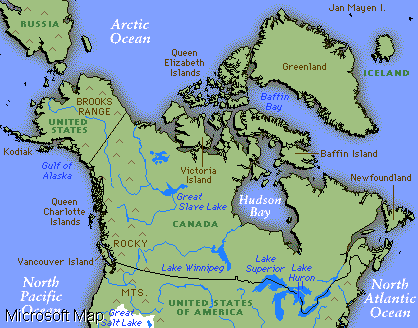
report is about the country of Canada. It is in the Western Hemisphere, on the
continent of North America.
Highlights
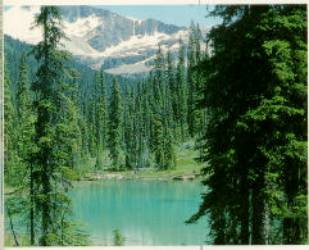
Most people go to Canada to see physical features such as wilderness areas, and
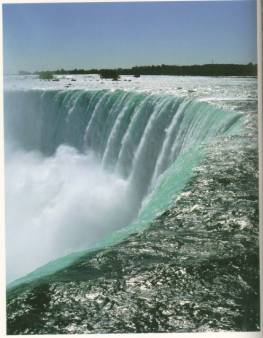
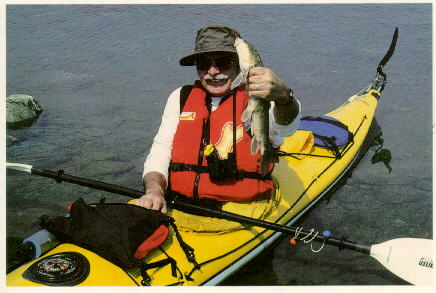
natural wonders. Canada is most known for maple trees, fishing, and Niagara
Falls.
A
Picture Tour
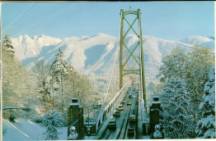
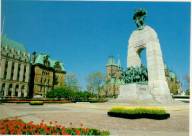
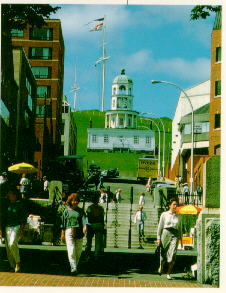
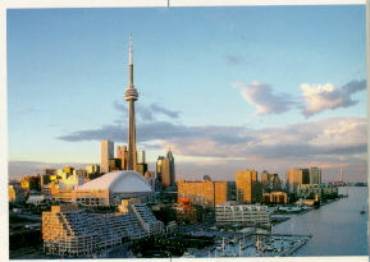
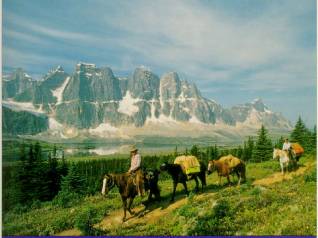
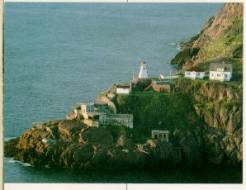
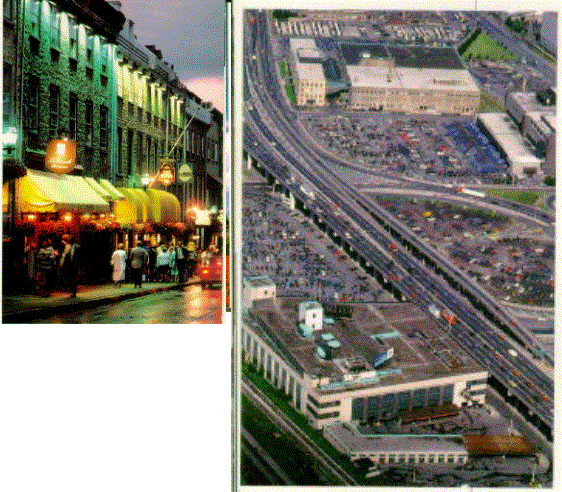
A Picture Tour
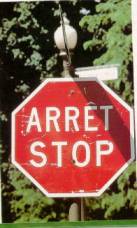
Bilingual stop sign
Map
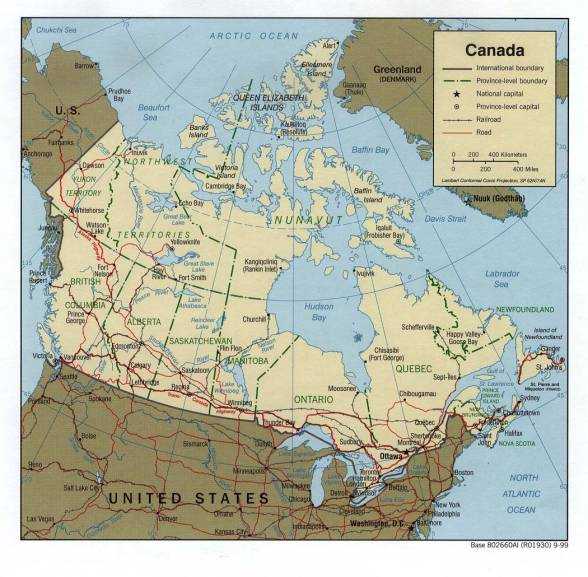
Population: 31,006,347 (July 1999)
Size: 3,851,809 sq. mi. (9,976,140 sq. km.)
Points
of Geographic Interest
Mountains
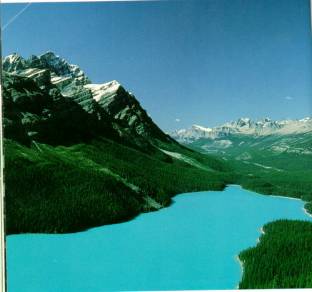
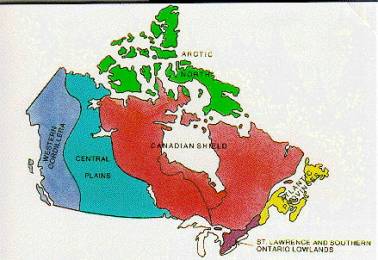
The two major mountains of Canada are the Rocky and Coastal Mountains. These mountain ranges run north to south. The highest peaks of Canada are in the St. Elias Mountains.
Rivers/Lakes
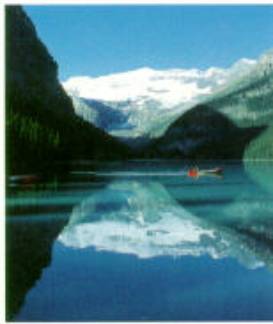
Canada also features some of the Great Lakes. These Great Lakes are Lake Erie, Lake Ontario, Lake Superior, and Lake Huron.
Forests
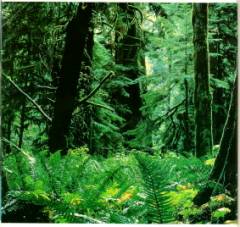
More than half of Canada’s forest is commercial forest. Canada has a large amount of forest exports. In 1993, Canada’s forest exports had a value of $26.7 billon dollars.
Deserts
Canada does not have any deserts.
 Other
Points of Interest
Other
Points of Interest
The Canadian Shield is wrapped around Hudson Bay. The Canadian Shield is a rocky region and is Canada’s largest geographical feature.
Capital
City
Name of City: Ottawa
Province: Ontario
Ottawa is the capital of Canada. It is the fourth largest metropolitan area in Canada. It has the finest art, history, and culture in the country. Ottawa is the home of Mitel, Newbridge, Corel, and other technological companies.
Ottawa is the home of
Parliament. It is where all the national government decisions are made. Ottawa
is a center for technology and hi-tech research.
Other
Important Cities
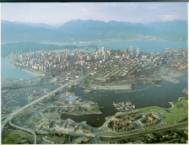
Vancouver: Vancouver is in the province of British Columbia.
It is the largest city in British Columbia. Vancouver is surrounded on three
sides by water. I have visited Vancouver, and it has a very nice park called
Stanley Park.
Calgary: Calgary is in the province of Alberta. It is the
largest city in the province. Calgary is the center of Canadian gas and oil
industries. Calgary has an altitude of 1,049 meters (3,340 ft.). I have also
visited Calgary.
Toronto: Toronto is in the province of Ontario. It is the
business center of Canada. Toronto has a network of recreation facilities and
parks. It is the home of more than 80 ethnic communities. Toronto is a large
city, and has lots of traffic. I have also visited Toronto.
Edmonton: Edmonton is in Alberta, and is the capital of
Alberta. The oil wells that Calgary uses are in areas near Edmonton. Most of
the buildings in Edmonton have been preserved and are historical.
Winnipeg: Winnipeg is in the province of Manitoba. The workers
in Winnipeg are known for their high skills. Winnipeg is a major distribution
center for Canada.
Regina: Regina is in the province of Saskatchewan. Regina
has over 200 parks. The city is the commercial and financial center of
Saskatchewan.
Montreal: Montreal is in the province of Quebec. The city
mainly uses the French language.
Climate
The climate of Canada varies from place to place. In most of Canada winter lasts longer than summer. Canadian winters are cold. Central Canada gets more snow than the Artic. The Pacific Coast is fairly dry and cool in the summer and mild and wet in the winter. British Columbia is cooler and much drier in the winter. Areas by the Rocky Mountains and the Great Lakes have long and cold winters and short and warm summers. Ontario and Quebec have a humid climate and have cold winters and hot summers. The Atlantic Provinces have precipitation all year.
|
Average
summer temperature: |
59
to 68°F |
|
Average
winter temperature: |
-22
to -4°F |
|
Average
yearly rainfall: |
10
to 30 inches |
Natural
Resources
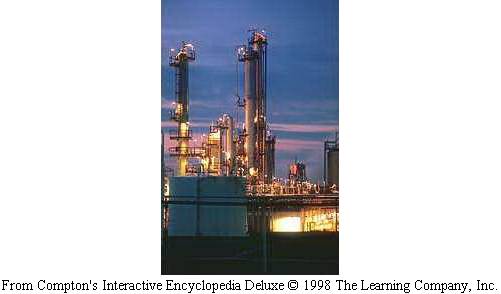
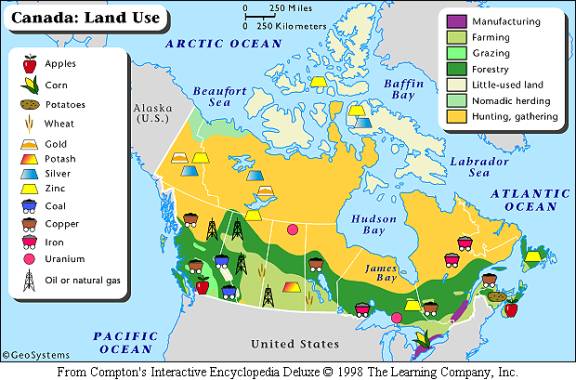
Canada has many natural resources. Many of these natural resources are in mining. Most of the mining products are mineral fuels, metallic minerals, nonmetallic minerals, or structural materials. Most of Canada’s mining production is in petroleum and natural gas. In Alberta, thick oil is found in the earth. This is where some of Canada’s oil comes from. The metallic minerals in Canada are high in the economy. Metallic minerals such as gold, copper, zinc, nickel, iron ore, uranium, and silver are found in Canada.
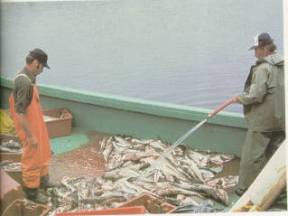
The fishing industry is another natural resource. Some people in Canada are fishermen. Nova Scotia is known for fishing. This industry provides food to Canada.

Resources
and Industries

Wildlife
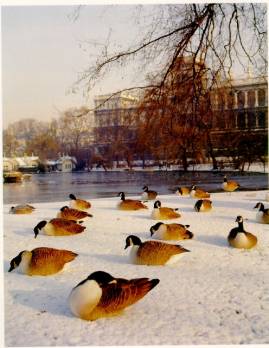
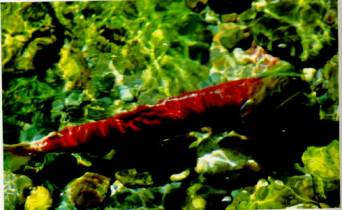
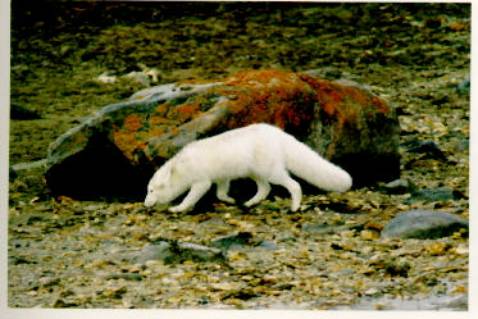
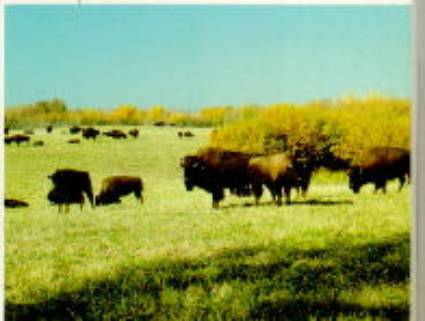
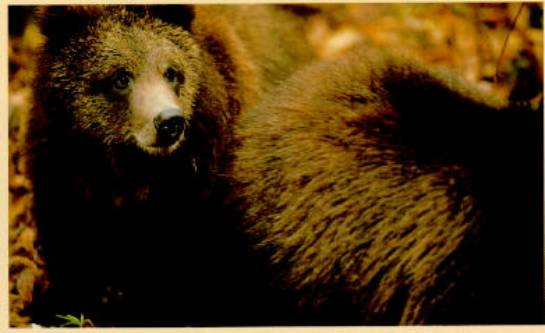
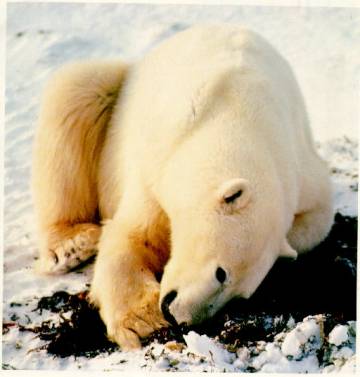
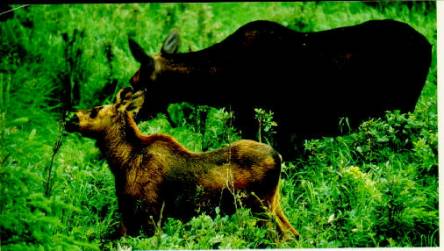
There are many different kinds of wildlife in Canada.
Wildlife
Wildlife
Plant Life
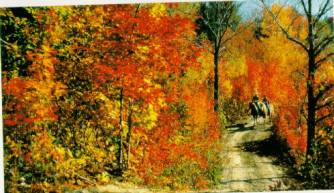
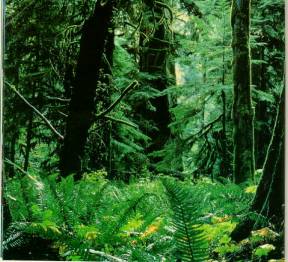
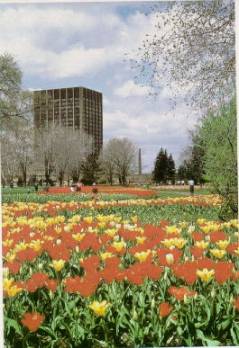
Canada has a lot of forest areas. Many of the trees in these forests are
evergreen trees. Some of these forests are used for paper and other forest
products.
Chapter 2 - Symbols
National
Flag:

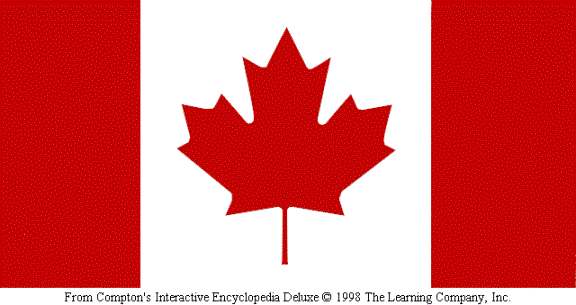
|
Motto From sea to sea |
Coat
of Arms
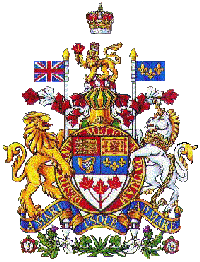
Other Symbols
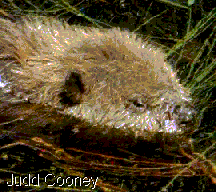
Maple
Leaf and Beaver
National
Anthem
Title: O Canada!
Author:
Sir Adolphe-Basile Routhier
Canada’s
national anthem:
O
Canada!
Our
home and native land!
True
patriot love in all thy sons command
With
glowing hearts we see thee rise,
The
True North strong and free!
From
far and wide, O Canada,
We
stand on guard for thee.
God
keep our land glorious and free!
O
Canada, we stand on guard for thee.
O
Canada, we stand on guard for thee.
Other
Songs
Other songs identified with this nation include:
Song |
Author |
|
God
Save the Queen |
Henry
Carey |
|
Maple
Leaf Forever |
Alexander
Muir |
Chapter
3 - Way
of Life
People
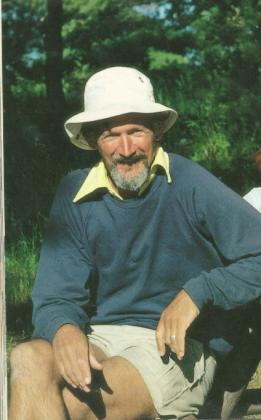
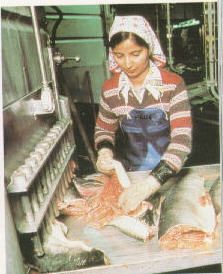
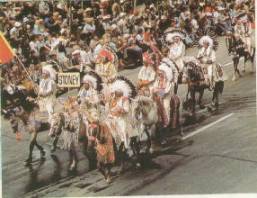
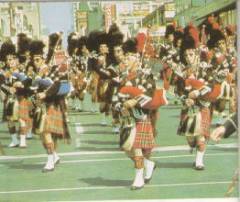
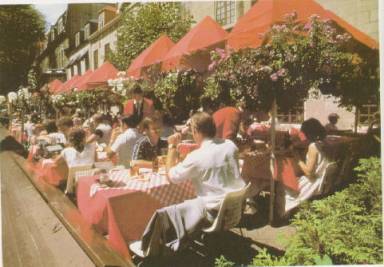
In Canada, there are two
official languages, French and English. Some of the people in Canada speak
English, some speak French, and some speak both. Most Canadians are middle
class. Most people have enough money to live comfortably and have plenty of
food to eat.
Most people in Canada have more than one vehicle. In Canada, having a car a
necessity. Most Canadians like to talk on the telephone also. Most people have
more than one phone line in their home in Canada. Many people have cordless
phones, answering machines, and fax machines.
People
Language
Canada’s official languages are English and French.
English |
French |
Hello |
Bonjour |
|
How
are you? |
Comment allez-vous |
|
Very
well, thank you |
Tres bien, merci |
|
Good-bye |
Au revoir |
|
What
is it? |
Qu’est-ce que c’est |
Traditions
Canada has many traditions.
Canadians traditionally like art, theater, and dance. Most of Canadian art is
by native artists. These artists have carved totem poles and soapstone.
Canada also has paintings in
its tradition. Most of these paintings are paintings done by pioneers. These
paintings are of native people.
Canada has a big tradition
in theater. Some actresses in Canada are Mary Pickford, Lorne Greene, and Sir
Christopher.
Canadians like to dance. Canadians enjoy classical Indian dance.
They also enjoy Architecture. Canadians like to build interesting buildings.
Traditions
Some traditional
foods in Canada are
Maple
syrup, lobsters, tortiere, maple syrup pie, flipper pie, and bannock. |
Type
of Government
Canada’s government is a federation with parliamentary democracy and a constitutional monarchy.
Canada’s legal system is
based on its tradition. Canada has a constitution that sets out basic rights of
individuals. The authority to make laws is mostly in Parliament.
Each province in Canada has its own court. Canada has two levels
of courts, first level and second level. The first level is the provincial
court. The second level is the provincial Superior Court.
In Canada, there is a house of commons. This
is where the members of Parliament make the laws. There is a gallery where the
public can sit and watch the laws being made. The prime minister of Canada is
the most powerful political figure.
There is also the senate.
The senators are not elected, but appointed by the governor general. There are
104 senate members. The members of the House of Commons are elected.
Leaders
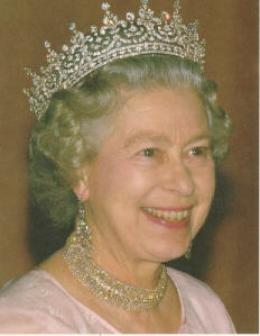
Queen Elizabeth II is the queen of Canada. She is also the queen of the United Kingdom, Australia, South Africa, New Zealand, Pakistan, and other countries. Queen Elizabeth was born in 1926 in London. She did not go to school. She was taught by Miss Crawford.
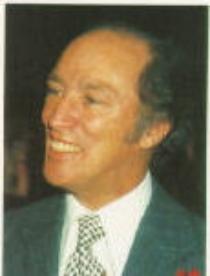 Pierre
Trudeau was born in 1919. He is Canada’s 15th prime minister. In
1965, he entered federal politics. He was appointed Minister of Justice in
1967. In 1968, he was elected leader of the Liberal party of Canada. He
introduced the Canadian Constitution of 1982.
Pierre
Trudeau was born in 1919. He is Canada’s 15th prime minister. In
1965, he entered federal politics. He was appointed Minister of Justice in
1967. In 1968, he was elected leader of the Liberal party of Canada. He
introduced the Canadian Constitution of 1982.
Money
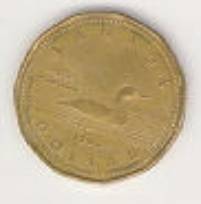
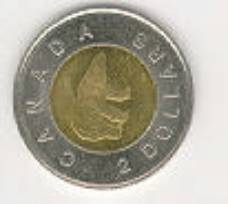
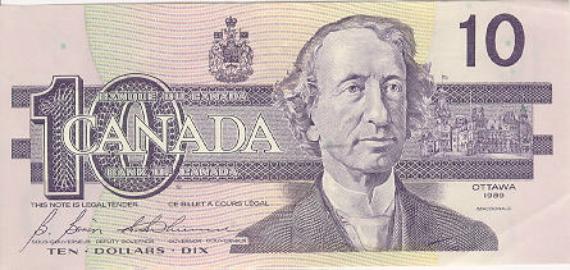
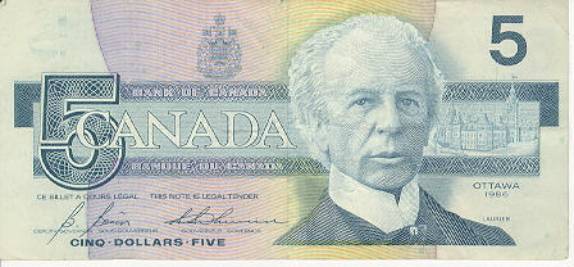
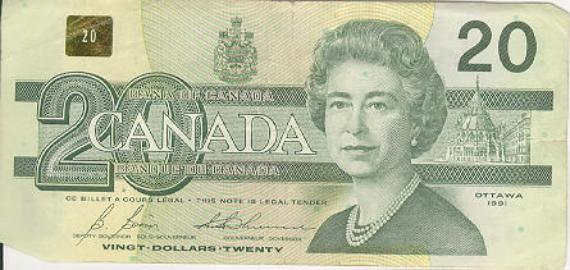
Canadian currency is multicolored. Originally the $1 bill was green and the $2 bill was pink. Recently the Looney and Toney replaced these.
Money
Ten
Dollars ($10)
Religion
The main religion in Canada is Roman Catholic.
This religion teaches the existence of Jesus. The
religion uses the New Testament, the Old Testament, and Apocrypha. Roman
Catholicism teaches that humans exist in a mode of sin and cannot have an
adequate knowledge of God except in revelation.
Other religions in Canada include the United Church and the Anglican Church.
Education
Canada has 10 provincial and 2 territorial school systems. You must go to school if you are ages 6-16. About 5 million children attend public schools in Canada. In some of the provinces, children can enter kindergarten at the age of four. The elementary schools emphasize language, math, social studies, and science. Juniors and seniors get more subjects like computer science, technology, trades courses, music, art, and home economics. Canada’s Public Schools are paid by local taxes and government grants.
Missions
David George is one of the many missionaries to/from Canada. He came from Virginia and went to Nova Scotia, Canada. He preached at a Baptist church.
James Evans started churches to teach Indians in
Ontario. He then went west to Lake Winnipeg and made a system of symbols for
the Cree language. This made it possible for him to work with the Cree Indians.
Sports
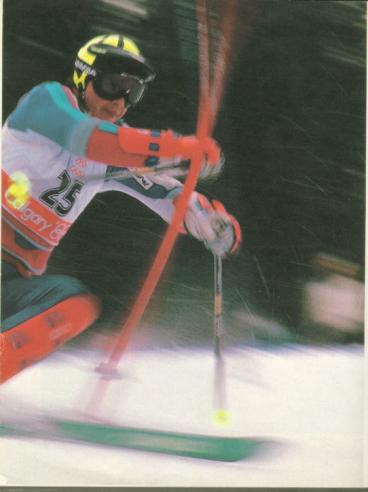
In Canada hockey, baseball, Canadian football, and Lacrosse are played.
In Canada hockey is ice hockey (not field hockey). Ice hockey is a Canadian invention. Canadians like to play ice hockey. Even young kids like to play ice hockey.
Canadians also like baseball. People like to watch baseball being played.
Another Canadian sport is Canadian Football. It is a Canadian invention. Canadian football has different rules than American football. In Canadian football there are more players.
Lacrosse is the oldest Canadian game. It is based on an Indian game called baggataway.
Chapter
4 - History
Historical Happenings
Canada was first inhabited by native Indians. In 1497, first white man entered the country. This was when John Cabot reached either Newfoundland or Nova Scotia. France took Canada in 1534. In 1608, Quebec was founded. Then, there was a conflict between the French and the English. In 1713, Canada was lost to England. In 1849, Canada was self-governed. In April 1999, the Northwest Territories was dived in two, making Nunavut.
Time
Line
Date |
Event |
|
1497 |
First
white man in Canada |
|
1534 |
France
took Canada |
|
1583 |
Humphrey
Gilbert claims Newfoundland for Britain |
|
1608 |
Quebec
founded |
|
1610 |
Henry
Hudson discovers Hudson Bay |
|
1642 |
Montreal
is founded by French missionaries |
|
1670 |
Hudson’s
Bay Company is founded |
|
1713 |
Canada
lost to England |
|
1763 |
Treaty
of Paris ends decades of fighting between the French and British |
|
1774 |
Quebec
Act gives political rights and religious freedom to French Canadians |
|
1807 |
David
Thompson and Simon Fraser travel through British Columbia |
|
1849 |
Canada
becomes self-governed |
|
1864 |
Colonial
leaders discuss creating the nation of Canada |
|
1870 |
North
West Territories is established |
|
1885 |
Last
spike driven in Canada’s transcontinental railway |
|
1896 |
Gold
discovered near Klondike River starting the Klondike gold rush |
|
1947 |
Oil
discovered at Leduc, Alberta |
Time
Line
|
Date |
Event |
|
1962 |
Trans-Canada
Highway completed |
|
1965 |
National
Health Plan introduced |
|
April
1999 |
Northwest
Territories divided making Nunavut |
Historical
Persons
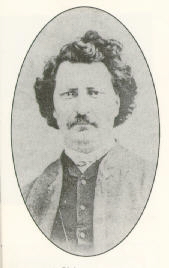
Name:
Louis Riel
He was born in 1844 and died in 1885. He founded the province of Manitoba. He formed an organization of Metis who fought for land, language, access to political power, and cultural rights in the 1860s. He if known as a heroic freedom fighter.
Name:
Lucy Maud Montgomery
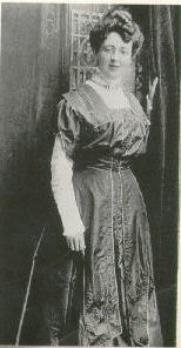 She
was born in 1847, and died in 1942. She wrote 22 novels. She also wrote several
volumes of short stories.
She
was born in 1847, and died in 1942. She wrote 22 novels. She also wrote several
volumes of short stories.
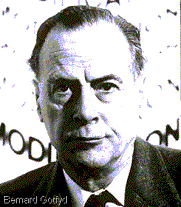 Name: Marshall McLuhan
He was born in 1911, and
died in 1980. He was a professor at the University of Toronto. He studied the
effects of media on thought and behavior. He wrote a book called The Medium
Is the Message. The book describes his theory of how people receive
information.
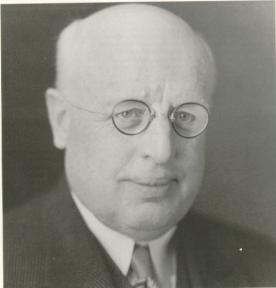 Historical Persons
Name:
William Aberhardt
He founded the Social Credit party. He was born in 1878. He died in 1943. He began as a high school teacher and religious-radio-show host.
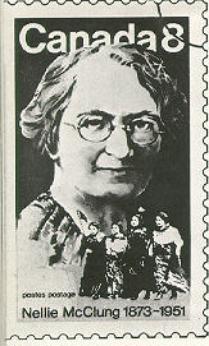
Name:
Nellie McClung
She
was born in 1873 and died in 1951. She was a teacher, author, and a suffragist
during the 20th century. She became a spokeswoman for woman’s right
and urged woman-voting rights. She was a famous speaker and gave speeches all
around the world. She also wrote books. Her first novel was Sowing Seeds in
Danny.
Name:
Rene Levesque
 Rene Levesque founded Parti
Quebecois. He started his career as a television and radio journalist. He won
political office of the Quebec Liberal party in 1960. He was born in 1922, and
died in 1987.
Rene Levesque founded Parti
Quebecois. He started his career as a television and radio journalist. He won
political office of the Quebec Liberal party in 1960. He was born in 1922, and
died in 1987.
Why
You Should Visit Canada
You should visit Canada because of its scenery, wildlife, physical features, culture, and people. Canada is very close (just north) to the United States.
Canada has a lot of scenery. There are plants, trees, bridges, cities, and lots of water. The country even has interesting buildings. This means that you should take your camera.
Canada also has lots of wildlife. Canada has bears, fish, bison, moose, polar bears, Artic foxes, hogs, cattle, and chickens.
There are many physical features in Canada. Some of these are Niagara Falls, the Canadian Shield, and lots of water. If you go to Niagara Falls, you might get wet.
In Canada there is a lot of culture. There is culture from the native people, Scottish, people from Greece, Ukraine, German, and many other places. People will dress up differently.
Summary
Key
Facts
|
Nation |
Canada |
|
Hemisphere |
Western |
|
Continent |
North America |
|
Boundaries |
|
|
North |
Artic
Ocean |
|
South |
United
States |
|
East |
Atlantic
Ocean |
|
West |
Pacific
Ocean |
|
Population |
31,006,347 (July 1999) |
|
Capital |
Ottawa |
|
National Anthem |
O Canada! |
|
Flag Colors |
Red and White |
|
Motto |
From sea to sea |
|
Other Symbols |
Maple Leaf and Beaver |
|
Type of government |
Federation with parliamentary democracy and constitutional monarchy |
|
National Leaders |
Queen Elizabeth II, Pierre Trudeau |
|
Climate |
Varies from place to place |
|
Wildlife |
Bears, beavers, Canadian geese, Sockeye salmon, Artic Fox, Bison, Cow Moose, Polar Bear |
|
Plant Life |
Trillium, Tulips, Ferns |
|
Natural Resources |
Mining, fishing |
|
Industries |
Corn, potatoes, wheat, gold, potash, silver, zinc, coal, copper, iron, uranium |
|
Cities |
Vancouver, Calgary, Toronto, Edmonton, Winnipeg, Regina, and Montreal |
|
Languages |
French and English |
|
Religion |
Roman Catholic (45%), United Church (12%), Anglican (8%), and other (35%) |
|
Interesting Traditions |
Art, theater, dance |
Bibliography
“About Canada’s Capital”, http://www.capcan.ca/english/about/index.html, 2000.
Barlas, Robert. Canada. Milwaukee: Gareth Stevens Publishing, 1998.
Calgary, Alberta, Canada, http://www.cuug.ab.ca:8001/VT/calgary.html, 2000.
Canada, http://www.infoplease.com/ipa/A0107386.html, 2000.
Canada at War, http://www.agricon.on.ca/andiland/essays/canada.htm, 2000.
Canada Info: Canadian Anthems and Songs, http://home.ican.net/~marlatt/craig/anthems.html, 2000.
Canada Information Office- Education in Canada,
http://infocan.gc.ca/facts/educ_e.html, 2000.
Canada Information Office- Geography, http://infocan.gc.ca/facts/geography_e.html, 2000.
Canada Information Office- The Legal System, http://infocan.gc.ca/facts/juri_e/html, 2000.
Cheng, Pang Guek. Canada. New York: Marshall Cavendish, 1994.
Compton’s Encyclopedia Deluxe, 1999. S.v. “Canada,” by James D. Miller.
Compton’s Encyclopedia Deluxe, 1999. S.v. “Roman Catholicism,” by Unknown.
Edmonton For First Time Visitors, http://www.discoveredmonton.com/VisitorInformation/AnIntroductiontotheArea/8-146.html?vid=882442, 2000.
Giabouski, John F.. Canada. San Diego: Lucent Books, 1998.
Hicks Laurel. New World History and Geography. Pensacola: A Beka Book., 1992.
Introduction- Montreal Quebec Canada, http://www.tourism-montreal.org/introa.htm, 2000.
LeVert, Suzanne. Canada Facts and Figures. New York: Chelsea House Publishers, 1992.
Lonely Planet- Destination Canada,
http://www.lonelyplanet.com/dest/nam/can.htm, 1999.
OTTAWA INFO, http://www.tourottawa.org/about/, 2000.
Profile of Winnipeg, http://www.city.winnipeg.mb.ca/html/profile/profile.htm, 2000.
Regina has it all, http://www.cityregina.com/info/general/regall.shtml#general, 2000.
Sateren, Shelly. Canada Star of the North. New York: Benchmark Books, 1996.
Sheperd, Jenifer. Canada. Chicago: Childrens Press, 1987.
Simpson, Stephen. United Kingdom. Ocala: Stephen Systems Publishing, 2000.
Vancouver A to Z, http://www.city.vancouver.bc.ca/commsvcs/planning/atoz/atozhome.htm, 1998.
Welcome to Toronto! Toronto City Guide and Information, http://www.math.toronto.edu/toronto/, 2000.