
my classroom

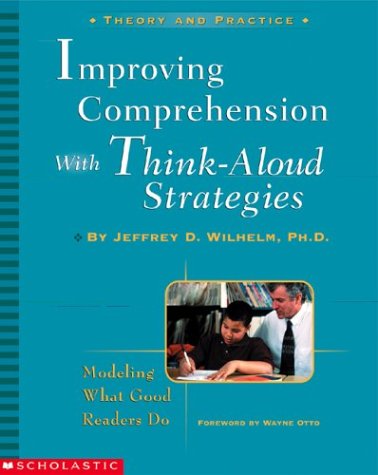
Improving Comprehension will help me to implement the "two-sided" or "learning-centered" model in my classroom. This is perhaps the most important thing I have learned from this book because classrooms have traditionally been dominated by the "teacher-centered" and "student-centered" models.
The teacher-centered model: "The most prevalent teaching/learning model today is the teacher/information-centered model, in which teaching is the purveying of information . . . This is considered a one-sided model because learning is centered on the information possessed by the teacher, which flows one way, from the teacher to the student" (8).
"I've always questioned the teacher-centered model because it focuses on what but not how. Research in cognitive science makes it compellingly clear that just telling students information is a weak form of teaching" (9).
The student-centered model: "A reaction against [the teacher-centered model] is the progressive student-centered model, in which the student learns about an interest of his choice. The teacher provides a nurturing environment for student exploration and discovery. This is also considered a one-sided model because learning is driven by the student" (8).
"Though the student-centered model is a major improvement over the teacher-centered model, I critique it too, because this model assumes that much learning occurs naturally. Given the conventionality of texts (i.e., given that texts are constructed in certain ways not because of nature but because people have agreed to construct and read them in certain ways), I do not believe that we learn to read naturally. . . . I would also argue that the teacher who believes in natural learning often deprives the student of her full expertise as a reader" (9).
The learning-centered model: "In this model, the teacher teaches through the relationship cultivated with a student in the context of working together closely. It goes well beyond the one-sided student-centered model in which students construct their own understandings in a nurturing environment but without the direct interventions of the teacher. In the learning-centered model, expertise is explicitly and continuously shared with the student as teacher and student engage together in meaningful and productive shared activities" (8 - 9).

This is a tool I have picked up from our textbook, Exploring and Teaching the English Language Arts, 4th Ed. by Stephen Tchudi and Diana Mitchell (1999). Dr. Wilhelm's ideas in Improving Comprehension have given me a lot of ideas for prompts and guidelines to use when assigning Reader Response Journals.
"Journals and freewrites should be done frequently; some teachers even believe they should be done daily. They can be used for a few minutes at the beginning or ending of a class or required as part of outside work. entries can be turned in one-at-a-time for quick response by the teacher or accumulated in a notebook or file or portfolio for periodic review" (Tchudi and Mitchell 250).
Here are some sample guidelines for a Reader Response Journal from a 9th grade English class:
http://www.gaston.k12.nc.us/schools/highland/class/
baron/readerresponselog.htm
In addition to providing strategies and specific suggestions for writing prompts, Wilhelm includes photographs of actual student responses. He encourages his students to respond to the text in creative ways, including with artwork and scribbles. For example:
Thought bubbles: "I draw a picture of a reader with a thought bubble above his or her head. For fun, students might even draw their own picture, paste a school picture of themselves on the face, and so forth. I'll make several copies of each picture so that students can use them to record several think-aloud moves. Then I ask them to write something they are thinking into the thought bubbles at various points in the text" (55).
Free responses: "A free response is . . . a freewheeling monologue wherein a reader reports on everything she can about what she is thinking, doing, seeing, feeling, asking, and noticing as she reads. Instead of focusing only on general-process strategies of reading . . . now we're interested in hearing every move a reader makes" (68). Free responses are often used as think-alouds, but Wilhelm also has his students use free response as a form of journaling.
- "Right-There" Questions: "These are factual questions for which the answer is immediately available (directly stated) in the text" (Wilhelm 70).
- "Think-and-Search" Questions: "These questions prompt readers to infer. A good reader poses the question to herself (thinks), and then pieces together details from several places in the text (searches) to arrive at an answer (an inference)" (70).
- "Author-and-Me" Questions: "These questions require readers to connect their own life experiences and beliefs with details from the text. To answer such questions the reader must have read the text, but must also go beyond the text and bring her personal lived experiences to bear" (70 - 71).
- On Your Own Questions: "These questions are usually stirred by the events, topics, or theme of the text. However, the answer to this kind of question does not reside in the text. Rather, it comes from the reader thinking about the book's issues in a much wider context - not the world of the text, but the world" (71).
Rules of the Road
http://www.joanbauer.com/rulesguide/journal.htm
Instructional Strategies Online - Response Journal
http://olc.spsd.sk.ca/DE/PD/instr/strats/responsejournal/
Suggestions for Reader Response Journal
http://www.clover2.k12.sc.us/barron/readerresponselog.htm
Reader Response Journals in Senior English
http://www.nipissingu.ca/oar/oarCurrIssue/V622Enew.htm
Before I read Improving Comprehension, I had used many of Wilhelm's think-aloud strategies without knowing it. They usually worked pretty well, but not as well as if I had studied them and used them consciously and systematically. Also, my students ended up just blindly following my lead. Improving Comprehension has given me the tools to use think-aloud strategies effectively. I plan to teach key strategies by name so that my students will be able to consciously choose them in the future.
Step 1: Choose a short section of text (or a short text).
Step 2: Decide on a few strategies to highlight.
Step 3: State your purposes.
Step 4: Read the text aloud to students and think-aloud as you do so.
Step 5: Have students underline the words and phrases that helped you use a strategy.
Step 6: List the cues and strategies used.
Step 7: Ask students to identify other situations (real world and reading situations) in which they could use these same strategies.
Step 8: Reinforce the think-aloud with follow-up lessons.
(Wilhelm 42 - 50)
1. Set purposes for reading.
2. Make predictions.
3. Connect personally.
4. Visualize.
5. Monitor comprehension.
6. Use fix-up strategies to address confusion and repair comprehension.
(Wilhelm 61 - 65)
AND PREDICTING
I tend to plunge right into the text with little or no attention to previewing the book and trying to predict what's coming. As Wilhelm would point out, expert readers may not need to do so. However, average or struggling readers can benefit greatly by this exercise. I will be sure to do this in the future.
"The title/author/call-outs/pictures/front matter/author information/book design/text this is in/makes me think . . ."
"The comments on the back make me think . . ."
"I need something light and funny to read, and this title and cover look fun because . . ."
"Reading this may help me to understand . . ."
(Wilhelm 62)
"I'm guessing that ______ will happen next."
"I think this book will be about [the general topic of . . .] I wonder if _____."
"I imagine the author believes _____. I think the tone of the book will be . . . [sad, happy in the end, pessimistic] about human beings . . ."
(Wilhelm 63)
THINKING ACTIVITY (DRTA)
Wilhelm provides step-by-step directions for directed reading and thinking activities. Although it would not be appropriate to use this entire process with each text (the kids and I would get burned out!), I think it would work very well early in the year, as well as later when we work with more difficult texts.
Before teaching: set your teaching purposes
1. Set goals for your unit (or for a text you have chosen).
Before reading: motivate your students
2. Front-load to activate students' background knowledge and awaken personal connections.
Beginning to read: Preview, set purposes, enter the text
3. Support student entry into the text and the reading process.
During reading: encourage a deeper and fuller experience of the text
4. Guide the reading.
After reading: reflect on the textual experience
5. Take students back into the text.
Follow-up: Extend understanding
6. Give a final assignment to synthesize a coherent view of the text as a whole and consider thematic generalizations that go beyond the text.
(Wilhelm 88 - 90)
"It's vital to embed your think-alouds within an instructional framework designed to assist readers before, during, and after reading a text. Think-alouds are one tool of many you will use; others include drama scenarios, written reflections, key questions, and so on. Think-alouds can be combined nicely with these other kinds of activities. Taken together, these practices can be integrated into what is called a directed reading and thinking activity (Stauffer, 1969)" (Wilhelm 87).
Using the Directed Reading and Thinking Activity
http://www.nald.ca/CLR/saraw/ch1pg1.htm
Content Reading Standards
http://www.state.tn.us/education/ci/cistandards2001/la/
cicontentreading.pdf
The "Read On" Project
http://www.dundee.ac.uk/psychology/ReadOn
12th grade, section 110.45(b)(7 - 16, 19 - 20)
Texas Examinations of Educator Standards (TExES)
8-12 ELAR Standards I - VI, VIII - IX
NCTE/NCATE Standards
Standards 2.4, 3.2.2, 3.2.3, 3.2.5, 3.3.1,
3.3.2, 3.3.3, 3.6.2